What Do Professional Car Detailers Use: Interior Cleaning Guide
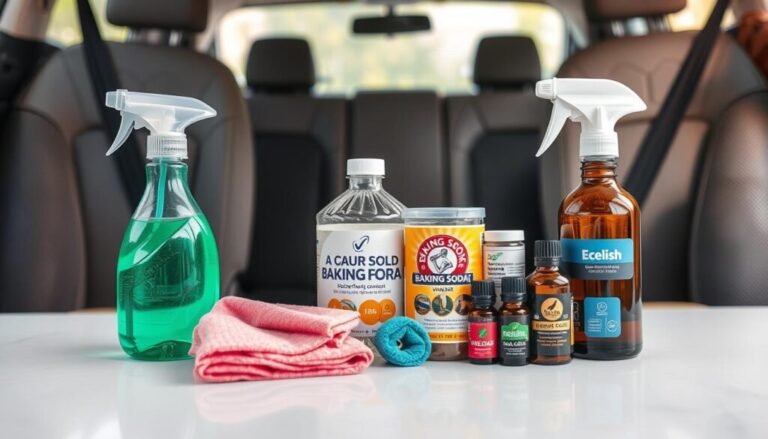
Professional car detailers use a set of cleaners and tools, not one product. Their kit often includes a vacuum, soft brushes, microfiber towels, an interior all-purpose cleaner, fabric cleaner, leather cleaner, glass cleaner, odor treatment, and sometimes a steam cleaner or extractor.
The key is to match the cleaner to the surface. Cloth seats, leather, vinyl, plastic, rubber, screens, and glass need different care. In the United States, detailers also check product labels and vehicle manuals because modern cars may have delicate coatings, touchscreens, sensors, and synthetic leather.

The Main Products Professional Detailers Use
Professional detailers choose products by soil type and surface. Dust needs a dry tool or mild cleaner. Grease needs a stronger cleaner. Stains in fabric may need an extractor. Leather needs low-moisture care.
| Interior area | Common professional product | Main tool |
|---|---|---|
| Carpet and floor mats | Carpet cleaner or low-foam fabric cleaner | Vacuum, brush, extractor |
| Cloth seats | Upholstery cleaner | Soft brush, microfiber towel, extractor |
| Leather seats | Leather-safe cleaner and protectant | Soft brush, leather towel |
| Vinyl and plastic | Interior cleaner or diluted all-purpose cleaner | Microfiber towel, detailing brush |
| Rubber mats | Mild cleaner or degreaser | Stiff brush, towel |
| Glass | Automotive glass cleaner | Glass towel |
| Touchscreens | Dry or slightly damp microfiber cloth | Clean microfiber cloth |
| Vents and seams | Mild cleaner | Soft detailing brush |
| Odors | Source removal, ventilation, and targeted odor treatment | Vacuum, extractor, air tools |
A professional detailer may use concentrated chemicals and dilute them for each task. This lowers cost and gives better control. It also reduces the risk of leaving a sticky film.
1. Vacuum cleaners
A strong vacuum is often the first tool used. Detailers use it to remove:
- Sand
- Dirt
- Pet hair
- Crumbs
- Dust
- Hair
- Loose grit from seams
Many shops use a commercial wet/dry vacuum. Some use a high-power car vacuum with narrow crevice tools. A vacuum removes dry soil before liquid cleaner turns that soil into mud.
Professional detailers may also use:
- A crevice tool for seat gaps
- A soft brush attachment for dashboards
- A rubber pet-hair tool
- An air nozzle to loosen dirt from seams
- A drill brush for rubber mats and hard plastic floors
Compressed air can move dust into the cabin. It should be used with a vacuum nearby so the dirt does not settle on another surface.
2. Interior all-purpose cleaner
An interior all-purpose cleaner, often called an APC, is used on hard surfaces such as:
- Door panels
- Vinyl
- Plastic trim
- Cup holders
- Rubber floor mats
- Console areas
- Seat rails
Detailers usually dilute an APC. A mild mix may work for light dust. A stronger mix may be used for greasy door panels or dirty rubber mats.
The product must be safe for the surface. A cleaner made for engine bays or tires may be too harsh for a dashboard. Strong alkaline cleaners can dull plastic, dry some materials, or damage coatings when used incorrectly.
3. Fabric and carpet cleaners
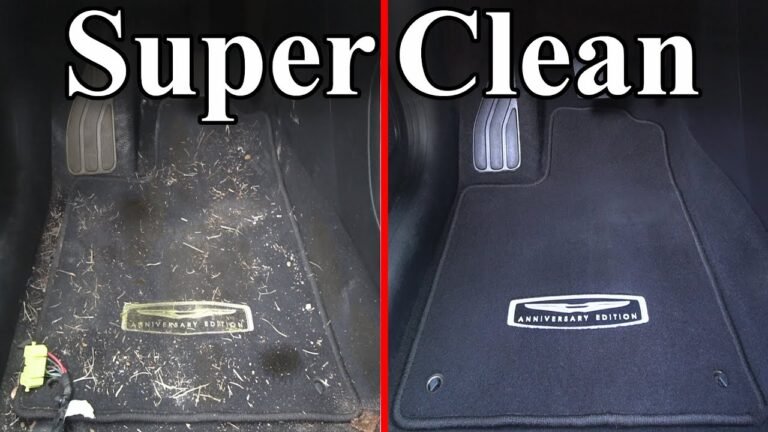
Fabric cleaners are made for cloth seats, carpet, and floor mats. professionals use low-foam products because too much foam can leave residue and slow drying.
A typical process is:
- Vacuum loose dirt.
- Apply a small amount of fabric cleaner.
- Agitate with a soft brush.
- Lift the soil with a microfiber towel or extractor.
- Dry the area with airflow.
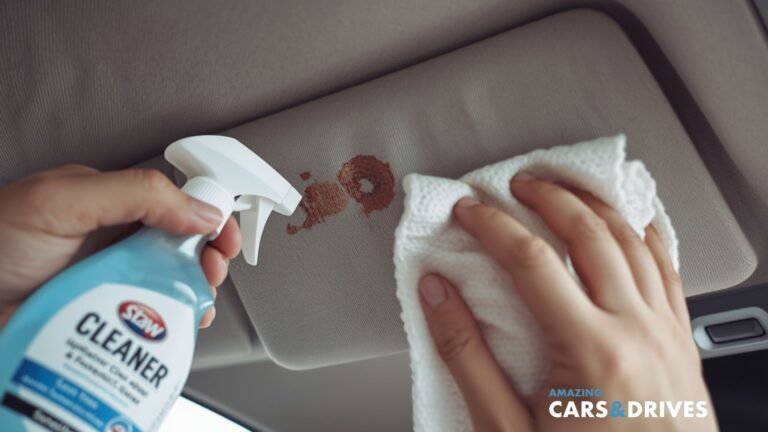
A fabric cleaner may remove food, mud, and body oils. It may not remove every dye stain, ink mark, burn, or old water ring. Some stains need special treatment, and aggressive scrubbing can spread the mark or damage the fibers.
4. Leather cleaners and conditioners
Professional detailers use a cleaner made for automotive leather or coated leather. Modern vehicle seats often have a protective coating over the leather. They are not the same as unfinished leather furniture.
Leather cleaning should be gentle. Detailers commonly use:
- A pH-balanced leather cleaner
- A soft leather brush
- A clean microfiber towel
- A leather protectant when suitable
Leather conditioner is not always needed after every cleaning. Too much conditioner can make seats greasy and attract dust. Some products may also leave a glossy finish that increases glare or makes the seat feel slippery.
Check the owner’s manual before using oil-based products. Alcantara, suede-like material, and perforated seats need special care. Do not flood perforated leather because liquid can enter the seat foam or heating and ventilation system.
5. Glass cleaner
Detailers use an automotive glass cleaner with a low-lint glass towel. Many avoid household glass products that contain ammonia, especially when the vehicle has:
- Window tint
- Plastic interior screens
- Special coatings
- Camera or sensor areas
Spray the glass cleaner onto the towel instead of directly onto the dashboard. This helps prevent liquid from entering vents, switches, speakers, and electronic controls.
A second dry towel helps remove haze and streaks. Clean glass is easier to inspect in sunlight and improves visibility at night.
6. Microfiber towels
Microfiber towels are one of the most important items in a detailing kit. Detailers use separate towels for separate jobs.
For example:
- A plush towel for dashboards
- A short-pile towel for cleaning
- A glass towel for windows
- A thicker towel for drying fabric
- A dedicated towel for dirty door jambs
Using one towel for every surface can spread grit and grease. Towels should be washed apart from household laundry. Avoid fabric softener because it can reduce absorbency and leave residue.
7. Brushes and detailing tools
Brushes help reach areas that a towel cannot clean. A professional kit may include:
- Soft interior detailing brushes
- A leather brush
- A stiff brush for rubber mats
- A drill brush for heavy soil
- A narrow vent brush
- A boar-hair-style brush for delicate trim
- Plastic scrapers for safe spot removal
The brush must match the surface. A stiff brush can scratch soft plastic, damage screen coatings, or roughen leather. Test an unfamiliar brush in a hidden area first.

What Tools Do Detailers Use for Deep Interior Cleaning?
For a deep clean, professionals may use an extractor, steamer, air tool, or specialty vacuum. These tools improve cleaning, but they also raise the risk of moisture damage if used poorly.
Carpet extractors
An extractor sprays cleaning solution into fabric and then removes the dirty liquid. It can clean:
- Cloth seats
- Carpet
- Floor mats
- Cargo-area carpet
The operator must avoid over-wetting. Wet foam and carpet can stay damp under the surface even when the top feels dry. Trapped moisture can lead to odor, mildew, or electrical problems.
An extractor works best after dry vacuuming and spot treatment. It is not a cure for every stain. It can also make a water-sensitive stain spread.
Steam cleaners
Steam can loosen grease and grime on hard surfaces. Detailers may use it on:
- Cup holders
- Door-panel seams
- Rubber mats
- Plastic trim
- Vents
- Seat rails
Steam should be used with care around electronics. Avoid directing steam at:
- Touchscreens
- Instrument clusters
- Speakers
- Buttons
- Airbag seams
- Seat controls
- Electrical connectors
- Exposed wiring
Steam is not a replacement for vacuuming. It loosens soil, but the soil still needs to be wiped away.
Compressed air
Compressed air helps remove grit from:
- Seat stitching
- Air vents
- Console seams
- Switches
- Floor tracks
- Dashboard gaps
Use short bursts. High pressure can push dirt deeper into a switch or force liquid into electrical parts. Eye protection is sensible when blowing out heavy dust.
Tornado-style air cleaning tools
Some shops use air-driven cleaning guns that create a fast, swirling air stream. They are useful for textured plastic, carpet, and tight spaces. They can also spread dirt through the cabin if the vehicle is not vacuumed at the same time.
Odor treatment tools
Professionals usually start with the odor source. They remove trash, wash fabric, clean spills, and dry the area. A fragrance or deodorizer only masks an odor if the source remains.
Some detailers use:
- Enzyme cleaners for certain organic soils
- Fabric deodorizers
- Activated carbon products
- Ozone machines
- Hydroxyl generators
Ozone treatment requires special caution. People and pets must not be inside during treatment, and the cabin must be aired out afterward. Ozone can also affect some rubber, plastic, and other materials with repeated or excessive exposure. It should not be treated as a routine substitute for cleaning.

How Professional Detailers Clean a Car Interior
The order matters. A good process removes dry dirt first, uses the least aggressive cleaner that works, and allows wet materials to dry.
Step 1: Inspect the interior
The detailer checks:
- Surface type
- Stains
- Odors
- Pet hair
- Loose trim
- Aftermarket electronics
- Damaged leather or fabric
- Seat ventilation and heating
- Child-seat marks
- Areas that may be water-sensitive
They may also ask about spills, smoke, pets, or previous cleaning products. This helps prevent the wrong chemical or tool from being used.
Step 2: Remove personal items and trash
Remove bottles, papers, child seats, floor mats, and cargo items. Check under the seats and inside door pockets.
If a spill contains a sharp object, battery, medicine, or unknown chemical, use suitable gloves and handle it safely. Do not vacuum broken glass with a small household vacuum unless the tool is designed for it.
Step 3: Vacuum from top to bottom
Start with the dashboard and seats, then work down to the carpet. This prevents falling dust from dirtying a finished area.
Use a crevice tool around:
- Seat rails
- Belt buckles
- Console gaps
- Door pockets
- Seat seams
- Floor edges
For pet hair, loosen the hair with a rubber tool or brush before vacuuming.
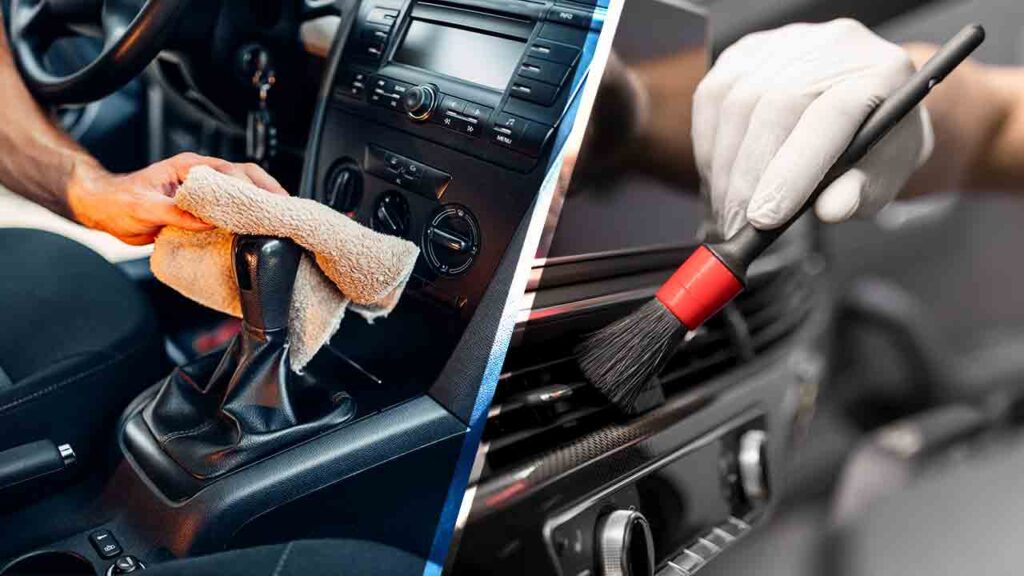
Step 4: Clean hard surfaces
Apply cleaner to a towel or brush rather than soaking the surface. Work in small areas.
Clean:
- Dashboard
- Door panels
- Center console
- Cup holders
- Steering wheel
- Gear selector
- Trim
- Seat controls
- Door jambs
The steering wheel deserves special care. It can collect skin oil and may become slippery if a glossy dressing is used. A clean, low-sheen finish is usually safer for grip.
Step 5: Clean seats and fabric
Use the least moisture needed. Mist or apply the product to the brush or towel, then work a small area.
For a stain:
- Blot rather than rub hard.
- Use a cleaner designed for the material.
- Lift the residue with a clean towel.
- Repeat only when the surface responds well.
- Dry the area with airflow.
Do not mix cleaners. Mixing bleach, ammonia, acids, solvents, or other chemicals can create harmful vapors or damage the material.
Step 6: Clean glass and screens
Clean interior glass last or near the end. This removes fingerprints made during other work.
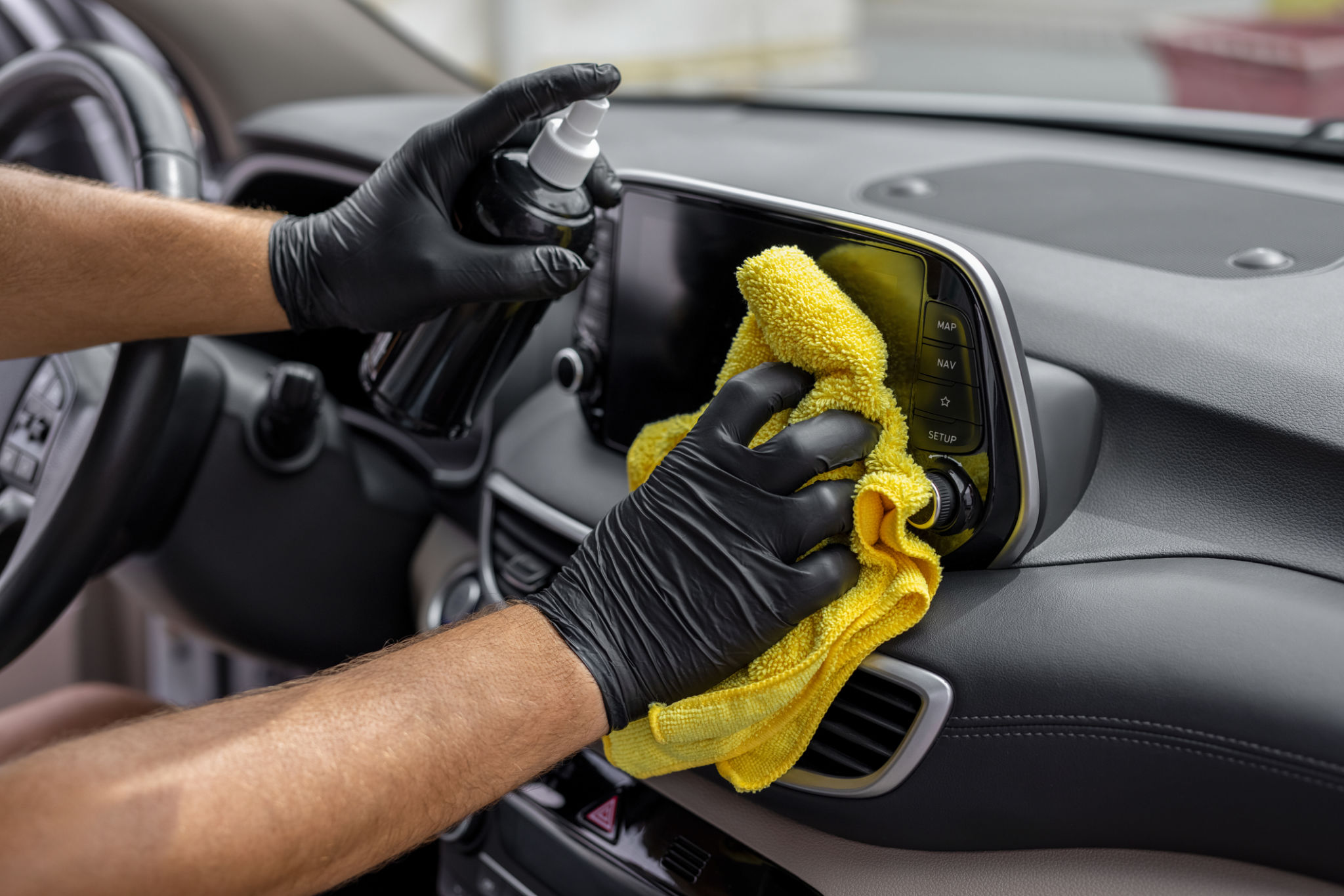
For screens, use the vehicle maker’s instructions. In many cases, a dry, clean microfiber cloth is the safest first step. If needed, lightly dampen the cloth with water or a screen-safe product. Never soak a screen or spray into its edges.
Step 7: Dry the cabin
Open the doors in a safe, dry place. Use fans when available. Move the vehicle only when it is safe to do so.
A cabin is not fully clean if seats and carpet remain damp. Check hidden areas such as:
- Under floor mats
- Seat rails
- Carpet edges
- Rear seat seams
- Cargo compartments
- Under removable liners
A musty smell after cleaning may mean that moisture remains below the surface.
Step 8: Apply protection only when suitable
Detailers may apply a water-based protectant to some plastic, vinyl, and rubber. The product should match the surface and leave a non-greasy finish.
Avoid shiny dressings on:
- Steering wheels
- Pedals
- Floor mats
- Seat surfaces
- Gear shifters
A glossy surface can reduce grip or create windshield glare.
Step 9: Perform a final inspection
Check the cabin in bright light. Look for:
- Streaks
- Cleaner residue
- Missed dirt
- Wet carpet
- Hazy glass
- Loose fibers
- Chemical odor
- Slippery controls
A professional finish should feel clean, dry, and natural rather than oily or heavily scented.

Which Interior Cleaner Should You Use?
The best cleaner depends on the surface and the soil. Use this guide before choosing a product.
| Problem | First choice | Avoid |
|---|---|---|
| Dust on the dashboard | Dry microfiber towel or soft brush | Excess water |
| Greasy plastic | Mild interior cleaner | Strong solvent |
| Mud on rubber mats | Diluted cleaner and brush | Excessive soaking |
| Food on cloth | Fabric cleaner and blotting | Hard scrubbing |
| Body oil on leather | Leather-safe cleaner | Harsh degreaser |
| Fingerprints on glass | Automotive glass cleaner | Dirty towels |
| Pet hair | Rubber tool and vacuum | Wet cleaning first |
| Musty odor | Find and remove moisture source | Fragrance alone |
| Stains near electronics | Damp towel, careful spot cleaning | Flooding the area |
| Touchscreen marks | Clean, dry microfiber cloth | Abrasive towel or household spray |
The least aggressive method is usually the best starting point. Increase cleaning strength only when the surface tolerates it and the soil requires it.

What Professional Detailers Do Not Use
Professional detailers generally avoid products that create more problems than they solve.
Household glass cleaner on every surface
Some household glass cleaners may contain ammonia or strong solvents. They can be unsuitable for window tint, plastic, screens, or specialty coatings.
Dish soap for the whole interior
Dish soap may remove grease, but it can leave residue and is not made for every automotive material. It is not a universal interior cleaner.
Silicone-heavy dressings
High-gloss dressings can make plastic look wet, attract dust, and create glare. They can also make steering wheels, pedals, and floor surfaces unsafe.
Excess water
Water can damage foam, adhesives, wiring, sensors, and seat electronics. More liquid does not always mean more cleaning.
Abrasive pads
Rough scrub pads can permanently change the texture of plastic, leather coatings, and trim. Use a soft brush first.
Strong solvents
Acetone, lacquer thinner, gasoline, and similar solvents can damage plastic, vinyl, synthetic leather, and fabric. They also create fire and health hazards.
Safety Tips for Interior Detailing
Read the product label and the vehicle owner’s manual before cleaning. Product instructions may vary by formula, and vehicle materials vary by model.
Follow these basic rules:
- Test the cleaner in a hidden spot.
- Use gloves when the label calls for them.
- Keep doors open for ventilation.
- Never mix cleaning products.
- Do not soak seats or carpet.
- Keep chemicals away from children and pets.
- Avoid airbag covers and seat-belt webbing.
- Do not spray near screens, switches, or vents.
- Keep slippery products off pedals and steering wheels.
- Dispose of dirty water according to local rules.
Seat belts need special care. Clean the webbing with mild soap and water if the manufacturer permits it. Do not use bleach, harsh solvents, or oily dressings. Do not alter, dye, or heavily saturate seat-belt material.
Airbag covers should not be scrubbed aggressively. If the airbag fabric, stitching, or cover is damaged, ask a qualified repair professional to inspect it.

Common Interior Detailing Mistakes
Using too much product
More cleaner can leave a film. Use a light application and wipe the surface clean.
Skipping the dry vacuum step
Liquid cleaner can turn loose grit into abrasive mud. Vacuum first.
Scrubbing stains too hard
Hard scrubbing may push a stain deeper or damage fibers. Blot, rinse carefully, and repeat when safe.
Cleaning in direct heat
Hot surfaces can dry cleaner before it lifts soil. Work in shade when possible and clean small sections.
Using one towel for everything
A dirty towel can spread grease and grit. Use clean towels and separate glass towels from dirty-area towels.
Covering odors with fragrance
A scent does not remove mold, smoke residue, spilled milk, or wet carpet. Find the source first.
Ignoring drying time
A damp cabin can smell worse after cleaning. Use airflow and check under mats and seats.

When Should You Hire a Professional Detailer?
A professional detailer may be the better choice when the interior has:
- Heavy pet hair
- Smoke odor
- Milk or food spills
- Mold concerns
- Deep stains
- Flood damage
- Delicate leather
- Alcantara or suede-like trim
- Water under carpet
- Damaged seat electronics
- Biohazard contamination
Flooded vehicles need more than normal detailing. Water can affect wiring, airbag systems, insulation, and hidden padding. A qualified automotive repair or restoration professional should inspect serious water damage.
For routine dust and light dirt, most owners can clean the interior with a vacuum, microfiber towels, mild interior cleaner, fabric cleaner, and a soft brush.
Frequently Asked Questions
What is the best cleaner for a car interior?
There is no single best cleaner for every interior. Use a mild automotive interior cleaner for plastic and vinyl, a fabric cleaner for cloth, a leather-safe cleaner for coated leather, and an automotive glass cleaner for windows.
Do professional detailers use steam to clean car interiors?
Some do. Steam can loosen grime on hard surfaces and seams. It must be used carefully around electronics, screens, airbag areas, switches, and seat controls.
Do detailers use an extractor on car seats?
They may use an extractor on cloth seats and carpet. The operator must control the amount of water and dry the material fully. Extractors are not automatically suitable for leather, suede-like fabric, or seats with exposed electronic parts.
How do professional detailers remove bad smells?
They remove the source first. This may involve vacuuming, washing fabric, cleaning spills, drying damp areas, and replacing contaminated materials. Deodorizers and specialized treatments may help after the source has been addressed.
Can I use an all-purpose cleaner inside my car?
You can use one only when its label says it is suitable for the surface and you dilute it as directed. Test it in a hidden area. Do not assume a strong APC is safe for leather, screens, clear plastic, or delicate trim.
Final Takeaway
Professional car detailers use a system: vacuum first, choose the right cleaner, use gentle tools, control moisture, and dry the cabin fully. Their results come less from one powerful chemical and more from correct product selection and careful technique.
For most U.S. car owners, a practical starter kit includes a good vacuum, clean microfiber towels, a soft brush, a mild interior cleaner, fabric cleaner, leather-safe cleaner when needed, and automotive glass cleaner. Start with the least aggressive method, protect sensitive electronics, and follow the vehicle maker’s care instructions.