How To Clean Audi Headliner: Easy Stain Removal Guide
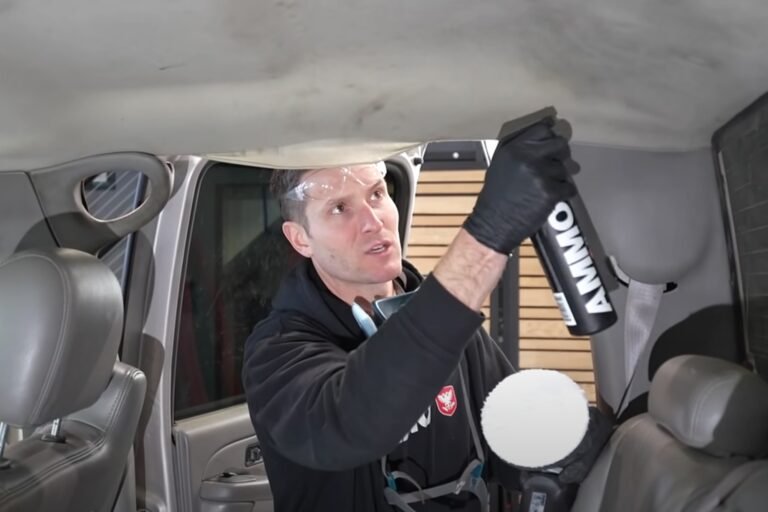
For Audi drivers in the United States, the safest way to clean a headliner is to vacuum it gently, spot-test a mild upholstery cleaner, and use as little moisture as possible. Never soak the fabric, scrub hard, or spray cleaner directly onto the roof.
Audi headliners use fabric bonded to a thin foam backing. Too much water, heat, or force can weaken the adhesive and cause sagging. This guide explains how to remove dust, stains, odors, and light marks while protecting the headliner, roof electronics, and trim.

What You Need Before cleaning an Audi Headliner
Gather the right tools before you start. A simple setup is safer than a large amount of water or strong chemicals.
You will need:
- A vacuum with a soft brush attachment
- Two or three clean, white microfiber cloths
- A soft interior brush
- A mild upholstery cleaner made for automotive fabric
- Distilled water
- A small spray bottle
- Cotton swabs for tight areas
- A dry towel
- A step stool for safe access, if needed
Use white cloths when possible. Colored towels can transfer dye, especially when damp.
Park the Audi in a shaded, dry place. The roof should be cool to the touch. Hot fabric dries too quickly and can leave rings or cleaner marks.
Keep the doors open while the headliner dries. Do not clean it in direct sun. If you live in a humid part of the United States, such as Florida or the Gulf Coast, allow more drying time.
Check the headliner material first
Most Audi models use a cloth or microfiber-style headliner. Some trims may have different fabric on the pillars, sunroof cover, or roof console.
Do not assume that every roof surface is the same. Check your Audi owner’s manual for interior-care instructions. If your vehicle has an Alcantara-style roof section, use only a cleaner approved for that material.

How to Clean an Audi Headliner Step by Step
The best method is to clean the Audi headliner in small areas. Start dry, then use controlled moisture only where it is needed.
1. Remove loose dust and dirt
Set the vacuum to a low or moderate setting. Attach the soft brush tool.
Hold the tool just above the fabric or move it with almost no pressure. Vacuum in straight, gentle passes. Do not press the nozzle into the headliner.
Pay attention to:
- Dust near the windshield
- Dirt around the door openings
- Hair and fibers near the sunroof
- Debris around the dome light
- Dust along the edges of the pillars
The goal is to lift loose dirt, not grind it into the fabric.
2. Test the cleaner in a hidden spot
Choose a hidden area, such as the rear edge of the headliner near the hatch or a covered section near the side trim.
Apply a small amount of cleaner to a cloth, not to the roof. Dab the test area gently. Wait until it dries.
Check for:
- Color change
- Water rings
- Fabric distortion
- Sticky residue
- Foam separation
- Excessive darkening
If the test area changes, stop using that product. A clean-looking spot is not useful if it damages the surrounding fabric.
3. Prepare a mild cleaning solution
Follow the cleaner’s label. If the product requires dilution, measure it as directed.
For a light cleaning, you can use a small amount of mild upholstery cleaner mixed according to the label. Distilled water can reduce mineral marks compared with hard tap water.
Do not create a strong homemade mixture. Avoid bleach, ammonia, alcohol, glass cleaner, and heavy degreasers. These products may affect the fabric, adhesive, or color.
4. Clean one small section at a time
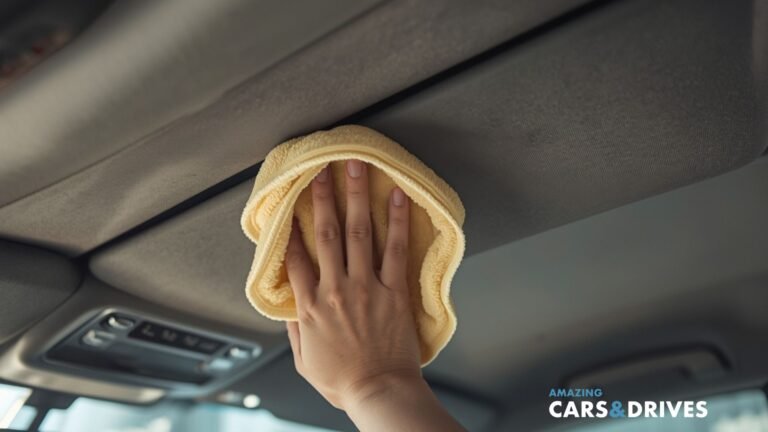
Lightly dampen a microfiber cloth. The cloth should feel moist, not wet.
Gently dab or wipe a section about 6 to 12 inches wide. Use short strokes and light pressure. Work from a clean area of the cloth as dirt transfers.
Do not rub in circles. Circular scrubbing can change the texture of the fabric and create a visible patch.
For a general clean, begin at the front and work toward the rear. This helps you see which areas still need attention.
5. Blot instead of soaking
After cleaning a section, press a dry microfiber cloth against it. Lift the cloth straight up rather than rubbing.
Blotting removes moisture and lifted dirt. It also limits the amount of liquid that reaches the foam backing.
If the headliner becomes visibly wet, stop. Open the doors and let the area dry before doing anything else.
6. Dry the roof naturally
Leave the Audi in a shaded, ventilated place. Keep the doors open if it is safe to do so.
Do not use:
- A heat gun
- A hair dryer on high heat
- A space heater
- Direct sunlight
- A steam cleaner
- Compressed air at close range
Heat can soften the adhesive. Strong air can lift the fabric edge or force moisture deeper into the headliner.
A headliner that feels cool or damp may need several hours to dry. Do not judge the final appearance until it is fully dry.
How to Remove Common Audi Headliner Stains
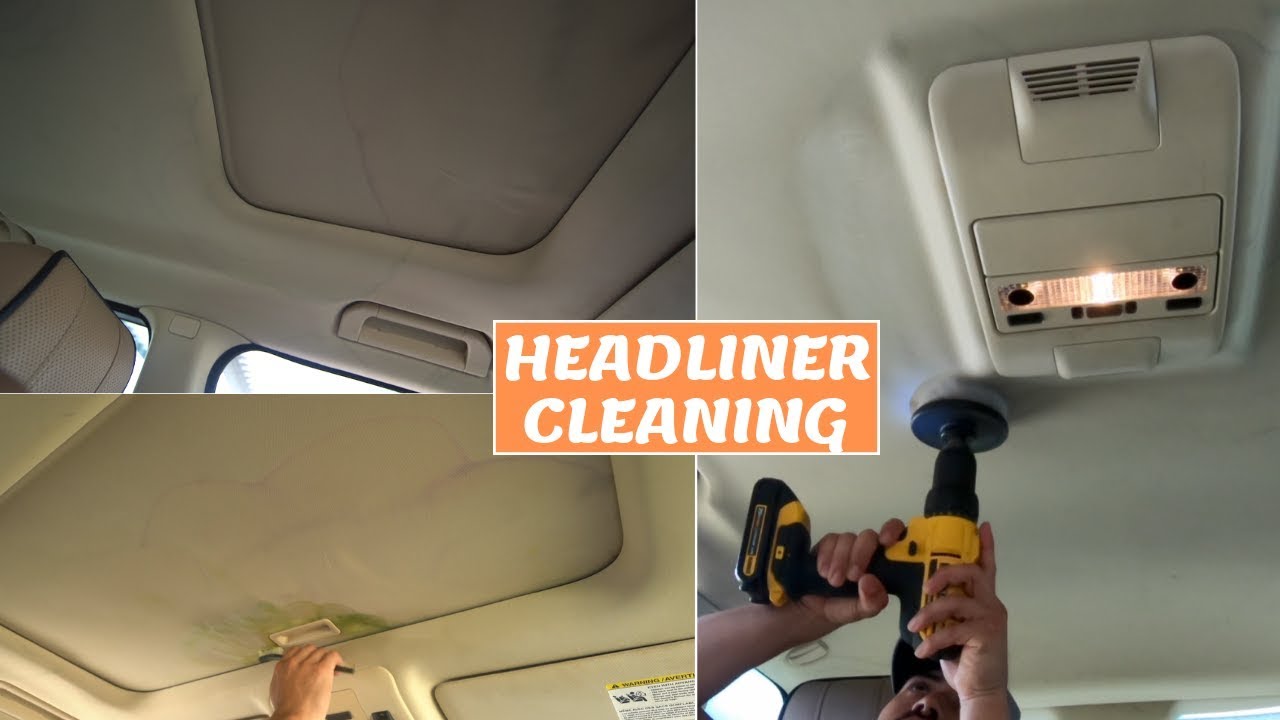
Different stains need different levels of care. Start with the least aggressive method.
| Stain or mark | Safer first step | Main risk |
|---|---|---|
| Dust | Soft vacuum brush | Pressing dirt into the fabric |
| Finger marks | Damp microfiber cloth | Creating a water ring |
| Food or drink | Blot, then use mild upholstery cleaner | Spreading the stain |
| Grease | Use a fabric-safe cleaner labeled for grease | Removing color |
| Smoke odor | Clean surface and air out vehicle | Odor remaining in foam |
| Water ring | Lightly even out the surrounding area | Making the ring larger |
| Mold or mildew | Professional inspection | Spores and hidden moisture |
Food and drink stains
Blot fresh spills as soon as possible. Use a dry cloth first. Do not wipe outward from the stain because this can spread it.
Once the liquid is absorbed, use a barely damp cloth with a small amount of fabric-safe cleaner. Dab from the outer edge toward the center.
Repeat only if the first pass does not work. Several light passes are safer than one wet pass.
Grease and oily marks
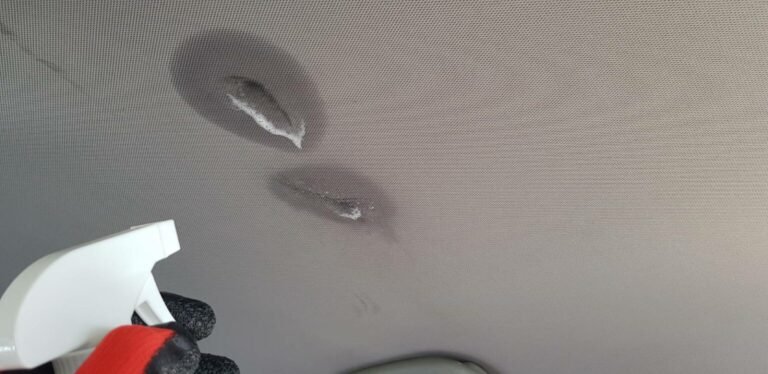
Oil from hands, hair products, or food can leave dark patches. Apply a small amount of suitable upholstery cleaner to a cloth.
Do not spray a degreaser on the headliner. Strong degreasers can leave pale spots, weaken the adhesive, or damage the foam.
If the mark remains after two careful passes, stop. Repeated scrubbing may make the repair more visible than the original stain.
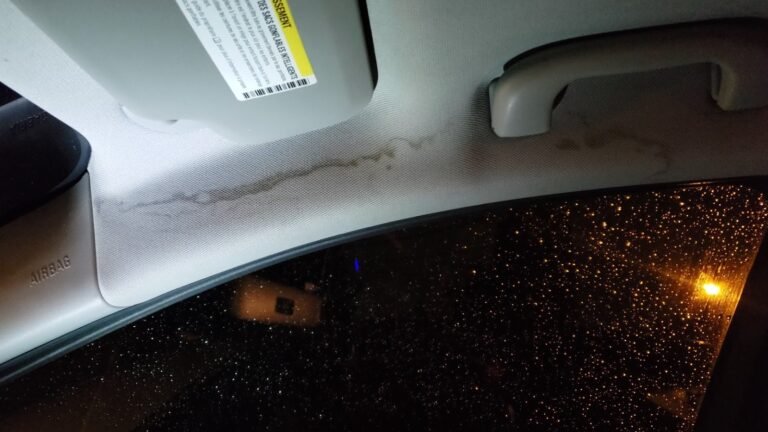
Water stains
Water rings often result from earlier cleaning. Treating only the dark center can create another ring.
Use a barely damp cloth to lightly blend the area around the mark. Work across a wider section with very little liquid, then blot it dry.
If the ring returns after drying, the fabric or foam may still contain moisture or residue. At that point, professional interior cleaning is safer.
Smoke odor
A headliner can hold smoke odor because its foam backing is porous. Surface cleaning may reduce the smell but may not remove it fully.
Clean the headliner, seats, carpets, and door panels as appropriate. Replace the cabin air filter if the vehicle has a persistent odor and the filter is due for service.
Do not mask smoke with heavy fragrance. Fragrance can add another residue without removing the source.
Areas That Need Extra Care in an Audi
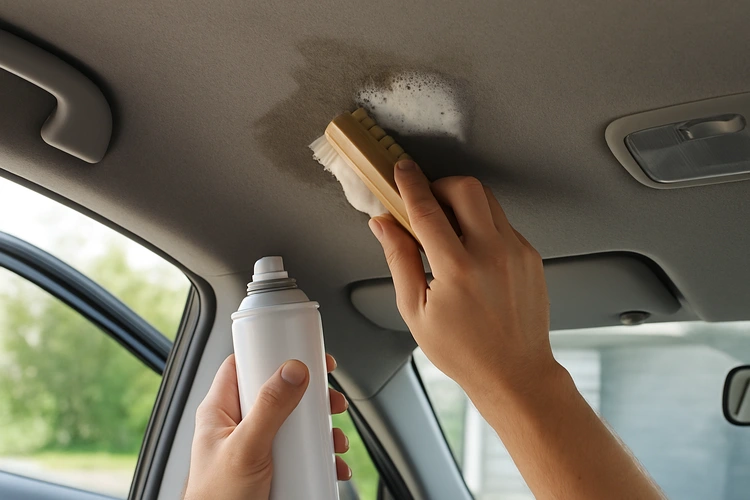
Audi headliners often sit close to electrical parts and delicate trim. Keep moisture away from these areas.
Avoid spraying near:
- Dome lights
- Reading lights
- Microphones
- Emergency-call or SOS modules
- Sunroof switches
- Garage-door controls
- Rear entertainment components
- Airbag trim and labels
- The edges of the windshield and sunroof
Use a nearly dry cotton swab around buttons and seams. Do not push liquid into gaps.
The roof-mounted microphone may be part of the hands-free phone system. A wet cloth or spray can enter the microphone opening and cause poor audio or failure.
Take care near curtain-airbag areas. Do not pull, pry, or remove trim unless you have the correct service information and tools. If the headliner must be removed, use a qualified Audi technician or experienced trim professional.

Mistakes That Can Damage an Audi Headliner
The most common mistake is using too much water. A headliner is not like a floor mat. Its fabric is bonded to a backing board, and that bond can fail.
Avoid these mistakes:
- Spraying cleaner directly onto the roof
- Saturating the fabric
- Using a carpet extractor
- Scrubbing with a stiff brush
- Using a magic eraser
- Applying bleach or ammonia
- Using household glass cleaner
- Using dish soap without proper dilution
- Applying steam
- Drying with high heat
- Pulling at loose fabric
- Cleaning without a hidden-area test
A carpet cleaner may work well on removable floor mats. It is usually too wet and aggressive for a roof-mounted headliner.
A magic eraser is also risky. It is an abrasive foam, not a normal sponge. It can change the fabric texture and leave a lighter patch.

What to Do if the Audi Headliner Is Sagging
Cleaning will not repair a sagging headliner. Sagging usually means the foam backing or adhesive has failed.
Signs of adhesive failure include:
- Fabric hanging away from the backing board
- Wrinkles that do not flatten
- A loose area around the sunroof
- Brown or crumbling foam
- A headliner that moves when touched
- Loose edges near the pillars
Do not glue the fabric while it is installed unless the repair product and method are specifically suited to headliners. Spray adhesive can stain the fabric, create hard spots, or interfere with trim and airbags.
A trim shop can remove the headliner board, replace the old foam, and install new headliner fabric. This is a repair job, not a cleaning job.

When to Hire a Professional
Professional cleaning is the safer choice when the headliner has widespread staining, mold, heavy smoke odor, or delicate specialty fabric.
Seek professional help if:
- The fabric is already loose
- The foam backing is visible
- Water has entered a roof console
- The vehicle has a strong mold smell
- A large area is stained
- A sunroof leak caused the damage
- You cannot identify the roof material
- The headliner is close to an airbag or electrical module
If a roof leak caused the stain, fix the leak before cleaning. Common sources can include sunroof drains, seals, windshield seals, or roof-mounted accessories. Cleaning without fixing the source will likely lead to another stain.
Ask the shop whether it will use low-moisture cleaning. Also ask how it will protect the roof electronics and prevent the headliner adhesive from becoming wet.

How Often Should You Clean an Audi Headliner?
Clean the Audi headliner only when it needs it. A light vacuum every few months can prevent dust buildup, but frequent wet cleaning is not necessary.
A practical schedule is:
- Vacuum lightly every three to six months
- Spot-clean spills as soon as possible
- Clean smoke or odor problems when found
- Inspect the roof after a leak or sunroof issue
- Avoid full wet cleaning unless the surface is visibly dirty
Vehicles used for rideshare work, family trips, smoking, pets, or dusty roads may need more frequent care. Even then, dry vacuuming should remain the first step.

Signs the Cleaning Worked
A successful cleaning should leave the headliner:
- Even in color
- Free of loose dirt
- Dry to the touch
- Free of sticky residue
- Firmly attached
- Without a strong chemical smell
Check the roof again after it dries. Some stains look gone while damp and return as the fabric dries.
If the area is clean but has a clear lighter patch, the issue may be fabric wear or color change rather than dirt. More cleaning will not restore worn fibers.
Frequently Asked Questions
Can I use a steam cleaner on an Audi headliner?
It is best to avoid steam cleaners. Steam adds heat and moisture near the adhesive, roof electronics, and trim. It may cause sagging or water marks. Use low-moisture spot cleaning instead.
Can I use diluted dish soap to clean the headliner?
Dish soap is not the first choice because it can leave residue and may be difficult to rinse from the fabric without over-wetting it. Use a mild automotive upholstery cleaner and follow its label.
How do I clean around the Audi sunroof?
Vacuum gently around the sunroof opening. Use a barely damp cloth on the fabric, but keep liquid away from the sunroof controls, seals, tracks, and roof console. Do not push dirt into the drainage channels.
Why did my headliner sag after cleaning?
Excess moisture may soften or weaken the adhesive that holds the fabric to the backing. Existing age, heat, and humidity can also contribute. Cleaning cannot restore failed adhesive; a headliner repair may be required.
Can I remove the Audi headliner myself?
Removal varies by Audi model and may involve roof electronics, trim clips, curtain-airbag areas, and the sunroof assembly. Use the correct service information for your exact year and model. If you are unsure, have a qualified technician remove it.
Conclusion
To clean an Audi headliner safely, start with a soft vacuum brush and use only a small amount of fabric-safe cleaner. Apply the cleaner to a cloth, not the roof. Work in small sections, blot often, and let the headliner dry naturally.
The key limit is moisture. If the fabric is sagging, the stain is widespread, or a roof leak caused the damage, stop cleaning and arrange a professional inspection.