Can A Jump Starter Charge A Car Battery: Easy Explained
Yes, a jump starter can start a car, but it usually cannot fully charge the battery.
Can a jump starter charge a car battery? The answer depends on what you mean by “charge.” A portable jump starter gives the battery a short burst of power so the engine can crank. It is not usually designed to replace a battery charger or restore a deeply drained battery.
Understanding this difference can save you time, money, and a great deal of frustration. This guide explains how jump starters work, when they help, why they may fail, and how to safely recharge your car battery after a jump.

Can a jump starter charge a car battery?
A jump starter can send power to a car battery, but most models do not charge it in the same way as a battery charger. Its main job is to provide high current for a few seconds. That current turns the starter motor and helps the engine run.
Once the engine starts, the alternator takes over. The alternator supplies electrical power to the vehicle and slowly restores some energy to the battery. This means the jump starter starts the charging process indirectly, but it does not normally perform a complete battery charge itself.
Can a jump starter charge a car battery fully? In most cases, no. A portable jump pack may provide enough energy to start the vehicle, but its internal battery is often too small to refill a weak car battery to 100 percent.
Think of a jump starter as a strong push. It gets the car moving, but it does not keep pushing for hours. A battery charger acts more like a steady water hose that fills the battery over time.

How a jump starter works
A jump starter contains its own rechargeable battery. Older models often used lead acid cells, while most newer portable units use lithium ion batteries. Both types can release a large amount of current in a short period.
When you connect the clamps, the jump starter supplies power to the vehicle’s starting system. The starter motor may need several hundred amps for a brief moment, especially in cold weather or with a large engine. The jump starter helps meet that demand when the car battery cannot.
The basic process is simple:
- Turn off the vehicle and all electrical accessories.
- Connect the red clamp to the positive battery terminal.
- Connect the black clamp to the negative terminal or a clean metal ground point.
- Turn on the jump starter if the instructions require it.
- Start the engine for only a few seconds.
- Disconnect the clamps in the order listed in the owner’s manual.
Many modern jump starters include safety features such as:
• Reverse polarity protection
• Short circuit protection
• Overload protection
• Overheat protection
• Low voltage alarms
These features reduce risk, but they do not remove the need for care. A damaged battery, loose connection, or incorrect clamp placement can still cause sparks or equipment damage.
Can a jump starter charge a car battery while connected? It may supply a small amount of power, but most units are not built to act as automatic battery chargers. Always check the product manual before leaving one connected.
Jump starter versus battery charger
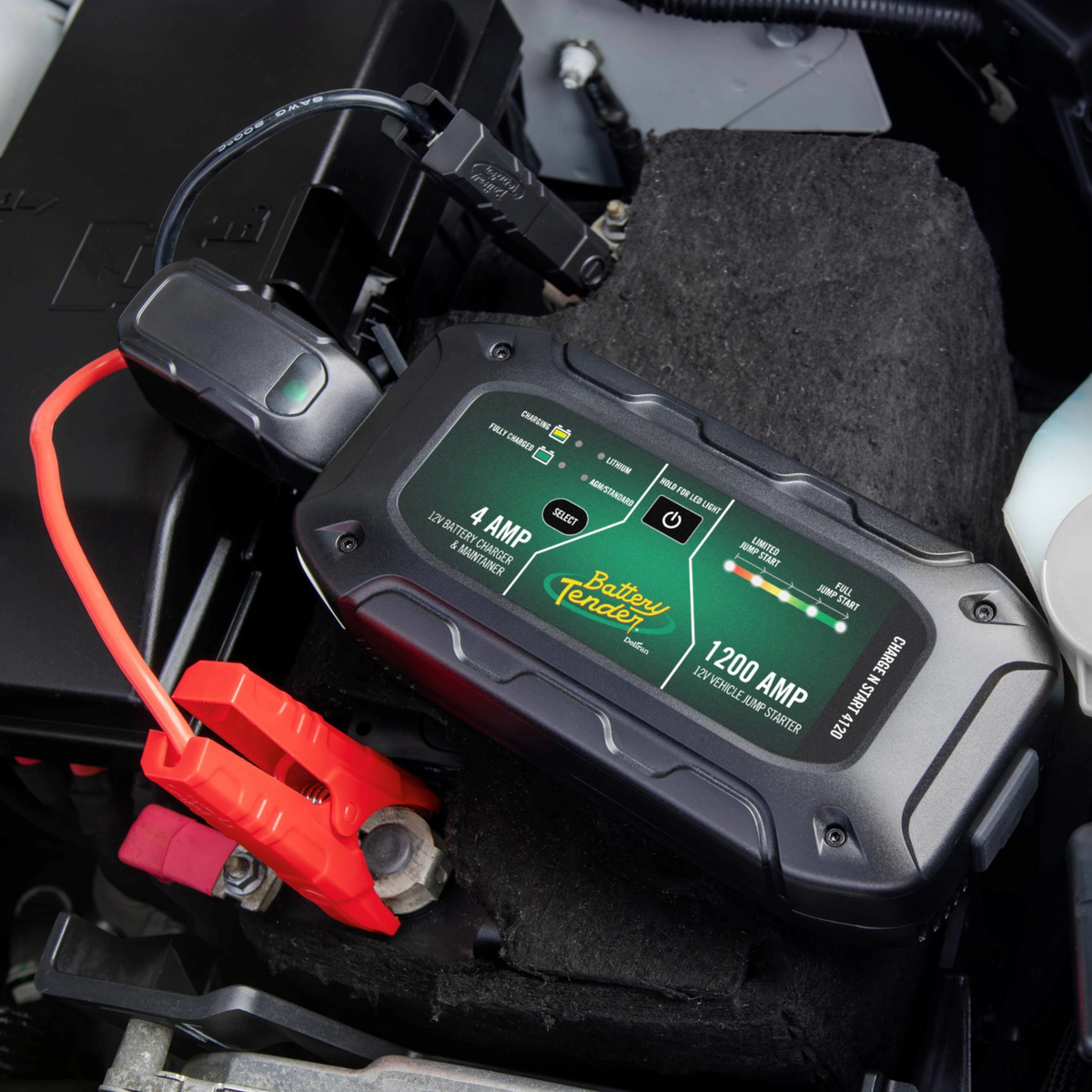
The biggest difference is the type of electrical output. A jump starter delivers high current for a short time. A battery charger delivers lower current for a longer period.
A jump starter is useful when:
• The battery has enough capacity to accept a jump.
• You need to start the car quickly.
• You are stranded away from a power outlet.
• The battery is weak because lights or accessories were left on.
A battery charger is better when:
• The battery is deeply discharged.
• You want to restore the battery to a full charge.
• The vehicle will sit for weeks or months.
• You need to maintain a battery during winter storage.
• You want to charge the battery slowly and safely overnight.
A typical portable jump starter may have a capacity measured in watt hours or milliamp hours. A car battery, however, stores much more energy. The jump starter also must reserve power for its main purpose, which is engine starting.
For example, a jump pack may start a vehicle several times but still lack enough stored energy to recharge a 60 amp hour car battery. Energy is also lost through cables, electrical resistance, and the vehicle’s charging system.
So, can a jump starter charge a car battery? It can transfer some energy, but it is not a practical full charger for most vehicles.

What happens after you use a jump starter?
After the engine starts, keep the vehicle running for a short period. However, idling alone may not restore much energy. The alternator often produces less useful charging power at idle than it does while driving.
A drive of about 20 to 30 minutes may help restore some charge, but the exact time depends on several factors:
• The battery’s age and condition
• The depth of discharge
• The alternator’s output
• The vehicle’s electrical load
• Driving speed and traffic
• Weather and temperature
Turn off unnecessary electrical loads during the drive. Heated seats, rear window defrosters, high fan speeds, and powerful audio systems all increase demand.
A longer drive does not guarantee a full recharge. If the battery was severely drained, the alternator may need many hours of driving to restore it. Some vehicles also use smart charging systems that reduce alternator output when the battery appears stable.
The best approach is to drive to a safe location, then test the battery. If the voltage or starting performance remains poor, use a proper charger or have the charging system checked.
Can a jump starter charge a car battery during a long drive? The alternator may recharge the battery during the drive, but the jump starter itself is no longer doing the work.
How to safely use a jump starter
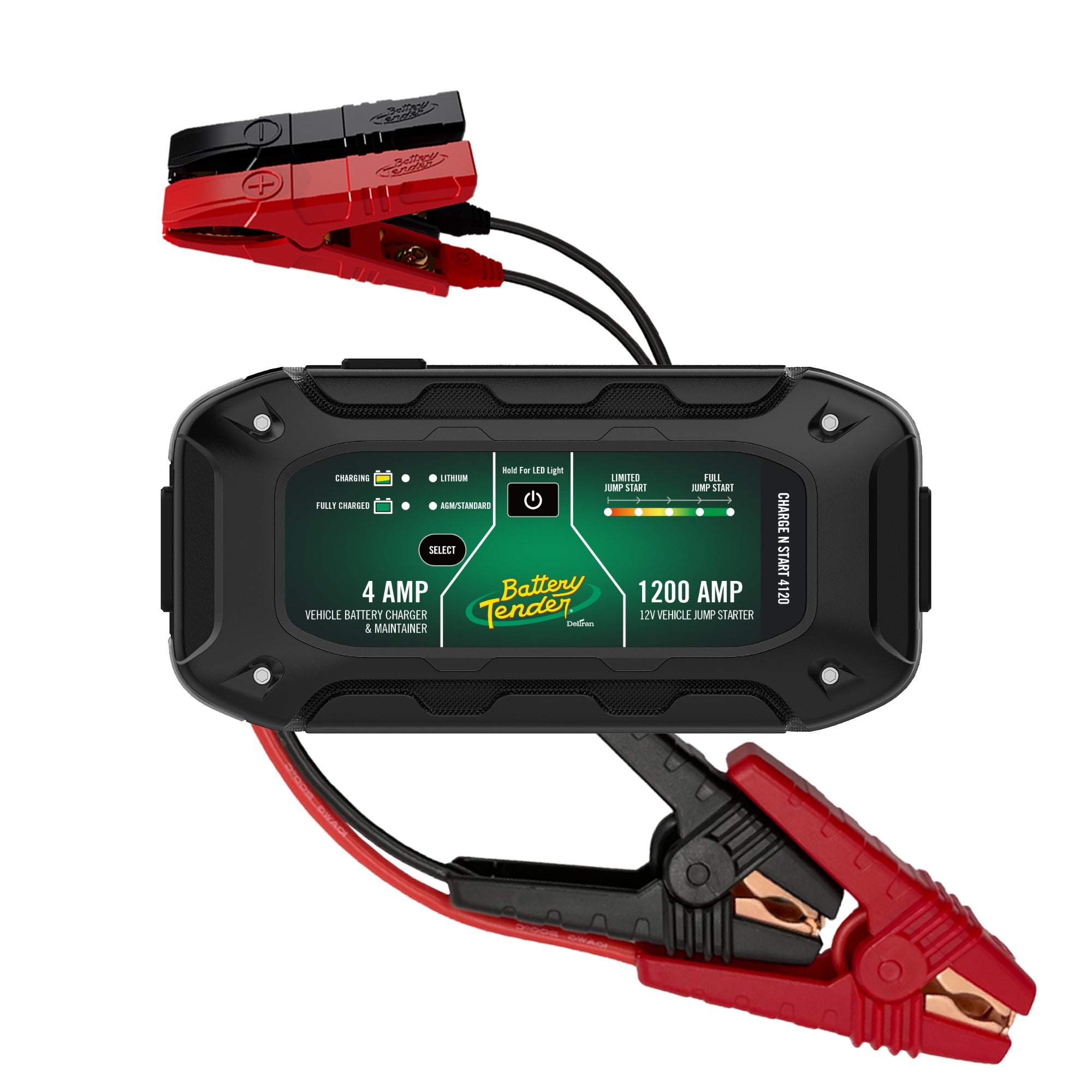
Correct connection matters. A mistake can damage the jump starter, the vehicle’s electronics, or the battery.
Follow these steps:
- Park both vehicles or position the jump pack safely. If using another vehicle, do not let the vehicles touch.
- Switch off the ignition, lights, radio, and climate controls.
- Check the battery for cracks, leaks, swelling, or freezing. Do not jump a damaged or frozen battery.
- Attach the red clamp to the positive terminal.
- Attach the black clamp to the negative terminal or a solid, unpainted metal ground point.
- Turn on the jump starter.
- Wait according to the manufacturer’s instructions.
- Crank the engine for no more than a few seconds at a time.
- Wait about 30 to 60 seconds before trying again.
- Remove the clamps carefully after the engine starts.
Never connect the red and black clamps directly to each other. Keep the jump starter away from moving belts, fans, and hot engine parts.
Many car batteries produce hydrogen gas while charging or starting. The gas can ignite from a spark. This is why clean connections and good ventilation matter, especially in a garage.
If the jump starter becomes hot, swells, smells unusual, or makes a loud buzzing sound, stop immediately. Move away from the vehicle and follow the product’s safety instructions.

Why a jump starter may not work
A jump starter does not fix every no start problem. Sometimes the battery is not the true cause.
Common reasons a jump starter fails include:
• The jump starter is not fully charged.
• The clamps are loose or connected to corrosion.
• The battery is completely damaged.
• The engine requires more current than the unit can provide.
• The vehicle has a faulty starter motor.
• The alternator has failed.
• The fuel system or ignition system has a fault.
• The jump starter is too small for the engine.
Cold weather also makes starting harder. Low temperatures reduce battery performance and make engine oil thicker. A small jump pack that works well in warm weather may struggle in freezing conditions.
Diesel engines often need more starting power than gasoline engines. Large trucks, vans, and vehicles with high compression may also require a stronger unit.
If the engine clicks once but does not turn, the starter or battery connection may be the problem. If the engine turns normally but does not start, the issue may involve fuel, spark, air, or engine control systems.
Can a jump starter charge a car battery that will not hold power? No. If the battery has an internal failure, charging or jumping may only provide a short-term result.
Signs your car battery needs a real recharge
A jump start may get you home, but it does not tell you whether the battery is healthy. Watch for these signs:
• The engine cranks slowly.
• The headlights look dim at idle.
• The battery warning light stays on.
• The vehicle needs repeated jump starts.
• Electrical accessories behave strangely.
• The battery case is swollen or cracked.
• The battery is more than three to five years old.
A digital multimeter can provide a useful first check. With the engine off and the vehicle rested for several hours, a healthy, fully charged 12 volt battery often measures near 12.6 volts. A reading near 12.2 volts suggests partial discharge, while a reading near 12.0 volts indicates a very low state of charge.
Voltage alone does not prove battery health. A weak battery may show normal voltage but fail under load. A professional battery test measures how well the battery can deliver current during starting.
If the battery repeatedly loses charge, test the alternator as well. With the engine running, many charging systems measure roughly 13.7 to 14.7 volts, but modern vehicles can vary. Always compare the reading with the vehicle’s service specifications.

Can a jump starter damage a car battery?
A good jump starter used correctly should not damage a healthy car battery. The main risks come from incorrect use, poor equipment, or a battery with an existing fault.
Possible problems include:
• Reverse polarity connection
• Short circuits
• Excessive cranking
• Using a damaged jump pack
• Connecting to the wrong battery terminals
• Jump starting a frozen battery
• Repeatedly forcing a failed battery to start
Do not keep cranking again and again. Each attempt creates heat in the starter motor, cables, and jump starter. If the engine does not start after two or three careful attempts, stop and find the cause.
A jump starter can also expose a weak battery. The engine may start, but the battery may fail again soon after. That does not necessarily mean the jump starter caused the problem.
Can a jump starter charge a car battery without causing harm? It can safely provide starting assistance when the equipment matches the vehicle and the instructions are followed. It should not be treated as a substitute for controlled charging.
Choosing the right jump starter
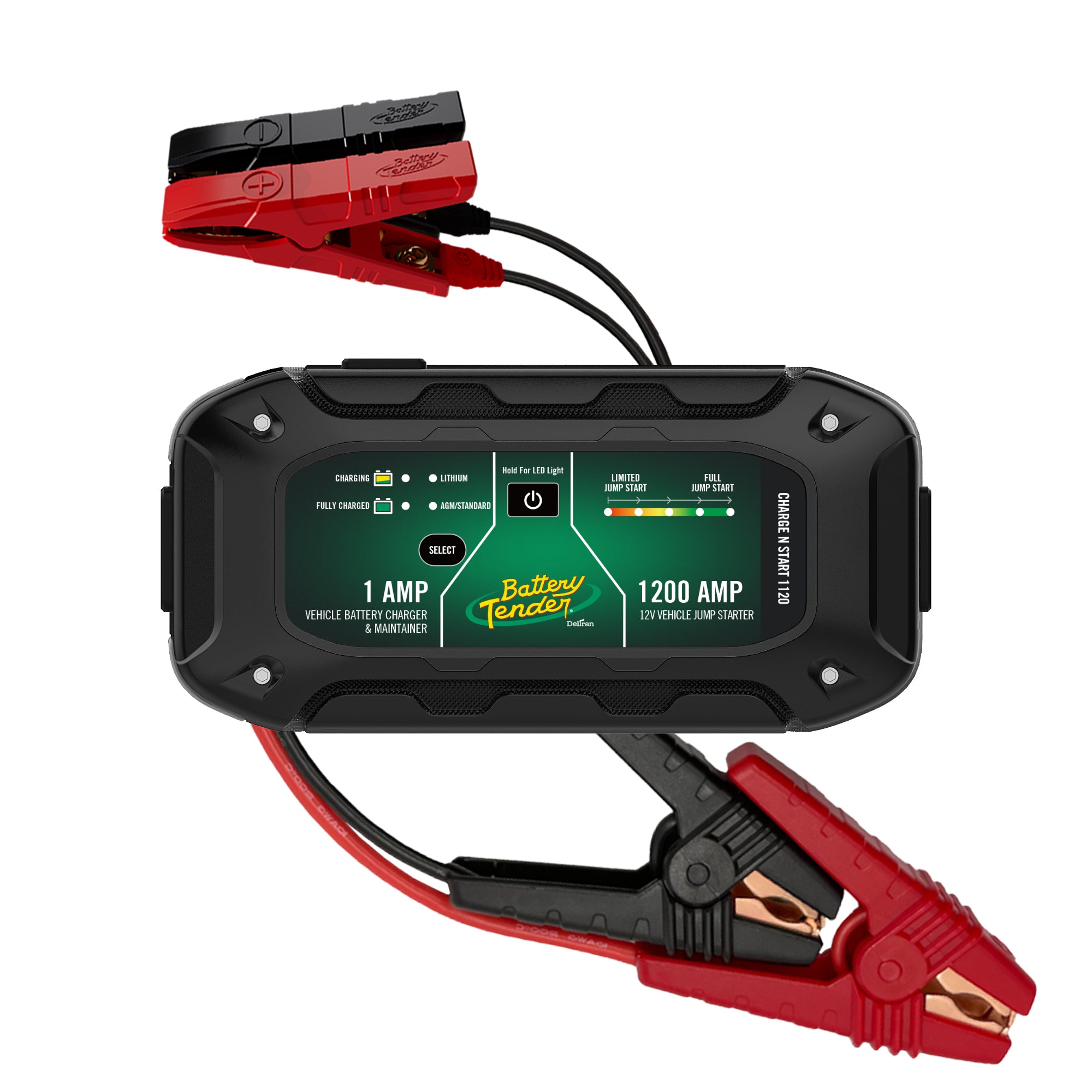
Select a jump starter based on the vehicle, climate, and use case. Peak amps can look impressive on packaging, but they are not the only factor that matters. Starting amps, battery capacity, cable quality, and safety systems are also important.
Consider these features:
• A 12 volt output for standard cars and light trucks
• Enough starting current for the engine size
• A capacity suitable for repeated starts
• Reverse polarity and short circuit protection
• Strong, flexible cables
• Clear status lights or a digital display
• A built in flashlight for roadside use
• USB ports for phones and other devices
• A durable case
Diesel owners and drivers in cold climates should choose a model with extra starting capacity. Check the manufacturer’s vehicle recommendations rather than relying only on a large peak amp number.
Keep the jump starter charged. Many lithium models lose power slowly during storage, but they still need regular checks. Inspect the cables and case before use, and store the unit away from extreme heat.
In practical roadside situations, the most common mistake is not choosing too small a jump starter. It is storing a suitable jump pack for months and discovering that it is empty when needed.
A practical example
Imagine that you leave your interior lights on overnight. In the morning, the starter clicks, but the engine does not turn. The battery may be low but still usable.
In this case, a jump starter can provide the extra current needed to start the engine. Afterward, drive to a safe place and use a battery charger if possible. If the car starts normally the next morning, the battery may be fine.
Now consider a different case. The battery is six years old, the case is swollen, and the vehicle has needed three jump starts this month. Can a jump starter charge a car battery in this condition? It may start the car once, but the battery likely needs replacement, not another jump.
A third case involves an alternator problem. The car starts with a jump pack but stalls during the drive, and the battery warning light remains on. The alternator may not be replenishing the battery. Driving farther could leave you stranded again.
These examples show why a jump start is a temporary solution. It helps you move the vehicle, but it does not diagnose the electrical system.
Best way to recharge a car battery
For a reliable recharge, use a compatible automotive battery charger. A smart charger is usually the safest choice because it adjusts the charging rate and reduces current as the battery approaches full charge.
Before charging:
• Confirm the battery type, such as flooded lead acid, AGM, or gel.
• Read the charger instructions.
• Inspect the battery for damage.
• Work in a ventilated area.
• Keep sparks and flames away.
• Connect the charger with the power switched off.
A slow charge is often better than a rapid charge for a weak battery. A low amp setting reduces heat and gives the battery more time to accept energy. Charging may take several hours or overnight, depending on battery size and condition.
Some vehicles have battery monitoring systems or batteries located in unusual places. In those cases, use the recommended charging points in the owner’s manual.
If the charger shows a fault or the battery becomes hot, stop charging. A professional technician can test whether the battery can safely hold a charge.
Common mistakes to avoid
Avoid these errors when using a jump starter:
• Assuming every no start problem is a dead battery
• Using a jump pack without checking its charge level
• Connecting clamps backward
• Cranking for too long
• Leaving high power accessories switched on
• Trying to jump a swollen or frozen battery
• Buying a unit that cannot support the engine size
• Treating repeated jump starts as a permanent repair
• Ignoring a battery warning light
• Failing to recharge the jump starter after use
A careful approach is faster than repeated trial and error. Take a moment to inspect the battery, read the labels, and check the connections. That small pause can prevent an expensive mistake.
Frequently Asked Questions
Can a jump starter fully charge a dead car battery?
Most jump starters cannot fully charge a dead car battery. They provide a short burst of power for starting, while a battery charger supplies controlled current for a much longer period.
How long should I drive after using a jump starter?
A drive of 20 to 30 minutes may restore some charge, but it may not fully recharge a deeply drained battery. Use a smart charger when you need a complete and dependable recharge.
Can a jump starter work if the battery is completely dead?
It may work if the battery is discharged but still functional. If the battery has an internal short, damaged plates, severe corrosion, or physical swelling, a jump starter may not help.
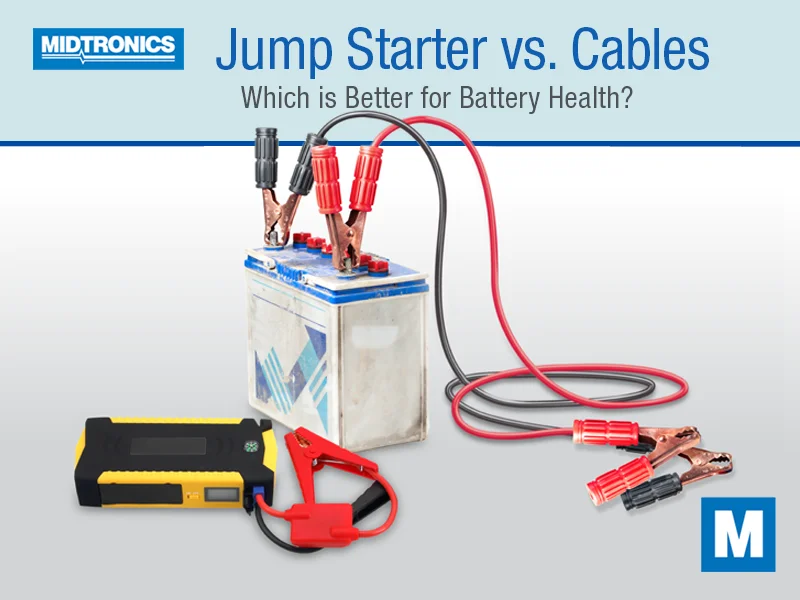
Is it better to use a jump starter or jumper cables?
A jump starter is convenient because it does not require another vehicle. Jumper cables can work well when used correctly, but both methods only provide starting assistance and do not replace a proper battery charger.
Can a jump starter damage my vehicle?
A suitable jump starter should not damage the vehicle when connected correctly. Reverse polarity, short circuits, excessive cranking, and damaged equipment can create serious risks.
Does running the car recharge the battery?
The alternator recharges the battery while the engine runs, but the rate depends on the vehicle and battery condition. Idling may provide limited charging, and a severely drained battery may need a dedicated charger.
How often should I charge a portable jump starter?
Check it at least once every few months and recharge it after every use. Follow the manufacturer’s storage guidance, especially for lithium models exposed to heat or cold.
Conclusion
A jump starter is an emergency tool, not a full battery charger. It can deliver the power needed to start an engine, but the alternator or a dedicated charger must restore the battery afterward.
Can a jump starter charge a car battery? It can add a limited amount of energy, but it usually cannot replace the steady, controlled charging provided by a smart battery charger. Use the jump starter to reach safety, then test the battery and charging system.
Keep your jump starter charged, choose one rated for your vehicle, and learn the correct connection steps before an emergency happens. If this guide helped, explore more vehicle maintenance resources or share your own jump starter experience in the comments.