Is There A Dry Cleaner For Water Stained Auto Headliner: Fix
Yes, but a normal clothing dry cleaner is usually not the best choice for a water-stained auto headliner. In the United States, look first for an automotive upholstery cleaner, auto interior detailer, mobile auto detailer, or headliner repair shop.
A headliner is the fabric-covered panel attached to the vehicle’s roof. It often contains foam, cardboard, fiberglass, or a thin molded board. Too much water, heat, or scrubbing can loosen the fabric or make the panel sag.
The safest plan is to:
- Find and fix the leak.
- Let the headliner dry.
- Have an automotive interior professional inspect it.
- Clean, repair, or replace the headliner based on the damage.
Can a Dry Cleaner Clean a Water-Stained Car Headliner?
A traditional dry cleaner may clean fabric clothing, but most do not have the tools or training to remove stains from a vehicle headliner. Auto headliners are bonded to a backing board with adhesive. They are not designed to be soaked, pressed, or placed in commercial cleaning equipment.
Some dry cleaners may accept removable automotive fabric pieces. However, a headliner installed in a vehicle should normally stay in the vehicle until an automotive specialist decides whether it must be removed.
The better search terms are:
- Automotive upholstery cleaning
- Auto interior detailing
- Car headliner cleaning
- Headliner repair
- Mobile auto detailing
- Vehicle water damage restoration
- Automotive trim and upholstery shop
A professional who works on auto interiors can assess both the stain and the material below it. That matters because a clean-looking surface may still hide wet foam, weakened adhesive, mildew, or rust near the roof.
What type of professional should you call?
| Problem | Best first contact |
|---|---|
| Small, fresh water mark | Automotive interior detailer |
| Large stain or damp roof lining | Auto upholstery or water-damage specialist |
| Sagging fabric | Headliner repair shop or automotive upholstery shop |
| Torn, detached, or brittle fabric | Headliner repair or replacement shop |
| Leak from a sunroof or windshield | Glass, sunroof, or body repair shop |
| Possible mold or long-term dampness | Water-damage restoration professional |
A professional detailer may be able to clean a minor stain. A repair shop is more appropriate when the fabric has detached or the backing has softened.
Why Water Stains Appear on an Auto Headliner
Water stains usually come from a leak above the headliner, not from a cleaning problem. Common sources include the sunroof drain system, windshield seal, roof seam, door weatherstrip, roof rack mount, antenna base, or a clogged drain channel.
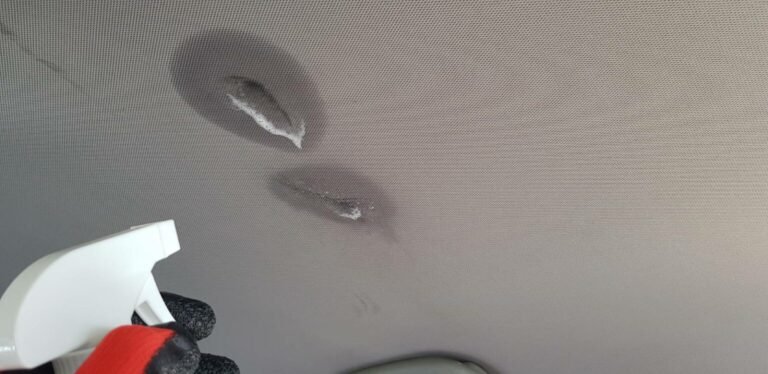
A yellow, brown, or gray ring often forms as water dries. The ring may contain dirt, adhesive residue, rust particles, or material pulled from the roof liner. Repeated wetting can also break down the foam and glue.
The stain’s location can offer a clue:
- Near the front windshield: possible windshield seal or roof seam leak
- Near the sunroof: clogged or disconnected sunroof drain
- Near a grab handle or side pillar: roof seam, door seal, or side leak
- Near the rear roof: antenna, hatch seal, rear glass, or roof rack issue
- Across a broad area: prolonged water entry or saturated insulation
Location alone cannot prove the source. Water can travel along the roof before it becomes visible. A shop may need to perform a controlled water test.
Why fixing the leak comes first
Cleaning a stain before stopping the leak often produces a short-term result. The mark can return after the next storm or car wash. Continued moisture can also create odors and weaken the adhesive that holds the headliner fabric in place.
The U.S. Environmental Protection Agency advises controlling moisture and drying wet materials promptly to reduce mold risk. That general moisture guidance applies to vehicle interiors as well as other enclosed spaces, although the best repair method depends on the vehicle and material.
Can You Clean a Water-Stained Headliner at Home?
You can try a careful spot clean when the stain is small, the headliner is firmly attached, and the area is fully dry. Use as little moisture as possible. A headliner should be dampened, not soaked.
Supplies
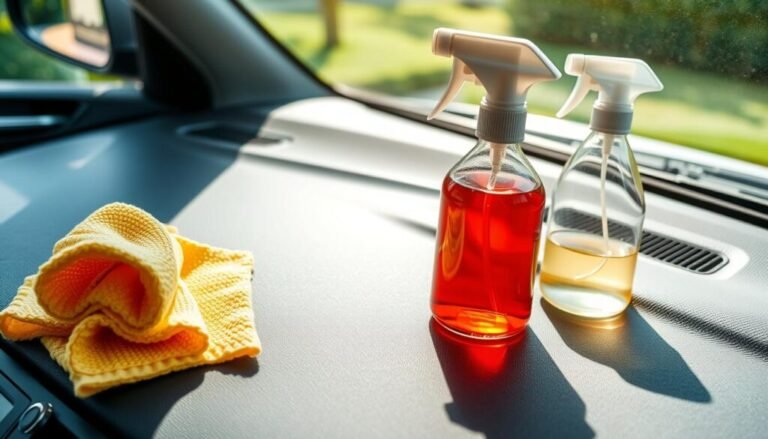
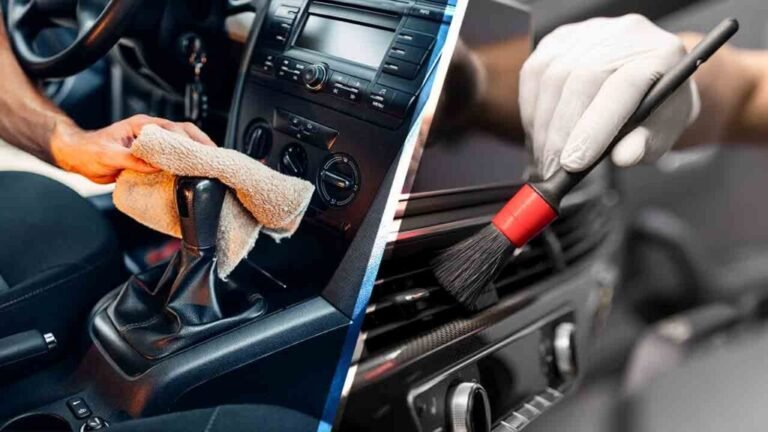
- Clean microfiber cloths
- A soft interior brush
- A small amount of mild automotive fabric cleaner
- Distilled water
- A vacuum with a soft brush attachment
- Gloves and eye protection
- A fan for gentle air movement
Always test the cleaner in a hidden area first. Check the vehicle owner’s manual for warnings about interior materials, airbags, and trim removal.
Step-by-step cleaning method
- Find the leak. Check the roof, sunroof, glass seals, roof rack, antenna, and door seals. Do not clean until active water entry has stopped.
- Dry the area. Park the vehicle in a dry place. Open the doors if weather and security allow. Use a fan, but do not use high heat.
- Vacuum lightly. Use a soft brush attachment to remove loose dust. Do not press hard against the fabric.
- Test a hidden spot. Apply a small amount of cleaner to an unseen edge. Wait for it to dry and check for color change, rings, or adhesive failure.
- Apply cleaner to the cloth. Do not spray a large amount directly onto the headliner. Overspray can soak the backing.
- Blot the stain. Work from the outside toward the center to reduce a spreading ring.
- Use light strokes. Avoid aggressive rubbing. Friction can roughen the fabric or separate it from the backing.
- Blot with a clean, damp cloth. Remove cleaner residue without saturating the panel.
- Dry the headliner fully. Keep air moving through the vehicle until the area feels dry and no musty odor remains.
- Inspect after drying. Look for a returning stain, loose fabric, odor, or sagging.
Stop if the fabric begins to bubble, wrinkle, sag, or pull away from the backing. Further cleaning may turn a minor stain into a headliner replacement job.
What should you not use?
Avoid:
- A steam cleaner
- A carpet extractor
- A garden hose
- A pressure washer
- Bleach
- Strong solvents
- Household glass cleaner
- Heavy scrubbing
- A heat gun or hair dryer on high heat
- Large amounts of water
Heat and moisture can soften the adhesive. Strong chemicals can bleach the fabric or damage foam. Water near the roof can also move toward electrical parts, wiring, or side-curtain airbag areas.
When Should You Hire a Professional?
Hire an automotive interior professional when the stain is large, old, repeated, or associated with odor or sagging. Professional help is also wise if you do not know where the water came from.
A shop may remove part or all of the headliner. It may then clean the fabric, replace the foam, repair the backing, or install a new headliner. The correct choice depends on the condition of the material.
Signs that cleaning may be enough
Cleaning may be reasonable when:
- The stain is small.
- The fabric is still tight.
- There is no musty odor.
- The roof is no longer leaking.
- The foam or backing is not visible.
- The fabric does not ripple when lightly touched.
- The stain appeared recently.
Signs that repair or replacement is better
Ask for a repair estimate when:
- The headliner sags.
- Fabric is bubbling or peeling.
- The stain keeps returning.
- The panel feels soft or swollen.
- The vehicle has a strong musty odor.
- Mold-like growth is visible.
- The water sat for an extended period.
- The headliner has water damage near an airbag pillar.
- The backing board is cracked or warped.
A cleaner can remove a mark without restoring the headliner’s structure. If the adhesive has failed, surface cleaning will not solve the problem.
How Much Does Auto Headliner Cleaning or Replacement Cost?
Prices vary by vehicle, location, material, access, and the cause of the leak. A small spot-cleaning visit is usually less costly than removing and replacing a full headliner. Leak diagnosis and repair may be separate charges.
Before approving work, ask the shop for a written estimate that separates:
- Leak inspection
- Leak repair
- Headliner removal
- Cleaning
- Mold or odor treatment
- Foam or fabric repair
- Full replacement
- Reinstallation
- Any trim clips or damaged hardware
A low cleaning price may not include the leak repair. A replacement quote may not include the cost of removing water-damaged insulation or repairing the roof opening.
Cost decision guide
| Condition | Likely service |
|---|---|
| Small stain with sound fabric | Spot cleaning |
| Large but stable stain | Full interior or headliner cleaning |
| Loose fabric in one area | Partial headliner repair |
| Broad sagging or failed adhesive | Headliner replacement |
| Repeated water damage | Leak repair plus cleaning or replacement |
| Odor and suspected microbial growth | Moisture assessment and restoration |
Do not choose a shop only because it advertises “dry cleaning.” Ask whether the business has worked on your vehicle type and whether it can repair or replace headliner material if cleaning fails.
How to Find a Headliner Cleaner Near You
Search for an automotive specialist rather than a general dry cleaner. Use the vehicle’s city or ZIP code with terms such as:
- “auto headliner cleaning near me”
- “water stain car ceiling repair”
- “automotive upholstery headliner repair”
- “car roof liner cleaning”
- “mobile auto interior detailing”
- “headliner replacement near me”
When you call, describe the issue clearly:
“I have a water stain on the vehicle headliner. The leak has [been fixed/not been fixed]. The fabric is [firm/sagging], and there is [no odor/a musty odor]. Can you inspect it and tell me whether it needs cleaning, repair, or replacement?”
Ask these questions:
- Do you clean installed headliners?
- Do you repair sagging or detached fabric?
- Can you diagnose the water source?
- What products and methods do you use?
- How do you protect side-curtain airbag areas?
- Will you inspect for odor or trapped moisture?
- Is the estimate for cleaning only, or does it include removal and reinstallation?
- What happens if the stain returns after the leak is repaired?
Look for clear answers, relevant vehicle-interior experience, and a written estimate. Be cautious if a provider recommends soaking the entire roof liner without first checking the leak or adhesive condition.
Water Stain, Mold, or Mildew: What Is the Difference?
A water stain is a visible mark left after moisture dries. Mold or mildew involves biological growth that may produce spots, odor, or surface fuzz. A dark mark is not automatically mold, and a clean-looking headliner is not proof that no moisture remains.
If the vehicle has a musty smell, visible growth, or repeated dampness, do not simply cover the odor with an air freshener. Identify the moisture source and dry the affected materials. Porous materials may be difficult to clean fully once they are contaminated or remain wet.
For extensive contamination, professional restoration may be safer than home cleaning. People with asthma, allergies, immune conditions, or strong reactions to mold should avoid disturbing suspected growth and seek appropriate professional advice.
Do not mix cleaning chemicals. Never combine bleach with ammonia or other household cleaners. Use ventilation and follow the product label.
Important Safety Issues Around a Vehicle Headliner
Headliners can sit close to side-curtain airbags, roof wiring, microphones, lights, and sensors. Removing trim or pulling down the panel can interfere with these systems. Some repairs require vehicle-specific procedures.
Do not insert tools into an airbag cover. Do not remove a roof trim panel unless you understand the vehicle’s service procedure. If water reached an airbag module, wiring connector, dome light, or electronic component, have the vehicle inspected by a qualified technician.
Use extra care when:
- The vehicle has side-curtain airbags.
- The leak is near an A-pillar, B-pillar, or C-pillar.
- The dome light stopped working.
- The vehicle has a sunroof or panoramic roof.
- Water reached the overhead console.
- The vehicle shows warning lights.
- The headliner is falling near an airbag area.
A detailer may clean the fabric, but a mechanic, glass technician, body shop, or dealer may need to repair the leak or inspect affected systems.
Common Mistakes to Avoid
The most common mistake is treating the visible stain while ignoring the water source. Other mistakes can cause permanent damage.
Mistake 1: Saturating the headliner
Too much liquid can soak the foam and loosen the adhesive. It can also leave a larger tide mark than the original stain.
Mistake 2: Scrubbing hard
Headliner fabric is often thin and delicate. Hard brushing can create a bald patch, fuzz, or a visible texture change.
Mistake 3: Using high heat
High heat can warp the backing or soften the glue. Gentle airflow is safer than a heat gun.
Mistake 4: Cleaning before taking photos
Photograph the stain, leak source, and interior condition before cleaning. Photos can help with an insurance claim or a repair estimate.
Mistake 5: Assuming a dry surface is a dry interior
The fabric may feel dry while insulation or foam below it remains damp. A musty odor or returning stain suggests that the problem is not fully resolved.
Mistake 6: Hiring a clothing dry cleaner without asking about vehicles
A clothing cleaner may have no way to protect the vehicle’s electronics, trim, airbags, or bonded headliner structure.
Insurance and Warranty Considerations
Water damage may be covered under an auto insurance policy in some situations, but coverage depends on the policy, cause, deductible, and facts of the loss. Comprehensive coverage often handles certain non-collision events, but policies differ. A gradual leak, maintenance issue, flood, or storm event may be treated differently.
Before authorizing major work:
- Photograph the damage.
- Record when you noticed it.
- Save repair estimates.
- Identify the likely water source.
- Review the policy or contact the insurer.
- Ask whether an adjuster must inspect the vehicle first.
A vehicle warranty may cover a defect in a seal or part only under specific terms. A dealer or manufacturer service center can tell you whether a known service issue applies to your vehicle, but coverage is not automatic.
Quick Decision: Clean, Repair, or Replace?
Use this short guide:
- Clean: The stain is small, the fabric is tight, and there is no odor.
- Repair: The fabric is loose in one area, but the backing is still sound.
- Replace: The panel sags broadly, the backing is damaged, or the adhesive has failed.
- Restore first: There is mold-like growth, strong odor, trapped moisture, or repeated leaking.
- Repair the vehicle first: Water still enters through the roof, glass, sunroof, antenna, or door seal.
The best provider is usually not a standard dry cleaner. It is an automotive interior shop that can explain the condition of the headliner and address the leak that caused the stain.
Frequently Asked Questions
Can a mobile detailer remove a water stain from a car headliner?
Often, a mobile detailer can treat a small surface stain. Confirm that the detailer has experience with headliners and uses low-moisture methods. A mobile visit may not be enough if the panel is sagging, the leak is active, or moisture is trapped behind the fabric.
Will vinegar remove a water stain from an auto headliner?
Vinegar may change the odor or appearance of some stains, but it is not a universal headliner cleaner. It can also leave residue or affect some materials. Use a product approved for automotive fabric, test it in a hidden area, and apply very little moisture.
Can a car wash clean the headliner?
Most automatic car washes are not equipped to clean or repair a headliner. Some full-service detail centers may offer interior cleaning, but ask specifically about water-stained roof liners before booking.
How do I stop a water stain from coming back?
Repair the leak before cleaning. Inspect the sunroof drains, windshield or rear glass seal, roof seams, roof rack mounts, antenna, and door weatherstrips. If the mark returns after a proper repair, moisture may still be trapped inside the headliner or insulation.
Is a sagging headliner safe to drive with?
A small loose area may not create an immediate driving problem, but a falling headliner can block visibility and interfere with trim or airbag areas. Have it repaired promptly, especially if it is near an A-pillar, B-pillar, C-pillar, or side-curtain airbag.
Conclusion
There is a service for a water-stained auto headliner, but it is usually called automotive upholstery cleaning, auto interior detailing, headliner repair, or headliner replacement, not traditional dry cleaning.
For a small, dry stain, careful low-moisture spot cleaning may work. For sagging fabric, repeated stains, musty odors, mold-like growth, or an unknown leak, contact an automotive interior professional. Fix the water source first, avoid soaking or heating the headliner, and ask for an estimate that separates cleaning from repair and leak correction.
Your next step is to photograph the damage, check whether the headliner is still tight and dry, and call an automotive upholstery or interior-detailing shop for an inspection.