How To Clean Saab Headliner: Easy Cleaning Guide
A Saab headliner can collect dust, smoke residue, skin oils, and water marks over time. The safest way to clean it is to use very little moisture, light pressure, and a mild fabric cleaner. Do not soak the roof panel. Too much water or scrubbing can loosen the foam backing and cause the fabric to sag.
This guide applies to Saab cars sold in the United States, including models such as the 9-3, 9-5, 900, and 9000. Interior materials and roof-mounted equipment vary by model year, so check the owner’s manual before removing trim, lights, handles, or sensors.

What You Need to Clean a Saab Headliner
Gather the right tools before you start. A short, controlled cleaning is safer than repeated passes with a wet cloth.
You will need:
- A vacuum with a soft brush attachment
- Two or three clean microfiber towels
- A soft interior brush or clean upholstery brush
- Mild automotive fabric or upholstery cleaner
- Distilled water
- A spray bottle
- Cotton swabs for small areas
- Painter’s tape
- A small bowl
- Nitrile gloves
- A clean, dry towel
Use a cleaner labeled for automotive fabric or upholstery. Avoid bleach, ammonia, strong solvents, household degreasers, and products that leave a greasy film. These products can change the color, weaken the adhesive, or leave a visible ring.
Before cleaning, park the Saab in a dry, shaded place. Open the doors or windows if weather allows. Good airflow helps the headliner dry faster.
Check the headliner before applying cleaner
Look closely at the fabric and its edges. Press very gently with one finger in an unseen area.
Stop and reconsider the cleaning method if you see:
- Sagging fabric
- Loose edges
- Exposed yellow or orange foam
- Cracks in the fabric
- Water damage
- A headliner that moves when touched
- Stains caused by a roof leak
A loose Saab headliner usually has an adhesive or foam failure. Cleaning will not repair it. In fact, moisture may make the sag worse.

How to Clean a Saab Headliner Step by Step
Clean the Saab headliner from the cleanest areas to the dirtiest areas. This reduces the chance of spreading grime across the roof.
1. Remove loose dust
Set the vacuum to low or medium power. Use the soft brush attachment and hold it just above the fabric or barely touch it.
Move in straight, light passes. Do not press the vacuum nozzle hard against the headliner. Strong suction can pull at weak fabric or lift an already loose section.
Vacuum around:
- Sun visors
- Dome lights
- Grab handles
- The edge near the windshield
- The rear roof edge
- The area around the sunroof, if equipped
If you do not have a soft brush attachment, use a clean microfiber towel. Wipe gently in one direction rather than rubbing in circles.
2. Test the cleaner
Mix a small amount of the automotive fabric cleaner according to its label. If the product does not provide clear directions, use a very small amount on a damp microfiber towel.
Test it in a hidden area, such as behind a sun visor or near the rear edge. Wait until the spot dries.
Check for:
- Color change
- Fabric bleeding
– A hard or shiny patch - A water ring
- Loose fabric
- A strong lingering smell
Do not continue if the test area changes. A Saab headliner may use fabric that reacts differently from seats or door panels.
3. Apply cleaner to the towel, not the roof
Lightly dampen a microfiber towel. The towel should feel moist but should not drip.
Never spray cleaner directly onto the headliner. Direct spraying can send liquid into:
- The dome light
- Electrical wiring
- Roof-mounted sensors
- The sunroof switch
- A microphone
- The headliner adhesive
Fold the towel so you have a clean side for each pass.
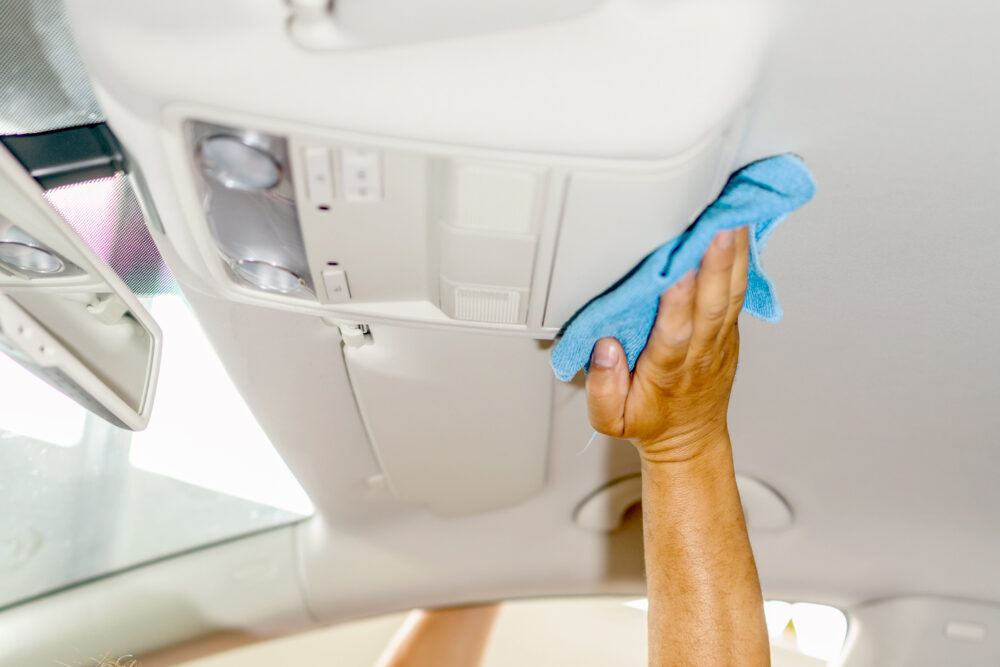
4. Wipe one small section at a time
Work in sections about 12 inches wide. Wipe the fabric with short, gentle strokes.
Use enough pressure to lift surface dirt, but not enough to compress the fabric. Avoid scrubbing. The thin fabric layer is often bonded to foam, and repeated friction can damage that bond.
Turn to a dry part of the towel as soon as dirt transfers to the cloth. If the towel becomes dirty, replace it.
5. Treat stains with controlled moisture
For a dark mark or small stain, place a small amount of cleaner on a towel or cotton swab. Dab the mark from the outside toward the center.
Do not flood the stain. Excess liquid can spread the mark and create a larger ring.
For greasy marks, use several light dabs instead of one wet treatment. Some oil stains may not come out fully without professional upholstery treatment.
For a water stain, first look for the source. Common causes include:
- A leaking sunroof drain
- A damaged door or windshield seal
- A roof antenna seal
- Condensation
- A poorly sealed roof accessory
Cleaning the mark before fixing the leak will usually lead to another stain.
6. Blot the area dry
Use a clean, dry microfiber towel to blot the cleaned section. Press lightly and lift the towel. Do not rub.
The headliner should feel only slightly damp. If it feels wet, continue blotting with dry towels.
7. Let the headliner dry naturally
Keep the Saab in a dry, ventilated area. Leave the doors or windows open when safe. Do not use a heat gun, hair dryer on high heat, or space heater.
Strong heat may shrink the fabric, soften the adhesive, or create a permanent ripple. Allow the roof to dry fully before closing the car.
8. Inspect the result in normal light
Once dry, check the headliner from several angles. Look for:
- Remaining spots
- Water rings
- Uneven color
- Loose fabric
- New wrinkles
- Damp areas
If the result is acceptable, stop. Repeated cleaning does not always improve the appearance and can increase the risk of damage.
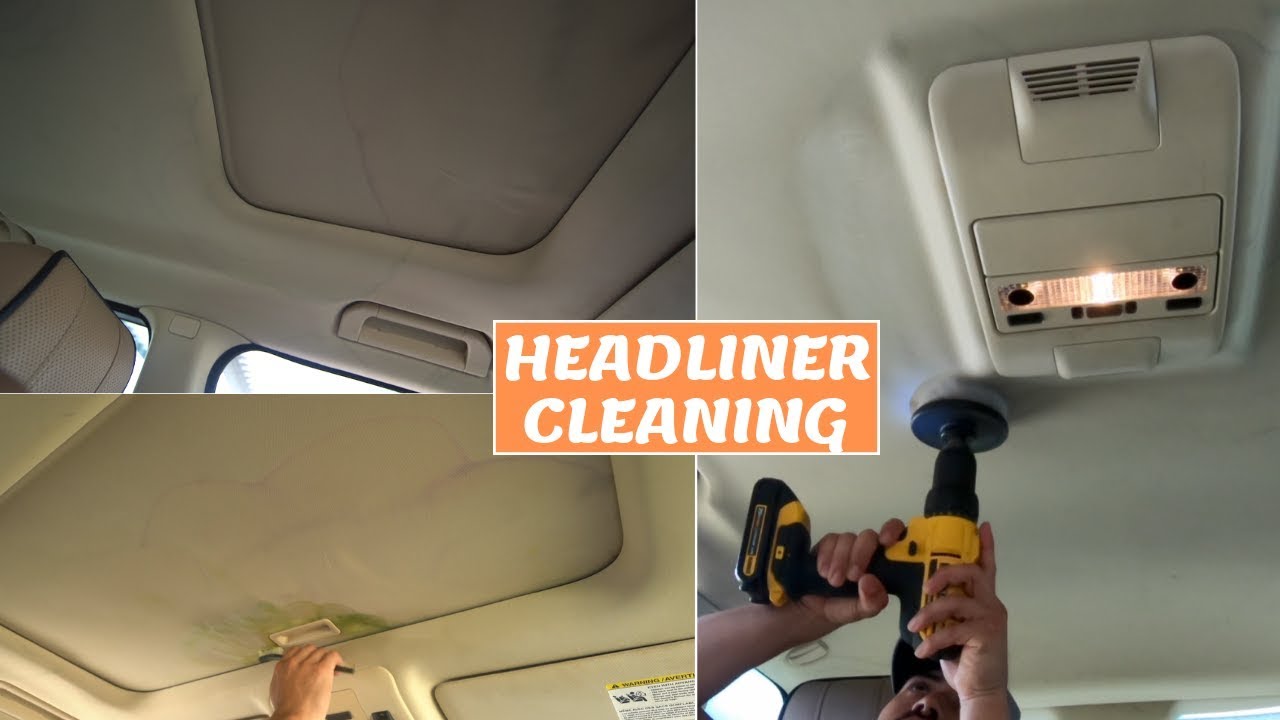
How to Remove Common Saab Headliner Stains
Different stains need different levels of care. The safest approach is always to start with the least aggressive method.
| Stain or problem | First method | Main caution |
|---|---|---|
| Dust | Soft vacuum brush | Do not use strong suction |
| Light fingerprints | Damp microfiber towel | Avoid wetting the foam |
| Smoke film | Small sections with fabric cleaner | Test for color change |
| Food or drink | Blot, then use mild cleaner | Do not spread the stain |
| Grease | Repeated light dabbing | Heavy oil may need professional work |
| Water mark | Find and repair the leak first | Cleaning alone will not solve it |
| Mold-like odor or spots | Stop and inspect for moisture | Do not seal in active moisture |
| Ink | Professional upholstery advice | Solvents can cause permanent damage |
Smoke odor and yellowing
Smoke residue can settle into the headliner fabric and foam. A light surface film may improve with careful cleaning, but a strong odor may remain because the foam and other interior materials have absorbed it.
Do not soak the roof to remove smoke smell. If odor remains after the headliner is dry, clean other soft surfaces such as carpets, seats, door panels, and trunk trim. Replace the cabin air filter if it is due for service, following the correct Saab procedure for the vehicle.
Mold or mildew
Mold-like spots are a sign to inspect for moisture. Check the roof, sunroof area, seals, carpet, and spare-tire well for dampness.
Do not simply cover the odor with fragrance. If the headliner has active mold growth, heavy water damage, or a persistent musty smell, a professional detailer or automotive upholstery shop is the safer choice.
What Not to Use on a Saab Headliner
Some common cleaning methods are too harsh for a bonded automotive headliner.
Avoid:
- Steam cleaners
- Carpet extractors
- Pressure washers
- Saturated sponges
- Stiff brushes
- Magic Eraser-type abrasive pads
- Bleach
- Ammonia
- Acetone
- Lacquer thinner
- Strong glass cleaner
- Household laundry detergent
- Undiluted degreaser
- High heat
Steam and extraction tools can force water into the foam and adhesive. Abrasive pads can roughen the fabric. Solvents can dissolve the adhesive or remove dye.
Do not remove the headliner just to clean a stain unless you understand the correct trim and safety procedures for your Saab. Roof trim may sit near curtain airbags on some vehicles. Removing trim near an airbag can create a serious safety risk.
If a component must be removed, use the correct service information for the exact Saab model and model year. Disconnecting the battery is not a universal substitute for following airbag service procedures.

How to Fix a Sagging Saab Headliner
Cleaning cannot permanently fix a sagging headliner. Sagging usually means the original foam backing has broken down or the adhesive has failed.
Temporary fixes include:
- Upholstery pins
- Headliner clips
- Small trim fasteners
These may hold the fabric in place, but they can leave visible marks and do not restore the original surface.
A proper repair normally involves removing the headliner board, stripping the old fabric and foam, cleaning the board, applying new automotive headliner fabric, and reinstalling the board. An automotive upholstery shop can often handle this without damaging trim or roof equipment.
Do not glue fabric while it is still installed unless the product is specifically made for headliners and the repair area is small. Spray adhesive can soak through the fabric, create hard spots, or stain the visible surface.
Replacement is usually the better option when:
- More than a small area is loose
- The foam is powdery
- The fabric has stretched
- The headliner has water damage
- The roof has developed multiple bubbles
- The adhesive has failed across a wide area

Saab Headliner Cleaning Troubleshooting
Use the symptom to guide the next step. Do not keep adding cleaner when the problem may be structural or moisture-related.
The headliner has a water ring
A ring often forms when dirty water dries unevenly. Lightly dampen the full surrounding section and blend outward with a clean towel. Use very little moisture.
If the ring returns, inspect for an active leak. A new stain after rain is not mainly a cleaning problem.
The fabric starts to sag after cleaning
Stop immediately. Do not press or brush the area again. Let it dry naturally and inspect the adhesive failure.
If only a small section has loosened, an upholstery shop may be able to repair it. A large sag usually needs headliner removal and re-covering.
The headliner feels stiff after drying
This can happen when too much cleaner dries in the fabric. Use a clean microfiber towel to gently lift surface residue once the area is fully dry.
Do not add more water unless the product instructions support rinsing. Excess moisture can create a larger problem.
The stain looks worse
A stain may spread when liquid moves dirt into nearby fabric. Stop and allow the area to dry fully before judging it.
If a water ring remains, professional upholstery cleaning may be safer than repeated home treatments. Tell the technician that the material is a bonded automotive headliner.
The odor remains
Persistent odor can come from smoke, mold, a leak, or contaminated foam. Find and remove the source before using deodorizer.
A fragrance may hide the smell for a short time, but it does not remove moisture or contamination.

Key Takeaways
- Use a soft vacuum brush to remove loose dirt first.
- Test any cleaner in a hidden area.
- Put cleaner on a microfiber towel, not directly on the roof.
- Use very little moisture and light pressure.
- Never scrub, steam, or soak the headliner.
- Fix roof leaks before cleaning water stains.
- Cleaning will not repair sagging fabric.
- Use professional help for heavy mold, major water damage, or widespread adhesive failure.
- Follow Saab-specific safety instructions before removing roof trim.
FAQs About Cleaning a Saab Headliner
Can I use regular upholstery cleaner on a Saab headliner?
Only if the product is labeled for automotive fabric or compatible upholstery and passes a hidden-area test. Some cleaners are too wet, too alkaline, or too strong for a bonded headliner.
Can I clean a Saab headliner with a steam cleaner?
Steam cleaning is not recommended for routine home cleaning. Steam can push moisture into the foam and weaken the adhesive that holds the fabric to the board.
How do I clean around the Saab dome light?
Use a nearly dry microfiber towel and keep liquid away from the light housing. Do not spray around the fixture. If the area needs more than light surface cleaning, follow the model-specific service procedure before removing the light.
Why is my Saab headliner sagging?
The most common reason is foam or adhesive failure caused by age, heat, moisture, or a roof leak. Cleaning does not restore the bond. A small repair may be possible, but widespread sagging usually requires re-covering.
How often should I clean a Saab headliner?
Clean it only when visible dirt or odor appears. A light vacuum during normal interior cleaning is usually enough. Frequent wet cleaning increases the chance of water marks and adhesive damage.
Conclusion
The safest way to clean a Saab headliner is to keep the process dry, gentle, and controlled. Vacuum loose dust, test the cleaner, apply it to a towel, clean small sections, and blot each area dry.
If the headliner is sagging, badly stained, damp, or affected by mold, stop using moisture and address the underlying problem. For major damage, an automotive upholstery professional is more likely to produce a durable result than repeated home cleaning.