What Household Cleaners Can I Use To Clean My Car: Guide
For most cars in the United States, you can safely use a small amount of mild dish soap, clean water, white vinegar, baking soda, or diluted isopropyl alcohol—but only on the right surface. A car has many materials, including clear coat, plastic, vinyl, leather, fabric, rubber, glass, and electronic screens. One cleaner that works on glass may damage a dashboard or window tint.
The safest rule is simple: check your owner’s manual, test any cleaner on a hidden spot, use less product than you think, and never mix cleaners.
Quick answer: the safest household cleaners for a car
These common products can help with basic car cleaning when used correctly:
| Household cleaner | Suitable uses | Important limits |
|---|---|---|
| Mild dish soap | Exterior paint, wheels, tires, and plastic trim when diluted | Can remove wax or sealants if used often |
| Water | Nearly every cleaning job | Use clean microfiber towels to prevent scratches |
| White vinegar diluted with water | Exterior glass and some hard-water spots | Avoid leather, touchscreens, paint, rubber, and window tint unless the manufacturer allows it |
| Isopropyl alcohol diluted with water | Glass, some hard plastic, and adhesive residue | May dry or discolor leather, vinyl, soft-touch coatings, and some plastics |
| Baking soda | Carpet and fabric odors | Vacuum it fully; do not scrub it into delicate surfaces |
| Mild laundry detergent, highly diluted | Some fabric floor mats | Test first; it may leave residue or cause color loss |
| Water-based soap flakes or mild soap | Some leather surfaces | Use only if the leather care guide permits it |
Avoid household bleach, ammonia-based cleaners, powdered abrasives, oven cleaner, drain cleaner, strong degreasers, and acetone. These products can damage finishes, cause stains, weaken materials, or create harmful fumes.

Before using a household cleaner in your car
Read the vehicle owner’s manual before cleaning leather seats, synthetic leather, touchscreens, special coatings, or matte paint. Automakers often give different instructions for these materials. For example, Ford advises using mild soap and water for many interior surfaces and warns against products that contain alcohol, bleach, or hydrogen peroxide on certain materials. General Motors also recommends checking product ingredients and testing cleaners in a hidden area.
Gather these supplies:
- Two or more clean microfiber towels
- A bucket
- Clean water
- A soft interior brush
- A vacuum
- Spray bottles labeled with the mixture inside
- Cotton swabs for tight areas
- Nitrile gloves if your skin reacts to cleaners
Use a separate towel for the wheels, paint, glass, and interior. Grit from a wheel towel can scratch clear coat. Wash the car in the shade, and let hot surfaces cool before applying cleaner.
Use the least aggressive cleaner first
Start with plain water. If water does not remove the soil, use a small amount of diluted mild soap. Move to a stronger cleaner only when the surface requires it.
This approach protects the material and makes mistakes less likely. A cleaner does not need to smell strong or produce lots of foam to work.
Test before full use
apply a small amount to a hidden section, such as:
- The underside of a seat
- The edge of a floor mat
- The lower inside corner of a door panel
- A small area under the trunk mat
Wait until the area dries. Check for fading, streaks, tackiness, clouding, swelling, or color transfer. If you see any change, stop using that product.

Household cleaners for the exterior of your car
Mild dish soap for the body and wheels
A mild, dye-free dish soap can clean road film, light grease, and dirt from painted panels. Mix about 1 teaspoon of soap with 1 gallon of water as a starting point. Use a clean microfiber wash mitt, rinse often, and dry with a separate towel.
Dish soap is useful for an occasional wash, but it is not the best regular product for a car with wax or a paint sealant. It can strip some protective products over time. A pH-balanced automotive wash soap is a better choice for routine washing.
You can use diluted dish soap on:
- Painted exterior panels
- Plastic grille pieces
- Wheel covers
- Some rubber tires
- Uncoated plastic trim
Do not let soapy water dry on the car. Dried soap can leave a film or spots.
Vinegar and water for exterior glass
White vinegar can help loosen mineral deposits on exterior glass. Mix one part white vinegar with one part water, spray it onto a microfiber towel rather than soaking the glass, and wipe a small area first.
Do not use vinegar on:
- Leather
- Vinyl
- Touchscreens
- Painted surfaces
- Rubber seals
- Waxed or coated surfaces unless approved
- Tinted film without checking the tint maker’s instructions
Vinegar is an acid. It may dull or dry some materials, especially when used often or left to sit.
Rubbing alcohol for adhesive residue
Isopropyl alcohol can help remove small amounts of sticker residue, sap, or oily film from hard glass. Use a diluted solution, apply it to a towel, and wipe gently. Do not pour it directly onto a surface.
Keep alcohol away from:
- Leather
- Vinyl
- Soft-touch dashboard coatings
- Painted surfaces
- Clear plastic instrument covers
- Touchscreens
- Rubber and sealed seams
For paint, try warm water and mild soap first. If residue remains, use a product made for automotive paint rather than escalating to a harsh solvent.
Baking soda for tire and wheel odors
Baking soda is mildly abrasive and can help with odors, but it is not a strong wheel cleaner. Do not use it as a dry scrub on glossy paint or clear plastic. For wheels, diluted dish soap and water are usually safer.

Household cleaners for the car interior
Dashboard, doors, and hard plastic
For most hard plastic and vinyl surfaces, start with a damp microfiber cloth. If dirt remains, add a small amount of mild dish soap to water. Apply the solution to the cloth, not directly to the dashboard.
Wipe with a clean damp cloth afterward. This removes soap residue, which can leave a sticky or shiny film. Keep liquid away from vents, buttons, seams, speakers, and electrical parts.
Do not use:
- Furniture polish
- Oil-based cleaners
- Bleach
- Strong degreasers
- Abrasive powders
- Undiluted alcohol
- Glass cleaner on the whole dashboard
Furniture polish can make a dashboard slippery and may leave a coating that attracts dust. A shiny dashboard may also create glare on the windshield.
Touchscreens and instrument panels
Use a dry or slightly damp microfiber cloth unless the vehicle manual says otherwise. Never spray cleaner directly on a screen. Do not use ammonia, bleach, paper towels, rough cloths, or abrasive pads.
If fingerprints remain, lightly dampen the cloth with water. For stubborn marks, use a screen-safe cleaner approved for automotive displays. Household glass cleaner is not automatically safe for a car touchscreen.
Fabric seats and carpet
Vacuum first. This removes loose sand and grit that could turn into mud during wet cleaning.
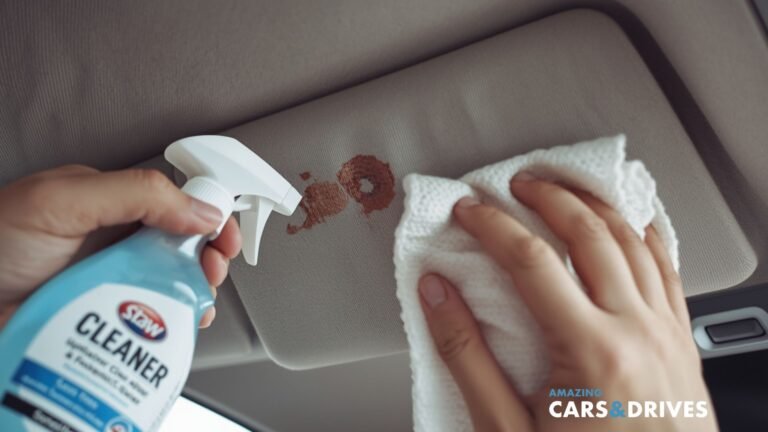
For a light stain, mix a few drops of mild dish soap into a cup of warm water. Dab the mixture onto a microfiber cloth or soft brush. Work from the outside of the stain toward the center. Avoid soaking the seat or carpet.
After cleaning:
- Wipe with a second cloth dampened with plain water.
- Press with a dry towel.
- Leave doors or windows open when safe.
- Let the material dry fully before closing the car.
Too much water can cause odor, mildew, water marks, or damp seat padding. If a stain returns after drying, the material may contain oil or dye that needs a professional cleaner.
Baking soda for interior odors
Sprinkle a thin layer of baking soda on dry carpet or fabric mats. Leave it for several hours, then vacuum thoroughly. This may reduce mild odors, but it will not remove the source of smoke, spilled milk, mold, or trapped moisture.
Do not use baking soda on wet upholstery. It can form a paste and become harder to remove.
Leather and synthetic leather
Leather needs more care than plastic or cloth. Use a cleaner made for automotive leather when possible. If the owner’s manual permits mild soap, use only a very diluted solution on a soft cloth. Do not saturate the seat.
Avoid vinegar, bleach, strong alcohol, abrasive powders, and household disinfectants unless the leather maker specifically approves them. After cleaning, use a compatible leather conditioner only when recommended. Too much conditioner can make seats greasy and slippery.
Synthetic leather, often called vinyl or polyurethane leather, can also react badly to solvents. Treat it as a delicate coated surface rather than as plastic.

What not to use on a car
Some household cleaners seem useful but create avoidable damage.
Bleach
Bleach can discolor fabric, weaken fibers, corrode metal, and damage leather, vinyl, rubber, and plastic. It also must never be mixed with ammonia or acidic cleaners such as vinegar. The reaction can release dangerous gases.
Ammonia-based glass cleaner
Ammonia may damage some window tint films, plastic surfaces, leather, and protective coatings. Use an automotive glass cleaner labeled as safe for tinted windows, or use plain water and a clean microfiber towel for light dust.
Powdered cleaners and scouring pads
Products such as abrasive powders and scrub pads can leave fine scratches on clear coat, glossy trim, piano-black plastic, screens, and clear instrument covers.
Oven cleaner and strong degreasers
These products are designed for baked-on kitchen grease, not delicate automotive finishes. They may strip coatings, stain plastic, damage aluminum, and dry rubber.
Hydrogen peroxide
Hydrogen peroxide can bleach or discolor some fabrics and materials. Do not use it as a general car cleaner. If you need to address a biological spill, follow the vehicle maker’s instructions and use a cleaner labeled for that surface.
Disinfecting wipes
Disinfecting wipes may be useful for high-touch hard surfaces when the automaker permits them. They can also dry leather, leave residue, or damage soft-touch coatings. Wipe gently, do not scrub, and follow with a clean damp cloth if the product instructions allow it.
Never mix vinegar, bleach, ammonia, alcohol, or other cleaners in the same bottle.

A simple step-by-step car cleaning method
Use this order to reduce scratches, stains, and trapped moisture.
1. Remove loose items
Take out trash, mats, child seats, and personal items. Clean the trunk separately if it contains dirt or spills.
2. Vacuum the interior
Vacuum seats, carpet, floor mats, door pockets, and the area between the seats. Use a soft brush near vents and screens.
3. Clean the glass
Clean the inside of the windows first. Use water or a tint-safe glass cleaner on a microfiber towel. Wipe in one direction inside and the opposite direction outside. This makes streaks easier to locate.
4. Clean the dashboard and panels
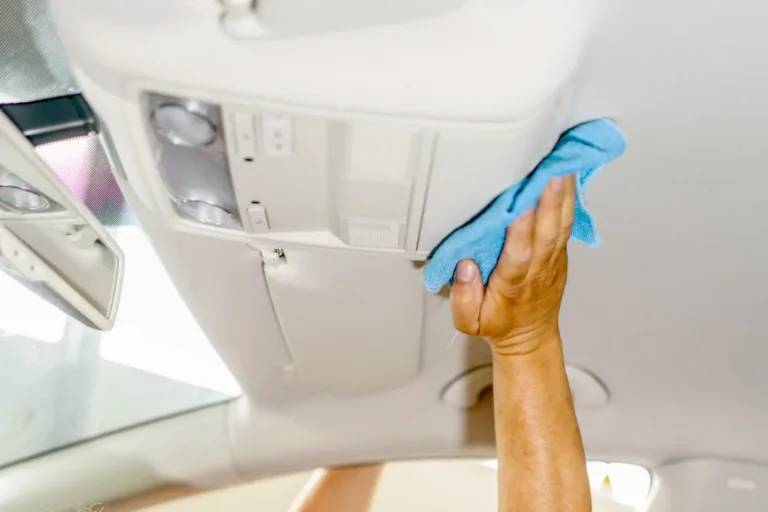
Use a dry microfiber towel first. For stuck-on dirt, use diluted mild soap on the towel. Wipe again with a clean damp towel.
5. Wash floor mats
Shake or vacuum them. For rubber mats, use dish soap and water, rinse well, and dry fully before reinstalling. For fabric mats, use a small amount of diluted soap and avoid soaking the backing.
6. Wash the exterior from top to bottom
Rinse the car first. Wash the roof, windows, hood, upper doors, lower panels, wheels, and tires. Use separate tools for wheels and paint.
7. Rinse and dry
Rinse off all soap. Dry with clean microfiber towels before water spots form. Do not let cleaners dry on the surface.
A successful cleaning leaves the surface clean without a sticky film, cloudy glass, discoloration, or strong chemical smell.

What to do when a cleaner causes a problem
If a surface feels sticky, wipe it with a clean cloth dampened with plain water. Repeat with fresh water rather than adding another cleaner.
If glass looks cloudy, clean it again with water and a clean glass towel. Residue from soap, wipes, wax, or interior dressing is a common cause.
If fabric remains wet, improve airflow and allow it to dry fully. Do not use high heat near plastic, leather, or electronics.
If paint looks dull or streaked, rinse it with clean water and dry it gently. Do not polish immediately. If the finish has changed color, feels rough, or shows a permanent mark, contact an automotive detailer.
If there is mold, a large biological spill, strong smoke odor, or water inside the seat padding, household cleaning may not be enough. Professional extraction or repair may be safer.

Best household cleaner by car surface
Use this table as a quick decision guide. The vehicle manual takes priority if it gives different instructions.
| Surface | First choice | Avoid |
|---|---|---|
| Painted body | Water, then mild dish soap diluted in water | Abrasive powders, strong degreasers, bleach |
| Exterior glass | Water or tint-safe glass cleaner | Ammonia unless approved for the glass and tint |
| Dashboard plastic | Damp microfiber cloth, diluted mild soap | Furniture polish, solvents, abrasive pads |
| Touchscreen | Dry or slightly damp microfiber cloth | Sprays, paper towels, ammonia, bleach |
| Cloth seats | Vacuum, diluted mild soap, minimal water | Soaking, harsh bleach, heavy scrubbing |
| Leather | Approved automotive leather cleaner | Vinegar, bleach, strong alcohol |
| Rubber mats | Dish soap and water | Petroleum-heavy products and strong solvents |
| Tires | Mild soap and water | Oven cleaner and harsh degreasers |
| Clear plastic | Water and a soft microfiber towel | Glass cleaner, alcohol, abrasive cloths |

Frequently asked questions
Can I use Dawn or another dish soap to wash my car?
Yes, diluted mild dish soap can clean an exterior car surface. Use it occasionally, rinse well, and do not let it dry. For regular washing, automotive car soap is better because it is made to clean while being less likely to remove wax or other protection.
Can I use vinegar to clean car windows?
Diluted white vinegar may help clean exterior glass and mineral spots. Do not use it on leather, vinyl, touchscreens, rubber, paint, or window tint unless the manufacturer approves it. Apply it to a cloth and rinse or wipe the glass clean.
Can I use Windex inside my car?
Only use a glass cleaner if its label and your vehicle’s instructions allow it for that surface. Keep it off dashboards, leather, touchscreens, and tinted film unless it is specifically approved. A damp microfiber towel is safer for many interior surfaces.
Is rubbing alcohol safe for car interiors?
It can be safe for limited use on some hard surfaces, but it may damage leather, vinyl, soft-touch coatings, screens, and plastics. Dilute it, apply it to a cloth, test first, and avoid spraying near electronics.
How can I remove a bad smell from my car?
Find and remove the source first. Vacuum the interior, clean the affected area with a surface-safe product, and dry it fully. Baking soda can help with mild fabric odors, but mold, smoke, milk, and moisture trapped under carpet may require professional cleaning.
Final recommendation
For most basic car cleaning, keep it simple: water, clean microfiber towels, diluted mild dish soap, and baking soda for limited odor control. Use diluted vinegar only for suitable exterior glass, and use alcohol only for carefully selected hard surfaces. Avoid bleach, ammonia, abrasives, strong solvents, and any cleaner that the vehicle manual does not permit.
Clean gently, use little liquid, test first, and dry every surface well. Those habits protect your car better than a crowded shelf of harsh household products.