What Causes Water Stains On Headliner: Causes And Fixes
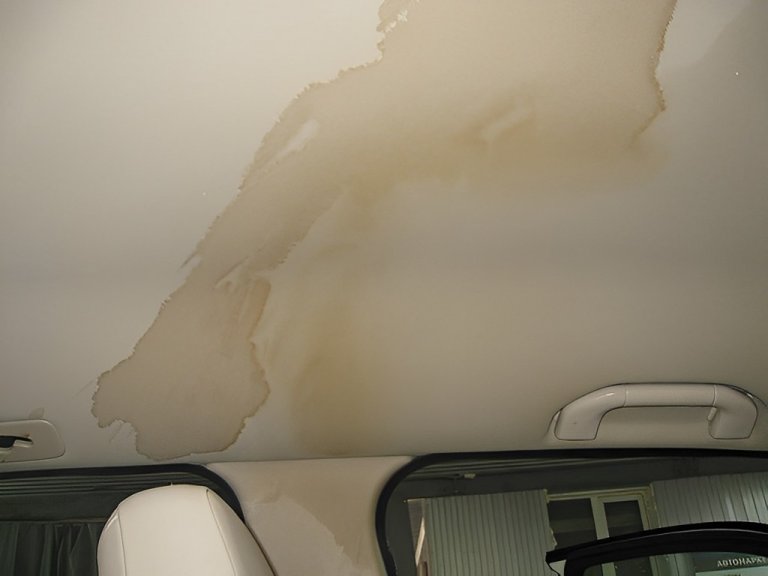
A water stain on a car headliner usually means water entered from above and traveled through the roof area before soaking the fabric. In the United States, the most common causes are clogged sunroof drains, a leaking windshield seal, damaged roof seams, a loose roof antenna, and failed door or hatch weatherstripping.
The stain may appear far from the real leak. Water can move along the roof panel, wiring, trim, or headliner backing. For that reason, cleaning the mark without finding the entry point often leads to a stain that returns.
What a headliner water stain means
A headliner is the fabric-covered panel attached to the inside of a vehicle’s roof. It helps reduce noise, limits heat transfer, and gives the cabin a finished appearance.
The headliner itself does not normally create water. A wet or brown mark means moisture reached the roof area or an upper body seal. The water may come from:
- Rain or melting snow
- A car wash
- Condensation
- A clogged drain
- A failed seal
- A loose roof-mounted part
- A leak from the air-conditioning system or another nearby component
A fresh leak may leave a damp, dark mark. An old leak often leaves a yellow, brown, gray, or ring-shaped stain. A musty smell, sagging fabric, bubbling material, or mold-like spots can show that moisture has remained inside the headliner.
The location of the stain provides a useful clue, but it does not prove the source. Water often follows the easiest path before it drops into the cabin.
The most common causes of water stains on a headliner
The best first step is to match the stain’s location with the vehicle’s roof features. The following causes account for most overhead water leaks.
1. Clogged or disconnected sunroof drains
A sunroof is one of the most common sources of a wet headliner. Most factory sunroofs have a shallow water channel around the glass. Drain tubes carry that water through the vehicle’s pillars and out near the body.
Leaves, dirt, pine needles, and road dust can block the drain openings. A drain tube can also loosen, split, or pull away from its fitting. When this happens, water may spill behind the headliner or down a roof pillar.
Common signs include:
- A stain near the front corners of the sunroof
- Wet A-pillars or overhead grab handles
- Water after rain, snow, or a car wash
- Damp carpet near the front seats
- Water running from the map-light area
- A sunroof channel that holds standing water
Do not force a hard wire into a drain. It can puncture or disconnect the tube. Use the cleaning method listed in the vehicle owner’s manual, or have a repair shop clear the drain with the correct tool.
2. Leaking windshield or rear glass seal
A windshield or rear window seal can leak after years of weather exposure, body flex, glass replacement, or collision repair. The leak may begin at the top edge of the glass and spread into the headliner.
This cause is more likely when:
- The stain sits along the front edge of the roof
- Water appears near the rear window or hatch glass
- The glass was replaced recently
- The vehicle has had body or roof repairs
- The leak occurs during a direct spray at the glass edge
Modern windshields are bonded to the body with adhesive. A leak is not always fixed by applying household caulk around the outside. A glass technician may need to inspect the bond and reinstall the glass correctly.
3. Damaged roof seams or failed seam sealer
The roof is made from several metal panels joined at seams. Manufacturers apply seam sealer to keep water out. Over time, the sealer can crack, shrink, or separate.
Roof seam leaks may follow:
- Hail damage
- A collision
- Rust
- Roof-mounted equipment
- Poor body repair
- Long-term exposure to sun and ice
A seam leak can appear anywhere along the headliner. It is especially likely when the stain has no nearby sunroof, glass edge, or roof accessory.
Do not cover a damaged seam with random sealant before finding the full leak path. The wrong product may fail to bond, trap moisture, or make later body repairs harder.
4. Loose or cracked roof antenna
Many cars, trucks, and SUVs have an antenna mounted on the roof. The antenna base normally uses a gasket or sealant to keep rain out.
A loose nut, damaged gasket, cracked antenna housing, or failed seal can allow water to enter around the mounting hole. The water may run along the roof and appear near the rear of the headliner.
Check for this cause when:
- The stain is near the rear roof area
- The vehicle has a roof-mounted radio, satellite, GPS, or communication antenna
- The antenna moves when touched
- The leak began after antenna service
- The vehicle has a rear overhead light or cargo-area stain
A loose antenna may require access from below the headliner. Avoid pulling the headliner down without checking for clips, wiring, and airbag components.
5. Failed door, hatch, or liftgate weatherstripping
Door and hatch seals keep rain from entering around the body openings. A seal can flatten, tear, shrink, or pull away from its channel.
This cause often creates wet trim and side-edge stains rather than a single mark in the center of the roof. It may also wet the carpet, seat belt, cargo trim, or pillar cover.
Look for:
- Torn rubber seals
- Dirt tracks on the seal
- A gap between the seal and body
- Wetness near the upper door frame
- Water after a side-angle car wash
- A hatch that does not close or align correctly
The correct replacement seal depends on the vehicle. Do not assume universal adhesive weatherstrip will restore the original water path.
6. Roof rack or crossbar mounting leaks
Roof racks can create leaks when mounting feet, bolts, plugs, or seals are damaged or installed incorrectly. Removing a rack can also leave open mounting points or missing covers.
This is more likely when the stain began after:
- Installing a roof rack
- Removing crossbars
- Carrying a rooftop cargo box
- Replacing roof trim
- Servicing a roof-mounted accessory
Check every mounting point. A leak may occur only when water flows from a certain direction, so a brief hose test may miss it.
7. Leaking high-mounted brake light
On many hatchbacks, SUVs, vans, and pickup trucks, the third brake light sits near the top of the rear glass or tailgate. Its gasket can fail, or its housing can crack.
Water may then enter the rear headliner and travel toward the sides or cargo area. Look for a stain near the rear dome light, upper hatch trim, or tailgate opening.
The brake light may need to be removed to inspect the gasket. Disconnect electrical power first when the repair procedure calls for it, and follow the vehicle’s service instructions.
8. Air-conditioning condensation or HVAC leaks
Air-conditioning systems remove moisture from cabin air. That moisture normally drains beneath the vehicle through an evaporator drain.
A blocked or disconnected HVAC drain usually causes water on the passenger-side floor, not the roof. However, air can move through ducts, and some vehicles have overhead HVAC components. A roof-level stain is less likely to come from air conditioning unless the vehicle has a related overhead unit or duct.
Check the floor and HVAC drain area before assuming the headliner is the source. Water on the floor can also rise through trim or spread under carpet.
9. Water from a roof-mounted lighting or wiring opening
Some vehicles have roof-mounted lights, sensors, satellite equipment, emergency equipment, or aftermarket wiring. Each opening is a possible leak point.
Aftermarket installations deserve special attention. A drilled hole, missing grommet, loose fastener, or poor seal can let water into the headliner.

How to find the source of a headliner leak
Find the leak before cleaning the stain. A controlled water test is safer and more useful than spraying the whole vehicle at once.
What you need
Prepare:
- A flashlight
- Clean towels
- A small cup or low-pressure hose
- Painter’s tape
- A helper
- The vehicle owner’s manual
- A trim tool, if the manual permits access
Do not use a pressure washer. High-pressure water can force moisture past seals that would not leak during normal rain.
Step-by-step leak test
-
Dry the cabin first.
Remove standing water and dry the visible trim. Mark the edge of the stain with painter’s tape. -
Inspect the roof from outside.
Check the sunroof, roof rack, antenna, glass edges, roof seams, and weatherstripping. -
Start at the lowest-risk area.
Test one small area at a time. Begin with the feature nearest the stain. -
Use a gentle flow of water.
Have a helper sit inside with a flashlight. Apply water for several minutes, then wait. Some leaks take time to travel. -
Work from lower areas to higher areas.
If a lower section does not leak, move upward. Do not flood the roof. -
Watch the first point of moisture.
The first wet spot is more useful than the largest stain. Water may spread after it enters. -
Dry the area again.
Do not leave the headliner damp after testing. Use ventilation or a fan.
A successful test identifies a repeatable entry point. If no water appears, the leak may require longer exposure, a different water angle, or inspection behind the headliner.
When professional leak testing makes sense
Seek professional help when:
- The windshield or rear glass may be leaking
- The headliner contains side-curtain airbag hardware
- The leak is hidden behind a pillar
- The vehicle has electrical equipment near the wet area
- The headliner is sagging
- The vehicle has mold or a strong musty odor
- The leak started after a collision or glass replacement
- A water test does not locate the source
A body shop, glass installer, or automotive trim technician may use controlled testing, compressed air, smoke, or partial trim removal. The right specialist depends on the suspected source.
Can you drive with a water-stained headliner?
A small, dry stain may not create an immediate driving problem, but an active leak should not be ignored. Water can damage wiring, lights, sensors, insulation, and seat-belt components.
Be more cautious when moisture is near:
- An overhead console
- Dome lights
- Side-curtain airbag labels
- A-pillars
- Seat-belt retractors
- Electronic sensors
- Sunroof controls
Turn off affected lights and electrical accessories if water is entering them. Do not remove airbag trim or wiring unless you have the vehicle-specific service procedure and the required training.
A wet headliner can also reduce visibility if water drips onto the windshield or driver’s area. Stop driving if the leak creates a distraction or affects vehicle controls.

How to remove water stains from a headliner
Clean the stain only after the leak is repaired and the headliner is dry. Cleaning first can hide the source and allow the stain to return.
Safe cleaning method
- Vacuum loose dust with low suction.
- Test a mild upholstery cleaner on a hidden area.
- Apply a small amount of cleaner to a microfiber cloth, not directly onto the headliner.
- Dab the stain gently.
- Avoid soaking the fabric or backing board.
- Blot with a clean, slightly damp cloth.
- Allow the area to dry fully with ventilation.
Do not scrub hard. Many headliners use a thin fabric bonded to foam. Excess water, heat, or friction can loosen the adhesive and cause sagging.
Avoid bleach, strong solvents, steam, and household carpet machines unless the vehicle manufacturer or product instructions specifically allow them. These methods can discolor the fabric or damage the adhesive.
When cleaning will not work
A stain may remain when:
- Water carried rust or dirt through the roof
- The foam backing has broken down
- Mold has developed
- The fabric adhesive has failed
- The stain has been present for a long time
- The water entered through a contaminated area
A trim shop may clean, dye, repair, or replace the headliner. Replacement is often the better option when the board is warped or the fabric has separated.
Common mistakes that make the problem worse
Using silicone caulk without finding the leak
Surface caulk may block one path while water enters through another. It can also make glass, trim, or roof repairs more difficult.
Pushing wire into sunroof drains
A wire can damage a drain tube or force a blockage deeper into the system. Use the method recommended for the vehicle.
Removing the headliner without checking for airbags
Pillar and roof trim may conceal side-curtain airbags, sensors, and wiring. Use the service manual or hire a trained technician.
Cleaning a wet headliner with too much water
The headliner can absorb the cleaner and sag. Light dabbing is safer than soaking.
Assuming the stain’s center is the leak
The visible mark may be several inches or more from the entry point. Trace upward and outward from the first wet area.
Ignoring the carpet
A roof leak can wet insulation below the carpet. If the carpet feels damp, lift or dry it as soon as practical to reduce odor and corrosion risk.

A quick cause-and-location guide
The table below helps prioritize an inspection. It is a starting point, not a substitute for a controlled leak test.
| Stain or wet area | More likely causes | First inspection |
|---|---|---|
| Front edge of headliner | Windshield seal, sunroof drain, roof seam | Upper windshield and front sunroof corners |
| Near map lights | Sunroof, roof console, antenna wiring | Sunroof channel and console mounting |
| A-pillar or front grab handle | Sunroof drain, windshield, door seal | Drain tube and glass edge |
| Center of roof | Roof seam, roof accessory, sunroof frame | Roof panel and mounted equipment |
| Rear headliner | Antenna, rear glass, third brake light | Antenna base and rear glass |
| Near hatch or liftgate | Hatch seal, brake light, rear glass | Upper hatch opening |
| Passenger floor plus overhead moisture | HVAC drain or multiple leaks | Evaporator drain and roof features |
| Only after a car wash | Seal, trim, rack, or high-pressure intrusion | Recreate with low-pressure water |
When should the headliner be replaced?
Replace or professionally repair the headliner when the backing board is warped, the fabric has detached, or the material smells strongly after drying.
A simple stain does not always require replacement. If the board remains firm and the fabric is attached, careful cleaning may be enough.
Replacement is more likely when:
- The headliner sags
- The foam has turned to powder
- The fabric bubbles
- Mold remains after drying
- The board is cracked
- The stain covers a large area
- The leak caused electrical or airbag-related damage
The source must still be repaired first. A new headliner will also stain if the roof leak remains.
Frequently asked questions
Why is my car headliner wet but the roof looks dry?
Water can enter through a small opening and travel under the roof liner. The outside roof may look normal, especially after the water has evaporated. Inspect seals, drains, roof accessories, and glass edges with a controlled water test.
Can a clogged sunroof drain cause a brown headliner stain?
Yes. A blocked drain can overflow into the headliner or roof pillar. Dirt in the drain water may leave a brown or yellow mark. The drain must be cleared and the headliner dried before cleaning the stain.
Can a bad windshield seal cause water to drip from the roof?
Yes. Water can enter at the upper windshield edge and travel behind the headliner. This is more likely after windshield replacement, body repair, or damage near the glass.
Is a water stain on the headliner a sign of mold?
Not always. A stain may come from dirt, rust, or old water. A musty smell, fuzzy growth, persistent dampness, or repeated staining raises concern for mold. Dry the area quickly and seek professional cleaning when contamination is suspected.
How much does it cost to repair a headliner leak?
The cost depends on the cause, vehicle, and damage. Clearing a drain may be a small service, while glass removal, roof repair, electrical repair, or headliner replacement can cost much more. Get the leak source diagnosed before approving cosmetic work.
Can I use a steam cleaner on a car headliner?
Steam can loosen the adhesive that bonds the fabric to its backing. Unless the vehicle or cleaner instructions specifically approve the method, use a small amount of suitable upholstery cleaner and gentle blotting instead.
Final recommendation
A water stain on a headliner is usually a symptom, not the actual problem. Inspect the nearest sunroof drain, glass seal, roof seam, antenna, rack mount, hatch seal, or overhead light before attempting to clean the fabric.
Use low-pressure water, avoid soaking the headliner, and treat any leak near airbags or electrical parts as a reason to seek qualified help. Once the entry point is repaired and the interior is fully dry, clean the stain gently or replace the headliner if its backing or adhesive has been damaged.