What Is The Best Car Interior Cleaner: Expert Guide
The best car interior cleaner in the United States is usually a mild, water-based interior cleaner made for automotive surfaces. For most dashboards, door panels, vinyl, and plastic trim, choose a product that cleans without leaving a greasy film or strong shine.
However, no single cleaner is best for every surface. Leather, cloth, suede-like trim, glass, touchscreens, and floor mats need different care. The safest choice is the least aggressive product that removes the soil without changing the surface finish.
This guide explains what to buy, how to use it, and when a general interior cleaner is the wrong choice.

The best car interior cleaner depends on the surface
A good all-purpose car interior cleaner can work well on sealed plastic, vinyl, rubber, and many painted interior parts. It should not be treated as a universal product for every material.
Use this simple guide:
| Interior surface | Best cleaner type | Main caution |
|---|---|---|
| Plastic and vinyl | Mild automotive interior cleaner | Avoid oily dressings that create glare |
| Leather | Leather cleaner made for finished automotive leather | Do not soak or scrub hard |
| Cloth seats and carpets | Low-foam fabric or carpet cleaner | Too much water can cause odor or stains |
| Touchscreens | Dry or slightly damp microfiber cloth | Do not spray liquid on the screen |
| Glass | Automotive glass cleaner | Keep ammonia and overspray away from tinted film |
| Suede-like trim or Alcantara-style material | Manufacturer-approved specialty cleaner | Wrong products can flatten or stain the fibers |
| Rubber seals | Water-based rubber-safe cleaner | Avoid petroleum-heavy products |
| Steering wheel | Low-residue cleaner suited to the wheel material | A slick finish can reduce grip |
Best overall choice for most interiors
For a typical American vehicle with plastic and vinyl surfaces, look for a water-based interior detailer or cleaner with a low-sheen finish. Meguiar’s Quik Interior Detailer, 3D LVP Cleaner, and similar automotive products are examples of this product type.
These examples are not a claim that one product is best for every car. Formulas change, and results depend on the surface, soil, and finish. Always read the current label and test the product in a hidden area.
Best cleaner for leather
Leather seats need a cleaner labeled for finished automotive leather. A leather cleaner should lift body oil, dust, and light grime without stripping the protective top coat.
A leather cleaner is not always the same as a leather conditioner. A conditioner may add oils or protectants, but it cannot repair cracked leather. Some modern automotive leather surfaces also have a synthetic coating, so heavy oil-based products may leave a sticky or shiny film.
Best cleaner for cloth and carpet
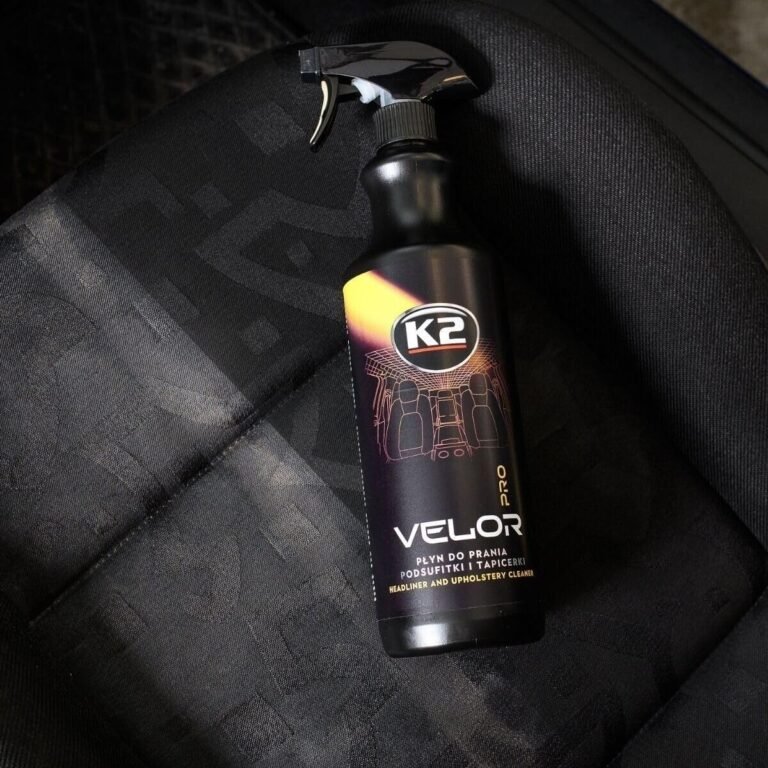
For cloth seats and carpet, use a fabric or carpet cleaner. Choose a low-foam formula when possible, especially if you do not have an extractor.
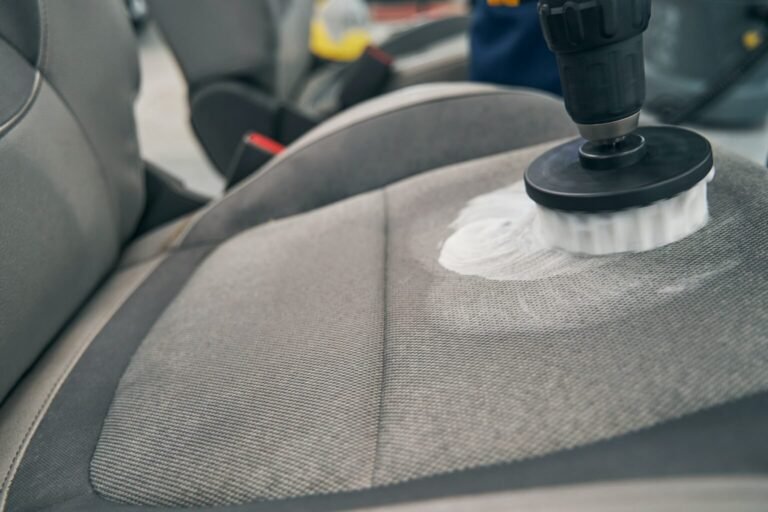
A cloth cleaner works best when you apply a small amount, agitate gently, and remove the loosened soil with a clean towel. Saturating the seat can push moisture into the foam and create a musty smell.

What makes a car interior cleaner safe and effective?
The best cleaner balances cleaning power with surface safety. Stronger is not automatically better.
Look for these traits:
- A clear surface label: The product states which materials it can clean.
- Low residue: The surface feels clean, not oily or tacky.
- Low sheen: A matte or natural finish reduces glare on dashboards.
- Controlled moisture: The product can be applied without soaking the material.
- Mild odor: Heavy fragrance can be unpleasant in a closed vehicle.
- No unneeded abrasives: Abrasive particles can dull plastic and clear coatings.
- Clear warnings: The label explains where not to use the product.
Why residue matters
A greasy dressing may make plastic look dark for a short time. It can also attract dust and create reflections in the windshield. On a steering wheel, residue may make the surface feel slippery.
For this reason, a cleaner that leaves a natural finish is often a better daily choice than a high-gloss dressing.
Why pH is only part of the answer
Many shoppers search for a “pH-neutral” car interior cleaner. A mild pH can reduce the risk of harming some materials, but pH alone does not prove that a product is safe.
Solvents, dyes, fragrances, oils, and surfactants also affect performance. A product can have a mild pH and still be unsuitable for a screen, suede-like trim, or unsealed leather.
Treat pH as one clue, not a complete safety test.
Cleaner versus protectant
A cleaner removes soil. A protectant helps reduce drying, fading, or surface wear. Some products combine both jobs.
Do not assume that every protectant is suitable for every material. A protectant designed for exterior plastic may be wrong for a dashboard. A product that adds shine may also add glare.

How to clean a car interior without causing damage
Start with dry cleaning, then use the smallest amount of liquid needed. This method reduces streaks, stains, and trapped moisture.
What you need
Gather:
- Two or more clean microfiber towels
- A soft interior brush
- A vacuum with a crevice tool
- The correct cleaner for the surface
- A small bowl of clean water
- Cotton swabs for narrow seams
- Disposable gloves if the product label recommends them
Use separate towels for glass, leather, and general trim. A towel that contains grit can scratch glossy plastic or piano-black trim.
Step 1: Remove loose dirt
Take out trash, floor mats, and personal items. Vacuum seats, carpet, floor mats, vents, and gaps before using liquid cleaner.
Loose grit acts like sandpaper when you wipe. Removing it first is one of the easiest ways to prevent small scratches.
Step 2: Read the vehicle and product instructions
Check the owner’s manual for special materials. Some vehicles use real leather, coated leather, synthetic leather, suede-like fabric, or soft-touch plastic.
Read the cleaner label as well. Do not use a product on a surface that the label excludes.
Step 3: Test a hidden area
Apply a small amount to an unseen section. Check for:
- Color transfer
- Dulling
- Sticky residue
- Swelling
- Staining
- Changes in texture
- Uneven gloss
Let the test area dry before judging the result.
Step 4: Spray the towel, not the electronics
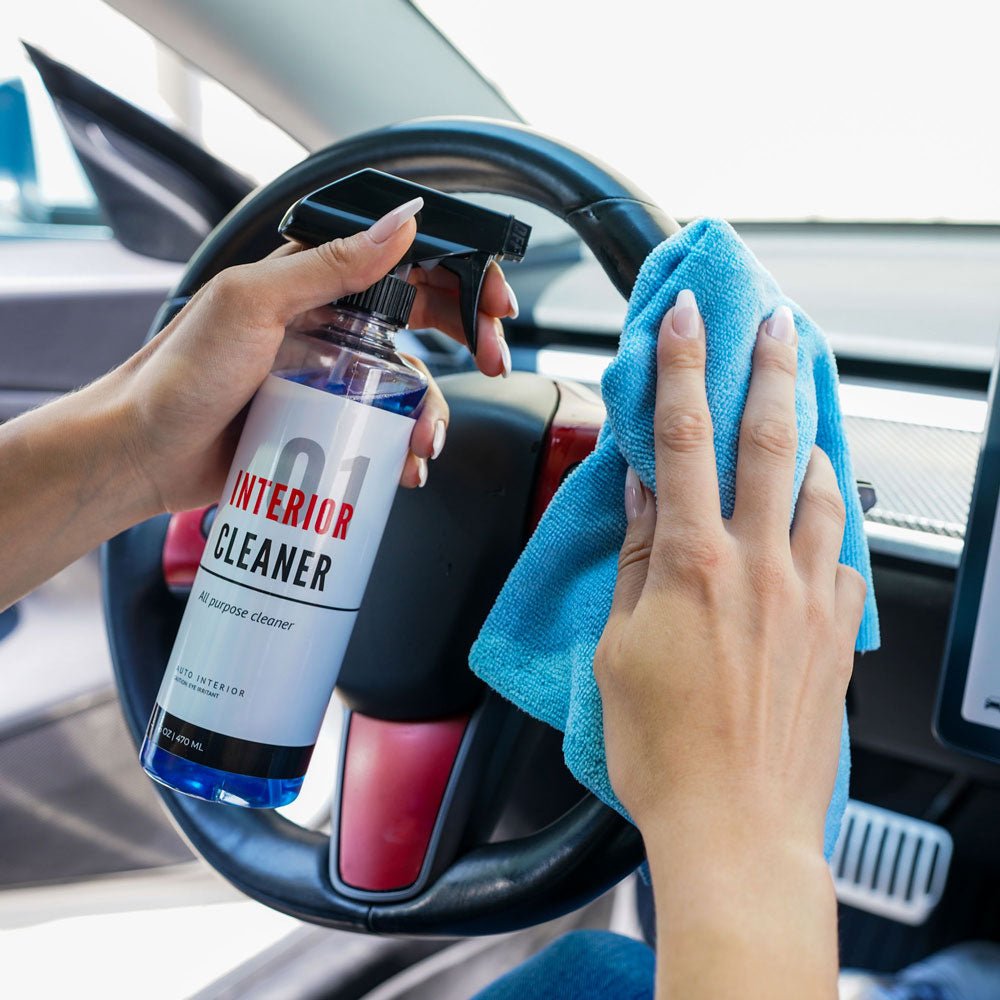
For dashboards and trim, spray the cleaner onto a microfiber towel instead of directly onto the surface. This gives you more control and helps keep liquid away from vents, switches, speakers, seams, and screens.
Never flood a button panel or instrument cluster.
Step 5: Work in small sections
Wipe one small area at a time. Turn the towel often so you do not spread dirty moisture across the surface.
For textured plastic, use a soft brush only when needed. Use light pressure. Dirt in a grain may need several gentle passes rather than one hard scrub.
Step 6: Wipe away residue
Use a second clean, dry microfiber towel to remove leftover product. The surface should look even and feel dry.
If the material still feels oily, dampen a clean towel with water and wipe again. Do not keep adding cleaner.
Step 7: Let damp fabric dry
After cleaning cloth seats or carpet, open the doors or windows when weather and security allow. Do not use the vehicle until wet areas are dry enough to avoid transferring moisture or creating odor.

How to choose the best cleaner for common car interior problems
Different stains need different methods. Begin with the least aggressive option.
Dust and light fingerprints
Use a dry microfiber towel first. If marks remain, use a small amount of interior cleaner on the towel.
This works well for dashboards, door panels, and center consoles.
Greasy film on plastic
Use a mild interior cleaner, then wipe with a clean damp towel. Finish with a dry towel.
Avoid adding a glossy dressing. It may hide the problem briefly while attracting more dust.
Food or drink spills
Blot the spill as soon as possible. Do not rub it deeper into cloth.
For fabric, use a fabric cleaner and extract or blot the moisture. For hard plastic, remove the spill with a damp towel before applying cleaner.
Ink
Ink can spread quickly. Test any solvent or stain product in a hidden area first. Some solvents can remove dye, soften plastic, or damage leather coatings.
For a valuable or light-colored interior, a professional detailer may be safer than experimenting.
Pet hair
Vacuuming alone may not remove embedded hair. Use a rubber brush or pet-hair tool before applying liquid cleaner.
Liquid products can make hair harder to collect.
Smoke or strong odor
Surface cleaning may not remove odor trapped in carpet, headliners, seat foam, or the ventilation system. Clean the source first, replace contaminated filters when appropriate, and avoid covering the smell with heavy fragrance.
Never use ozone-generating equipment inside an occupied vehicle. Ozone treatment requires strict safety control and does not replace removal of the odor source.

What not to use inside a car
Several household products can cause problems because they are too strong, too wet, too oily, or not designed for automotive materials.
Avoid using these unless the vehicle maker or material maker specifically allows them:
- Household disinfectants with strong solvents
- Bleach
- Ammonia-based products near window tint
- Abrasive powders
- Rough paper towels on glossy trim
- Furniture polish
- Undiluted degreasers
- Glass cleaner on leather or plastic
- Exterior tire dressing on the dashboard
- Magic Eraser-style abrasive pads on visible trim
- Large amounts of water near electronics
- Alcohol on screens or unknown plastic coatings
Be careful with disinfectants
A disinfectant and a cleaner serve different purposes. A cleaner removes soil. A disinfectant is designed to reduce certain germs when used for the required contact time.
Many disinfectants can affect color, coatings, or texture. If disinfection is needed, use a product whose label allows the specific surface and follow the label exactly.
The U.S. Environmental Protection Agency explains that disinfectant labels define approved uses and directions. See the EPA disinfectants and cleaning products guidance.
Do not mix cleaning chemicals
Never mix bleach, ammonia, acids, solvents, or other cleaners. Mixing products can create harmful vapors or damage the interior.
Use one product at a time, keep the container closed, and follow the label’s ventilation and storage instructions.
Best car interior cleaner by buyer need
The right choice depends on what you value most.
| Your priority | Best product type | Why it fits | Main trade-off |
|---|---|---|---|
| One product for routine cleaning | Mild interior cleaner | Useful on many hard surfaces | Not ideal for leather, screens, or fabric |
| Natural factory look | Low-sheen water-based cleaner | Reduces glare and oily feel | May look less dramatic than a glossy dressing |
| Leather care | Finished-leather cleaner | Designed for coated leather | Does not fix cracks or worn color |
| Stain removal | Fabric and carpet cleaner | Targets cloth and carpet soil | Requires careful moisture control |
| Minimal fragrance | Fragrance-free or low-odor cleaner | Better for scent-sensitive users | Fewer fragrance options |
| Fast wipe-downs | Ready-to-use interior detailer | Convenient for light dust and fingerprints | May not remove heavy grease |
| Deep cleaning | Dedicated cleaner plus brush or extractor | More effective on embedded soil | Takes more time and equipment |
For most drivers, the best setup is not one bottle. It is a small system:
- Mild interior cleaner for plastic and vinyl.
- Leather cleaner if the vehicle has leather.
- Fabric cleaner for cloth seats and carpet.
- Automotive glass cleaner.
- Clean microfiber towels.
This approach costs more than a single universal spray, but it lowers the risk of using the wrong chemical on the wrong material.

Common mistakes that damage car interiors
The most common mistake is using too much product. More spray does not mean more cleaning power. It often means more residue and more moisture.
Other frequent errors include:
- Cleaning in direct, intense heat
- Using one dirty towel on the whole cabin
- Scrubbing textured plastic too hard
- Spraying into vents or switches
- Cleaning glass with a towel used for dashboard dressing
- Leaving cleaner to dry on the surface
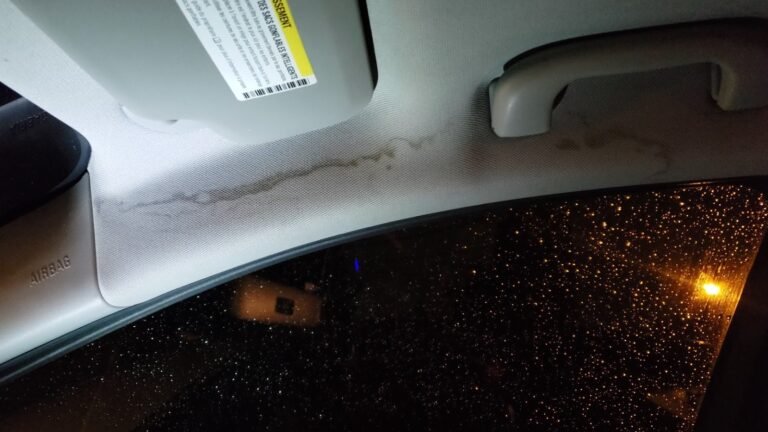
- Ignoring the headliner
- Applying shiny dressing to the steering wheel
- Using a leather conditioner on suede-like trim
- Skipping the hidden-area test
- Closing the car while fabric is still damp
When should you stop and ask for help?
Professional detailing is sensible when you find:
- Mold or extensive mildew
- Deep odor in seat foam
- Bleeding dye
- Cracked or peeling leather
- Water damage near electronics
- Chemical burns or discolored trim
- A stain on a valuable light-colored interior
- A loose or damaged headliner
A detailer cannot always reverse chemical damage. The safest action is often to stop testing products before the damage spreads.
Frequently asked questions
Can I use an all-purpose cleaner inside my car?
Sometimes, but only if the product label allows automotive interior materials and you dilute it as directed. Strong all-purpose cleaners may remove oils, discolor plastic, or leave residue. A dedicated interior cleaner is usually the safer choice for routine care.
Is Armor All or another protectant the same as an interior cleaner?
No. Some protectants also clean light dust, but their main purpose is to leave a protective finish. Check whether you want soil removal, UV protection, shine, or all three. Avoid glossy products on the steering wheel and areas where glare could affect visibility.
What is the best cleaner for a car dashboard?
Use a mild, low-residue interior cleaner on a microfiber towel. Choose a low-sheen finish, and keep liquid away from vents, screens, gauges, and seams. Do not use furniture polish or oily exterior dressing.
Can I use dish soap on car seats?
Dish soap may remove grease, but it is not the best routine cleaner for automotive seats. It can be difficult to rinse from fabric and may affect leather finishes. Use a fabric cleaner for cloth and a leather cleaner for finished leather.
How often should I clean my car interior?
Vacuum and wipe high-touch areas as needed. A light clean every few weeks works for many vehicles, while family cars, work vehicles, and cars exposed to pets may need weekly care. Clean spills right away instead of waiting for the next scheduled detail.
Can I use rubbing alcohol on a car touchscreen?
Do not assume it is safe. Screen coatings and plastics vary by vehicle. Start with a dry microfiber cloth and follow the vehicle owner’s manual. If the manual permits a cleaning solution, apply it to the cloth, never directly to the screen.
Final recommendation
For most U.S. vehicles, choose a mild, water-based automotive interior cleaner with a natural or low-sheen finish. Use it for sealed plastic, vinyl, and routine hard-surface cleaning.
Use separate products for leather, cloth, glass, and specialty trim. Apply cleaner to a towel, work in small sections, test first, and keep moisture away from electronics. The best car interior cleaner is not the strongest formula; it is the one that matches the material and leaves the surface clean without residue or damage.