How To Get Makeup Out Of Car Headliner: Easy Fix
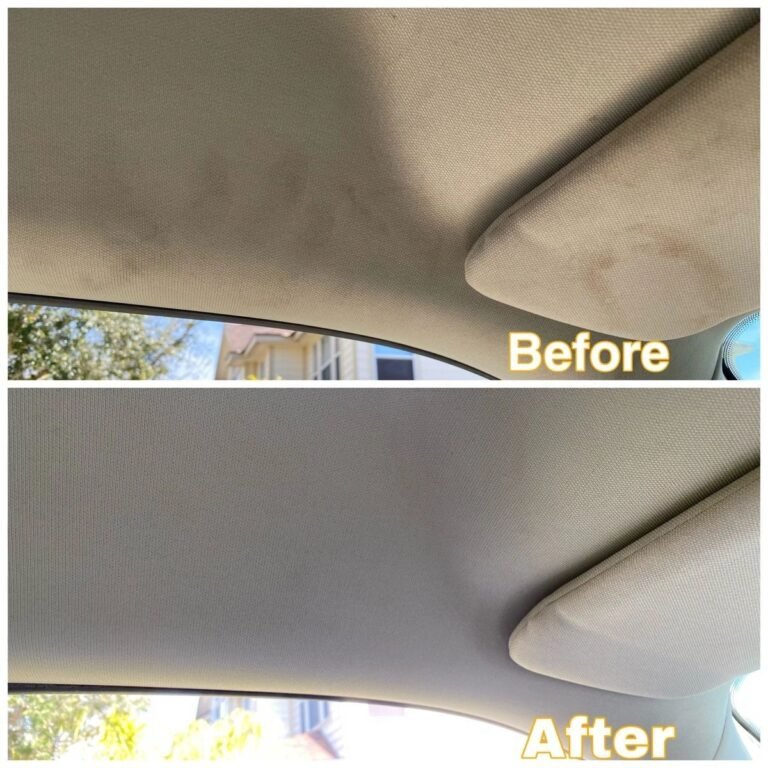
Makeup on a car headliner can usually be removed at home if you act gently. In U.S. vehicles, the headliner is often a thin fabric bonded to foam and a rigid backing board. Too much water, strong cleaner, heat, or scrubbing can loosen the fabric or leave a wide water mark.
The safest method is to remove dry powder first, blot liquid makeup, then use a small amount of mild cleaner on a cloth—not directly on the ceiling. Always check your vehicle owner’s manual and test the cleaner in a hidden spot before treating the stain.

What You Need Before Cleaning the Headliner
Gather the following supplies before you begin:
- A vacuum with a soft brush attachment
- Two or three clean white microfiber cloths
- Distilled water
- Mild liquid dish soap
- A small bowl
- Cotton swabs
- A soft, clean toothbrush or detailing brush
- Isopropyl alcohol, preferably 70%, for limited spot treatment
- A dry towel
- A small fan, if available
Use white cloths because colored towels may transfer dye to light fabric. Avoid paper towels when possible. They can tear and leave lint behind.
Check the headliner material first
Most modern headliners have three layers:
- A visible cloth, knit, or vinyl surface
- A foam layer
- A backing board attached to the vehicle roof
The adhesive between these layers can weaken when soaked. This is why cleaning a headliner differs from cleaning a floor mat or removable seat cover.
Before cleaning, look for:
- Sagging fabric
- Torn cloth
- Exposed foam
- Loose edges
- Built-in lights, microphones, sensors, or handles near the stain
If the fabric already sags, avoid liquid cleaning. A professional auto upholstery shop can reduce the risk of making the damage worse.
Basic safety rules
- Park outside or in a well-ventilated place.
- Turn off the vehicle before cleaning near lights or electronic parts.
- Do not spray cleaner onto the ceiling.
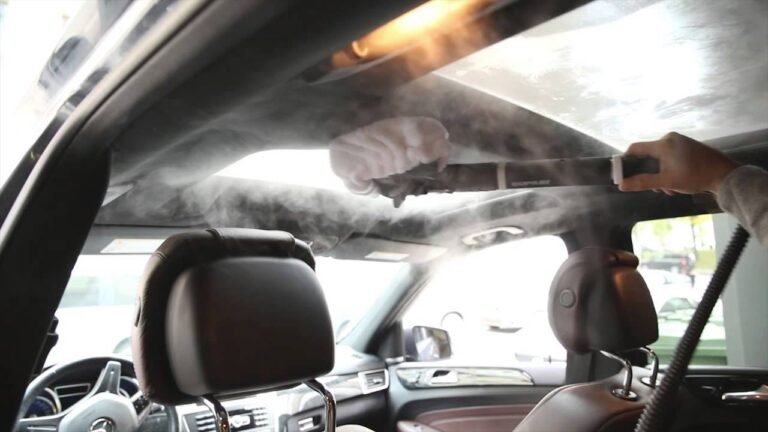
- Do not use a steam cleaner or hair dryer.
- Keep liquid away from the sunroof controls, dome lights, microphones, and grab handles.
- Never mix cleaners, especially bleach, ammonia, and alcohol-based products.

How to Remove Powder Makeup From a Car Headliner
Remove loose powder before using any liquid. Wetting powder first can turn it into a paste and push the pigment deeper into the fabric.
Step 1: Remove loose powder
Hold the vacuum nozzle slightly above the stain. Use a soft brush attachment if you have one. Do not press the nozzle hard against the headliner.
Vacuum from the outside edge toward the center. This helps keep loose pigment from spreading.
If you do not have a vacuum, use a piece of clean masking tape. Lightly touch the tape to the powder and lift it away. Do not rub the tape across the fabric.
Step 2: Make a mild cleaning solution
Mix:
- 1 cup of distilled water
- 1 or 2 drops of mild dish soap
The goal is a weak solution, not a bowl full of suds. Too much soap can leave a sticky film that attracts more dirt.
Step 3: Blot the stain
Dampen a white microfiber cloth with the solution. Wring it until it is nearly dry.
Press the cloth onto the stained area for a few seconds. Lift it straight up. Repeat with a clean part of the cloth.
Do not scrub in circles. Scrubbing can spread pigment, flatten the fabric, and create a fuzzy patch.
Step 4: Rinse lightly
Use a second cloth dampened with plain distilled water. Wring it well and lightly blot the treated area.
This removes leftover soap. Use as little water as possible.
Step 5: Dry the area
Press a dry towel against the spot. Then leave the doors open or run a fan near the vehicle.
Allow the headliner to dry fully before judging the result. A damp area can look darker than the surrounding fabric.

How to Remove Liquid, Cream, or Foundation Makeup
Liquid foundation, concealer, cream blush, and tinted sunscreen often contain oils, waxes, and pigments. Treat these marks as fresh spills first, even if the stain has dried.
Step 1: Lift excess makeup
Use the edge of a plastic card or a clean spoon to lift thick makeup. Work from the outside toward the center.
Do not press down. Pressure can force the product into the foam layer.
Step 2: Blot with a dry cloth
Use a clean white microfiber cloth to blot the mark. Change to a clean section of the cloth as makeup transfers.
Do not use a wet cloth at this stage. Water can spread oil-based makeup across the fabric.
Step 3: Use mild soap and water
Apply the weak dish-soap solution described above to a cloth. Never pour or spray it on the headliner.
Blot the stain in short passes. Give the solution time to loosen the makeup instead of adding more liquid.
Step 4: Use alcohol only when needed
If a small amount of oily pigment remains, test 70% isopropyl alcohol on a hidden part of the headliner first.
If there is no color change, bleeding, texture change, or adhesive odor after the test area dries, place a small amount of alcohol on a cotton swab. Touch the stained fibers lightly.
Work from the outside edge inward. Stop if the fabric color appears on the swab or the surface begins to change.
Alcohol is not safe for every headliner. It may affect dyes, coatings, printed fabric, vinyl, or adhesive. Use it only as a limited spot treatment, not as a general cleaner.
Step 5: Blot and dry
Use a clean, barely damp cloth to remove residue. Then press the area with a dry towel.
Let it air-dry completely. If a faint mark remains, repeat the mild soap method once rather than using stronger chemicals.
How to Treat Different Makeup Stains
The right approach depends on the makeup type. The table below gives a safe starting point.
| Makeup type | First action | Follow-up method | Main risk |
|---|---|---|---|
| Loose powder | Vacuum or lift with tape | Mild soap solution | Spreading pigment with water |
| Blush or bronzer | Remove dry residue | Blot with mild soap solution | Rubbing a larger colored patch |
| Foundation | Lift excess product | Blot, then use mild soap | Oil spreading into fabric |
| Concealer | Scrape thick residue gently | Mild soap; limited alcohol test if needed | Pressing it into the foam |
| Mascara | Lift or blot without rubbing | Mild soap solution | Creating a dark smear |
| Lipstick | Lift waxy residue | Mild soap; cautious alcohol test | Removing headliner dye |
| Eyeliner | Lift flakes first | Small, controlled blotting | Making a long black mark |
| Setting spray | Blot quickly | Distilled water and mild soap | Water rings or adhesive damage |
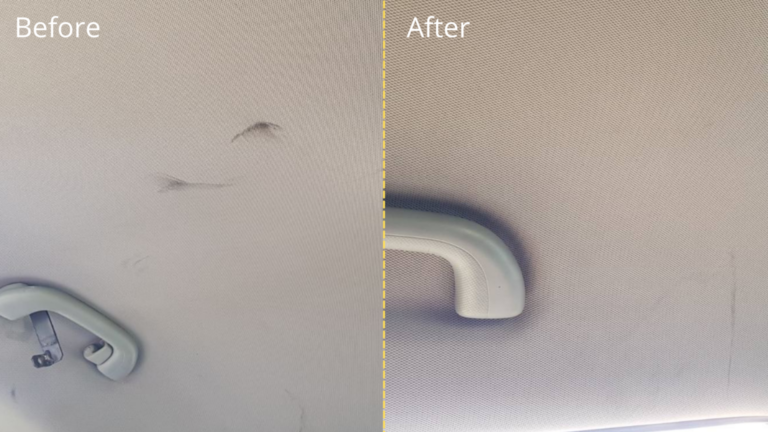
This table is a guide, not a guarantee. Headliner colors and materials vary by vehicle. A dark stain on a light roof may need professional cleaning if it does not improve after one or two gentle attempts.
How to Remove an Old or Dried Makeup Stain
Old makeup may need more than one light treatment. Start with the least aggressive method.
- Vacuum or brush away loose particles.
- Place a barely damp cloth over the stain for about 10 to 15 seconds.
- Blot with a mild soap solution.
- Rinse with a nearly dry cloth.
- Press with a dry towel.
- Let the area dry fully before repeating.
Do not keep adding cleaner because the stain remains visible while wet. Wait until the headliner is dry. Repeated wetting can cause a ring, sagging, or separation from the backing board.
If the stain has a greasy outline, a professional may use a fabric-safe solvent or extraction method. Home use of strong solvent cleaners is risky because the product may dissolve adhesive or leave a faded patch.
How to Clean a Makeup Stain Near a Dome Light or Sensor
Use extra care around roof-mounted electronics. Water can enter the light housing or travel behind the headliner.
For a stain near a dome light, microphone, emergency call button, sunroof switch, or sensor:
- Do not spray anything overhead.
- Use a cotton swab or small cloth with very little cleaner.
- Keep the cloth damp, not wet.
- Work away from openings and seams.
- Stop if liquid reaches the component.
- Check the owner’s manual before removing any trim or light cover.
Do not remove a dome light or headliner panel unless you know how the vehicle’s wiring and side-curtain airbags are arranged. Many U.S. vehicles place airbags in or near the roof pillars. Incorrect removal can cause injury or interfere with airbag deployment.
Common Mistakes That Damage Car Headliners
Avoid these common cleaning errors:
Scrubbing hard
Hard brushing can roughen the cloth and spread makeup. Blotting is slower but safer.
Soaking the fabric
A saturated headliner may develop loose spots, stains, or sagging. Use a nearly dry cloth and small amounts of cleaner.
Spraying cleaner overhead
Spray can travel into lights, switches, microphones, and seams. Spray products onto a cloth only when the product instructions allow it.
Using bleach
Bleach can discolor the fabric and weaken materials. It is not a suitable general headliner cleaner.
Using window cleaner
Many glass cleaners contain solvents, ammonia, or other ingredients that may affect fabric dyes and adhesives. Unless the vehicle or product maker specifically approves it, do not use it.
Using a steam cleaner
Steam combines heat and moisture. That combination may soften the adhesive and cause the fabric to separate from the backing board.
Using a hair dryer
High heat can deform foam or soften adhesive. Air-dry the area instead.
Cleaning only the center of a visible mark
If the stain has spread, cleaning only its center may leave a sharp water ring. Use small, controlled passes that blend slightly into the surrounding area without soaking it.
When to Stop and Call a Professional
Stop home cleaning if:
- The headliner begins to sag.
- The fabric pulls away from the backing board.
- The stain spreads after blotting.
- The color transfers to the cloth.
- A water ring becomes larger.
- The headliner has a strong chemical smell.
- The stain is near an airbag, sensor, or electrical part.
- The vehicle has a suede-like, perforated, or specialty roof lining.
- The makeup contains a large amount of oil, wax, or glitter.
A professional auto detailer or upholstery shop can identify the material and choose a compatible cleaner. Ask whether the service is safe for bonded headliners and roof-mounted electronics.
Professional cleaning may not restore a headliner that has already separated from its backing. In that case, repair or replacement may be the better option.
How to Prevent Makeup From Getting on the Headliner
Prevention is easier than repairing a loose roof liner.
- Apply makeup before entering the vehicle.
- Keep brushes and compact cases in a closed bag.
- Use a clean towel over the headrest when touching up makeup.
- Do not place open foundation or lipstick on the roof or visor.
- Clean makeup from hands before adjusting the sun visor.
- Treat fresh marks as soon as the vehicle is parked safely.
If a makeup case breaks inside the vehicle, remove the case and loose powder first. Then clean the headliner before the product warms and spreads.
Quick Decision Guide
Use this simple process:
- Dry powder: Vacuum or lift it first.
- Fresh liquid makeup: Blot with a dry cloth.
- Thick cream makeup: Lift it with a card, then blot.
- Remaining pigment: Use mild soap and very little water.
- Small oily residue: Consider a hidden test with 70% isopropyl alcohol.
- Loose or sagging fabric: Do not use liquid; call a professional.
- Stain near electronics or airbags: Use extreme caution and avoid disassembly.
The safest cleaner is the one that removes the stain with the least moisture and the fewest ingredients.
Frequently Asked Questions
Can I use makeup remover on a car headliner?
Usually, no. Makeup removers may contain oils, alcohol, fragrance, or solvents that can spread the stain or affect the headliner adhesive. A mild soap solution is a safer first choice. Test any specialty product in a hidden area.
Will rubbing alcohol remove foundation from a headliner?
It may remove a small oily pigment mark, but it can also remove dye or damage the surface. Test 70% isopropyl alcohol in a hidden spot after the area is dry. Use only a tiny amount on a cotton swab, and stop if the color transfers.
Can I use a Magic Eraser on the headliner?
It is best to avoid it. A melamine sponge acts like a fine abrasive. It may change the texture or brightness of the fabric and leave a visible patch.
How long does a car headliner take to dry?
A small, lightly dampened area may dry within a few hours in a warm, ventilated vehicle. Do not use high heat to speed up drying. Wait until the area is fully dry before deciding whether another treatment is needed.
What if the makeup stain will not come out?
Do not keep adding stronger products. Let the headliner dry, then contact an auto detailer or upholstery specialist. Persistent stains may need a professional solvent or controlled extraction method, and repeated home cleaning can cause more visible damage than the original stain.
Conclusion
To get makeup out of a car headliner, remove dry residue first, blot wet or oily makeup, and use a weak soap solution with almost no water. Work slowly from the outside toward the center, test products in a hidden area, and let the headliner air-dry.
Avoid soaking, scrubbing, steam, bleach, and overhead spraying. If the fabric sags, the stain is near electronics or airbags, or gentle cleaning does not work, professional help is the safer next step.