How To Get Blood Out Of Car Headliner: Safe Cleaning Guide
For drivers in the United States, the safest way to get blood out of a car headliner is to use cold water, a clean towel, and a small amount of fabric-safe cleaner. Blot the stain instead of rubbing it, work from the outside toward the center, and keep the headliner as dry as possible. Too much water can loosen the headliner adhesive and make the fabric sag.
If the blood came from an unknown person, a serious injury, or a large spill, treat it as potentially infectious. Wear disposable gloves, keep children and pets away, and consider a professional biohazard cleanup service.

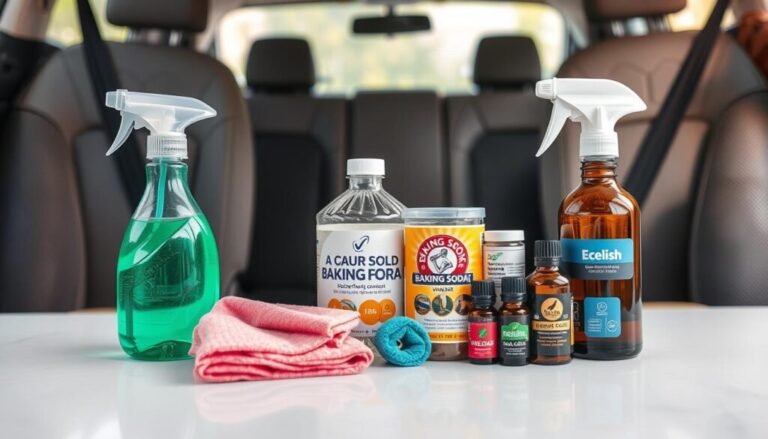
What You Need Before Cleaning a Headliner
Gather these items before you start:
- Nitrile or disposable rubber gloves
- Several clean white microfiber towels
- Cold water
- A small bowl or spray bottle
- Mild liquid dish soap or a cleaner labeled safe for automotive fabric
- A soft-bristle toothbrush or upholstery brush
- A plastic bag for used towels and gloves
- A vacuum with a soft brush attachment, if loose debris is present
- A small fan for drying
Use white towels when possible. Colored towels can transfer dye to light headliner fabric.
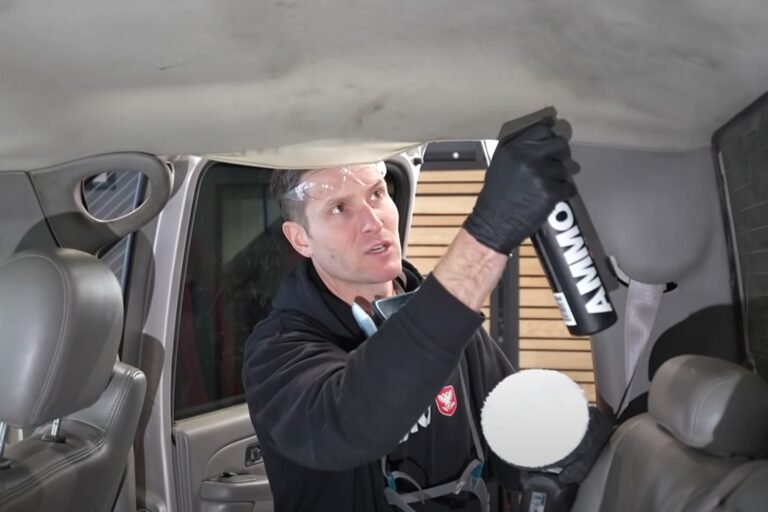
A car headliner is not just cloth. It usually has a thin fabric layer bonded to foam and a rigid backing board. The adhesive between these layers can weaken when exposed to excess water, heat, or harsh chemicals.
That construction changes the cleaning method. You are cleaning the surface, not washing the entire material.
Basic safety steps
- Park the car in a shaded, well-ventilated place.
- Turn off the vehicle and remove the keys.
- Wear gloves before touching the stain.
- Open the doors or windows for airflow.
- Check the vehicle owner’s manual for warnings about interior cleaners.
- Test every cleaner on a hidden area first.
Do not use a household vacuum on wet blood. It can spread contamination inside the vacuum and expose you to biological material.

How to Remove Fresh Blood From a Car Headliner
Fresh blood is usually easier to remove than dried blood. Start as soon as practical, but do not rush and soak the headliner.
1. Blot the fresh blood
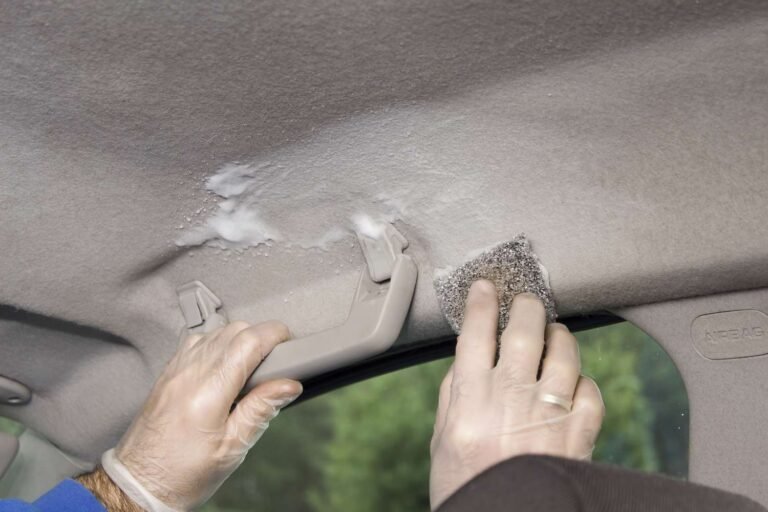
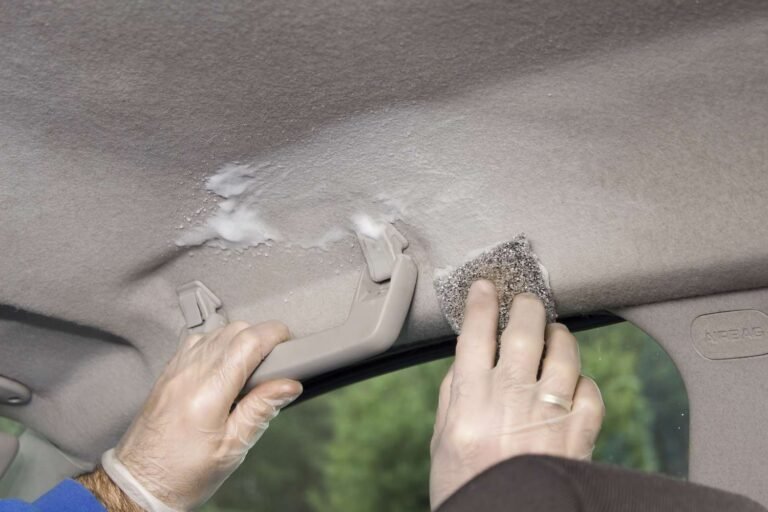
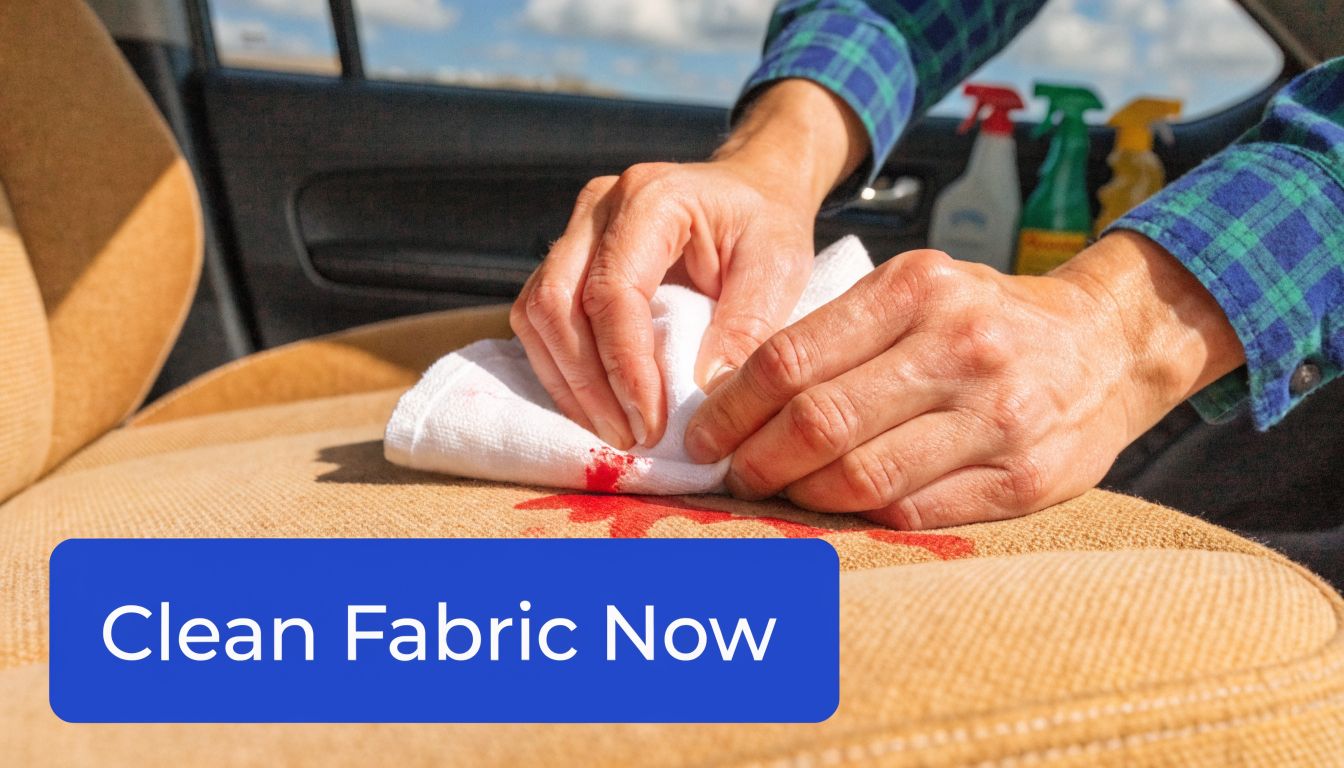
Place a dry, clean white towel over the stain. Press straight down with light pressure, then lift the towel.
Repeat with a clean section of the towel. Do not scrub. Scrubbing can push blood deeper into the fabric and spread the mark across a wider area.
Continue until the towel no longer picks up much liquid.
2. Apply a small amount of cold water
Dampen a clean towel with cold water. The towel should be moist, not dripping.
Press the damp towel onto the stain for a few seconds. Then blot with a dry towel. Work around the edge of the stain first and move toward the center.
Cold water is the better first choice because heat can help set protein-based stains. Do not pour water directly onto the headliner.
3. Use diluted mild soap if needed
If water alone does not remove the mark, mix a small amount of mild dish soap into cold water. A practical starting point is:
- About 1 cup of cold water
- One or two drops of mild liquid dish soap
dip a towel into the mixture and wring it out well. Dab the stained area. Follow with a second towel dampened with plain cold water to remove soap residue.
Use short passes. Stop if the fabric begins to look darker over a broad area or if the headliner feels loose.
4. Dry the area
Press a dry towel against the cleaned spot. Replace the towel as it becomes damp.
Leave the doors or windows open and aim a fan toward the area. Do not use a heat gun, hair dryer, or strong direct sunlight. Heat can shrink the fabric or soften the adhesive.

How to Remove Dried Blood From a Car Headliner
Dried blood needs more time, but it still does not require aggressive scrubbing. The goal is to soften the residue in small sections and lift it from the fabric.
1. Remove loose residue
If the dried blood has formed a crust, gently lift the surface with the edge of a plastic card or a soft toothbrush.
Do not use a knife, razor, or metal tool. These tools can cut the fabric or damage the foam below it.
If loose flakes fall onto the seat or floor, pick them up with a damp towel. Avoid blowing them through the cabin.
2. Soften the stain with cold water
Dampen a folded microfiber towel with cold water. Hold it against the stain for about 30 to 60 seconds.
Do not saturate the headliner. A small damp area is safer than a wet panel.
Blot the softened stain with a dry towel. Repeat this process several times rather than applying a large amount of water at once.
3. Try a fabric-safe enzyme cleaner
If a mild soap solution fails, use an enzyme cleaner that specifically states it is safe for automotive upholstery or fabric. Enzyme products may help break down protein-based organic stains, but formulas differ.
Apply the cleaner to a towel, not directly to the headliner, unless the product label says direct application is safe. Follow the label’s dwell time. Then blot with a clean, damp towel and dry the area.
Avoid products that contain bleach, strong solvents, or ammonia unless the vehicle manufacturer specifically approves them for that material.
4. Brush only after the area is nearly dry
When the fabric is almost dry, use a soft brush with very light strokes to restore the nap. Brushing too early can spread the stain and roughen the fabric.
If a faint shadow remains, repeat the process once after the headliner has fully dried. Repeated wet cleaning is more likely to cause damage than one careful treatment.

How to Clean a Large Blood Stain or Blood That Soaked In
A large blood stain needs a different decision. If blood has soaked into the foam, a surface cleaning may improve the appearance without removing all contamination.
For a small spill on the fabric surface:
- Put on disposable gloves.
- Absorb liquid with disposable towels.
- Seal used towels and gloves in a plastic bag.
- Clean the surface with cold water and a compatible cleaner.
- Dry the area fully.
- Clean nearby hard surfaces with a product suitable for those surfaces.
For a large spill, repeated bleeding, or blood from an unknown person, use a professional biohazard cleanup company. Standard car detailing may not include bloodborne-pathogen procedures.
Do not remove the headliner yourself if it is near curtain airbags, wiring, microphones, lights, or other roof-mounted equipment. Removal can create safety risks and may require vehicle-specific procedures.
In the United States, OSHA’s bloodborne pathogens standard is written for occupational exposure, not ordinary household cleaning. However, its use of universal precautions supports a sensible rule: treat human blood as potentially infectious and avoid direct contact.

Which Cleaners Are Safe for a Car Headliner?
The safest cleaner depends on the fabric, dye, adhesive, and vehicle age. Always check the owner’s manual and the product label.
| Cleaner | Use on a headliner? | Main concern |
|---|---|---|
| Cold water | Usually the best first step | Too much can loosen adhesive |
| Mild dish soap, diluted | Often suitable for small spots | Soap residue or over-wetting |
| Automotive fabric cleaner | Use if the label allows it | Test for color change |
| Enzyme upholstery cleaner | May help with dried organic stains | Formula may affect dye or adhesive |
| Hydrogen peroxide | Not a first choice | Can bleach or discolor fabric |
| Chlorine bleach | Do not use | Can damage fibers, color, foam, and adhesive |
| Ammonia | Avoid unless approved | Strong odor and possible material damage |
| Acetone or paint thinner | Do not use | Can dissolve or damage the headliner system |
| Steam cleaner | Usually avoid | Heat and moisture can cause sagging |
Never mix cleaning chemicals. In particular, do not combine bleach with ammonia or acidic products. Dangerous gases can form.
A disinfectant designed for hard, nonporous surfaces may not be suitable for fabric. “Disinfectant” on the label does not automatically mean “safe for automotive headliners.”
How to Tell Whether the Headliner Is Damaged
Cleaning is going well when:
- The stain becomes smaller or lighter.
- The fabric stays firmly attached.
- No broad water ring forms.
- The fabric does not become fuzzy or rough.
- The area dries without a strong chemical smell.
Stop cleaning if:
- The headliner begins to sag.
- The fabric pulls away from the backing.
- A large wet ring spreads beyond the stain.
- The fabric color changes.
- The foam becomes visible.
- A musty odor develops after drying.
A small water mark may sometimes be blended by lightly cleaning the entire nearby panel, but this creates a greater risk of adhesive damage. For an older or already sagging headliner, professional repair is usually safer than more moisture.
If the headliner is sagging, do not use pins or staples near an airbag area. They can create a hazard and may interfere with proper deployment.

Common Mistakes to Avoid
Rubbing the stain
Rubbing spreads blood and pushes it deeper into the fabric. Blotting lifts liquid with less disturbance.
Using hot water
Hot water can make protein stains harder to remove. Cold water is the safer first step.
Spraying cleaner directly on the headliner
Direct spraying can create a wet spot larger than the original stain. Spray onto a towel unless the product instructions clearly allow direct use.
Over-wetting the fabric
Moisture can reach the foam and adhesive. This may cause sagging, rings, odor, or delamination.
Using bleach to disinfect the fabric
Bleach can permanently discolor the headliner and damage its structure. It may also leave harmful fumes in the vehicle.
Using a steam cleaner
Steam adds both heat and moisture. That combination can loosen the adhesive that holds the fabric to the backing.
Drying with high heat
A hair dryer on high heat can shrink the fabric or soften the glue. Air movement is safer.
Ignoring the source of the blood
If the blood came from a serious accident, check that the injured person has received medical care. Cleaning the vehicle does not address the exposure risk or the injury itself.
When Should You Hire a Professional?
Hire a professional detailer or biohazard cleanup service when:
- The stain covers a large area.
- Blood soaked into the headliner foam.
- The source is unknown.
- The blood may contain a bloodborne pathogen.
- The car has a strong odor after cleaning.
- The headliner is already loose or sagging.
- The stain is near a curtain airbag or roof wiring.
- You have no way to safely contain used towels and cleaning waste.
Ask the service what type of cleaning they perform. A general detailer may focus on appearance, while a biohazard remediation company is equipped for contaminated materials and waste handling.
If the headliner cannot be cleaned safely, replacement may be more practical. An automotive upholstery shop can inspect the backing board, foam, fabric, and adhesive.

What to Do If the Blood Stain Will Not Come Out
If the stain remains after one or two careful cleaning attempts, stop adding moisture. The remaining mark may be in the fabric dye, foam, or backing layer.
Take these steps:
- Let the headliner dry completely.
- Photograph the area for comparison.
- Check whether the fabric is loose or discolored.
- Ask a professional detailer for an inspection.
- Request an upholstery or headliner replacement estimate if needed.
Do not keep increasing the strength of the cleaner. A harsher chemical may remove more color than blood.
For light-colored headliners, a faint shadow may remain even when the surface is clean. Appearance and contamination are separate issues. A professional can advise whether the material needs further cleaning or replacement.

Quick Decision Guide
Use this guide to choose the next step:
- Tiny fresh spot: Blot with a dry towel, then use cold water.
- Small dried spot: Soften with cold water and blot.
- Persistent small spot: Try a fabric-safe enzyme cleaner after a hidden-area test.
- Large or soaked stain: Avoid home extraction and contact a professional.
- Unknown source: Use gloves and consider biohazard remediation.
- Sagging headliner: Stop wet cleaning and arrange an inspection.
- Stain near an airbag: Do not remove or fasten the headliner yourself.
The key trade-off is simple: more moisture and stronger chemicals may improve the stain but increase the chance of permanent headliner damage.

Frequently Asked Questions
Can I use hydrogen peroxide to remove blood from a car headliner?
It is not the best first choice. Hydrogen peroxide can lighten or bleach automotive fabric, especially on dark or dyed headliners. Start with cold water and a mild, fabric-safe cleaner. If you consider peroxide, check the vehicle and product guidance and test a hidden area first.
Will baking soda remove blood from a headliner?
Baking soda may help with odor, but it is not a reliable blood stain remover. Dry powder can also be hard to remove from the fabric and foam. Treat the stain with controlled moisture first, then address odor after the headliner is fully dry.
Can I use a carpet cleaner on a headliner?
Only if the product specifically says it is safe for automotive headliners or delicate overhead fabric. Many carpet cleaners use too much water or suction for a headliner. Apply a small amount to a towel and avoid soaking the material.
How long does a car headliner take to dry?
A small treated area may dry within a few hours with good airflow. A larger damp area can take longer. Do not close the vehicle and assume it is dry if the foam still feels cool or damp. Trapped moisture can cause odor and adhesive problems.
Should I replace the headliner after blood gets on it?
Not always. A small surface stain may be cleaned successfully. Replacement becomes more reasonable when blood has soaked into the foam, the material smells, the headliner is sagging, or a professional cannot verify that cleaning is adequate.
Final Recommendation
To get blood out of a car headliner, use gloves, blot first, apply cold water sparingly, and use only a tested fabric-safe cleaner when needed. Keep the headliner nearly dry and use airflow instead of heat.
For a large, soaked, or unknown-source blood stain, skip aggressive home cleaning and contact a qualified biohazard or automotive upholstery professional. That protects both the vehicle and the people who use it.