How To Clean Vomit From Car Headliner: Easy Guide
Clean vomit from a car headliner as soon as you can. Wear gloves, remove solids, blot the area, use a small amount of mild cleaner, and dry it fast. Do not soak the headliner, scrub hard, or use bleach. Too much liquid can loosen the fabric and damage the foam or glue beneath it.
This guide applies to cars, trucks, and SUVs in the United States. It covers cloth headliners, light stains, odor, and cases where vomit has soaked into the material. If the headliner sags, has a large stain, or still smells after cleaning, a professional auto detailer may be the safer choice.

What You Need Before Cleaning a Car Headliner
Gather your supplies before you start. Quick action helps limit stains and odor.
You will need:
- Disposable nitrile or rubber gloves
- A face mask, if the smell is strong
- Paper towels or clean white towels
- A plastic scraper, spoon, or old card
- A vacuum with a hose attachment
- Two clean microfiber cloths
- Mild dish soap or a fabric-safe upholstery cleaner
- Clean, lukewarm water
- A spray bottle
- A soft-bristle brush, used gently
- Baking soda for odor control
- A fan or open-air ventilation
Use white or light-colored cloths when possible. Colored towels may transfer dye to the headliner.
Before cleaning, remove children, pets, food, and loose items from the vehicle. Park in a safe, shaded place with the doors open. Good air flow helps the headliner dry and reduces the chance of a musty smell.
The Centers for Disease Control and Prevention recommends using gloves when cleaning vomit and washing your hands after glove removal. For a large amount of vomit, repeated exposure, or a person with a known infectious illness, consider professional cleaning and follow current CDC guidance for cleaning body-fluid spills.
How to Clean Vomit From a Car Headliner
The safest method is to use as little moisture as possible. A car headliner is often made from thin fabric attached to foam and a rigid backing board. Water can travel through the fabric, weaken the adhesive, and cause sagging.
1. Protect yourself and ventilate the vehicle
Put on gloves before touching the mess. Open the car doors and windows if the weather and location allow it.
Avoid pointing a strong fan directly at fresh vomit before removing it. Air movement may spread droplets or odor. Ventilate the vehicle after the solid material is gone.
2. Remove solid material without spreading it
Use a plastic scraper, spoon, or stiff piece of cardboard. Lift the material from the headliner instead of pushing it into the cloth.
Work from the outside of the mess toward the center. This helps keep the affected area small. Place used paper towels and waste in a sealed plastic bag.
Do not use a vacuum on wet vomit. Liquid and solid waste can contaminate the vacuum and spread odor through its filter.
3. Blot the area
Press a dry paper towel or white microfiber cloth against the spot. Lift the towel straight up. Repeat with clean sections of the towel.
Do not rub in circles. Rubbing can push the mess deeper into the foam and may roughen or loosen the headliner fabric.
If the area is already dry, gently lift loose particles with the scraper first. Then vacuum only the dry residue with a clean hose attachment. Keep the vacuum nozzle slightly above the surface if the fabric looks loose.
4. Test the cleaner in a hidden spot
Before cleaning the visible stain, test the solution near the edge of the headliner or another hidden area. Wait several minutes and check for:
- Color transfer
- Fading
- Water marks
- Fabric fuzzing
- Softening or lifting of the material
- A change in texture
Stop if the test area changes. Check the vehicle owner’s manual for material-care limits. Some headliners have delicate fabric, printed designs, or special coatings.
5. Make a mild cleaning solution
For a small spot, mix:
- One cup of lukewarm water
- A few drops of mild dish soap
The solution should feel lightly soapy, not thick or sudsy.
You may use a fabric-safe automotive upholstery cleaner if its label allows use on a vehicle headliner. Do not assume that a carpet cleaner, household disinfectant, or leather cleaner is safe for the roof fabric.
6. Dampen the cloth, not the headliner
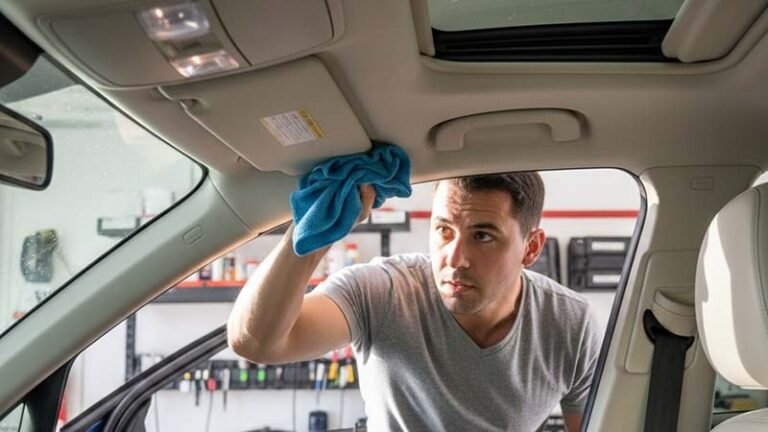
Dip a clean microfiber cloth into the solution. Wring it out until it is only damp.
Do not spray the headliner directly. Spray can send liquid into the foam, lights, switches, speakers, sunroof controls, and other roof-mounted parts.
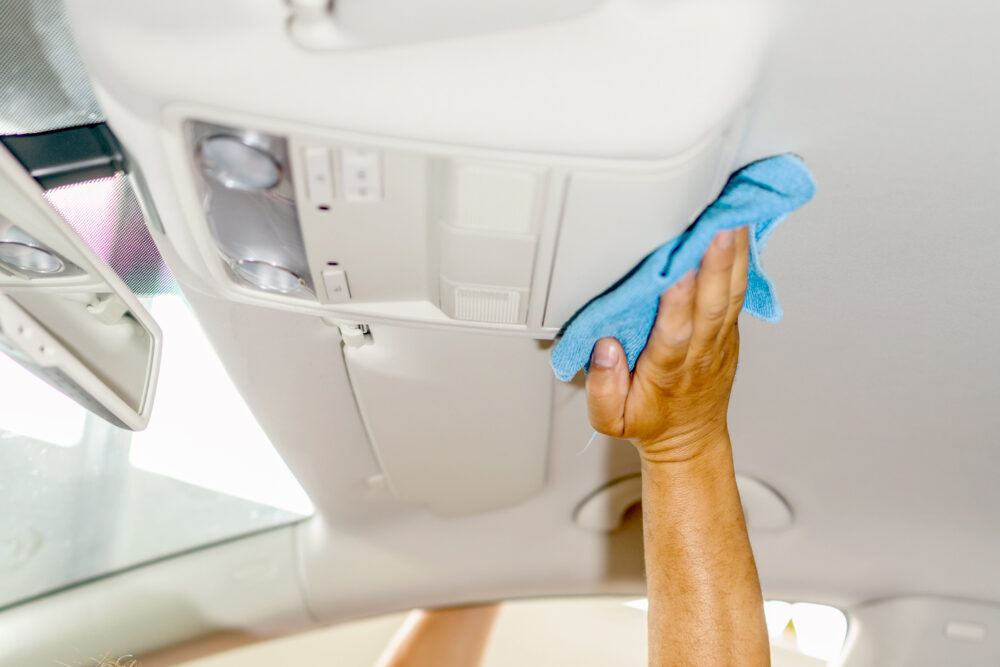
Gently dab the stain with the damp cloth. Start at the outer edge and move toward the center. Use short, light presses rather than hard scrubbing.
For a larger area, clean small sections at a time. Rinse and wring the cloth often so you do not spread the vomit back onto the fabric.
7. Lift soap and residue
Use a second cloth dampened with plain water. Wring it well, then dab the cleaned area to remove soap.
Use very little water. You are lifting residue from the surface, not washing the headliner like a carpet.
Follow with a dry towel. Press gently until the area feels only slightly damp.
8. Dry the headliner quickly
Leave the doors or windows open in a safe place. Use a fan to move air through the vehicle.
Do not use a heat gun, hair dryer on high heat, or space heater. Strong heat can shrink the fabric, soften glue, warp the backing board, or create a fire risk.
Drying may take several hours, depending on humidity and how much moisture you used. Do not close the vehicle until the headliner is fully dry.
9. Treat odor only after the surface is clean
If a mild smell remains, sprinkle a thin layer of baking soda over the dry fabric. Leave it for several hours, then remove it with a clean vacuum hose.
Keep the vacuum nozzle from pressing into the headliner. Do not use baking soda on a damp surface, and do not leave powder near roof-mounted electronics.
Baking soda may reduce surface odor, but it cannot remove contamination that has soaked into the foam. A lasting odor often means the material below the fabric needs professional treatment or replacement.
How to Clean Dried Vomit From a Headliner
Dried vomit needs a softening step, but use very little liquid. Start by removing loose flakes with a plastic scraper. Hold a paper towel under the area to catch debris.
Place a barely damp cloth over the dried spot for a short time. This can soften the residue. Do not press hard, and do not leave a wet cloth on the headliner for a long period.
Once softened, lift the material with the scraper. Blot the remaining mark with the mild soap solution described above. Repeat in small passes rather than flooding the area.
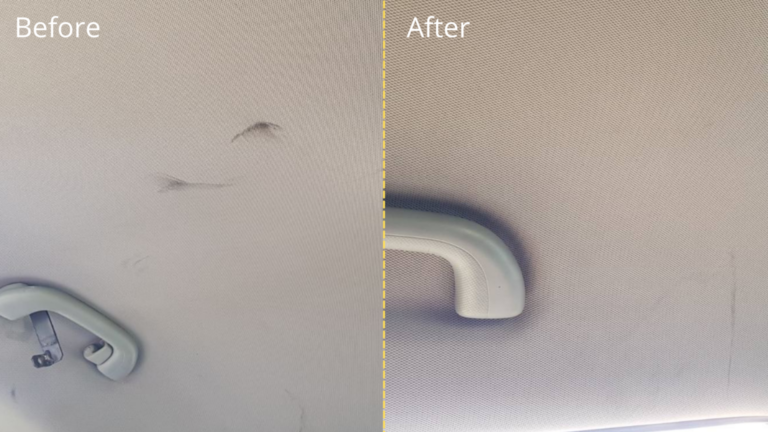
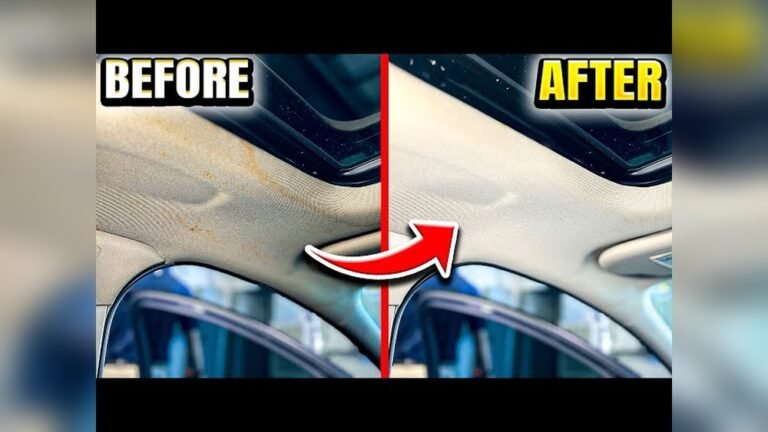
A dried stain may leave a yellow or brown mark. Several light cleaning passes are safer than one aggressive pass. If the color remains after the fabric is clean and dry, the stain may have reached the foam or caused permanent discoloration.

How to Remove Vomit Smell From a Car Headliner
Remove the source before treating the smell. Odor can remain in the headliner, seat belts, carpet, seats, door panels, or floor mats.
Check nearby areas, including:
- The roof fabric around the original spot
- Sun visors and grab handles
- Seat belt webbing
- Seat cushions
- Floor mats and carpet
- Door pockets
- The gap between the seat and center console
- The cabin air intake area
Clean each affected surface with a method suited to its material. Do not use one cleaner on every part of the interior.
For the headliner, use a dry odor absorber only after cleaning and drying. Baking soda can help with a light surface smell. An activated-carbon odor absorber may also help in the cabin, but it does not replace cleaning.
Avoid spraying air freshener over the odor. It may mask the smell for a short time while leaving the source in place. Avoid ozone generators in an occupied vehicle. Ozone can irritate the lungs and may damage some rubber, plastic, and fabric materials.
If the smell returns when the car warms up, contamination may remain under the headliner or in another interior component. At that point, seek an automotive detailer with experience in headliner cleaning.

What Not to Use on a Car Headliner
The wrong product can cause more damage than the vomit stain.
| Product or method | Why to avoid it |
|---|---|
| Bleach | May discolor fabric, weaken fibers, and create harmful fumes |
| Strong disinfectant | May stain the fabric or damage foam and adhesive |
| Carpet extractor | Can inject too much water into the headliner |
| Steam cleaner | Heat and moisture may loosen glue or warp the backing |
| Hard brush | Can roughen, tear, or pull the fabric loose |
| Direct spray | May send liquid into foam, wiring, lights, and controls |
| Ammonia-based cleaner | Can create irritating fumes and damage some materials |
| Hair dryer on high heat | May shrink fabric or soften adhesive |
| Ozone generator | Can irritate people and degrade some vehicle materials |
Never mix bleach with ammonia, acids, or other cleaners. Mixing household chemicals can create dangerous gases.
A disinfectant may be useful on a hard, nonporous surface when the label permits that use. A fabric headliner is different. Cleaning and drying it carefully is usually safer than saturating it with a strong chemical.

When to Replace or Professionally Clean the Headliner
Professional help is wise when the vomit has soaked through the fabric, covered a large area, or caused the headliner to sag.
Contact an automotive detailer or upholstery professional if:
- The headliner is loose or bubbling
- The fabric has pulled away from the backing board
- The stain covers a large section
- The odor remains after two careful cleaning attempts
- Liquid reached a dome light, speaker, sunroof control, or wiring
- The vehicle has a sunroof and fluid may have entered the frame or drain area
- The person who vomited had a known contagious illness
- You cannot clean the area without touching it repeatedly
- The backing foam feels wet or soft
Do not remove the headliner casually. It may sit near curtain airbags, wiring, grab-handle mounts, and trim clips. A service professional can identify safe removal points and decide whether the board can be cleaned or needs replacement.
A replacement may be more practical when the backing board is warped, the foam has broken down, or the odor returns after professional cleaning. Cleaning the visible cloth will not fix damaged adhesive or contaminated foam.
How to Tell Whether the Cleaning Worked
The headliner should meet four simple checks:
- No solid residue remains.
- The fabric is dry all the way through.
- There is no spreading water ring or loose fabric.
- The vomit odor does not return after the vehicle warms up.
Inspect the area in daylight. A stain can look gone while wet and become visible again after drying. Wait until the headliner is fully dry before judging the final result.
If the fabric feels stiff, rough, or loose, stop cleaning. Further moisture or brushing may increase the damage.

Common Questions About Cleaning Vomit From a Car Headliner
Can I use vinegar on a car headliner?
A diluted vinegar solution may leave its own smell and can affect some fabrics, coatings, or adhesives. Mild soap and water are a safer first choice. If you use any specialty cleaner, test it in a hidden area and follow the product label.
Can I use an upholstery cleaner on the headliner?
Only if the cleaner label clearly allows headliner use. Many upholstery products are designed for seats or carpet and may add too much moisture. Apply the product to a cloth, not directly to the roof fabric.
How do I clean vomit from a fabric car ceiling without making a water stain?
Use a barely damp cloth, clean from the outside toward the center, and avoid soaking one small spot. Afterward, lightly blend the edge with a clean, damp cloth only if the fabric allows it. Dry the area quickly and evenly.
What if vomit gets into the dome light?
Turn off the vehicle before cleaning around the light. Do not spray liquid near the fixture. If fluid entered the light housing, wiring, or switch, have the vehicle inspected before using that component again.
Can a professional detailer remove the smell completely?
A professional may remove the odor if the source is reachable and the affected materials can be cleaned. No cleaner can guarantee success when vomit has soaked into foam, insulation, carpet padding, or hidden trim. Ask what materials they will treat and whether they use a low-moisture headliner method.
Conclusion
To clean vomit from a car headliner, remove solid waste, blot instead of rubbing, use a small amount of mild cleaner, and dry the fabric quickly. Avoid bleach, steam, extractors, direct spray, and high heat.
If the headliner sags, the odor persists, or liquid reached electrical parts, stop and contact an automotive detailer or qualified repair professional. The safest next step is to inspect the headliner and nearby surfaces before cleaning so you can treat every affected area without adding moisture damage.