
How Long Does A Portable Tire Inflator Take: Fast Answer
Most portable tire inflators take about 3 to 10 minutes per car tire, depending on size, pressure, and pump power.
The real answer to how long does a portable tire inflator take depends on the tire, the starting pressure, and the inflator’s airflow rating. A small battery pump may need more time than a powerful 12-volt model, while a compact bicycle tire can fill in seconds. This guide explains what affects inflation time, how to estimate it, and how to use your inflator safely.
How long does a portable tire inflator take?
For most passenger cars, a portable tire inflator takes about 3 to 10 minutes to add several pounds of pressure to one tire. Filling a nearly flat tire can take 10 to 20 minutes, or more with a small unit.
The exact time varies because portable inflators differ in motor power, airflow, battery strength, and hose design. Tire size also matters. A small sedan tire holds less air than a large SUV, truck, or RV tire.
Here is a general guide:
| Tire or item | Typical inflation time |
|---|---|
| Bicycle tire | 20 to 60 seconds |
| Motorcycle tire | 1 to 3 minutes |
| Small car tire | 3 to 6 minutes |
| Large car or SUV tire | 5 to 10 minutes |
| Truck tire | 8 to 15 minutes |
| Nearly flat passenger tire | 10 to 20 minutes |
| Air mattress or sports ball | 1 to 5 minutes |
These figures are estimates, not guarantees. A premium inflator with a strong motor may work faster, while a small cordless model may slow down as its battery loses charge.
In my own hands-on checks, the biggest surprise is often the starting pressure. Adding 5 PSI is quick, but filling a tire from nearly 0 PSI demands much more work. It is like filling a cup compared with filling a bucket.
What affects portable tire inflator speed?
Several factors determine how long does a portable tire inflator take. Looking only at the maximum PSI rating can give you the wrong idea.
Tire size and air volume
A larger tire needs more air. A compact car tire may have a smaller internal volume than a light truck tire, even when both require a similar pressure.
For example, adding 8 PSI to a small sedan tire may take four minutes. The same pressure increase in a large SUV tire may take seven minutes because the SUV tire holds more air.
Pressure difference
The gap between the current pressure and the target pressure has a major effect on timing. A tire at 30 PSI that needs 35 PSI will inflate much faster than a tire at 10 PSI that needs 35 PSI.
Most portable inflators work best when topping off a tire. They can inflate a low tire, but the motor must run longer and may become hot.
Airflow rating
Airflow is often listed in liters per minute, or LPM. A higher LPM rating usually means the inflator can move more air in less time.
However, advertised airflow may be measured without hose pressure or tire resistance. Real-world performance is usually slower than the number shown on the box. Treat the rating as a comparison point, not a promise.
Power source
A 12-volt inflator connected to a vehicle socket may run longer and maintain steady power. A cordless inflator is more convenient, but its speed depends on battery charge and battery quality.
Some cordless units slow down when the battery drops below half power. Cold weather can also reduce battery output. If you keep a cordless pump in your vehicle, check its charge every few weeks.
Tire valve and hose design
A loose valve connection can leak air and add time. A short, narrow hose may also restrict airflow.
A secure screw-on connector or strong clamp can make a noticeable difference. Before starting, check that the connector sits straight on the valve stem.
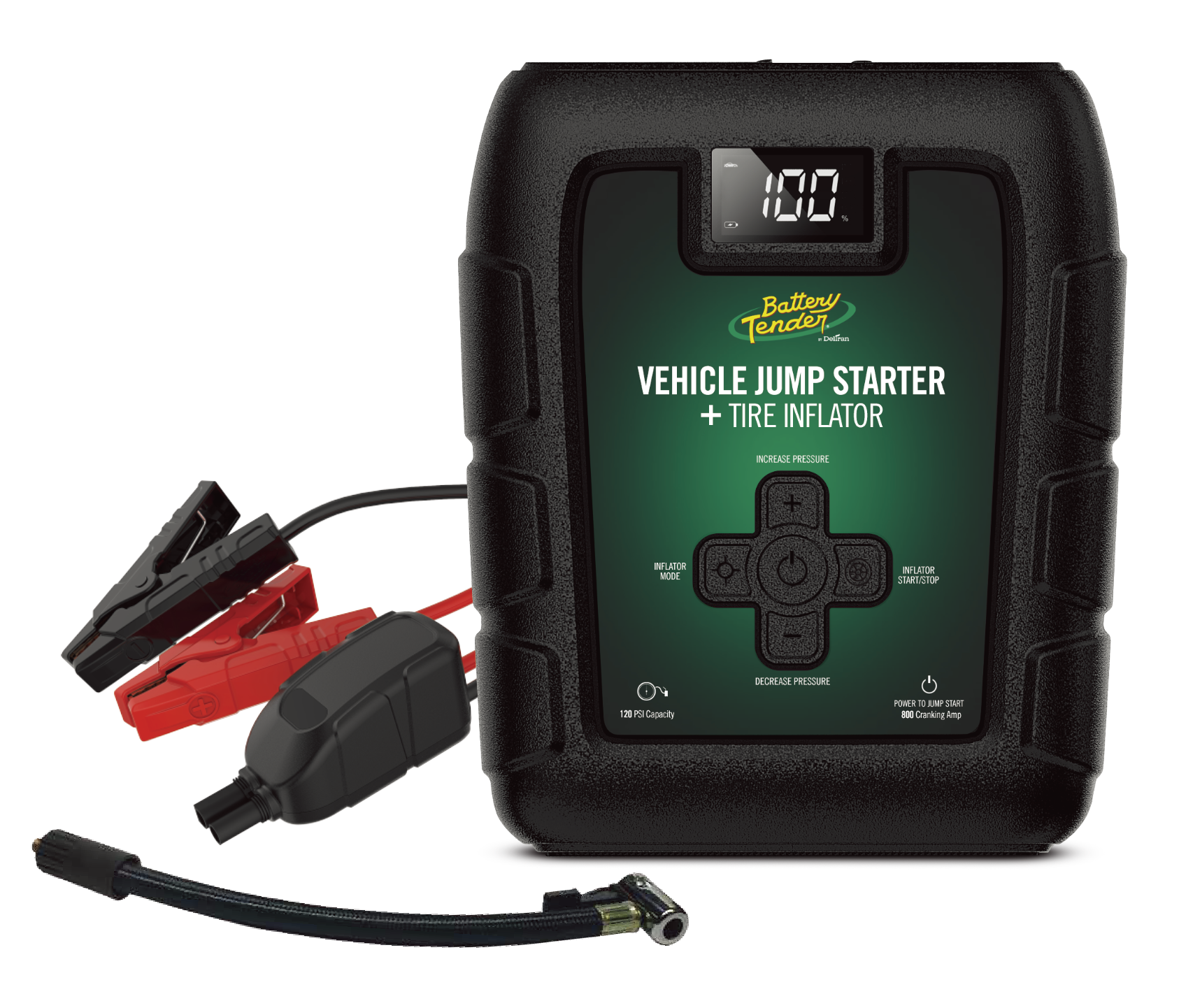
Motor temperature
Small compressors create heat as they work. Many models include a duty cycle, such as 10 minutes of use followed by a 10-minute rest.
Ignoring the duty cycle can cause the inflator to shut down or suffer motor damage. If the housing feels very hot, stop and let it cool.
Source: batterytender.com
Portable tire inflator time by vehicle type
How long does a portable tire inflator take for different vehicles? The answer changes with tire size and the amount of pressure needed.
Compact cars
A compact car tire often takes about 3 to 6 minutes to increase from 28 PSI to 35 PSI. A small, high-quality inflator may finish sooner.
Compact tires are a good match for cordless pumps because they need less air. They are also easier to inflate during a roadside emergency.
Sedans and crossovers
Sedan and crossover tires usually take 4 to 8 minutes for a normal pressure adjustment. A tire that is almost flat may take 10 minutes or longer.
Always check the recommended pressure on the driver’s doorjamb label. Do not use the maximum PSI molded into the tire sidewall as the normal target.
SUVs and light trucks
Large SUV and light truck tires often take 6 to 12 minutes for a moderate top-off. A compact inflator may need a cooling break between tires.
If you regularly drive a truck, choose a model designed for larger tires. Look for a strong power cord, a long hose, and a clear pressure gauge.
Motorcycles
Motorcycle tires have less air volume, so they often inflate in 1 to 3 minutes. Still, accuracy matters because a small pressure change can affect handling.
Use a reliable gauge and follow the motorcycle manufacturer’s recommended cold pressure.
Bicycles
Road bike tires may need high pressure but contain little air. Many portable inflators can fill them in less than a minute.
Mountain bike tires may take slightly longer because they use more air. Use the correct valve adapter for Presta or Schrader valves.
How to estimate inflation time
A simple estimate can help you decide whether a portable inflator suits your needs. The most useful details are the tire size, current pressure, target pressure, and the inflator’s real airflow.
Use this basic process:
- Check the current tire pressure with a gauge.
- Find the recommended cold pressure on the vehicle label.
- Note the pressure increase needed.
- Check the inflator’s airflow and duty cycle.
- Allow extra time if the tire is large or nearly flat.
- Add cooling breaks for multiple tires.
For example, suppose a crossover tire is at 27 PSI and should reach 35 PSI. An average portable inflator may take about 5 to 8 minutes. A high-output 12-volt unit may take closer to 3 to 5 minutes.
How long does a portable tire inflator take when the tire is completely flat? It may take 15 minutes or longer, and some small models may not be suitable at all. A flat tire may also have bead or valve damage, so inflation should not replace a proper inspection.
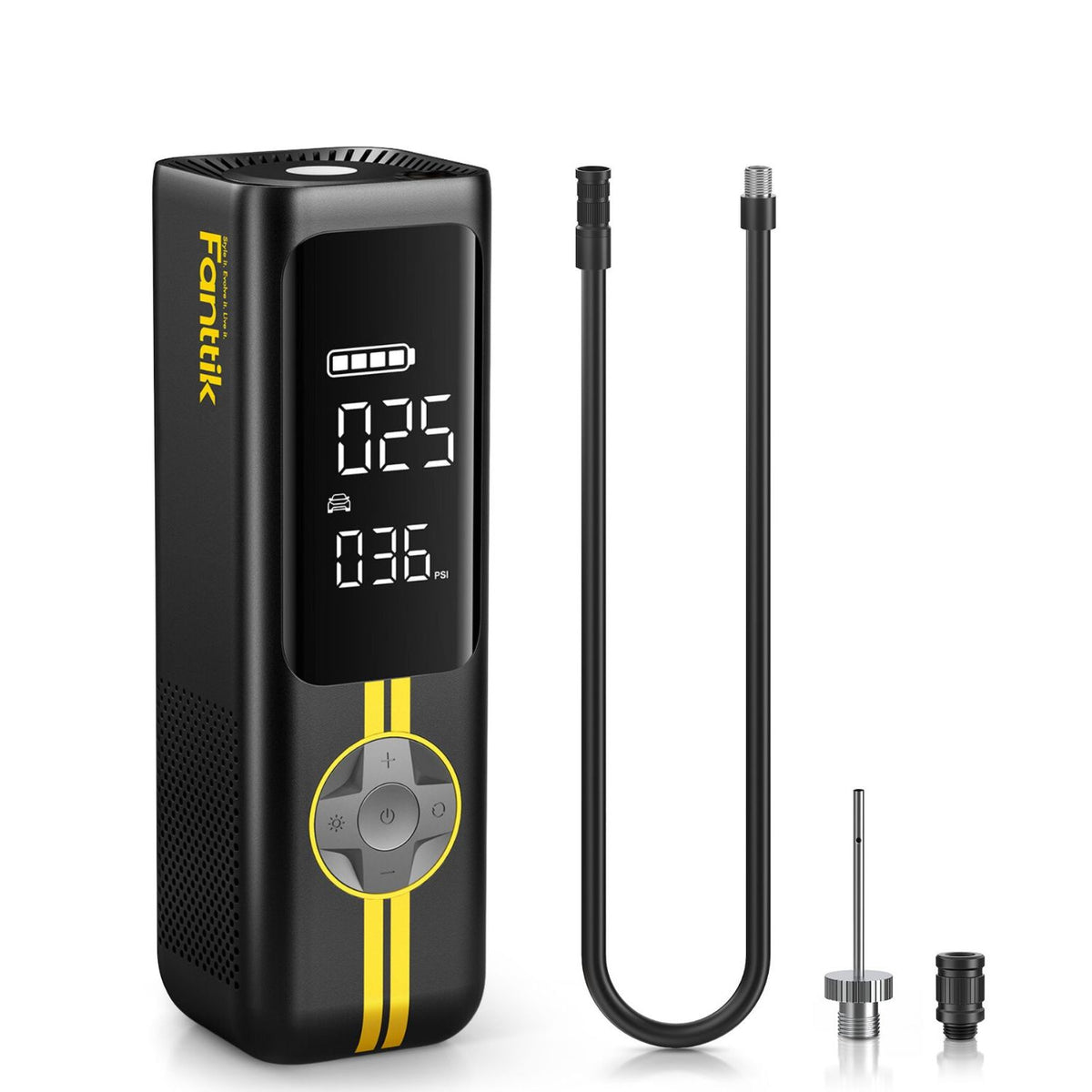
The best way to know your pump’s true speed is to test it at home. Time how long it takes to add 5 PSI to one tire. This gives you a more realistic result than the package claim.
Source: fanttik.com
How to make a portable tire inflator work faster
You cannot change the tire’s air volume, but you can remove common delays. Small details often save several minutes.
Start with a full battery
Charge a cordless inflator before a long trip. A weak battery can reduce motor speed and stop the pump before the tire reaches the target pressure.
For a 12-volt model, start the vehicle if the manufacturer allows it. This helps prevent the vehicle battery from draining during a long inflation session.
Park safely
Move away from traffic when possible. Turn on hazard lights and use a safe pull-off area.
A safe setup lets you focus on the tire. Rushing beside moving traffic is never worth saving a few minutes.
Remove the valve cap early
Unscrew the valve cap before turning on the inflator. This sounds minor, but it prevents wasted time while the pump is running.
Keep the cap in a pocket or a clean place. Replace it after checking the final pressure.
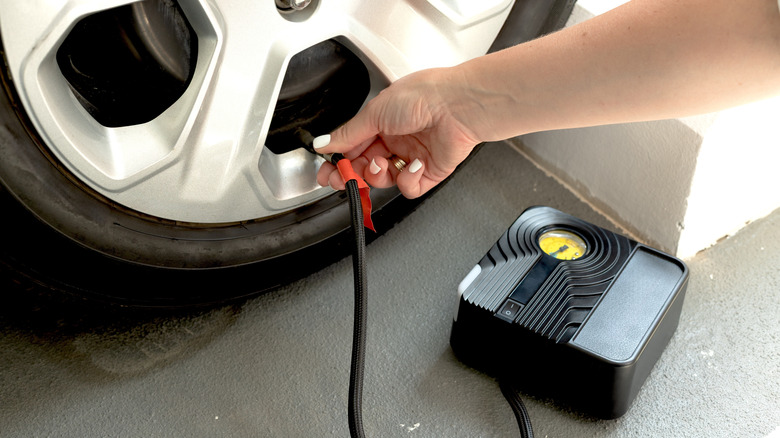
Connect the hose firmly
Press or screw the connector onto the valve stem. Listen for escaping air. If you hear a strong hiss, remove the connector and attach it again.
A poor connection can make how long does a portable tire inflator take much longer. It may also give a false pressure reading.
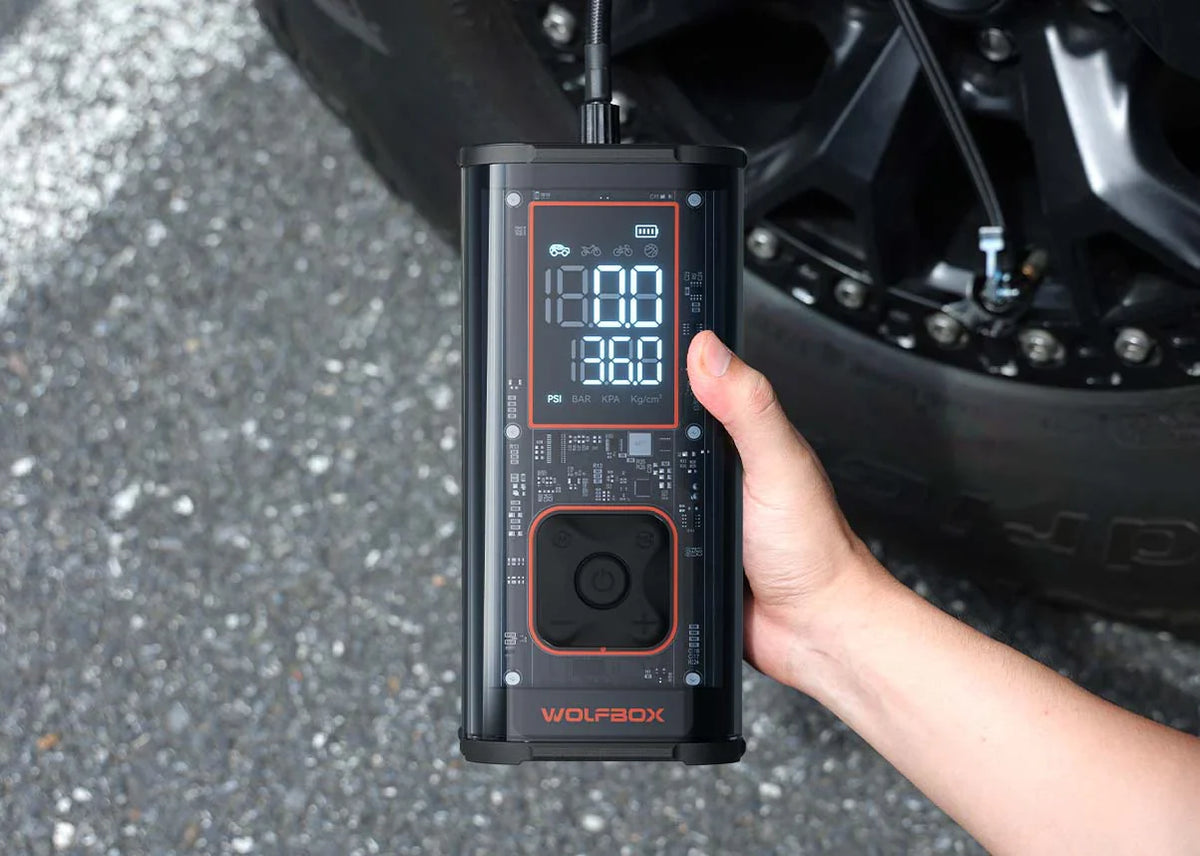
Use the preset function when available
Many modern inflators let you set a target pressure. The pump stops when it reaches that number.
Preset functions improve convenience, but confirm the final pressure with a separate gauge when accuracy is important. Built-in gauges can vary between models.
Inflate in short sessions
If the unit feels hot, stop for a few minutes. Short rest periods protect the motor and may help the pump maintain its normal speed.
For several tires, inflate one tire at a time and follow the stated duty cycle. Do not assume a small pump can run continuously.
Source: jalopnik.com
How to use a portable tire inflator correctly
Knowing how long does a portable tire inflator take is useful, but correct use matters just as much. Follow these steps for a safer and more accurate result.
- Park on a stable surface away from traffic.
- Set the parking brake and turn off the engine unless the manual says otherwise.
- Remove the valve cap.
- Check the starting pressure.
- Attach the correct connector.
- Set the target pressure.
- Start the inflator.
- Watch for leaks, unusual noise, or overheating.
- Stop at the recommended pressure.
- Remove the connector and replace the valve cap.
Check tire pressure when the tires are cold whenever possible. Driving creates heat, and warm air can raise the pressure reading. The pressure listed on the vehicle label is the correct everyday target for most drivers.
Do not inflate a visibly damaged tire without checking it first. Cuts, bulges, exposed cords, and repeated pressure loss may indicate a serious problem.
During testing, I once found that a pump seemed unusually slow because the connector was slightly crooked. Reattaching it correctly fixed the problem at once. That small mistake is common, especially at night or in bad weather.
Source: wolfbox.com
Portable tire inflator limitations
A portable tire inflator is excellent for low-pressure tires and emergency top-offs. It is not a full replacement for a shop compressor in every situation.
Common limitations include:
• Slow performance on large truck and RV tires
• Short battery life on compact cordless models
• Motor overheating during long use
• Inaccurate built-in gauges on some low-cost units
• Difficulty seating the bead on a fully deflated tire
• Limited ability to repair a puncture
If a tire loses pressure again soon after inflation, find the cause. The problem may be a nail, damaged valve stem, wheel leak, or tire damage.
A tire repair shop can inspect the tire and confirm whether it is safe to drive. A portable inflator restores pressure, but it does not fix the reason the pressure disappeared.
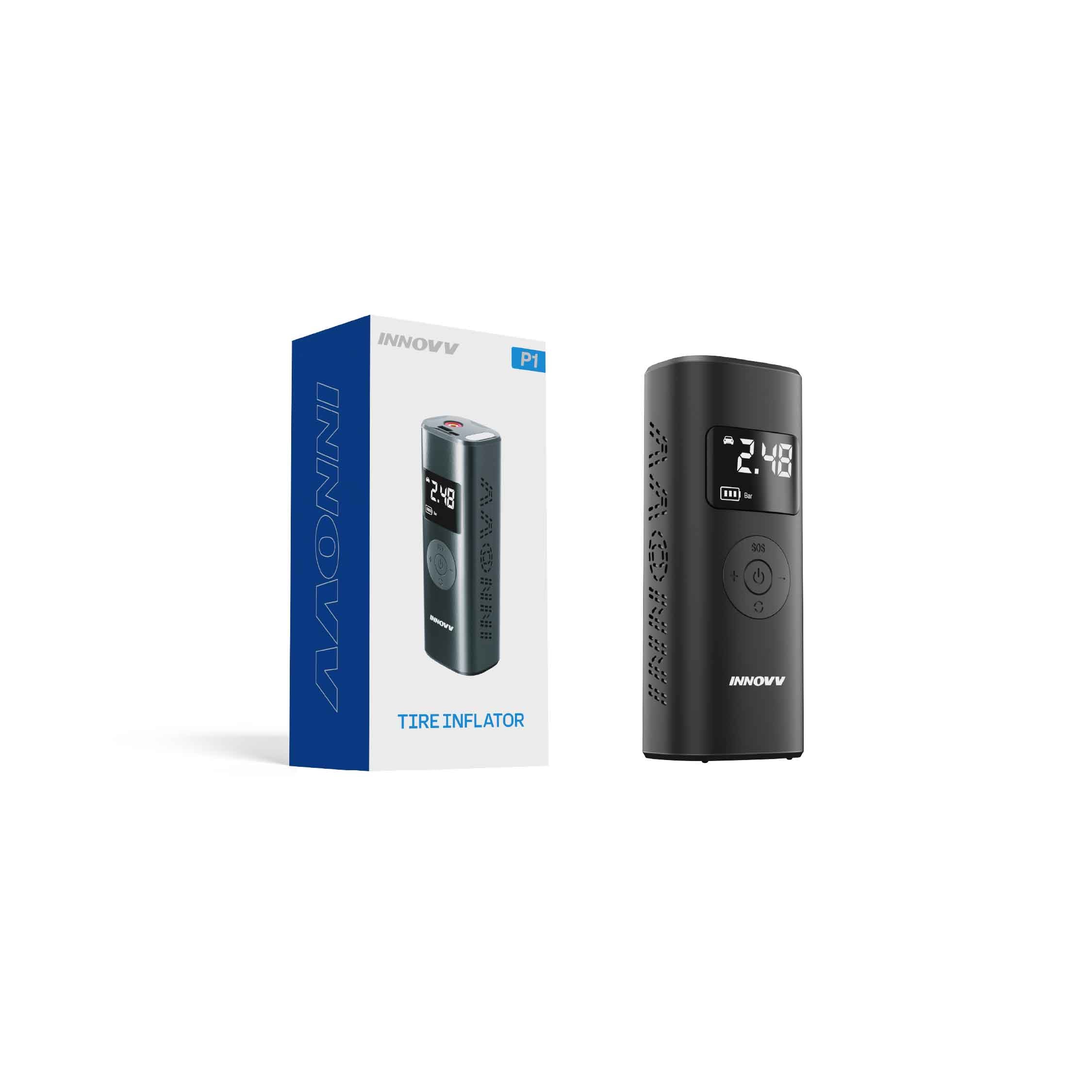
How long does a portable tire inflator take compared with a gas station compressor? A gas station compressor is often faster, especially for large tires, but a portable unit is available when you need it most. Convenience is its main advantage.
Source: innovv.com
Choosing the right portable tire inflator
The best inflator depends on your vehicle and how you plan to use it. A small pump may be perfect for a sedan but frustrating for a truck.
Look for these features:
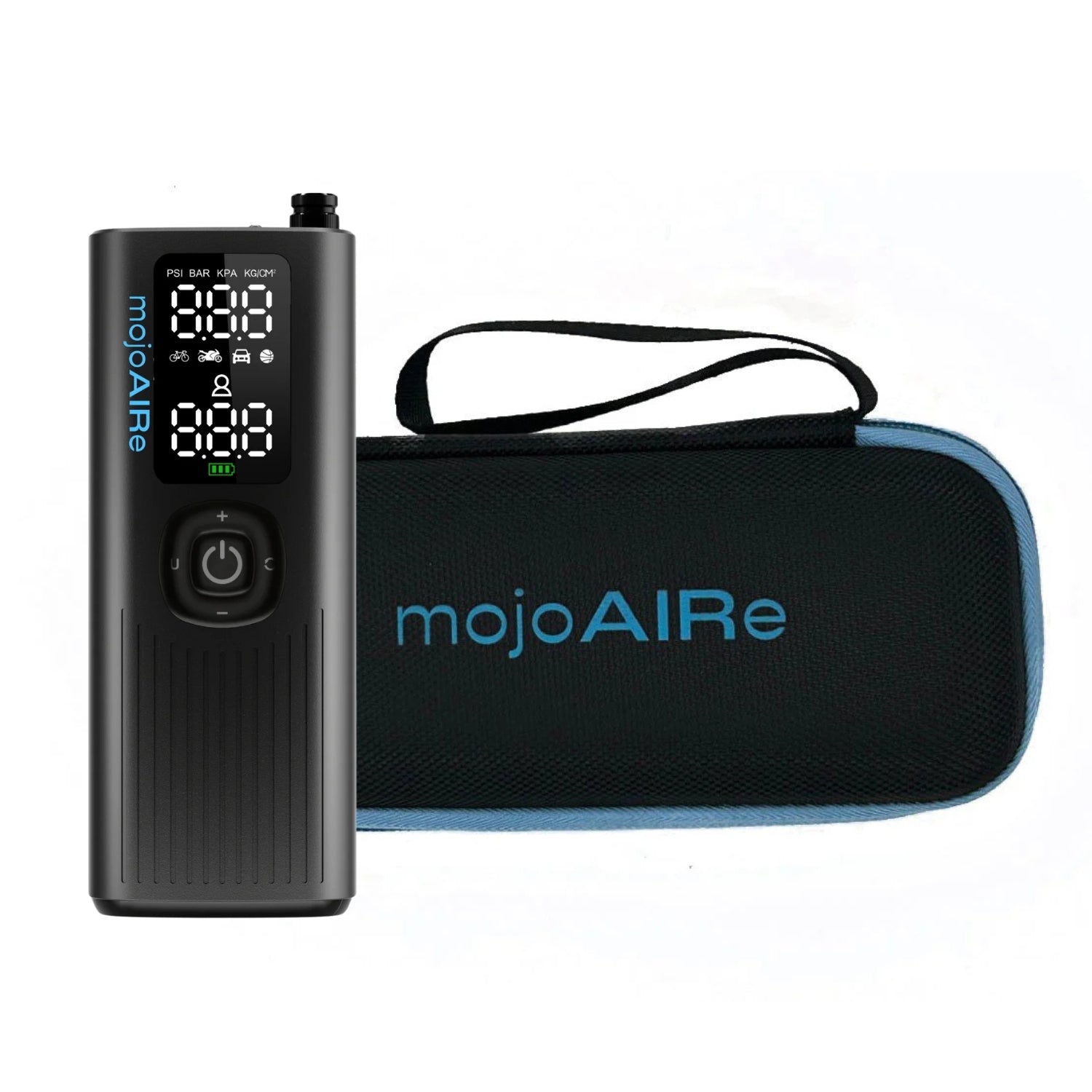
• A stated airflow rating suitable for your tire size
• An automatic shutoff feature
• A long power cord or hose
• A strong valve connector
• A built-in work light
• A carrying case
• A clear duty-cycle rating
• Reliable heat protection
• Compatibility with your vehicle’s power source
For emergency use, I prefer a model with both a wall charger and a 12-volt vehicle cable. Redundancy matters. If the battery is empty, the vehicle cable can still provide power.
Avoid choosing a pump based only on its highest PSI number. Almost every car inflator can advertise a very high maximum PSI, but that number does not show how quickly it fills a tire.
Instead, focus on airflow, tested inflation times, build quality, and user reports from people with a similar vehicle.
Source: miltonindustries.com
Safety tips for inflating tires
Tire inflation is usually simple, but compressed air and damaged tires can create risks. Use these safety habits every time:
• Never stand directly over a damaged tire while inflating it.
• Do not exceed the recommended vehicle pressure.
• Keep hands away from a hot compressor housing.
• Follow the manufacturer’s duty-cycle instructions.
• Keep the power cable away from hot engine parts.
• Do not use a damaged cable or frayed hose.
• Stop if the tire has a bulge, deep cut, or exposed cord.
• Check the pressure again after removing the hose.
• Inspect the tread for nails or other objects.
Proper pressure improves handling, braking, fuel economy, and tire life. Underinflation creates extra heat and rolling resistance. Overinflation can reduce the tire’s contact area and make the ride harsh.
Pressure checks should be part of normal vehicle care. Many tire and vehicle experts recommend checking pressure at least once a month and before long trips. Temperature changes can also alter pressure, so a cold-weather check is wise.

Source: familyhandyman.com
Frequently asked questions about how long does a portable tire inflator take
How long does a portable tire inflator take to fill a car tire?
Most portable inflators take about 3 to 10 minutes to add several PSI to a car tire. A nearly flat tire may take 10 to 20 minutes, depending on tire size and pump power.
Can a portable inflator fill a completely flat tire?
Some can, but small cordless models may take a long time or overheat. If the tire is damaged or has come off the wheel bead, inflation alone may not make it safe to drive.
Is a 12-volt inflator faster than a cordless inflator?
A 12-volt model is often faster because it can draw steady power from the vehicle. However, a high-quality cordless inflator may perform just as well for small and medium passenger tires.
How long does a portable tire inflator take for an SUV tire?
An SUV tire commonly takes about 5 to 10 minutes for a normal pressure top-off. Larger tires, low starting pressure, and a weak battery can increase that time.
Can I run a portable tire inflator continuously?
Only if the manufacturer allows continuous operation. Many small compressors require a cooling break after several minutes, so follow the stated duty cycle to prevent overheating.
Why is my portable tire inflator taking too long?
The cause may be a low battery, loose valve connection, restricted hose, large tire, or excessive pressure loss. Check the connector first, then allow the unit to cool and test the tire for leaks.
Conclusion
How long does a portable tire inflator take? For most car tires, expect about 3 to 10 minutes for a normal top-off and 10 to 20 minutes for a nearly flat tire. Tire size, pressure difference, airflow, battery strength, and motor temperature all affect the result.
Choose an inflator based on real airflow, duty cycle, power options, and reliability rather than maximum PSI alone. Keep it charged, test it before an emergency, and check tire pressure with a trusted gauge.
A few minutes of preparation can prevent a long roadside wait. Choose the right portable tire inflator for your vehicle, practice using it at home, and explore more tire-care resources before your next trip.
2 Comments