Can I Use Water And Vinegar On Car Headliner: Safe Tips
For drivers in the United States, you can use a small amount of diluted water and vinegar on some car headliners, but it is not the safest first choice. A headliner is often made from thin fabric bonded to foam and a rigid backing board. Too much liquid can loosen the adhesive, stain the fabric, cause sagging, or leave a musty smell.
For light dirt, start with a vacuum and a barely damp microfiber cloth. If you use vinegar, dilute it well, test it in a hidden spot, and avoid soaking the headliner.

What Is a Car Headliner?
A car headliner is the fabric-covered panel attached to the inside roof of a vehicle. In most cars sold in the United States, it has several layers:
- A thin outer fabric
- Foam or padding
- Adhesive
- A molded backing board
This layered design makes the headliner soft and quiet. It also makes it sensitive to water. The fabric may look dry on top while moisture remains below it.
The main risk is not usually the water alone. The bigger risk is water reaching the adhesive layer. Heat, age, and moisture can weaken that adhesive. This is why an old headliner may begin to sag after cleaning or during hot weather.
Why headliners are easy to damage
A headliner is different from a removable floor mat or seat cover. You cannot usually rinse it, scrub it hard, or dry it in direct sun.
Common damage includes:
- Sagging fabric
- Wrinkles
- Water rings
- Color loss
- Loose edges
- Foam breakdown
- A sour or musty odor
The risk is higher in hot areas of the United States, such as Arizona, Texas, Florida, and southern California. High heat can make old adhesive fail faster.

Is Water and Vinegar Safe for a Car Headliner?
Diluted vinegar and water may be acceptable for a small spot, but only when used with very little moisture. It is not a good choice for deep cleaning, large stains, or a headliner that already feels loose.
Vinegar is mildly acidic. It can help reduce some odors and loosen light residue, but it is not a universal cleaner. It may also leave its own smell until it dries.
Plain water is often the better first test. If water alone removes the mark, there is no need to add vinegar.
When a diluted vinegar mix may help
A weak solution may help with:
- A small food or drink mark
- Light surface grime
- A mild odor on synthetic fabric
- Fresh residue that has not soaked into the foam
When not to use it
Avoid vinegar on the headliner when:
- The fabric is already sagging
- The roof panel has loose edges
- The stain is large or oily
- The fabric is delicate, dyed, or unknown
- The headliner has water damage
- The vehicle has exposed electronics near the roof
- You cannot test the solution first
Do not mix vinegar with bleach, ammonia, or other cleaning chemicals. Mixing cleaners can create harmful vapors or unwanted chemical reactions.
How to Clean a Car Headliner With Water and Vinegar
Use the least amount of liquid that can do the job. The goal is to clean the surface, not wet the headliner.
What you need
Prepare:
- A vacuum with a soft brush attachment
– Two clean microfiber cloths - Distilled water, if available
- White vinegar
- A small spray bottle or bowl
- A soft, clean brush
- A dry towel
Distilled water can reduce mineral marks. It is not required, but it may help when tap water leaves spots.
Make a mild solution
Start with this mix:
- 1 part white vinegar
- 4 parts water
For a very small or light stain, use an even weaker mix:
- 1 part white vinegar
- 6 parts water
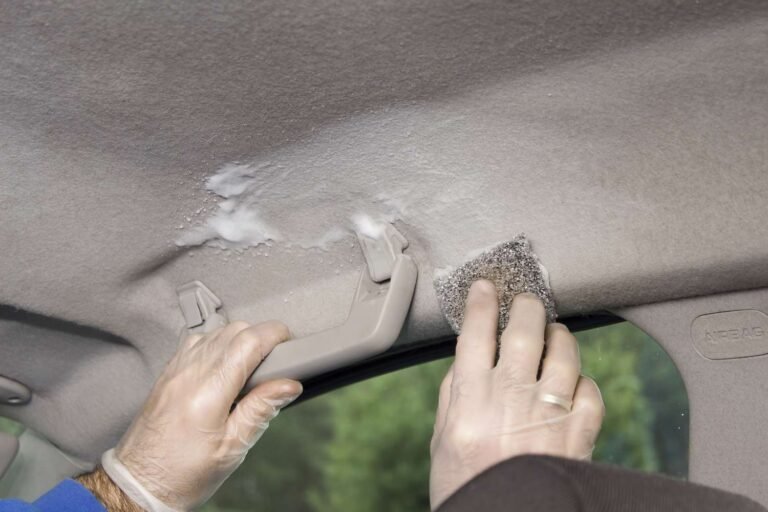
Do not spray the solution directly onto the roof. Spray or pour a small amount onto the microfiber cloth instead.
Step-by-step method
-
Park in a shaded, ventilated place.
The vehicle should be cool. Avoid cleaning a hot headliner in direct sun. -
Read the vehicle owner’s manual.
Look for warnings about interior materials, roof-mounted airbags, lights, microphones, or sensors. -
Vacuum gently.
Use a soft brush. Do not press hard against the fabric. -
Test a hidden area.
Try the solution near the edge of the headliner or behind a visor. Wait until the area dries. Check for color change, stiffness, rings, or loosened fabric. -
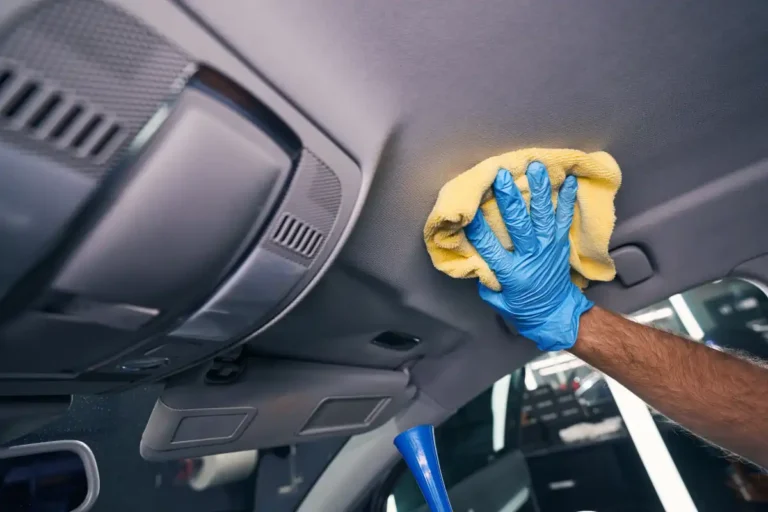
Dampen—not wet—the cloth.
The cloth should feel slightly moist. It should not drip. -
Blot the stain.
Press lightly and lift the cloth. Do not rub in circles. Rubbing can spread the stain and roughen the fabric. -
Work from the outside toward the center.
This can reduce the chance of spreading a visible mark. -
Use a second cloth with plain water.
Lightly blot any vinegar residue. Use very little water. -
Blot dry.
Press a clean, dry towel against the area. -
Let the vehicle air out.
Open the doors or windows when safe. Keep the area dry until the headliner is fully dry.
Signs that the process worked
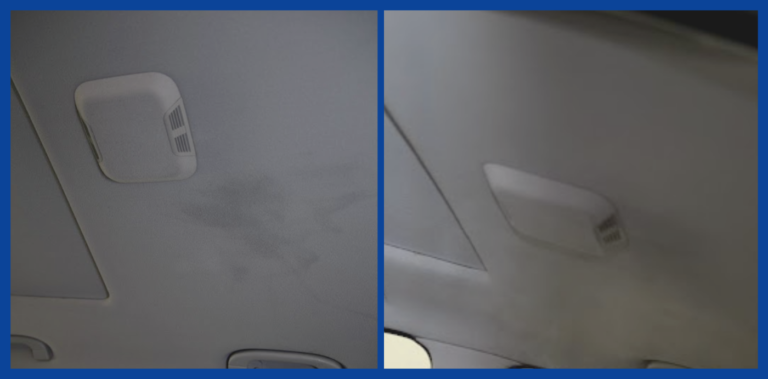
A successful cleaning should leave:
- No spreading water ring
- No loose fabric
- No discoloration
- No sticky feel
- No strong vinegar smell after drying
- No damp feel when pressed lightly
If the fabric begins to lift, stop at once. More cleaning may turn a small mark into a headliner repair.

How Much Water Can a Headliner Take?
There is no universal safe amount. Headliner materials differ by vehicle, age, fabric, adhesive, and prior damage.
A useful rule is simple: the cloth should be damp enough to transfer cleaner, but never wet enough to soak the backing.
Practical moisture guide
| Cleaning method | Risk level | Best use |
|---|---|---|
| Dry vacuuming | Lowest | Dust and loose debris |
| Dry microfiber cloth | Very low | Fresh surface dust |
| Barely damp cloth | Low to moderate | Small marks |
| Lightly sprayed cloth | Moderate | Small, stubborn spots |
| Direct spraying on headliner | High | Avoid |
| Saturating or shampooing in place | Very high | Avoid |
| Steam cleaning | High | Use only when the material maker allows it |
A headliner that looks clean after a wet treatment may still fail later. Adhesive damage can appear hours or days after cleaning, especially after the vehicle heats up.
Better Alternatives to Vinegar
For most headliners, water alone or a cleaner labeled for automotive headliners is a better starting point than vinegar.
Use a dry method first
A soft vacuum brush can remove:
- Dust
- Hair
- Loose food
- Surface grit
- Light cobwebs
For a fresh spill, blot it with a dry microfiber towel. Do not press hard, since pressure can drive the spill into the foam.
Use a headliner-safe cleaner
If water does not work, choose a product that clearly states it is suitable for automotive headliners or delicate interior fabric. Follow the product label and test it first.
A general carpet cleaner may be too wet or too strong. A household upholstery cleaner may also leave residue or affect the adhesive.
Consider professional cleaning
Professional help makes sense when:
- The stain covers a large area
- The headliner is already loose
- Smoke odor has entered the foam
- There is mold or water damage
- The stain came from oil, ink, dye, or chemicals
- The vehicle has a valuable or delicate interior
A professional may clean the surface, remove the headliner, replace the fabric, or repair the backing. Cleaning cannot restore adhesive that has already failed.

Common Headliner Cleaning Mistakes
Spraying the roof directly
Direct spraying creates uneven moisture. Liquid may run behind trim, lights, speakers, microphones, or roof-mounted controls.
Spray onto the cloth instead. Use a small amount.
Scrubbing hard
Hard scrubbing can flatten the fabric, spread the stain, and separate the fabric from the foam.
Blotting is safer than scrubbing.
Using too much vinegar
More vinegar does not always mean better cleaning. A strong mix can leave odor, residue, or discoloration.
Start with water. Increase cleaning strength only when needed.
Using hot water or steam
Heat and moisture can weaken old adhesive. Steam may also force water into the backing.
Unless the material maker specifically approves it, avoid steam on a vehicle headliner.
Drying with a high-heat tool
Do not use a heat gun or very hot hair dryer. High heat may shrink the fabric or soften the adhesive.
Air movement is safer than high heat.
Cleaning around roof electronics
Many vehicles have roof-mounted lights, microphones, cameras, antennas, or sensors. Moisture can reach these parts.
Keep liquid away from openings and seams. If the stain is next to an electronic component, use a dry cloth or seek professional help.

What to Do if the Headliner Starts Sagging
If the fabric begins to sag during cleaning, stop immediately. Do not press it back into place while it is damp.
Follow these steps:
- Move the vehicle to a dry, shaded area.
- Blot nearby moisture with a dry towel.
- Allow the panel to dry naturally.
- Do not pull, stretch, or glue the fabric while it is wet.
- Inspect the area after it dries.
If the headliner remains loose, a repair shop may need to remove the panel and replace the fabric or adhesive. Household glue, spray adhesive, and staples can create visible damage and may interfere with airbags or trim.
A sagging headliner can also block the driver’s view or interfere with safety equipment. Repair it before it becomes a driving hazard.
Water and Vinegar by Stain Type
| Stain or problem | First choice | Vinegar-water advice |
|---|---|---|
| Dust | Vacuum | Not needed |
| Fresh water mark | Dry blot, then barely damp cloth | Usually not needed |
| Light food residue | Mild headliner cleaner | Test a weak mix first |
| Smoke odor | Professional odor treatment | Vinegar may mask, not remove, the odor |
| Grease or oil | Headliner-safe degreasing product | Vinegar is usually ineffective |
| Ink or dye | Professional advice | Avoid experimenting |
| Mold or mildew | Find and fix the moisture source | Do not rely on vinegar alone |
| Loose or sagging fabric | Repair | Do not wet the area |
The right treatment depends more on the stain than on the cleaning liquid. Vinegar may help with light residue, but it will not solve every odor or stain.
Frequently Asked Questions
Can I spray vinegar directly on my car headliner?
No. Spray the diluted solution onto a microfiber cloth instead. Direct spraying can soak the fabric, create rings, and send liquid into trim or electronics.
What is the safest way to clean a headliner?
Start with a gentle vacuum and a dry microfiber cloth. For a small mark, use a barely damp cloth with plain water. If needed, use a headliner-safe cleaner after testing it in a hidden area.
Can vinegar remove smoke smell from a headliner?
It may reduce a light surface odor for a short time, but it usually cannot remove smoke that has entered the foam, carpet, seats, or ventilation system. Persistent smoke odor may need professional interior cleaning.
Can I use white vinegar on a black headliner?
You can test a very weak solution, but do not assume black fabric is colorfast. Test behind a visor or near an edge first. Stop if the area looks lighter, shiny, stiff, or uneven after drying.
How do I remove water stains from a car headliner?
First try a dry microfiber cloth. If the mark remains, lightly blot with distilled water. Use very little moisture and blend carefully around the mark. Large or old rings may need a headliner-safe cleaner or professional service.
Key Takeaways
- You can use diluted water and vinegar on a small headliner spot, but use very little liquid.
- Start with vacuuming and plain water.
- A 1:4 vinegar-to-water mix is a cautious starting point.
- Test the solution in a hidden area.
- Never soak, scrub hard, or spray the roof directly.
- Stop if the fabric loosens, changes color, or begins to sag.
- Use a headliner-specific cleaner or professional service for large, oily, smoky, or difficult stains.
Conclusion
Water and vinegar can work on a small, light headliner stain when the solution is weak and applied with a barely damp cloth. The main danger is excess moisture, which can damage the adhesive and cause sagging.
For the safest approach, vacuum first, test plain water, and use a headliner-safe cleaner before trying vinegar. If the headliner is already loose or the stain is large, skip home treatment and have it inspected by an automotive interior professional.