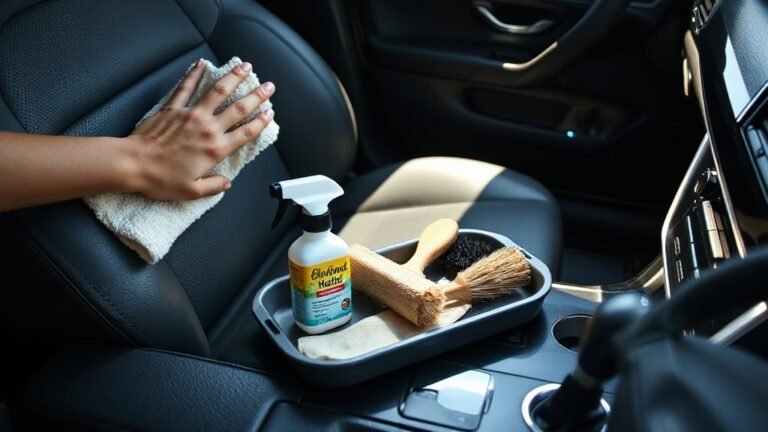
How To Get Coffee Stain Out Of Headliner: Easy Fix
A fresh coffee stain on a car headliner usually comes out with a small amount of cool water, mild soap, and gentle blotting. Do not soak the fabric. Too much liquid can loosen the headliner adhesive, leave a larger water ring, or cause the fabric to sag.
This guide explains how to remove black coffee, coffee with milk, and sweetened coffee from a vehicle headliner without spreading the stain or damaging the foam backing.

What You Need Before You Start
Gather these items before cleaning:
- Two or three clean, white microfiber cloths
- Cool or lukewarm water
- A small bowl
- Mild liquid dish soap or gentle upholstery cleaner
- A soft-bristle toothbrush or soft detailing brush
- A dry towel
- A vacuum with a soft brush attachment, if available
- A fan or open-air ventilation
Use white cloths when possible. Colored towels may transfer dye to the headliner.
Before applying any cleaner, check the vehicle owner’s manual. Some automakers use delicate fabric, suede-like material, or specialty trim that requires a specific cleaner. Also check whether the stain is near a grab handle, dome light, microphone, or other electrical part.
Test the cleaner first
Choose a hidden area, such as the edge behind a sun visor. Apply a tiny amount of your cleaning solution, blot it, and wait several minutes.
Stop if you see:
- Color transfer
- A lighter patch
- Fabric fuzzing
- A hard or shiny spot
- The fabric pulling away from the roof
A headliner is not the same as a removable floor mat. It has a fabric surface, foam layer, and adhesive backing. Gentle cleaning protects all three layers.

How to Remove a Fresh Coffee Stain From a Headliner
For a fresh spill, act quickly. The less time coffee has to dry, the less likely it is to leave a dark ring or sticky residue.
1. Blot the spill
Press a dry microfiber cloth against the stain. Lift the cloth straight up, then move to a clean section and repeat.
Do not rub from side to side. Rubbing pushes coffee deeper into the fabric and spreads the mark across the ceiling.
If the coffee is still pooling, hold the cloth against the area for a few seconds. Replace the cloth when it becomes damp.
2. Make a mild cleaning solution
Mix:
- 1 cup of cool or lukewarm water
- 1 or 2 drops of mild liquid dish soap
The solution should be weak. A heavily soapy mix can leave residue that attracts dirt later.
Avoid hot water. Heat can help set some stains, soften adhesive, or create a visible water mark.
3. Dampen the cloth, not the headliner
Dip a clean microfiber cloth into the solution. Wring it out well until it is only damp.
Never pour or spray cleaner directly onto the roof. Direct spraying can force liquid into the foam, wiring, lights, and adhesive.
4. Blot from the outside toward the center
Start at the outer edge of the stain. Work inward with light dabs.
This method reduces the chance of making the stain larger. Use a clean part of the cloth after each few dabs so you do not put coffee back on the fabric.
5. Remove soap residue
dampen a second cloth with plain water. Wring it out well, then lightly blot the cleaned area.
This step removes leftover soap. Do not keep adding water if the headliner already feels damp.
6. Dry the area
Press a dry towel against the spot to remove moisture. Leave the doors or windows open in a safe, dry place until the headliner is fully dry.
A fan can improve airflow. Do not use a high-heat hair dryer. Heat may damage the fabric or weaken the adhesive.
A fresh, small stain may need only one cleaning cycle. Let the area dry before deciding whether it needs another pass.

How to Remove a Dried or Dark Coffee Stain
Dried coffee can contain more than a simple color mark. Sugar, milk, cream, and flavor syrup may leave a sticky film. That residue can attract dust and make the spot look darker over time.
Use the same mild soap method, but work in short cycles:
- Vacuum loose dust with a soft brush attachment.
- Dampen a white microfiber cloth with the mild solution.
- Blot the stain for 10 to 15 seconds.
- Pause and inspect the cloth.
- Use a clean section of the cloth.
- Blot with a separate cloth dampened with plain water.
- Dry the area with a towel and airflow.
If the stain is still visible after drying, repeat the process once or twice. Several light treatments are safer than one wet treatment.
For coffee with milk or cream
Milk proteins and fats may create odor as they dry. Use a small amount of mild soap to lift the residue. Do not use strong bleach, disinfectant, or solvent-based cleaner.
If a sour smell remains after the visible stain is gone, the liquid may have reached the foam backing. In that case, repeated wet cleaning may worsen the problem. A professional automotive detailer can assess the area with less risk of causing sagging.
For sweetened coffee or flavored syrup
Sugar can leave a tacky film. Plain water may remove part of it, but a weak soap solution usually works better.
Keep the cloth nearly dry. If the surface becomes wet enough to feel soft or heavy, stop and dry it. A sticky residue is easier to treat than a detached headliner.

What to Use—and What to Avoid
The safest cleaner is usually the mildest one that removes the stain. Start with water, then add a tiny amount of mild soap only if needed.
| Cleaning option | Best use | Main concern |
|---|---|---|
| Plain cool water | Fresh black coffee | May not remove sugar, milk, or cream |
| Mild dish soap solution | Most small coffee stains | Too much can leave residue |
| Automotive fabric cleaner | Older or stubborn stains | Follow the label and test first |
| Soft upholstery brush | Small dried spots | Scrubbing can roughen fabric |
| Steam cleaner | Usually not recommended for headliners | Heat and moisture can loosen adhesive |
| Bleach or strong chemicals | Not recommended | Can discolor fabric and damage backing |
Choose an automotive upholstery cleaner only when its label says it is suitable for headliners or delicate fabric. A cleaner designed for carpets may be too wet or too strong for overhead trim.
Avoid:
- Bleach
- Ammonia
- Acetone
- Rubbing alcohol unless the vehicle maker specifically approves it
- Household glass cleaner
- Heavy carpet shampoo
- Abrasive powders
- Large amounts of water
- High-pressure spray
- Steam
- Stiff brushes
These products and methods can bleach the fabric, dissolve adhesive, push the stain deeper, or leave a permanent texture change.

How to Prevent Water Rings and Headliner Damage
Water rings often appear when the cleaned spot dries at a different rate from the surrounding fabric. The best prevention is to use very little liquid and feather the edges.
If a ring begins to form, do not flood the whole roof. Instead:
- Stop adding cleaner.
- Blot the damp area evenly with a clean, nearly dry cloth.
- Lightly blend the outer edge with a barely damp cloth.
- Dry the area with airflow.
- Recheck it only after it is fully dry.
Do not pull, press hard, or stretch the fabric. Headliner fabric is often bonded to foam. Once the adhesive lets go, cleaning may not restore the original shape.
Keep liquid away from:
- Dome lights
- Map lights
- Sunroof controls
- Microphones
- Wiring
- Curtain airbag areas
- Trim seams
If coffee entered an electrical opening, turn off the vehicle and allow the area to dry. For a large spill near wiring or an airbag trim area, seek professional help rather than continuing to spray or blot.

When a Professional Detailer Should Handle the Stain
Professional help makes sense when the stain is large, old, oily, strongly scented, or located near sensitive equipment.
Contact an automotive detailer if:
- The headliner is sagging
- The fabric has separated from the foam
- The stain covers a large section
- Several cleaning attempts have made the mark larger
- The smell remains after the surface is dry
- The coffee entered a light, microphone, or control
- The fabric is suede-like, perforated, or unusually delicate
- The vehicle has a specialty or custom headliner
A professional may use low-moisture cleaning methods or remove and replace damaged headliner material. Removal is not a good first step for a small coffee mark because headliner boards and trim clips can break during disassembly.
If the fabric has already detached, do not glue it back while it is wet. Improper adhesive can stain the fabric, create a hard patch, or release fumes inside the vehicle.

Common Mistakes to Avoid
Scrubbing the stain
Scrubbing spreads coffee and damages the fabric nap. Blotting is slower but safer.
Spraying the roof directly
A spray pattern can soak a much larger area than the visible stain. Spray onto a cloth only when the product label allows it, and use a very small amount.
Using too much cleaner
More cleaner does not always mean better cleaning. It often means more residue and more moisture in the foam.
Cleaning only the dark center
A stain may have a faint outer edge that becomes visible after drying. Treat the mark from the outside inward, but avoid wetting a large circle around it.
Repeating the process before the area dries
A damp headliner can look darker than it really is. Wait until it is fully dry before judging the result.
Using heat to speed up drying
High heat may affect adhesive and fabric. Use ventilation and a fan instead.

Quick Decision Guide
Use this simple guide to choose the next step:
- Small, fresh, black coffee mark: Blot, then use a weak soap solution.
- Coffee with sugar: Use mild soap to remove the sticky residue.
- Coffee with milk or cream: Clean gently and watch for lingering odor.
- Large wet area: Blot as much as possible and dry with airflow.
- Stain near a light or airbag trim: Use minimal moisture or call a professional.
- Headliner already sagging: Do not wet it further.
- Stain remains after two light treatments: Stop aggressive cleaning and seek professional detailing.
The goal is not to make the headliner wet. The goal is to transfer the coffee from the fabric to the cloth.

Frequently Asked Questions
Can I use vinegar to remove coffee from a car headliner?
Vinegar is not the best first choice. It may leave an odor and can affect some fabrics or adhesives. Start with cool water and a very mild soap solution. Use a product made for automotive upholstery only if the label approves it.
Can I use a Magic Eraser on a headliner?
It is best to avoid it. A Magic Eraser is abrasive and may remove surface color or change the texture. Headliner fabric can show a lighter, rougher patch after abrasive cleaning.
Will baking soda remove a coffee stain from a headliner?
Baking soda may absorb some odor, but it does not reliably remove a liquid coffee mark. Loose powder can also fall into lights and controls. For odor, first remove the coffee residue with minimal moisture and allow the area to dry.
How long does a car headliner take to dry?
A small, lightly dampened area may dry within a few hours. Time depends on airflow, humidity, temperature, and how much liquid was used. Do not judge the final color until the fabric is fully dry.
Why did the coffee stain get bigger after cleaning?
The cloth may have moved coffee outward, or the area may have dried unevenly. Stop adding liquid. Blot the damp edge with a clean, dry towel and let the headliner dry completely before trying another light treatment.
Conclusion
To get coffee out of a car headliner, blot quickly, use a weak soap solution, apply it to a cloth rather than the roof, and keep moisture to a minimum. Work from the outside of the stain toward the center, rinse with a barely damp cloth, and dry the area with airflow.
If the headliner begins to sag, the stain reaches an electrical component, or the odor remains, stop cleaning and use a professional automotive detailer. Gentle treatment protects the fabric, foam backing, and adhesive better than strong chemicals or heavy scrubbing.