How To Remove Soda Stains From Car Headliner: Easy Fix
Introduction
To remove a soda stain from a car headliner, blot the spill, use a small amount of mild soapy water, and avoid soaking the fabric. Soda leaves sugar, color, and odor behind. Too much water can loosen the headliner adhesive or make the fabric sag.
This method works for most cars and trucks sold in the United States. Always check your vehicle owner’s manual and test the cleaner in a hidden spot first. Headliner fabric varies by vehicle, so a gentle approach is safer than aggressive scrubbing.

Key Takeaways
- Act quickly. Fresh soda stains are easier to remove.
- Blot the spill. Do not rub it deeper into the fabric.
- Use a lightly damp microfiber cloth, not a wet sponge.
- Clean from the outside of the stain toward the center.
- Use low moisture to protect the foam backing and adhesive.
- Let the headliner dry fully before closing the car.
- Call a professional if the fabric sags, the stain covers a large area, or the odor remains.
Why Soda Can Damage a Car Headliner
Soda contains water, sugar, acids, flavor compounds, and often artificial color. When the liquid dries, the water evaporates but some of the other materials remain in the headliner.
The residue can cause:
- A sticky or stiff patch
- A brown, yellow, or colored ring
- A sour or sweet odor
- Dust that sticks to the affected area
- A larger stain after repeated wet cleaning
A car headliner is not the same as a removable carpet mat. It usually has a thin fabric layer bonded to a foam-backed board. Excess water can seep through the fabric and weaken the glue. The fabric may then bubble, wrinkle, or sag.
That is why the best method uses controlled moisture. The goal is to lift the soda residue without wetting the backing.
What You Need Before Cleaning
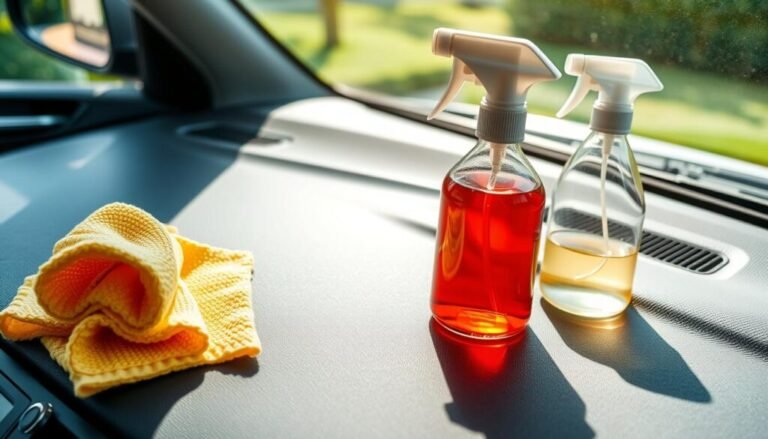
Gather these items before you start:
- Two or three clean, white microfiber cloths
- A small bowl
- Warm water
- A mild, dye-free liquid dish soap
- A soft interior-detailing brush, if needed
- A clean spray bottle, used only if you can control the spray
- A fan or open-air parking area
- A vacuum with a soft brush attachment, if dry residue remains
Avoid colored towels. Dye from a towel can transfer to light-colored headliner fabric.
Do not use a stiff scrub brush, steam cleaner, bleach, strong degreaser, or large amount of water. These may damage the fabric, foam, adhesive, or interior trim.

How to Remove a Fresh Soda Stain
Fresh soda should be treated before it dries. Follow these steps.
1. Park safely and protect the interior
Park the vehicle in a safe place with the engine off. If possible, work in a shaded, well-ventilated area. Avoid cleaning a hot headliner in direct sunlight because heat can speed drying and leave a visible ring.
Move sunglasses, papers, and other items away from the stained area.
2. Blot the liquid
Press a dry microfiber cloth against the spill. Lift the cloth straight up, move to a dry section, and press again.
Do not rub side to side. Rubbing can spread the soda and push it into the headliner fibers.
Continue until the cloth no longer picks up much liquid. Use gentle pressure. The headliner may look delicate because the fabric is thin and the backing is soft.
3. Mix a mild cleaning solution
Mix about 1 cup of warm water with one or two drops of mild dish soap.
The solution should feel only slightly soapy. A strong mixture can leave its own residue. Do not add bleach, ammonia, or a household glass cleaner.
You can also use a vehicle interior cleaner if its label specifically says it is safe for fabric or headliners. Follow the product label and use the least amount needed.
4. Dampen the cloth, not the headliner
Dip one corner of a clean microfiber cloth into the solution. Wring it out well until it is damp, not wet.
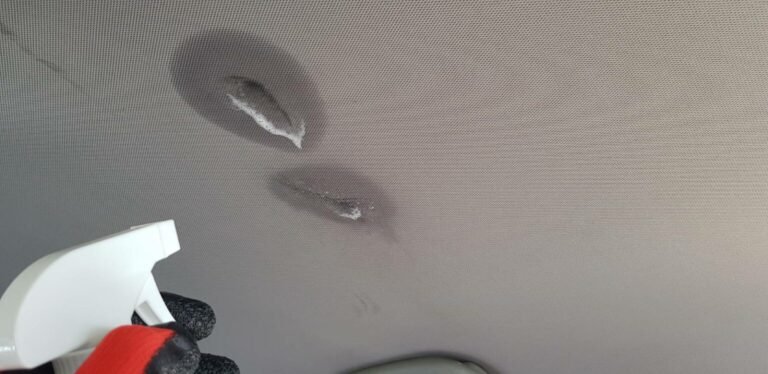
Do not spray the headliner directly. Direct spraying can create a wet spot larger than the original stain and may allow liquid to reach the adhesive.
5. Dab from the outside toward the center
Start at the outer edge of the stain. Dab inward with short, light presses.
Working inward helps prevent the stain from spreading. Turn the cloth often so you are not putting removed soda back onto the fabric.
If the stain is large, clean small sections at a time. Do not try to wet the whole area in one pass.
6. Remove soap residue
Use a second cloth dampened with plain water. Wring it out well, then lightly dab the cleaned area.
This step removes leftover soap. Use as little water as possible.
7. Blot dry
Press a dry microfiber cloth against the area. Replace the cloth as it becomes damp.
Leave the vehicle doors open or windows slightly lowered, if safe, to improve airflow. A fan aimed near the area can help. Do not use a heat gun or a high-heat hair dryer.
The headliner should be fully dry before you judge the final result. A damp fabric can look darker than the surrounding area.

How to Remove a Dried Soda Stain
A dried soda stain needs more than simple blotting because sugar and coloring may have bonded to the fibers.
First, use a dry, soft brush or a vacuum with a soft brush attachment to remove loose flakes. Use very light pressure. Do not scrape the fabric.
Next, dampen a microfiber cloth with the mild soap solution described above. Press the cloth onto the stain for a few seconds, then lift it. This gives the dried residue time to soften without soaking the headliner.
Repeat the light dabbing process as needed. Use a clean part of the cloth each time. If the stain begins to spread, stop adding moisture and blot the area dry.
For a stubborn mark, use a fabric cleaner labeled safe for automotive headliners. Apply the cleaner to the cloth rather than spraying the ceiling. Test it in a hidden area first.
If two or three gentle cleaning passes do not improve the stain, more scrubbing is unlikely to help. Continued rubbing may damage the fabric or create a lighter patch.

How to Remove Soda Odor From a Headliner
A sticky soda smell usually comes from residue that remains after the liquid dries. Clean the residue first. Fragrance sprays only cover the smell and may leave another film.
After cleaning:
- Blot the area with a nearly dry cloth.
- Improve airflow through the vehicle.
- Leave the headliner undisturbed until fully dry.
- Check the area again after several hours.
- Repeat a light cleaning pass if the odor remains.
Do not pour baking soda, vinegar, or another powder directly onto the headliner. Powder can become trapped in the fabric, and liquid home remedies can leave rings or affect the adhesive.
If the smell returns after cleaning, soda may have reached the foam backing or ceiling board. That problem may require professional interior cleaning or headliner repair.

What to Do About a Large or Sticky Soda Spill
A large spill needs quick action, but adding more water is not the answer.
Blot as much liquid as possible with dry cloths. Work around the edges first if the spill has spread. Then clean small sections with a barely damp cloth.
If soda has reached:
- The overhead console
- Dome-light wiring
- A sunroof control
- A microphone
- An airbag trim area
- The edge of the windshield or side trim
Stop cleaning near electrical parts and controls. Do not spray into openings. If a light flickers, a control stops working, or liquid entered a switch, have the vehicle inspected.
A large stain may leave a visible cleaning border. A professional detailer can often clean the full headliner panel evenly, which may look better than treating only the center.

Common Mistakes That Make Headliner Stains Worse
Scrubbing hard
Hard scrubbing can roughen the fabric, spread the soda, or create a lighter spot. Use short dabs instead.
Soaking the fabric
Too much moisture may loosen the bond between the fabric and foam. This can cause sagging that cleaning cannot reverse.
Spraying cleaner overhead
Overspray can run into trim, lights, switches, and the windshield edge. Spray onto a cloth only when the product instructions allow it.
Using hot steam
Steam adds heat and moisture. It may loosen adhesive or distort the foam backing.
Using bleach or strong chemicals
Bleach can remove color unevenly and weaken fibers. Strong solvents may dissolve adhesive or damage plastic trim.
Cleaning only the center of a large spill
A small cleaned patch may dry with a visible ring. For a large spill, clean the full affected section lightly and evenly, or seek professional help.
Reinstalling wet items too soon
Do not close the vehicle for a long period while the headliner is still damp. Poor airflow can increase odor and moisture problems.
When Home Cleaning Is Not Enough
Professional help makes sense when:
- The headliner is sagging or bubbling.
- The stain covers a large part of the ceiling.
- The soda has soaked through the fabric.
- The odor remains after the area dries.
- The fabric has changed color.
- The vehicle has a suede-like or specialty headliner.
- The spill reached lights, controls, or wiring.
- You cannot identify a safe cleaner for the material.
A detailer may be able to clean the entire headliner with controlled extraction or specialized interior tools. If the adhesive has failed, cleaning will not restore the headliner. An automotive upholstery shop may need to repair or replace the fabric.
Do not pull down a sagging headliner to clean beneath it unless you know the vehicle’s trim and airbag layout. Modern vehicles can contain curtain airbags and electrical parts near the roof.

Soda Stain Cleaning Decision Guide
| Situation | Best first step | Main risk |
|---|---|---|
| Fresh, small spill | Blot, then dab with mild solution | Spreading the stain |
| Dried sugar residue | Soften with a barely damp cloth | Over-wetting the backing |
| Strong odor | Remove residue and dry with airflow | Masking the odor only |
| Large spill | Blot, clean small sections, consider a detailer | Uneven drying |
| Sagging fabric | Stop cleaning and seek repair advice | Making adhesive failure worse |
| Spill near lights or controls | Avoid spraying and inspect the area | Electrical damage |
The key trade-off is simple: more moisture may remove more residue, but it also raises the risk of headliner damage. Use the least moisture that works.

Frequently Asked Questions
Can I use vinegar to clean a soda stain from a car headliner?
Vinegar is not the first choice. It may leave an odor and can create a damp ring if overused. Start with warm water and a tiny amount of mild dish soap. Test any alternative cleaner in a hidden area.
Can I use a carpet cleaner on a car headliner?
Only if the product label clearly allows use on automotive headliners or delicate overhead fabric. Many carpet cleaners apply too much liquid or use strong agitation. A lightly damp microfiber cloth is usually safer for a small stain.
Will soda permanently stain a car headliner?
Not always. Fresh, clear soda may come out fully. Dark soda, colored soda, and dried stains may leave discoloration. The result depends on the fabric, dye, age of the stain, and whether the liquid reached the backing.
How long does a cleaned headliner take to dry?
A small, lightly cleaned area may dry within a few hours with good airflow. Drying time varies with humidity, temperature, and how much water was used. Do not judge the final appearance until the area is fully dry.
How can I prevent another soda spill?
Use a cup with a secure lid, keep drinks in a stable cup holder, and avoid placing open containers on the center console or seat. A small towel can protect the area during travel, but it should not replace a secure container.
Conclusion
The safest way to remove soda stains from a car headliner is to use controlled moisture. Blot the spill, dab with a weak soap solution, rinse with a nearly dry cloth, and allow the fabric to dry with good airflow.
Avoid scrubbing, steam, direct spraying, and soaking. If the headliner sags, the stain is widespread, or the spill reached electrical parts, stop the DIY process and contact an automotive detailer or upholstery professional.