Where Can I Get My Car Interior Cleaner: Best Places
If you need your car interior cleaned in the United States, you have several options: a local auto detailer, a mobile detailing service, a full-service car wash, a dealership, or a retail store that sells automotive cleaning products. The best choice depends on whether you want someone to clean the car or you only need to buy an interior cleaner.
For a quick refresh, a car wash or do-it-yourself product may be enough. For stains, odors, pet hair, leather care, or deep cleaning, an auto detailer is usually the better choice.

The Best Places to Get Your Car Interior Cleaned
The best place depends on the condition of your vehicle, your budget, and how much work you want to do yourself.
1. Local auto detailers
An auto detailer is usually the best choice for a deep interior clean. Detailers may clean:
- Carpets and floor mats
- Cloth seats
- Leather and vinyl seats
- Door panels
- Dashboards and consoles
- Cup holders and vents
- Windows and mirrors
- Trunk areas
- Pet hair and light stains
Many detailers offer several service levels. A basic interior cleaning may include vacuuming, wiping, and window cleaning. A deep detail may include shampooing, steam cleaning, stain treatment, odor removal, and leather conditioning.
Search Google Maps, Apple Maps, or another local directory for:
- “Car interior detailing near me”
- “Auto detailer near me”
- “Deep car cleaning near me”
- “Car upholstery cleaning near me”
Read recent reviews and check the service list before booking. A business that mainly washes the outside of cars may not offer the interior work you need.
2. Mobile car detailing services
A mobile detailer comes to your home, office, or another approved location. This can save time because you do not need to leave your car at a shop.
Before booking, ask whether the detailer needs:
- Access to an electrical outlet
- A water connection
- A driveway or covered work area
- Enough space to open all doors
- Permission to work in a parking lot
Mobile services are useful for busy drivers, families, and vehicles that cannot be driven easily because of clutter or spills. Ask whether travel fees apply and whether the price changes for heavy stains, excessive pet hair, or severe odors.
3. Full-service car washes
Many full-service car washes offer interior cleaning packages. These often include vacuuming, wiping hard surfaces, cleaning windows, and washing floor mats.
This option can work well when your car needs a basic clean. It may not be the best choice for:
- Deep stains
- Mold or mildew
- Strong smoke odor
- Extensive pet hair
- Damaged leather
- Water extraction from soaked carpet
Ask exactly what the package includes. “Interior clean” can mean a quick vacuum at one business and a full shampoo service at another.
4. Car dealerships
A dealership may provide interior cleaning through its service or appearance department. This may be helpful if you drive a newer vehicle or need care for special materials.
A dealership may know the recommended care for:
- Heated or ventilated seats
- Perforated leather
- Suede-like trim
- Delicate dashboard finishes
- Touchscreens
- Specialty coatings
Dealership cleaning may cost more than an independent detailer. It can still make sense when your vehicle has unusual materials or when you want service from a business familiar with your make and model.
5. Upholstery and carpet cleaning companies
A carpet or upholstery cleaner may help with severe fabric stains, liquid spills, or odor problems. These companies often have strong extraction equipment.
Confirm that the company works on vehicle interiors. Home furniture equipment and methods may not suit a car’s tight spaces, electronics, seat controls, or headliner.
6. Do-it-yourself cleaning at home
You can buy car interior cleaning products from many U.S. retailers, including:
- Automotive parts stores
- Big-box stores
- Warehouse clubs
- Home improvement stores
- Grocery stores with automotive aisles
- Online retailers
- Some gas stations and convenience stores
Look for products labeled for the surface you need to clean. A fabric cleaner is not automatically safe for leather. A glass cleaner may damage certain plastic, screen, or coated surfaces.

Where to Buy Car Interior Cleaner
If you want to clean the car yourself, buy a product made for the exact material in your vehicle.
For cloth seats and carpet
Choose a fabric or carpet cleaner that states it is safe for automotive upholstery. You may also need:
- A soft interior brush
- Clean microfiber towels
- A wet-dry vacuum or extractor
- A small crevice tool
Test the product on a hidden area first. Use only enough moisture to clean the fabric. Too much water can soak the padding below the upholstery and create a lingering odor.
For leather seats
Use a cleaner labeled for automotive leather. Leather cleaner and leather conditioner serve different purposes:
- Leather cleaner removes dirt and oils.
- Leather conditioner helps maintain the surface, when the manufacturer permits its use.
Modern vehicle seats may have protective coatings. Heavy oils or household products may leave the surface greasy or affect its finish. Check the vehicle owner’s manual before applying conditioner.
For vinyl and plastic
Use an automotive interior cleaner marked for vinyl, plastic, or both. A soft microfiber cloth is often safer than a rough sponge.
Avoid products that leave a very glossy or slippery coating on:
- Steering wheels
- Pedals
- Gear selectors
- Door handles
- Seat controls
A slippery steering wheel or pedal can create a safety problem.
For touchscreens and instrument panels
Use the vehicle manual as the first source of care instructions. Many screens should be cleaned with a soft, dry microfiber cloth or a lightly damp cloth.
Do not spray liquid directly onto a screen, gauge cluster, button panel, or air vent. Liquid can enter gaps and damage electronic parts.
For glass and mirrors
Use a glass cleaner that is suitable for automotive use. Spray the cleaner onto a cloth rather than directly onto the dashboard or electronic controls.
If the vehicle has window tint, confirm that the cleaner is safe for tinted film. Avoid abrasive pads and ammonia-based products unless the tint maker specifically permits them.

How to Choose Between a Detailer and a DIY Cleaner
Use this simple guide to match the problem with the right solution.
| Your situation | Best starting choice |
|---|---|
| Dust, crumbs, and light dirt | DIY cleaning or a basic car wash |
| Regular upkeep | DIY products and a monthly clean |
| Stained cloth seats | Auto detailer or upholstery service |
| Heavy pet hair | Detailer with pet-hair equipment |
| Smoke or food odor | Deep interior detail |
| Leather that looks dry | Automotive leather cleaner and approved conditioner |
| Spilled drink on carpet | Clean it soon or book an extraction service |
| Water inside the carpet | Professional inspection and drying |
| Mold or mildew | Professional cleaning and source repair |
| Damaged leather or trim | Automotive upholstery or repair specialist |
The main trade-off is cost versus labor. DIY cleaning costs less but requires time, tools, and care. Professional detailing costs more but can provide stronger equipment and a more complete result.
What to Ask Before Booking an Interior Cleaning Service
Ask for a written description of the service before you schedule an appointment.
Useful questions include:
- What surfaces are included?
- Does the service include shampooing or only vacuuming?
- Do you remove pet hair?
- Do you treat stains and odors separately?
- Are leather seats cleaned and conditioned?
- Do you clean the trunk and floor mats?
- How long will the vehicle need to dry?
- Will you remove child seats before cleaning?
- Are there extra fees for heavy dirt, trash, or pet hair?
- What happens if a stain cannot be removed?
Ask for the full price, not only the starting price. The final charge may change based on vehicle size, interior condition, location, or added services.
Take photos of the interior before the appointment. This gives you a clear record of the vehicle’s condition and helps prevent confusion about existing damage.

How Much Does Car Interior Cleaning Cost?
Prices vary across the United States. They depend on the vehicle’s size, location, condition, and service level.
A basic interior cleaning is generally less expensive than a deep detail. Services may cost more when the vehicle has:
- Large food or drink spills
- Ground-in dirt
- Excessive pet hair
- Smoke odor
- Mold or mildew
- Sand or mud
- Stains that need extraction
- A third-row seat or large cargo area
A low advertised price may cover only vacuuming and surface wiping. Shampooing, steam cleaning, stain removal, odor treatment, and leather conditioning may cost extra.
For an accurate estimate, send the business:
- Vehicle year, make, and model
- Photos of the interior
- A list of stains or odors
- Information about pets or smoke
- Your ZIP code or service location
A quote based on photos is often more useful than a generic “starting at” price.
How to Clean Your Car Interior Yourself
You can complete a basic interior cleaning with a careful, simple process.
What you need
Gather:
- A vacuum
- Several clean microfiber towels
- A soft detailing brush
- An automotive interior cleaner
- A separate glass cleaner
- A bucket of clean water
- A soft brush for mats and fabric
- A trash bag
- Gloves, if the product label recommends them
Use separate towels for glass, dirty surfaces, and final drying.
Step 1: Remove trash and personal items
Take out bottles, papers, toys, floor mats, and other items. Check under the seats and in door pockets.
Do not move unknown or hazardous materials without care. Sharp objects, leaking batteries, needles, and chemical containers need safe handling.
Step 2: Read the product label and vehicle manual
Check the cleaner’s approved surfaces and warnings. Check the owner’s manual for special instructions about leather, screens, seat belts, and trim.
If you are unsure, test the product in a hidden place first.
Step 3: Vacuum from top to bottom
Start with the dashboard, seats, and door panels. Then vacuum the floor and mats.
Use a soft brush around vents and seams. Do not force the vacuum nozzle into fragile buttons, speaker mesh, or loose trim.
Step 4: Clean hard surfaces
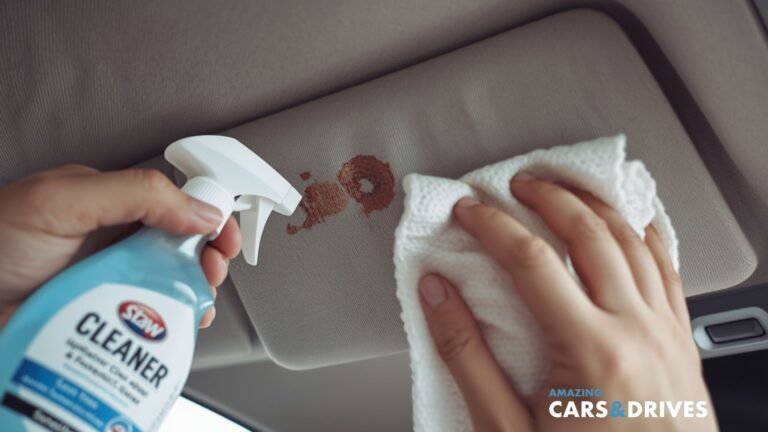
Spray cleaner onto a microfiber towel, not directly onto the dashboard or controls. Wipe one small area at a time.
Use a dry towel to remove leftover moisture. This helps prevent streaks and residue.
Step 5: Clean fabric and carpet
Apply a small amount of fabric cleaner. Work in sections and avoid soaking the material.
Blot stains rather than rubbing them hard. Aggressive rubbing can spread the stain or damage the fibers. Use an extractor only as directed, and allow the interior to dry fully.
Step 6: Clean leather or vinyl
Use the correct product and a soft cloth. Wipe gently, then remove residue with a clean towel.
Do not use household oils, hand lotion, or harsh solvents unless the vehicle maker specifically approves them.
Step 7: Clean windows and mirrors
Use a clean glass towel to reduce streaks. Keep liquid away from electronics, speakers, and dashboard seams.
Step 8: Dry and ventilate the vehicle
Leave the doors or windows open in a safe, dry place when possible. Run the vehicle’s ventilation system only in a safe outdoor area, never inside a closed garage.
The interior should feel dry, not damp or tacky, before you reinstall mats and child seats.

Safety Mistakes to Avoid
Some cleaning mistakes can damage the car or create a safety risk.
Do not spray products directly onto electronics
Spray the cloth instead. This reduces the chance of liquid entering screens, buttons, vents, and instrument panels.
Do not use household cleaners without checking compatibility
Bleach, strong solvents, abrasive powders, and some glass cleaners can damage plastic, leather coatings, fabric, tint, or decorative trim.
Do not make steering wheels or pedals slippery
Avoid oily dressings on controls that you must grip or operate. Wipe away residue before driving.
Do not soak seats or carpet
Excess water can reach wiring, seat sensors, padding, and the vehicle floor. It can also produce a musty odor.
Do not mix cleaning chemicals
Never mix bleach, ammonia, acids, or other cleaning products. Use one product at a time and follow the label.
Do not ignore mold or repeated moisture
Mold may point to a leak, wet carpet padding, blocked drain, or damaged door seal. Cleaning the visible area may not solve the cause. A professional detailer, water-damage specialist, or qualified automotive technician may be needed.

When a Professional Should Handle the Job
Book professional help when the interior has a serious odor, widespread staining, mold, soaked carpet, or delicate materials.
A professional may also be the safer choice after:
- A large drink spill
- Flood or storm-water exposure
- Vomit or other biological contamination
- Smoke damage
- Extensive pet contamination
- Damage near seat wiring or airbag components
Do not remove seats or disconnect wiring unless you understand the vehicle’s procedures. Modern seats may contain sensors and airbag parts. An automotive technician should handle electrical or restraint-system concerns.
If the odor returns after cleaning, look for the source. The problem may be under the carpet, inside the seat padding, in the cabin air filter, or in the air-conditioning system.
How to Find a Reliable Interior Detailer Near You
Use local search terms that describe the exact service:
- “Interior car detailing near me”
- “Car seat shampoo near me”
- “Auto upholstery cleaning near me”
- “Mobile interior detailing near me”
- “Pet hair removal car detailing near me”
- “Smoke odor removal car near me”
Then compare at least two or three businesses. Look for:
- Clear service descriptions
- Recent customer reviews
- Real photos of completed work
- A visible business address or service area
- Written pricing or estimates
- Clear statements about stain and odor limits
- Proof of insurance when appropriate
Be cautious of businesses that promise to remove every stain or odor. Some stains permanently change fabric, bleach color, damage leather, or soak into padding. A trustworthy detailer should explain what may improve and what may remain.

Frequently Asked Questions
Can I get my car interior cleaned at a regular car wash?
Often, yes. Many full-service car washes offer vacuuming, surface wiping, mat cleaning, and window cleaning. Ask whether they also provide shampooing, extraction, stain treatment, or odor removal.
Is a mobile car detailer worth it?
A mobile detailer can be worthwhile when convenience matters or the vehicle needs more than a quick vacuum. Confirm the service area, equipment, water and power requirements, drying time, and final price before booking.
What is the difference between car cleaning and car detailing?
Car cleaning usually means basic vacuuming and surface wiping. Car detailing is more thorough and may include deep vacuuming, stain treatment, extraction, leather care, crevice cleaning, and odor treatment.
Can I use an all-purpose cleaner inside my car?
Only if the label says it is safe for the specific surface. All-purpose products may damage leather, soft-touch plastic, screens, clear trim, or coated materials. Always test a hidden area first.
How often should I clean my car interior?
Vacuum and remove trash as needed, especially if you carry children, pets, or food. A deeper cleaning can be scheduled when stains, odors, or built-up dirt appear. The right interval depends on use, weather, and the materials inside the vehicle.
Conclusion
For a basic refresh, buy an automotive interior cleaner from a U.S. auto parts store, big-box retailer, or online seller and clean the car yourself. For stains, odors, pet hair, leather care, or soaked carpet, contact a local auto detailer or mobile detailing service.
Before you book, confirm what the service includes, ask about added fees, and share photos of the interior. If the car has mold, flood damage, electrical concerns, or a strong odor that returns, seek professional help instead of repeatedly applying more cleaner.