
How To Check Tire Pressure With A Digital Gauge: Easy Steps
To check tire pressure with a digital gauge, measure cold tires, compare the reading with the door placard, and adjust as needed.
Learning how to check tire pressure with a digital gauge takes only a few minutes, but the small details matter. A correct reading can improve handling, tire life, fuel use, and safety. This guide explains the process clearly, including common mistakes, gauge limits, and practical tips used by experienced drivers and technicians.
Why Correct Tire Pressure Matters
Tire pressure is the amount of air inside a tire. It supports the weight of your vehicle and helps the tread stay in contact with the road. If the pressure is too low or too high, the tire may not work as designed.
Low tire pressure can cause:
- Slower steering response
- Uneven tread wear
- Reduced fuel economy
- Extra heat inside the tire
- A higher risk of tire damage
High tire pressure can make the ride feel harsh. It may also reduce the tire’s contact patch, which can affect grip on wet or rough roads.
The correct pressure is usually listed on a label inside the driver’s doorjamb. You may also find it in the owner’s manual. Do not use the maximum pressure printed on the tire sidewall as your normal target. That number is the tire’s maximum rated pressure, not the vehicle maker’s recommended setting.
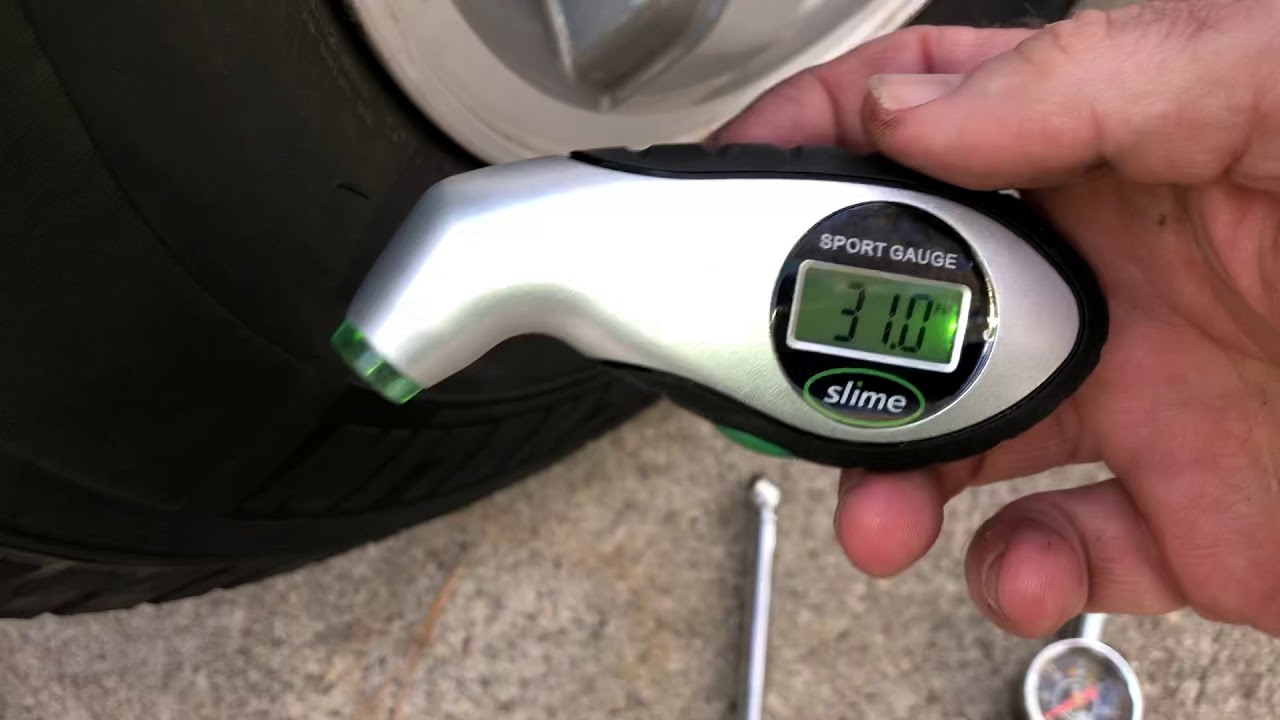
What You Need Before Checking Tire Pressure
You need only a few basic items to check tire pressure with a digital gauge:
- A digital tire pressure gauge
- An air compressor or tire inflator
- Your vehicle owner’s manual or doorjamb label
- A valve cap for each tire
- A clean cloth, if the valve stems are dusty
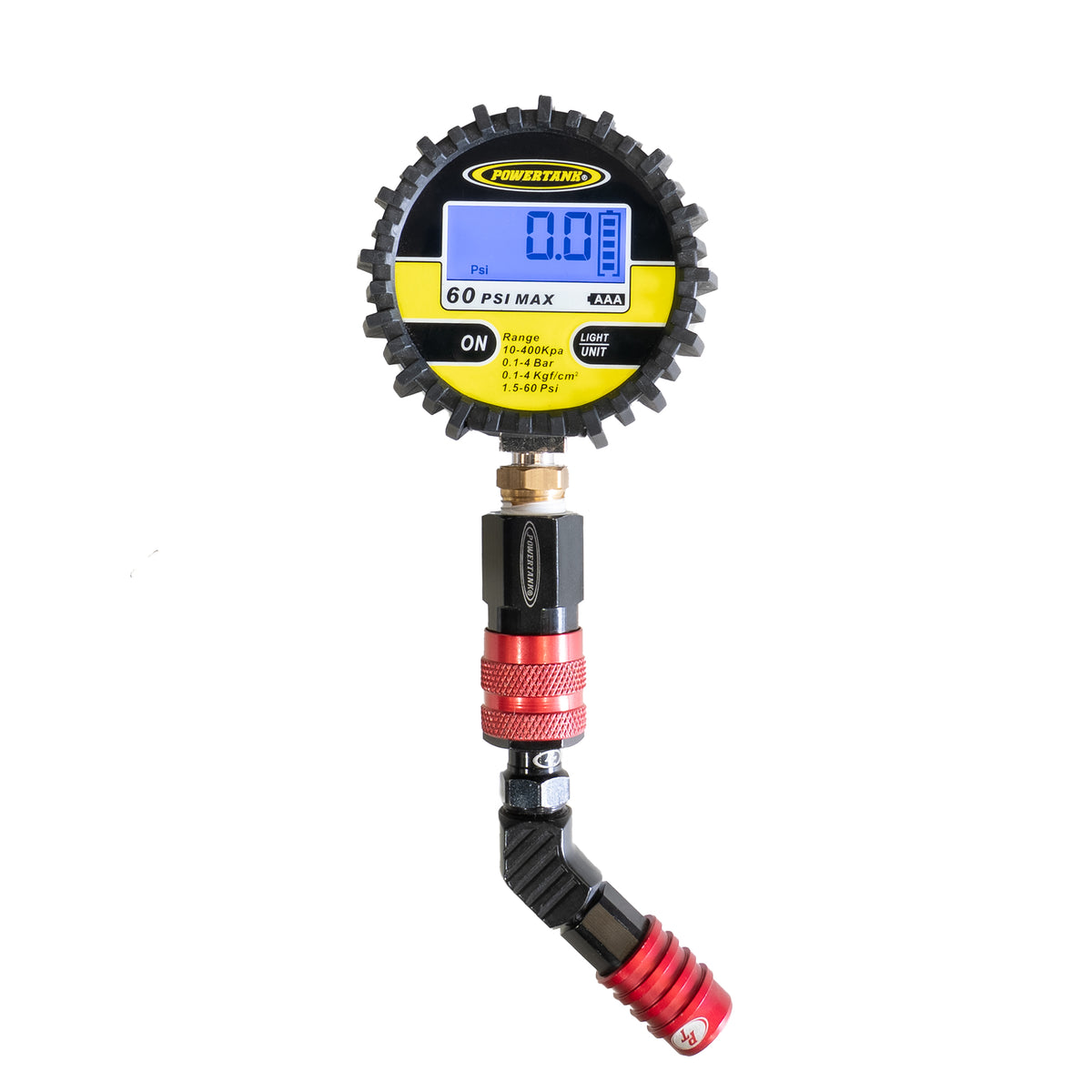
Choose a gauge with a pressure range that fits your vehicle. Most passenger cars use pressures between about 30 and 40 pounds per square inch, or PSI. A gauge that reads up to 100 PSI is more than enough for most cars and light trucks.
Digital gauges often show readings in PSI, bar, kPa, or kg/cm². In the United States, PSI is the most common unit. Check the display before taking a reading so you do not mistake 2.4 bar for 2.4 PSI.
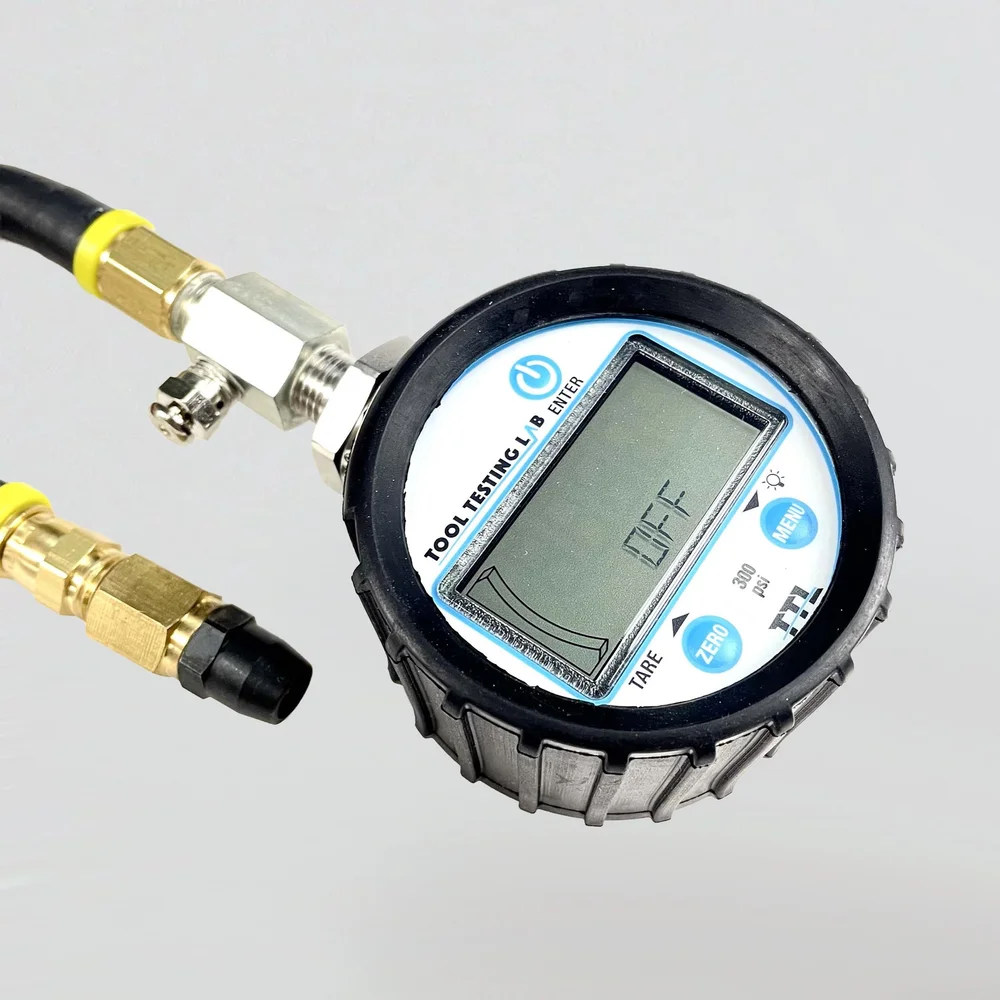
A quality digital gauge should have a clear display, a working battery, and a sealed nozzle. Some models include a backlight, an automatic shutoff, or an audible signal when the reading is stable.

How to Check Tire Pressure With a Digital Gauge
Follow these steps to check tire pressure with a digital gauge accurately.
1. Park on a safe, level surface
Park away from traffic and set the parking brake. A level surface makes the process easier and helps you reach each valve stem safely.
Avoid checking a tire immediately after driving. Road friction warms the air inside the tire and raises the pressure reading.
2. Check the tires when they are cold
Cold tires have not been driven for at least three hours. You can also check them before driving more than one mile at low speed.
This step is important because tire pressure changes with temperature. As air warms, it expands. A warm tire may show a higher number than it would when cold, even though no air has been added.
3. Find the recommended PSI
Open the driver’s door and look for the tire information label. It may list different pressures for the front and rear tires. Some vehicles also list a separate pressure for a heavily loaded vehicle.
Write down the correct number for each axle. For example, your vehicle may require 35 PSI in the front tires and 33 PSI in the rear tires.
4. Remove the valve cap
Unscrew the small cap from the valve stem. Place it somewhere clean so it does not collect dirt.
The valve cap helps keep dust and moisture away from the valve. It is not what holds the main air pressure in the tire, but it still protects the valve from contamination.
5. Turn on the digital gauge
Press the power button and select PSI if the gauge uses another unit. Wait until the display is ready.
If the screen is dim, the gauge turns off quickly, or the reading jumps around, replace the battery. A weak battery can create confusion, even when the sensor itself is accurate.
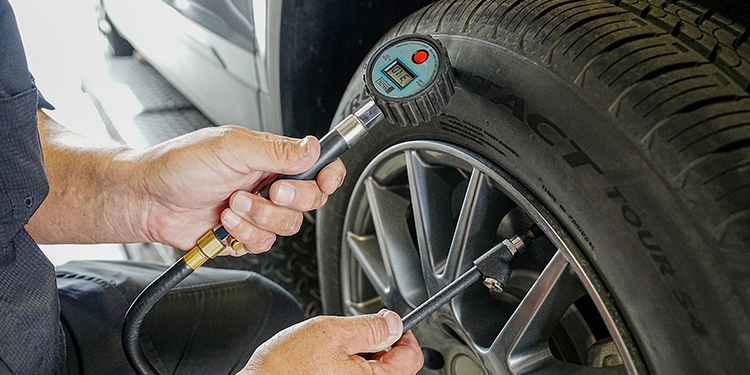
6. Press the gauge firmly onto the valve
Place the gauge nozzle straight over the valve stem. Press down firmly until you hear little or no air escaping.
Keep the gauge steady for one or two seconds. Most digital gauges will display a stable reading. If air escapes for several seconds, remove the gauge and try again.
7. Record the reading
Check the number on the screen and compare it with the recommended PSI. Repeat the process on all four tires.
Do not assume that all four tires have the same pressure. Front and rear recommendations can differ, especially on trucks, SUVs, and vehicles with uneven weight distribution.
8. Add or release air
If the reading is low, add air in short bursts. Wait a few seconds, then measure again.
If the reading is high, use the small metal pin inside the valve or the air tool’s release button to let out a little air. Check the pressure after each short release.
9. Replace each valve cap
Once the pressure is correct, screw the valve cap back onto the stem. Then check the remaining tires, including the spare if your vehicle has one.
Learning how to check tire pressure with a digital gauge becomes quick with practice. The full process often takes less than five minutes.

How to Read and Adjust the Gauge Correctly
A digital tire gauge shows pressure at one moment. It does not automatically tell you whether that pressure is correct. You must compare the number with the vehicle manufacturer’s recommendation.
For example:
- Recommended pressure: 35 PSI
- Gauge reading: 29 PSI
- Adjustment: Add air until the cold reading reaches 35 PSI
If a reading is 1 PSI higher or lower than the target, make a small adjustment. A difference of several PSI deserves more attention.
Check for a slow leak if one tire repeatedly loses air. Possible causes include:
- A nail or screw in the tread
- A damaged valve core
- A leaking valve stem
- A bent wheel
- A bead leak where the tire meets the wheel
- Cracks caused by age or damage
Do not keep adding air without finding the cause. A tire that loses pressure again and again needs a professional inspection.
A pressure monitoring system, or TPMS, can warn you about low pressure. However, it may not warn you until the pressure is already well below the recommended level. It is a useful safety feature, but it does not replace a manual pressure check.
Common Mistakes to Avoid
Many inaccurate tire pressure readings come from simple errors. Avoid these common problems when you check tire pressure with a digital gauge.
Checking hot tires
A hot tire can show a higher pressure than a cold tire. Do not release air from a hot tire just to match the door label. Check it again when cold.
Using the sidewall number
The sidewall may show a number such as 44 PSI. This is often the tire’s maximum pressure, not the correct pressure for your vehicle. Use the doorjamb label or owner’s manual instead.
Pressing the gauge at an angle
An angled nozzle can let air escape and produce an unstable reading. Keep the gauge straight and press it firmly onto the valve.
Measuring only one tire
One tire may lose air while the others remain normal. Check all four tires every time.
Ignoring the spare tire
A spare tire can lose air while sitting unused. Some temporary spares require much higher pressure than regular tires, so follow the pressure printed on the spare or listed in the manual.
Checking after adding air
An air compressor may deliver more pressure than expected. Always measure again after filling.
Using a damaged gauge
A cracked nozzle, weak battery, or scratched display can affect usability. Compare your gauge with a trusted shop gauge from time to time if you suspect an error.
In my experience, the most common mistake is rushing the valve connection. A firm, straight seal gives a much better reading than quickly tapping the gauge against the stem.
How Often Should You Check Tire Pressure?
Check tire pressure at least once each month and before long road trips. Also check it after major temperature changes, because air pressure commonly drops as outdoor temperatures fall.
A practical routine is to check the tires on the same day each month. For example, you might measure them on the first Saturday morning before driving.
You should also check pressure when:
- The vehicle feels harder to steer
- The tire warning light turns on
- The car pulls to one side
- You notice uneven tread wear
- The vehicle carries a heavy load
- You install different tires
- The vehicle has been parked for several weeks
Many tire professionals recommend checking pressure more often during winter. A cold snap can lower tire pressure enough to trigger the TPMS warning light.
Checking tire pressure with a digital gauge before a long trip is especially helpful. A few minutes in your driveway can prevent a stressful stop on the highway.

Digital Gauge Accuracy and Limitations
Digital gauges are convenient and easy to read, but they are not perfect. Most consumer gauges are accurate enough for normal vehicle maintenance when used correctly. Still, readings may vary slightly between gauges.
The following factors can affect results:
- A poor seal at the valve
- Dirt inside the valve stem
- A weak battery
- Extreme heat or cold
- A damaged pressure sensor
- Repeated air loss during measurement
For better accuracy, take two readings without adding or removing air. If the results are close, the gauge is likely working normally. If they differ by several PSI, inspect the nozzle, replace the battery, or compare the gauge with a trusted instrument.
A digital gauge also cannot identify internal tire damage. If a tire has a bulge, deep cut, exposed cord, or serious tread separation, do not rely on pressure alone. Have the tire inspected by a qualified professional.
The gauge gives you a number, not a complete safety diagnosis. Think of it as a thermometer for your tire. It tells you one important condition, but it cannot reveal every problem.
Practical Tips for Better Results
Use these simple habits to make checking tire pressure with a digital gauge easier and more reliable:
- Keep the gauge in the glove box or emergency kit.
- Replace the battery before a long trip if it is weak.
- Store the gauge away from water and extreme heat.
- Check pressure before loading the vehicle for travel.
- Keep valve caps installed.
- Measure pressure before making adjustments.
- Wait a moment after adding air before taking another reading.
- Check for visible tire damage during every inspection.
- Follow the vehicle label rather than a general online recommendation.
When using a gas station air machine, verify the setting before connecting it. Some machines display PSI, while others may use kPa. If you use an air compressor at home, add air slowly because small passenger tires can gain pressure quickly.
If your vehicle has a TPMS reset procedure, follow the instructions in the owner’s manual after correcting the pressure. Some systems reset automatically after driving, while others require a button or menu command.
Frequently Asked Questions About How to Check Tire Pressure With a Digital Gauge
How do I check tire pressure with a digital gauge?
Remove the valve cap, turn on the gauge, select PSI, and press the nozzle straight onto the valve stem. Hold it firmly until the reading becomes stable, then compare the number with the pressure on the driver’s door label.
Should I check tire pressure when the tires are hot or cold?
Check tire pressure when the tires are cold. Ideally, the vehicle should sit for at least three hours or be driven less than one mile before measuring.
Is the tire sidewall pressure the correct pressure?
Usually, no. The sidewall number is often the tire’s maximum rated pressure, while the correct vehicle pressure is listed on the doorjamb label or in the owner’s manual.
How accurate are digital tire pressure gauges?
Most good digital gauges provide adequate accuracy for routine checks. A poor valve seal, low battery, dirt, or a damaged gauge can cause unreliable readings.
How often should I check my tire pressure?
Check all tires at least once a month and before long trips. Check them more often during large temperature changes or whenever the vehicle feels unusual.
Why does one tire keep losing pressure?
A recurring pressure loss may indicate a puncture, leaking valve, wheel damage, or a bead leak. Have the tire inspected instead of repeatedly adding air.
Should I check the spare tire?
Yes. Spare tires can lose air while they sit unused, and temporary spares often need a different pressure from regular tires. Follow the number printed on the spare or listed in the owner’s manual.
Conclusion
Checking tire pressure with a digital gauge is simple: measure cold tires, use the doorjamb recommendation, press the gauge firmly onto each valve, and adjust the air in small steps. Check all four tires, inspect for damage, and do not confuse the tire sidewall maximum with the correct vehicle pressure.
Make this task part of your monthly car care routine. Keep a digital gauge in your vehicle, check the tires before your next road trip, and explore your owner’s manual for TPMS and load-specific guidance.

6 Comments