How To Clean Car Interior Without Chemicals: Easy Car Guide
You can clean a car interior without added cleaning products by using water, air, gentle brushing, microfiber cloths, and careful drying. This method works well for dust, loose dirt, crumbs, light fingerprints, and many fresh spills. It may not remove every stain, odor, mold issue, or grease mark, but it reduces residue and limits the risk of damaging sensitive surfaces.
For this guide, “without chemicals” means without added soaps, solvents, disinfectants, fragrances, or commercial cleaners. Water is still a chemical substance in the scientific sense, but it is the simplest and least reactive cleaning option for routine care.
This approach suits most cars in the United States, including cloth seats, vinyl trim, plastic dashboards, rubber mats, and glass. Always check the vehicle owner’s manual first, especially for leather, suede-like microfiber, coated screens, and electronic controls.

What You Need Before You Start
Gather clean tools before you begin. A small set of simple tools is safer than using one wet rag on every surface.
You will need:
- Two or more clean microfiber cloths
- Clean water in a bowl or spray bottle
- A soft-bristle brush
- A dry, soft toothbrush for seams and vents
- A vacuum with a crevice tool, if available
- A soft cotton cloth for screens
- A bucket or bag for trash
- A dry towel for final drying
- A plastic card wrapped in a cloth for narrow gaps
Use clean tools. A dirty cloth can move grit across a dashboard and cause fine scratches. Wash microfiber cloths without fabric softener, because fabric softener can leave a film that attracts dust.
Choose the right water
For most car interiors, tap water is fine. Distilled water may help reduce mineral spots on glass or glossy trim, especially if your tap water is hard.
Use cool or lukewarm water. Hot water can soften some adhesives, affect coatings, or make certain stains spread.
Test an unseen area first
Before cleaning a visible section, dampen a hidden spot. Good test areas include:
- The bottom edge of a seat
- The side of a door pocket
- The underside of a floor mat
- A hidden section of plastic trim
Wait until the area dries. Stop if the color changes, the surface becomes sticky, or the material looks uneven.
How to Clean a Car Interior Without Chemicals
Clean from top to bottom and from dry to damp. This order prevents dust and dirty water from settling on areas you already cleaned.
1. Remove trash and personal items
Take out bottles, papers, floor mats, child seats, and items from door pockets. Open the trunk as well if you want to clean the full cabin.
Check under the seats. Coins, gravel, food, and small plastic items can damage a vacuum or scratch trim during wiping.
2. Open the doors and improve airflow
Park in a shaded, well-ventilated place. Open the doors or windows when weather and security allow.
Do not clean in direct, strong sunlight. Water can dry too fast and leave marks. A hot cabin can also make plastic and glass harder to clean evenly.
3. Vacuum or brush away dry dirt
Remove dry dirt before adding water. Use a vacuum on:
- Seats
- carpets
– Floor mats - Door pockets
- The area around seat rails
- The space between the seat and center console
Use a soft brush on dashboards, vents, switches, and textured plastic. If you do not have a vacuum, brush dirt onto a sheet of paper or a towel and remove it by hand.
Do not press grit into upholstery. Scrubbing dry dirt into fabric can push it deeper into the fibers.
4. Dust the dashboard and trim
Start with a dry microfiber cloth. Fold it into sections and turn to a clean side as dust builds up.
For vents and seams, use a dry soft toothbrush. Work gently around:
- Air vents
- Steering wheel controls
- Window switches
- Cup holders
- Instrument bezels
- Gear selector trim
Keep dust from falling into switches. A brush is safer than flooding these areas with water.
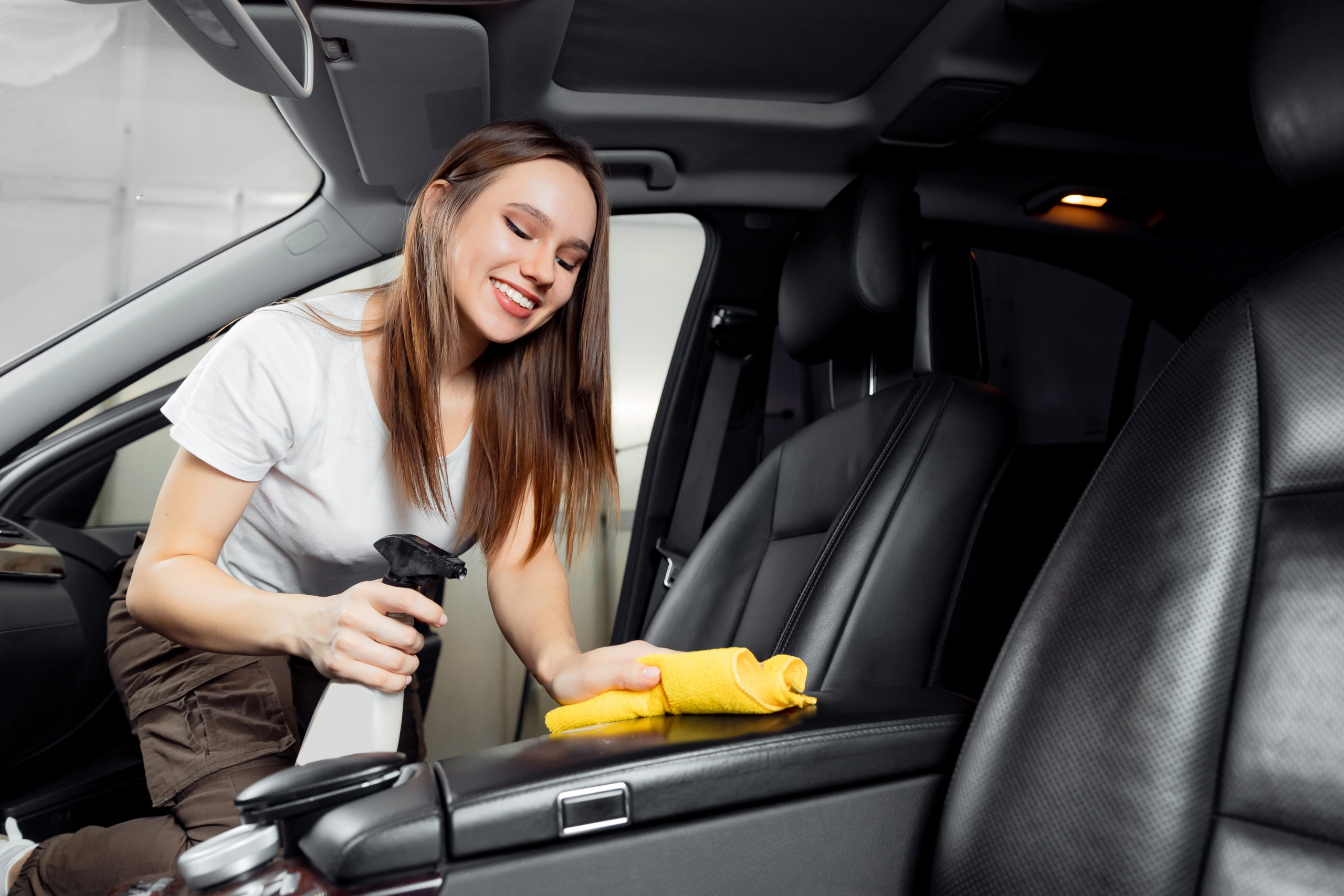
5. Wipe hard surfaces with a damp cloth
Dampen a microfiber cloth with clean water, then wring it out until it is only slightly moist. Wipe small areas at a time.
Suitable areas usually include:
- Plastic door panels
- Vinyl armrests
- Rubber cup holders
- Hard plastic center consoles
- Interior door handles
- Seat belt buckles, away from the belt webbing
Use a second dry cloth after each section. This removes moisture before it can collect in seams.
Never spray water directly onto the dashboard, controls, vents, speakers, USB ports, or screens. Spray only onto the cloth if a damp cloth is needed.
6. Clean fabric seats with minimal moisture
For cloth seats, begin with vacuuming and brushing. Many light marks will improve without water.
For a fresh spot:
- Blot the spill with a dry cloth.
- Dampen a clean corner of a microfiber cloth.
- Press the spot from the outside toward the center.
- Turn to a clean part of the cloth as dirt transfers.
- Blot with a dry towel.
- Let the seat air-dry fully.
Avoid soaking the seat. Water can travel into foam and remain there longer than the surface suggests. A damp seat may also develop a musty smell.
Do not rub hard. Friction can spread a stain and roughen the fabric.
7. Clean vinyl and synthetic leather carefully
Vinyl and synthetic leather often respond well to a damp microfiber cloth followed by a dry cloth. Use light pressure on seams and raised texture.
Do not use excessive water around stitched areas. Water can enter through needle holes and remain under the surface.
Some synthetic materials have a top coating. Strong rubbing, rough brushes, and repeated wet cleaning may dull that coating. Follow the vehicle maker’s instructions when available.
8. Treat genuine leather as a special case
Water alone can remove surface dust from finished leather, but it may not remove body oil or heavy grime. Blot a damp cloth rather than rubbing it across the surface.
Leather types differ. Aniline leather, coated leather, perforated leather, and suede-like materials have different care needs. Do not assume that a water-only method is safe for every leather finish.
If the owner’s manual requires a leather cleaner or conditioner, follow that instruction. A “no chemicals” rule should not override material-specific care.
9. Clean glass and mirrors with a nearly dry cloth
Use a clean, slightly damp microfiber cloth on interior glass. Follow with a dry glass cloth.
Clean in straight lines. Wipe the inside of the windshield in one direction and the outside in another. This makes streaks easier to identify.
Keep water away from:
- Defroster wiring
- Camera housings
- Rain sensors
- Dashboard openings
- Electrical connectors
If the glass remains cloudy, the film may come from smoke, plastic off-gassing, grease, or a prior product. Water alone may not remove it.
10. Clean rubber mats and floor mats
Remove mats from the vehicle before cleaning. Shake or brush off loose dirt first.
For rubber mats:
- Brush away dry grit.
- Rinse with clean water outdoors if practical.
- Wipe the surface with a damp cloth.
- Rinse again if dirt remains.
- Dry both sides completely before reinstalling.
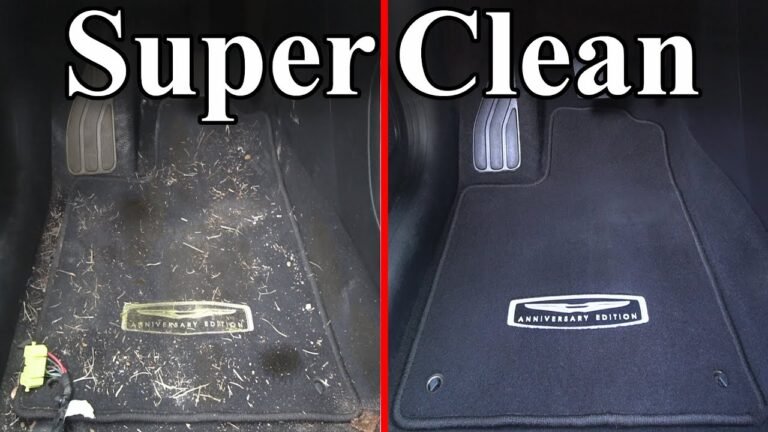
For carpet mats, vacuum first. Blot small marks with a damp cloth and allow the mat to dry fully outside the vehicle.
A wet mat can trap moisture against the vehicle floor. That can create odor and may contribute to corrosion over time.

How to Remove Common Interior Dirt Without Cleaner
Water and mechanical action work best on fresh, water-based dirt. They work less well on oils, tar, adhesive, dye transfer, and old stains.
| Problem | First method | Main limit |
|---|---|---|
| Dust | Dry microfiber cloth or soft brush | A wet cloth can smear it |
| Crumbs and grit | Vacuum or brush | Remove grit before wiping |
| Fresh water spill | Blot, then air-dry | Do not soak the seat |
| Light fingerprints | Damp microfiber cloth | Dry the surface after wiping |
| Mud | Let it dry, brush, then vacuum | Wet mud can spread |
| Grease or oil | Blot only | Water alone may not dissolve it |
| Ink or dye | Do not rub; isolate the area | It may need a material-safe cleaner |
| Gum | Chill and lift carefully | Heat can spread it |
| Smoke film | Damp cloth test | Water may not remove the film |
| Mold or mildew | Stop and assess the source | Cleaning the surface may not solve it |
Fresh spills
Act quickly. Blot rather than scrub. Place a dry towel over the spill and press down to transfer liquid from the fabric into the towel.
Repeat with a clean part of the towel. Do not use a hair dryer or strong heat to force drying. Heat can set some stains and may damage synthetic fabrics.
Mud and sand
Let mud dry before brushing or vacuuming. Removing wet mud often spreads it through carpet fibers.
For sand, use a vacuum and a soft brush. Move the brush in short strokes while the vacuum collects loosened grit.
Gum
Cool gum with an ice pack inside a sealed bag. Once firm, lift it gently with a plastic card wrapped in cloth. Test first, because cold or scraping can affect some upholstery finishes.
Grease and oil
Blot fresh oil with a dry, absorbent cloth. Do not add water at first. Water does not dissolve oil, and rubbing can push it deeper into fabric.
A persistent oil stain usually requires a cleaner designed for the specific material. If you choose not to use any cleaner, the safest option may be professional upholstery service rather than aggressive scrubbing.
Ink and dye transfer
Do not spread the mark. Avoid rubbing, alcohol, nail-polish remover, and unknown solvents unless the vehicle maker or material maker specifically approves them.
Take a photo and identify the upholstery material. Professional help is sensible if the mark is on light leather, a headliner, or a dyed fabric seat.
How to Remove Car Odors Without Chemicals
Start with the source. Odor control is more effective when you remove the material causing the smell.
Check:
- Under the seats
- Door pockets
- Floor mats
- The trunk
- Seat seams
- Child-seat areas
- Damp carpet
- The cabin air filter area, if accessible
Vacuum dry debris and air out the cabin. Dry every damp item before putting it back.
Water-only cleaning may reduce odors from dust or a fresh spill, but it will not reliably remove odors from mold, smoke, pet urine, spoiled food, or deeply soaked foam. Fragrance only covers many odors and does not remove their source.
If the smell returns after drying, look for hidden moisture. A leaking door seal, sunroof drain, windshield seal, air-conditioning drain, or wet carpet pad may need inspection.
Mold and mildew need extra care. Avoid brushing a large moldy area inside the car, because that can spread particles. If the odor is strong, the vehicle has visible growth, or someone in the home has asthma or a weakened immune system, use a qualified automotive detailer or remediation professional.
How to Clean Car Screens, Electronics, and Seat Belts
Sensitive parts need less moisture and less pressure than ordinary trim.
Screens and displays
Turn the screen off and let it cool. Wipe it with a clean, dry microfiber cloth. If needed, use a cloth that is barely damp with water.
Do not spray the screen. Do not use paper towels, rough cloth, window cleaner, alcohol, ammonia, or abrasive pads unless the vehicle manual permits them.
Avoid pressing hard. Some screens have coatings that can become cloudy or scratched.
Buttons and switches
Use a dry brush or dry microfiber cloth first. If a damp cloth is necessary, apply moisture to the cloth and keep it away from gaps.
Do not pour or spray water near switches. If liquid enters a control, stop using that area and follow the owner’s manual or seek service.
Steering wheel
The steering wheel needs a firm, clean grip. Wipe it with a barely damp microfiber cloth and dry it well.
Do not leave an oily or slippery film. Avoid products that make the wheel slick, especially if the steering wheel is leather or has a special coating.
Seat belts
Pull the belt out slowly and wipe the webbing with a damp cloth. Let it extend until fully dry.
Do not use bleach, solvents, abrasive tools, or heavy scrubbing. Do not put seat belts in a washing machine. A damaged or frayed belt should be inspected by a qualified service provider.
Airbag areas
Use light dusting only around steering-wheel airbag covers, dash airbag panels, and seat-mounted airbag areas. Do not remove covers or push tools into seams.
If an airbag warning light is on, cleaning will not fix the fault. Have the vehicle checked according to the owner’s manual.

What Not to Do When Cleaning Without Chemicals
A chemical-free goal does not make every natural method safe. Avoid these common mistakes:
- Do not pour water onto seats, carpets, vents, or electronics.
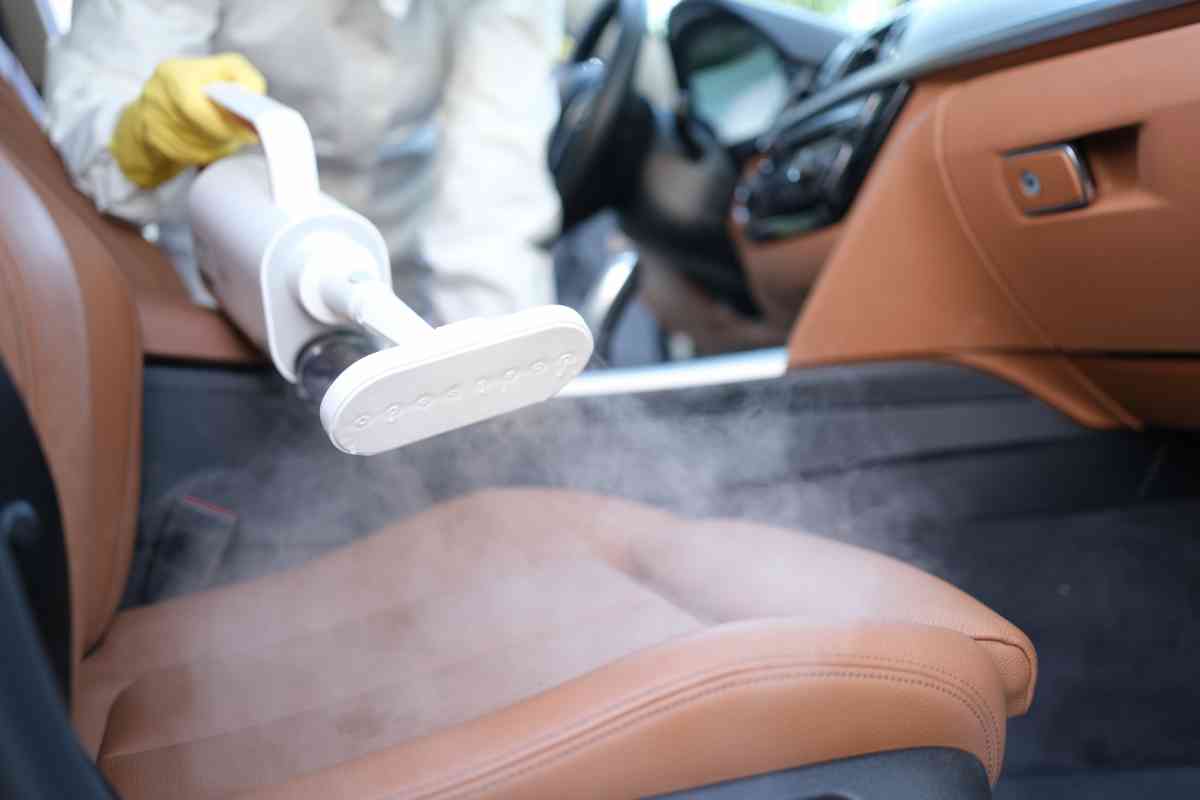
- Do not use steam unless the vehicle maker allows it for that material.
- Do not scrub a stain before identifying the surface.
- Do not use a stiff brush on leather, suede-like fabric, screens, or headliners.
- Do not clean a hot interior in direct sunlight.
- Do not reinstall wet mats or seats.
- Do not use essential oils or undiluted household substances as “natural” cleaners.
- Do not mix household products.
- Do not ignore a recurring damp smell.
- Do not use compressed air near sensitive electronics unless you understand where debris may travel.
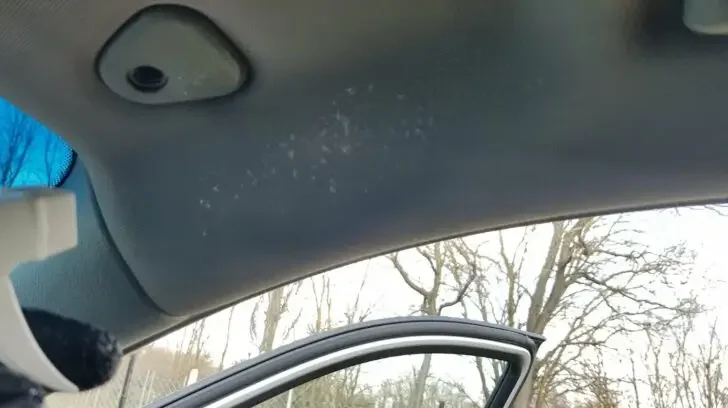
A headliner deserves special care. It is often held to the roof by adhesive. Too much water or rubbing can loosen the fabric and create a sagging area. Use a dry cloth first, then a barely damp cloth only for a small mark.

How to Know the Interior Is Clean and Dry
A clean interior should have:
- No loose crumbs or visible dust
- No wet patches
- No slippery film on the steering wheel
- No streaks on glass
- No water trapped in seams
- No musty odor after the cabin sits closed
- Dry mats on both sides
- Controls that work normally
Run a dry cloth over cleaned surfaces. If it picks up moisture or grime, continue drying or use a clean cloth.
Let fabric, carpet, and mats dry completely before closing the car for long periods. In humid areas of the United States, drying can take longer. Air movement matters more than simply waiting.
If a stain becomes larger, the color changes, the surface feels sticky, or the odor returns, stop. The material may need a product made for that surface or professional treatment.
A Simple Maintenance Schedule
Frequent light cleaning prevents the need for aggressive cleaning later.
After each trip
- Remove food and drink containers.
- Shake out loose debris.
- Wipe fresh spills at once.
- Close lids and bottles before placing them in the car.
Each week
- Vacuum the seats and floor.
- Empty door pockets.
- Dust the dashboard and vents.
- Check for damp mats or unusual odors.
Each month
- Clean glass.
- Wipe trim and cup holders.
- Clean rubber mats.
- Look under seats and around the trunk.
The best time to clean a spill is while it is still a surface problem. Once liquid reaches seat foam or carpet padding, water-only cleaning becomes less reliable.
Frequently Asked Questions
Can I clean my whole car interior with only water?
You can clean much of the interior with water, a soft brush, and microfiber cloths. This works best for dust, loose dirt, and light surface marks. Water alone may not remove oil, smoke film, ink, adhesive, mold, or old stains.
Is vinegar safe for a car interior?
Vinegar is a chemical cleaner, so it does not meet a strict no-added-chemicals approach. It can also harm or dull some finishes. Do not use it unless the vehicle or material maker specifically approves it.
Can I use steam instead of chemicals?
Steam uses heat and water, but it is not safe for every material. High heat and moisture may damage adhesives, screens, leather finishes, headliners, electronics, and seat components. Use it only when the owner’s manual or material maker permits it.
How do I clean a car interior without leaving water spots?
Use a nearly dry microfiber cloth, work in small areas, and dry each section right away. Distilled water may reduce mineral spots on glass and glossy trim. Avoid cleaning hot surfaces in direct sun.
What should I do if the car still smells after cleaning?
Find the odor source rather than adding fragrance. Check under seats, mats, carpet padding, the trunk, and areas exposed to leaks. A returning musty smell can point to hidden moisture, mold, or a wet cabin air filter.
Is water-only cleaning safe for leather seats?
It may be suitable for light dust on some finished leather, but leather types vary. Use the owner’s manual as the main guide. Avoid soaking, rough rubbing, and water on suede-like or untreated leather.
Conclusion
To clean a car interior without chemicals, remove dry dirt first, use a barely damp microfiber cloth for hard surfaces, blot fabric instead of scrubbing, and dry every area fully. Keep water away from electronics, screens, airbag seams, and seat-belt mechanisms.
This method is gentle and useful for routine care, but it has limits. Oil, smoke, mold, dye, and deep stains may need a material-safe cleaner or professional service. If you clean lightly and often, your car’s interior can stay fresh without relying on added cleaning products.
Your next step: remove the trash, vacuum or brush the dry dirt, and test a damp microfiber cloth on a hidden area before cleaning the visible surfaces.