What Is A Gentle Cleaner For Car Interior: Safe Tips
A gentle car interior cleaner is a mild product that lifts dust, skin oils, food marks, and light grime without drying, fading, or weakening interior surfaces. For most cars in the United States, the safest general choice is a pH-balanced, water-based interior cleaner labeled for automotive use.
Use it with a soft microfiber cloth, light pressure, and little moisture. Always check the vehicle owner’s manual first, especially for leather, suede-like upholstery, touchscreens, and coated plastic trim.
What makes a car interior cleaner gentle?
A gentle cleaner removes surface soil without using harsh chemicals or excess force. It should clean the material while leaving its color, texture, finish, and protective coating intact.
The term gentle cleaner is not one fixed legal category in the United States. A product may use words such as:
- Interior cleaner
- Detailer
- pH-neutral cleaner
- Mild cleaner
- Leather cleaner
- Fabric or upholstery cleaner
- Automotive all-purpose cleaner
These labels do not all mean the same thing. Read the product label and confirm that it lists your surface.
Key traits of a gentle interior cleaner
A suitable cleaner often has these traits:
- Water-based formula: It uses water as the main carrier and is less likely to leave a heavy oily film.
- Mild cleaning action: It removes normal dirt without strong bleaching or stripping action.
- Low or neutral pH: A near-neutral formula can be less aggressive on many materials, although pH alone does not prove that a product is safe.
- No harsh solvents: Strong solvents may affect dyes, coatings, adhesives, or soft-touch finishes.
- Low residue: A clean surface should not feel greasy or attract dust.
- Clear material directions: The label should state whether the product is safe for plastic, vinyl, leather, fabric, rubber, or other surfaces.
A gentle cleaner is not always the weakest cleaner. It is the cleaner that matches the soil and the surface. Light dust may need only a damp microfiber cloth. Grease may require a mild automotive cleaner. A strong product can create more damage than benefit when used for a small stain.
Cleaner, protectant, and disinfectant are different
These products have different jobs:
| Product type | Main purpose | Important limit |
|---|---|---|
| Interior cleaner | Removes dirt, oils, and light stains | Does not automatically disinfect |
| Leather cleaner | Removes soil from finished leather | Does not replace a leather conditioner when the manual recommends one |
| Fabric cleaner | Loosens soil in cloth and carpet | Too much liquid can cause slow drying or water marks |
| Protectant | Adds a finish or helps resist UV exposure | May make steering wheels, pedals, or seats slippery |
| Disinfectant | Reduces or kills certain germs when used as labeled | Must meet label directions for surface, amount, and contact time |
Do not assume that a cleaner disinfects. In the United States, a product making antimicrobial claims must follow the applicable U.S. Environmental Protection Agency requirements for those claims. For routine car care, cleaning is often the main need.
How do you choose a gentle cleaner for each car interior surface?
Choose the cleaner by surface first and soil type second. A product that works well on vinyl may not be suitable for an untreated leather surface, suede-like material, or a vehicle touchscreen.
Plastic, vinyl, and rubber trim
For dashboards, door panels, center consoles, and vinyl seats, choose a mild automotive interior cleaner or a damp microfiber cloth for light dust.
Avoid products that leave a slick shine on:
- Steering wheels
- Gear selectors
- Pedals
- Floor mats
- Door handles
- Seat controls
A glossy dressing can reduce grip or make dust stick to the surface. A matte or low-residue finish is usually easier to maintain.
Finished leather
Use a cleaner that specifically says it is safe for automotive leather. Many modern car seats use coated or finished leather, but leather types and surface coatings vary.
Do not soak leather. Excess liquid can move into seams, perforations, or cushion edges. Follow cleaning with the care step listed in the owner’s manual or leather product instructions.
A leather cleaner is not automatically suitable for:
- Suede
- Alcantara-style material
- Nubuck
- Perforated leather
- Uncoated leather
- Heated or ventilated seat surfaces
When the material is unclear, check the vehicle manual or ask the manufacturer or a qualified detailer before applying a product.
Cloth seats and carpet
For fabric, select a cleaner made for automotive upholstery. Use the least amount that can do the job.
Too much water can create several problems:
- Slow drying
- Musty odors
- Water rings
- Stains spreading into the padding
- Moisture near seat wiring or sensors
Vacuum first. This removes dry grit that could turn into muddy residue when wet.
Suede-like upholstery and specialty materials
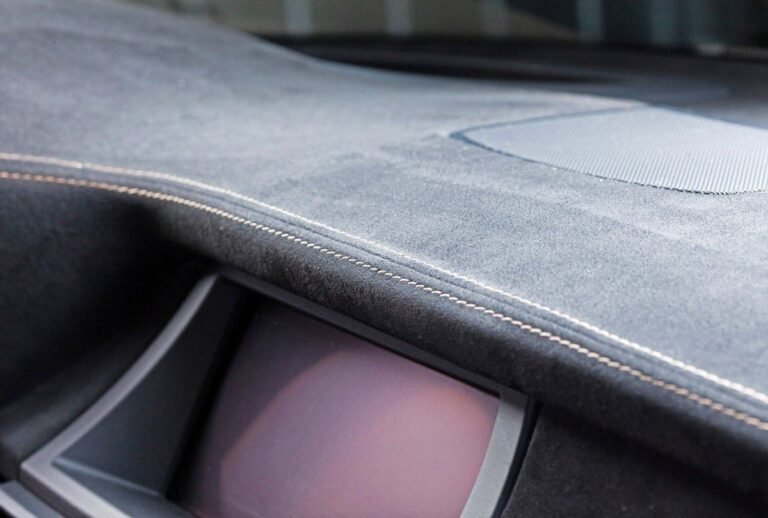
Suede-like materials need special care. A general interior spray may flatten the nap, leave marks, or change the texture.
Use only a product approved for that material. Apply it to a cloth or brush when the instructions allow it. Do not saturate the surface or scrub hard.
Touchscreens and instrument displays
Screens need a different approach. First remove dust with a clean, dry microfiber cloth. If a mark remains, lightly dampen the cloth with water or use a screen-safe product approved for automotive displays.
Never spray liquid directly onto a screen. Avoid glass cleaners unless the vehicle maker specifically permits them. Some cleaners contain chemicals that can affect anti-glare or protective coatings.
How to clean a car interior gently
A careful process matters as much as the product. These steps work well for routine cleaning in most U.S. vehicles, but the owner’s manual takes priority.
What you need
Gather:
- A vacuum with a soft brush attachment
- Two or more clean microfiber cloths
- A small soft-bristle brush
- A gentle automotive interior cleaner
- A bucket or clean water source
- A soft towel for drying
- A small amount of mild soap only when the surface instructions allow it
Use separate cloths for dirty areas and final wiping. A cloth used on the floor should not be used on the dashboard or screen.
Step 1: Read the vehicle manual and product label
Look for warnings about leather, screens, seat belts, airbag panels, and electronic controls. Product directions may require dilution, ventilation, a test spot, or a set dwell time.
Do not rely on a product being called “natural,” “green,” or “gentle.” The ingredient name and surface directions matter more than the marketing phrase.
Step 2: Remove loose items and vacuum
Take out trash, mats, and personal items. Vacuum seats, carpet, cracks, and cup holders.
Use a soft brush around vents and buttons. Do not push grit across glossy plastic or piano-black trim.
Step 3: Test a hidden area
Apply a small amount to an unseen area, such as the lower edge of a seat or door panel. Let it dry and check for:
- Color change
- Sticky residue
- Cloudiness
- Streaks
- Texture change
- Dye transfer
If any problem appears, stop and choose a different method.
Step 4: Apply cleaner to the cloth
Spray the cleaner onto a microfiber cloth instead of directly onto the dashboard, console, buttons, or seats.
This gives you better control and lowers the chance of liquid entering:
- Switches
- Speakers
- USB ports
- Instrument clusters
- Air vents
- Seat controls
- Gaps around the gear selector
Step 5: Wipe a small section
Work in small areas. Use light pressure and straight or overlapping passes. Turn the cloth to a clean side as soil transfers to it.
Do not scrub hard to make a surface look clean. Aggressive rubbing can create shiny spots on soft-touch trim or wear printed markings from buttons.
Step 6: Wipe away residue and dry
Use a clean, slightly damp cloth if the label permits it, then dry the area with another microfiber towel.
A successful result should look clean and even. It should not feel oily, sticky, or unusually wet.
Step 7: Let fabric and leather dry fully
Keep doors open or windows lowered when safe to improve airflow. Do not use high heat on leather or plastic.
If a seat remains damp, avoid sitting on it until it dries. Persistent moisture or odor may require professional extraction or inspection.
Which household cleaners should you avoid?
Many household products are too strong, too wet, or poorly matched to car materials. A product that works on a kitchen counter may damage a vehicle interior.
Avoid using these unless the vehicle maker or material maker specifically approves them:
- Bleach
- Ammonia-based cleaner
- Strong glass cleaner
- Acetone or nail-polish remover
- Undiluted rubbing alcohol
- Abrasive powder
- Melamine foam used with heavy pressure
- Furniture polish
- Oily silicone dressing
- Undiluted dish soap
- Vinegar mixtures on sensitive surfaces
Why bleach and ammonia are poor choices
Bleach can discolor materials and may damage dyes or coatings. Ammonia can affect some plastics, films, and coated surfaces. Mixing bleach with ammonia or acidic products can create dangerous gases.
Never mix cleaning products. Use ventilation, follow the label, and keep chemicals away from children and pets.
Why dish soap is not a universal car cleaner
A small amount of mild dish soap may be suitable for some washable plastic or rubber items when properly diluted. It is not a universal solution for an entire cabin.
Dish soap can leave residue and may remove oils or finishes that a material needs. It is especially risky when used on leather, suede-like upholstery, screens, or soft-touch trim.
Why disinfecting wipes need care
Some disinfecting wipes contain alcohol, quaternary ammonium compounds, fragrances, or other ingredients that may affect color and finish. If you use one, confirm that the label allows the surface and follow the required wet contact time.
Do not use a disinfecting wipe as a general polish. Wipe away residue only when the product and surface directions allow it.

Gentle car interior cleaner comparison
The best choice depends on the surface, the amount of dirt, and how much moisture the material can handle.
| Situation | First choice | Avoid |
|---|---|---|
| Light dust on dashboard | Dry or slightly damp microfiber cloth | Heavy spray |
| Fingerprints on plastic | Mild interior cleaner on a cloth | Abrasive pad |
| Greasy center console | Diluted automotive interior cleaner | Oily protectant |
| Cloth seat spill | Upholstery cleaner used sparingly | Soaking the cushion |
| Finished leather soil | Automotive leather cleaner | Household degreaser |
| Dust on touchscreen | Dry microfiber cloth | Paper towel or direct spray |
| Suede-like seat mark | Approved specialty cleaner | General all-purpose cleaner |
| Sticky residue | Test-approved mild cleaner | Scraping with a sharp tool |
pH and safety
A pH-balanced product may be a sensible starting point, but pH is only one factor. A product can have a mild pH and still contain solvents or additives that are unsuitable for a certain coating.
Use the full label, safety data, and vehicle instructions together. When the label does not name your surface, do not assume compatibility.
When a professional detailer is the better choice
Consider professional help when:
- A stain has reached the seat padding
- Mold or a strong odor remains after cleaning
- A liquid entered electronic controls
- A seat belt is heavily contaminated
- An airbag panel needs cleaning
- Leather is cracked, peeling, or losing its finish
- A delicate material has changed color or texture
- The vehicle has flood or water damage
Do not remove seats, airbag trim, or seat-belt parts just to clean them unless you have the correct service information and skills. These areas may contain safety systems and wiring.

Common mistakes when cleaning a car interior
Most damage comes from too much product, too much water, or too much force. Avoid these errors:
- Spraying directly onto electronics. Spray the cloth, not the control panel.
- Skipping the test spot. A hidden test can reveal dye transfer or finish damage.
- Using one dirty cloth everywhere. Grit can scratch glossy trim.
- Over-wetting fabric. Moisture can move deep into foam and padding.
- Cleaning in direct hot sun. Product can dry before you wipe it, causing streaks.
- Using a shiny dressing on control surfaces. It can reduce grip and create glare.
- Scrubbing leather or soft-touch trim. Pressure can create permanent shine.
- Ignoring the owner’s manual. The manual may list special material limits.
- Mixing cleaners. Chemical reactions can create harmful vapors.
- Cleaning seat belts with harsh chemicals. This may affect the webbing or leave residue.
If streaks appear, stop adding cleaner. Wipe with a clean, slightly damp microfiber cloth only if the product directions permit it. Then dry the surface. If the finish remains cloudy or sticky, stop experimenting and seek material-specific advice.

Frequently asked questions
Is diluted dish soap a gentle cleaner for a car interior?
It can be acceptable for some washable plastic or rubber parts when highly diluted and fully rinsed, but it is not a safe universal choice. Avoid using it on leather, suede-like materials, screens, and soft-touch trim unless the material instructions approve it.
Can I use baby wipes on my car interior?
Baby wipes may remove light surface soil, but they are not designed for every automotive material. They can contain lotions, fragrances, or preservatives that leave residue. Test a hidden area first, and do not use them on screens or delicate upholstery without approval.
Is water alone enough to clean a car interior?
For dust and light marks, a clean, slightly damp microfiber cloth may be enough. Water will not remove all oils, grease, or set-in stains. Use a surface-appropriate cleaner when plain water does not work.
What is the safest cleaner for a car dashboard?
A mild automotive interior cleaner applied to a microfiber cloth is a practical choice for many dashboards. A damp microfiber cloth may be safer for light dust. Avoid soaking the dashboard or spraying near vents, displays, and electronic controls.
How often should I clean my car interior?
Clean high-touch areas when they become visibly dirty or feel oily. Vacuuming every few weeks can help prevent grit from building up. The right schedule depends on use, passengers, pets, food, weather, and whether the vehicle is used for work or travel.
Final recommendation
For most routine cleaning, start with a clean microfiber cloth and a mild, water-based automotive interior cleaner labeled for the specific material. Apply the cleaner to the cloth, not the surface. Use light pressure, avoid excess moisture, test first, and follow the vehicle owner’s manual.
That simple method is gentle because it controls the three main sources of interior damage: harsh chemicals, trapped moisture, and aggressive scrubbing.