How To Clean Headliner In PT Cruiser: Easy Guide
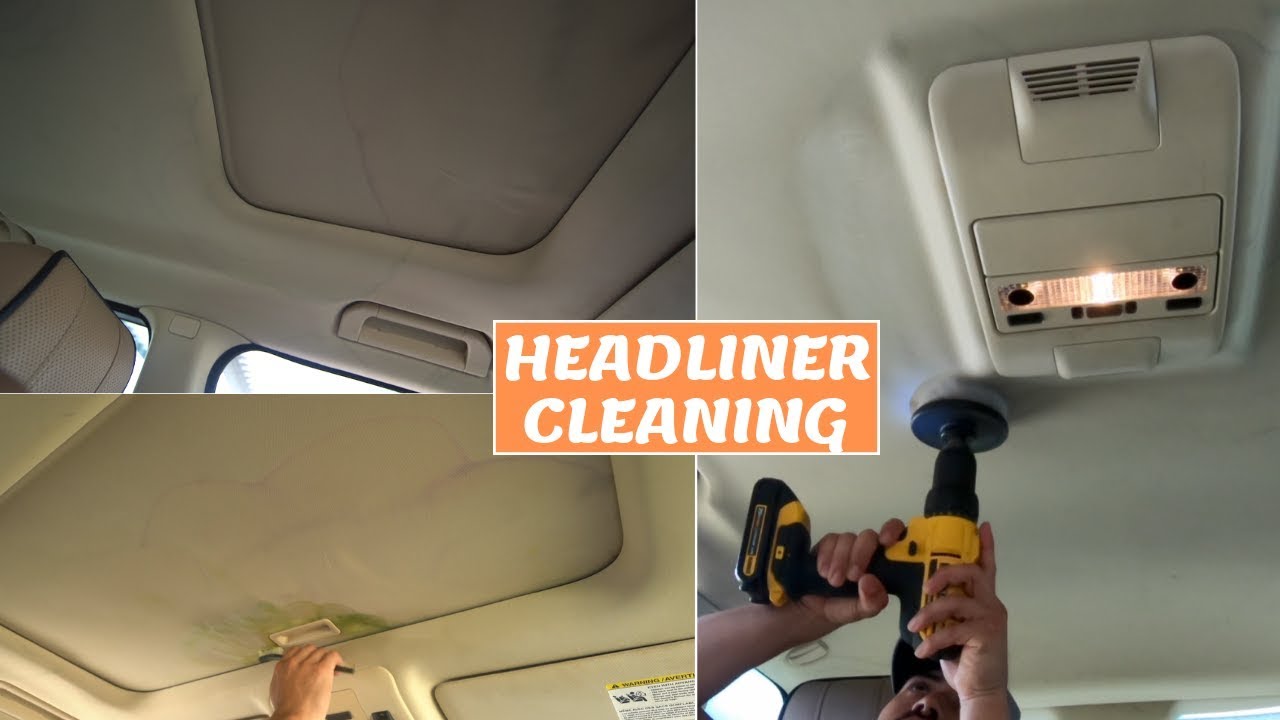
cleaning the headliner in a Chrysler PT Cruiser takes a light touch. The fabric is bonded to a thin foam layer and backing board. Too much water, cleaner, heat, or scrubbing can loosen the fabric and cause sagging.
For most dirt and light stains, vacuum the headliner first. Then use a small amount of mild upholstery cleaner on a microfiber cloth or soft brush. Work in small areas, avoid soaking the fabric, and let the cabin dry with the doors open.
What You Need Before Cleaning a PT Cruiser Headliner
Gather the right tools before you start. A simple setup works better than a bucket of water or a hard brush.
You will need:
- A vacuum with a soft brush attachment
- Two or three clean microfiber cloths
- A soft upholstery brush or soft toothbrush
- Mild automotive upholstery cleaner
- Distilled water
- A small spray bottle
- Dry towels
- Nitrile gloves
- A step stool, if needed
Choose a cleaner made for fabric, cloth seats, or automotive upholstery. Avoid products with bleach, ammonia, strong solvents, or heavy fragrance oils.
Make a mild cleaning solution
For light dirt, mix a small amount of mild soap with distilled water. The mixture should be weak, not thick or foamy.
A practical mix is:
- 2 cups of distilled water
- 1 or 2 drops of mild liquid soap
Do not spray this mix directly onto the headliner. Spray or dab it onto the cloth instead.
Check the headliner first
Look at the roof fabric before cleaning. Check for:
- Loose or sagging fabric
- Brown water marks
- Cigarette smoke film
- Grease near the door openings
- Mold or mildew
- Torn fabric
- Loose trim around the roof
If the fabric is already loose, cleaning may make the problem worse. A sagging headliner usually needs repair or replacement, not deep cleaning.

How to Clean the Headliner in a PT Cruiser
The safest method is to clean the headliner in small sections. Keep the fabric only slightly damp.
1. Park the PT Cruiser in a dry, shaded place
Clean the vehicle in a garage or shaded driveway. Do not clean a hot headliner in direct sun. Heat can make stains spread and may weaken the adhesive that holds the fabric to the backing board.
Open the doors or windows during the job. Make sure the vehicle will stay dry while the headliner dries.
2. Remove loose items from the cabin
Take out floor mats, papers, hanging air fresheners, and other items. Cleaning spray can drip onto seats or trim.
Cover the front seats with clean towels if you plan to use any damp cloth.
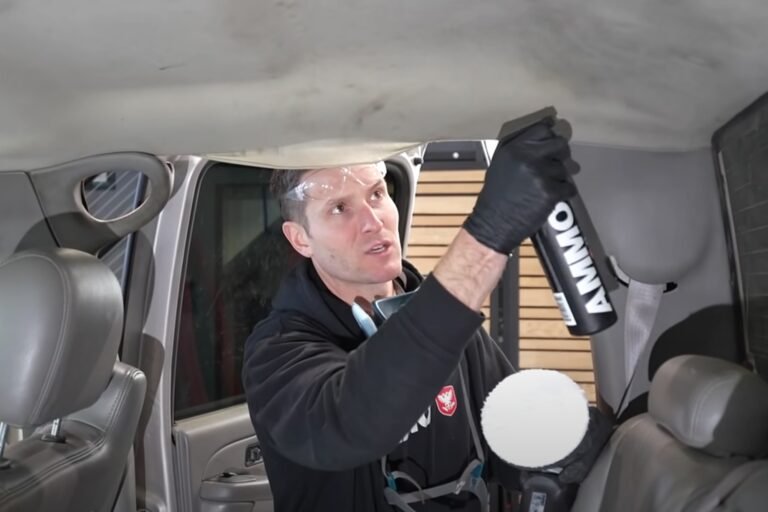
3. Vacuum the headliner gently
Use a vacuum with a soft brush attachment. Hold the tool just above the fabric or touch it very lightly.
Move in one direction. Do not press hard, scrape, or make fast back-and-forth strokes. Strong suction can pull at weak fabric or lift the edges.
Pay close attention to:
- The area above the driver and passenger seats
- The roof near the hatch
- The front edge near the sun visors
- The area around the dome light
- The upper door edges
Vacuuming often removes enough dust that no wet cleaning is needed.
4. Test the cleaner in a hidden spot
Choose a small area behind a sun visor or near the rear edge of the headliner. Apply a little cleaner to a cloth and dab the spot.
Wait several minutes. Check for:
- Color change
- Water rings
- Fabric transfer
- Sticky residue
- Loose foam
- Hard or shiny spots
If the test area changes color or texture, stop and use a professional auto upholstery service.
5. Clean one small section at a time
Lightly dampen a microfiber cloth with the cleaner. The cloth should feel damp, not wet.
Press the cloth against the fabric. Use short, gentle strokes or small dabs. Clean an area about 12 inches by 12 inches at a time.
Do not rub hard. Headliner fabric is thin, and its foam backing can break down under pressure.
6. Blot the area with a dry towel
Use a clean, dry microfiber towel to lift moisture and loosened dirt. Press gently, then lift the towel.
Do not twist the towel against the fabric. Do not keep adding cleaner to chase a stain that does not lift at once.
7. Repeat only when needed
Let the first pass dry before deciding whether to clean again. A second light pass is safer than one heavy pass.
If a stain remains after two gentle passes, it may be permanent. It may also be caused by water damage, smoke residue, adhesive failure, or foam breakdown.
8. Let the PT Cruiser dry fully
Leave the doors or windows open until the headliner is dry. Use natural airflow or a fan placed outside the vehicle.
Do not use a heat gun, hair dryer on high heat, or space heater inside the PT Cruiser. High heat may loosen the adhesive or shrink the fabric.

How to Remove Common Headliner Stains
Different stains need different methods. Always test the method first and use the least amount of moisture that can work.
| Stain or problem | First method | Avoid |
|---|---|---|
| Dust and loose dirt | Vacuum with a soft brush | Hard brushing |
| Light fingerprints | Damp microfiber cloth | Soaking the area |
| Food or drink marks | Mild upholstery cleaner and blotting | Scrubbing in circles |
| Grease | Automotive fabric cleaner used sparingly | Household degreaser |
| Smoke film | Professional interior cleaning may be needed | Heavy perfume sprays |
| Water rings | Light, even cleaning of the nearby panel | Treating only the darkest edge |
| Mold or mildew | Professional inspection | Brushing mold into the cabin |
| Sagging fabric | Headliner repair or replacement | Wet cleaning |
Food and drink stains
Remove solid material with a clean spoon or edge of a plastic card. Do not scrape with a knife.
Dab the stain with a slightly damp cloth. Work from the outside toward the center. This helps limit the spread of the mark.
Blot with a dry towel. If the stain contains milk, soda, or juice, repeat with a clean cloth lightly dampened with plain water. Soap left in the fabric can attract more dirt.
Grease and oily marks
Grease can spread when rubbed. Use a small amount of automotive fabric cleaner on a cloth. Dab the outside of the mark first, then move toward the center.
Do not use brake cleaner, engine degreaser, gasoline, acetone, or paint thinner. These chemicals can damage the fabric, foam, plastic trim, and vehicle paint.
Smoke odor
Smoke odor can settle into the headliner foam. Surface wiping may improve the smell but may not remove it.
Clean the headliner lightly, then clean the seats, carpet, door panels, and seat belts. Replace the cabin air filter if the vehicle has one and if its condition requires replacement. Do not spray deodorizer heavily onto the headliner.
Water stains
A water stain may point to a leak rather than a dirty headliner. Common leak areas include:
- Sunroof drains, if equipped
- Roof antenna seals
- Hatch seals
- Door seals
- Windshield or rear glass seals
Find and repair the leak before cleaning the stain. Otherwise, the mark will return.
What Not to Do When Cleaning the PT Cruiser Headliner
The biggest risk is using too much water. The headliner is not like a removable floor mat. Its fabric is usually bonded to foam and a rigid backing board.
Avoid these methods:
- Do not soak the headliner.
- Do not use a carpet extractor on the roof.
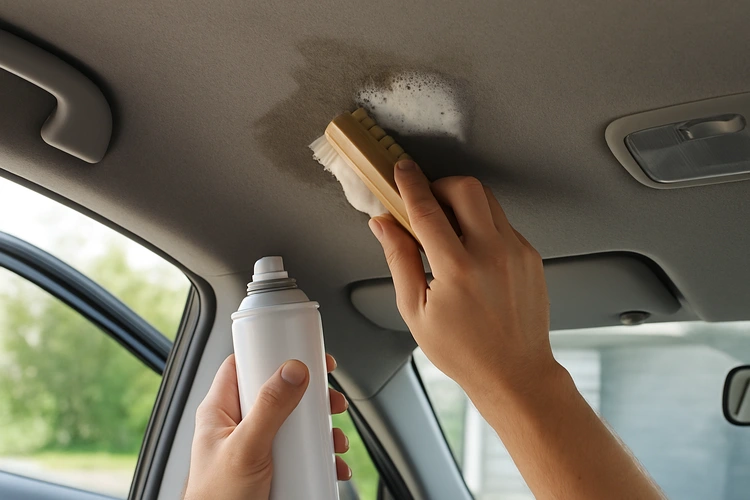
- Do not spray cleaner directly overhead.
- Do not use a steam cleaner unless a trained upholstery professional confirms it is safe.
- Do not scrub with a stiff brush.
- Do not pull down on the fabric.
- Do not use bleach or strong household cleaners.
- Do not use high heat to dry the roof.
- Do not remove roof trim without checking the vehicle service information.
- Do not clean around lights with liquid running into the fixture.
Keep cleaner away from the dome light, switches, wiring, and trim seams. If liquid enters an electrical part, stop cleaning and allow the area to dry fully before using it.
Some PT Cruiser versions may have supplemental restraint equipment near the roof or pillars. Do not disturb pillar trim or airbag-related parts during a basic headliner cleaning. If the headliner must be removed, follow the correct Chrysler service procedure or use a qualified technician.

How to Fix a Sagging PT Cruiser Headliner
Cleaning cannot reliably fix a sagging headliner. Sagging usually means the foam backing has broken down or the adhesive has failed.
Small loose edge
A small loose edge near a trim piece may be repairable. The fabric must be clean, dry, and free of old loose foam. Use an adhesive made for automotive headliners and follow its label directions.
Do not use ordinary school glue, craft glue, or thick household adhesive. These products may soak through the fabric, smell in heat, or fail under vehicle temperatures.
Large sagging area
A large sag usually needs headliner removal and re-covering. The old fabric and deteriorated foam must be removed. The backing board may also need repair.
This job can involve:
- Sun visors
- Dome lights
- Grab handles
- Roof trim
- Pillar trim
- Electrical connectors
- Supplemental restraint components
If you are not familiar with vehicle trim and electrical systems, have an automotive upholstery shop do the work.
Signs that cleaning should stop
Stop cleaning if:
- The fabric begins to move over the foam
- The surface becomes wrinkled
- Foam appears on the cloth
- The fabric changes color
- A water ring grows
- The headliner feels soft or detached
- A trim panel starts to pull away
Continuing can turn a small stain into a full headliner replacement.

How to Dry and Maintain the Headliner
Drying the headliner well helps prevent odor, water marks, and adhesive damage. After cleaning, keep the PT Cruiser ventilated until the roof feels fully dry.
For routine care:
- Vacuum the headliner every few months.
- Clean spills as soon as possible.
- Keep windows closed during rain.
- Repair roof and hatch leaks quickly.
- Avoid smoking inside the vehicle.
- Do not hang heavy items from the headliner.
- Keep oily hands away from the fabric.
- Use the sun visors carefully so their mounts do not pull on the roof fabric.
A light clean is better than frequent deep cleaning. The less moisture and friction the headliner sees, the longer it may remain attached.

When to Use a Professional Detailer or Upholstery Shop
Use a professional when the headliner has widespread stains, mold, strong smoke odor, or major sagging. Professional help is also wise when the stain comes from a roof leak that has not been found.
Ask the shop how it will protect the headliner backing and adhesive. A good service should explain whether it plans to:
- Use low-moisture cleaning
- Remove the headliner
- Repair the backing board
- Replace the fabric
- Protect lights, wiring, and trim
- Locate the source of water damage
Professional cleaning cannot guarantee that old stains will disappear. Smoke, dye transfer, rust-colored water marks, and adhesive damage may remain visible even after proper cleaning.

Quick Takeaways
- Vacuum the PT Cruiser headliner before using liquid.
- Test every cleaner in a hidden area.
- Apply cleaner to a cloth, not directly to the roof.
- Use light pressure and small sections.
- Keep the headliner only slightly damp.
- Avoid steam, soaking, harsh chemicals, and high heat.
- Stop if the fabric loosens or the foam breaks down.
- Repair roof leaks before treating water stains.
- Use a professional for sagging, mold, or severe smoke damage.
FAQs
Can I use Windex on a PT Cruiser headliner?
It is better to avoid glass cleaner. Many glass cleaners contain chemicals that can discolor fabric, leave residue, or affect the foam adhesive. Use a mild automotive upholstery cleaner instead, and test it first.
Can I use dish soap to clean the headliner?
A very small amount of mild dish soap diluted in water may work for a light spot. Use it sparingly and apply it to a cloth. Rinse residue with a separate cloth that is only slightly damp.
Can I use a steam cleaner on a PT Cruiser headliner?
Steam is risky because heat and moisture can loosen the adhesive. A trained detailer may use a controlled low-moisture method, but a household steam cleaner is not a safe default choice.
Why did my headliner sag after cleaning?
The fabric may have had weak adhesive or deteriorated foam before cleaning. Moisture and rubbing can expose that condition. Once the fabric sags, drying it will not usually restore the bond.
How do I remove a bad smell from the headliner?
Clean the headliner lightly and improve airflow. Also clean nearby seats, carpets, and door panels. If the smell is from smoke, mold, or a water leak, find the source instead of covering it with fragrance.
Should I remove the PT Cruiser headliner before cleaning it?
Usually, no. Light surface cleaning can be done in place. Remove it only for repair, re-covering, severe contamination, or access to a leak. Roof trim and safety-related parts can make removal more complex.
Conclusion
The safest way to clean a PT Cruiser headliner is to vacuum it first, use a small amount of mild upholstery cleaner, and blot rather than scrub. Keep moisture low and let the cabin dry with good airflow.
If the fabric is sagging, the roof has a leak, or the headliner shows mold or severe smoke damage, cleaning is not the main repair. Fix the underlying problem or contact an automotive upholstery professional before the damage spreads.