How To Clean Headliner Stains: Easy Safe Guide
Most headliner stains can be cleaned with a small amount of mild cleaner, a soft microfiber cloth, and gentle pressure. The key is to clean the surface without soaking the headliner. Too much water, heat, or scrubbing can loosen the adhesive that holds the fabric to the backing board.
This guide applies to cars, trucks, and SUVs commonly used in the United States. It covers food marks, fingerprints, water rings, smoke film, grease, and other light stains. It also explains when a stain needs professional repair instead of more cleaning.
Introduction: Why Headliners Need Gentle Cleaning
A vehicle headliner is the fabric-covered panel attached to the inside roof. It usually has a thin foam layer and an adhesive-backed board beneath it. That layered design makes the headliner soft and quiet, but it also makes it more fragile than seats, carpets, or plastic trim.
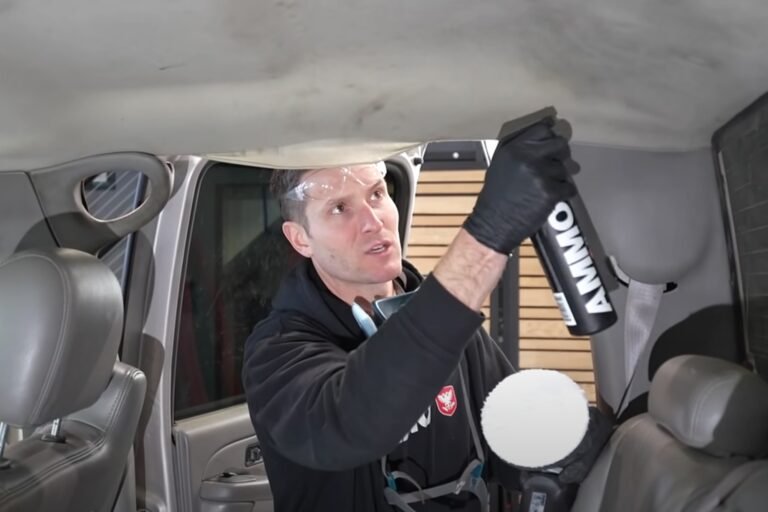
A stained headliner should be cleaned with a low-moisture method. Spray the cleaner onto a cloth, not directly onto the roof. Blot the mark, work from the outside toward the center, and let the area dry with the doors open.
Avoid soaking, steam cleaning, stiff brushes, bleach, and strong household cleaners. These can cause water marks, fabric damage, discoloration, or headliner sagging.

What You Need Before Cleaning a Headliner
Gather the right tools before you start. A short, controlled cleaning session is safer than repeated attempts with too much liquid.
Basic supplies
- Two or three clean, white microfiber cloths
- Distilled water
- A small bowl
- Mild upholstery cleaner made for automotive interiors
- A soft, clean detailing brush
- A dry towel
- A vacuum with a soft brush attachment
- Nitrile gloves
- A small spray bottle, if needed
White cloths help you see whether dye or dirt is transferring. They also reduce the risk of color bleeding onto a light-colored headliner.
Choose the cleaner carefully
Use a cleaner labeled for automotive upholstery or fabric interiors. A mild solution of water with a very small amount of gentle soap may work for fresh, light marks, but commercial products vary. Always follow the product label.
Do not use:
- Bleach
- Ammonia
- Glass cleaner
- Acetone or nail-polish remover
- Heavy degreasers
- Carpet shampoo in large amounts
- Abrasive powders
- Hair spray or adhesive remover
- High-temperature steam
A cleaner that works on plastic, glass, or carpet may be too harsh for headliner fabric or its foam backing.
Check the vehicle first
Before cleaning, look for:
- A loose or sagging section
- Torn fabric
- Stains around a sunroof
- Water near a dome light
- Airbag labels or trim panels
- A strong mildew odor
- Rust-colored marks from a roof leak
If the fabric is already loose, cleaning may make the problem worse. Fix the leak or adhesive problem first.
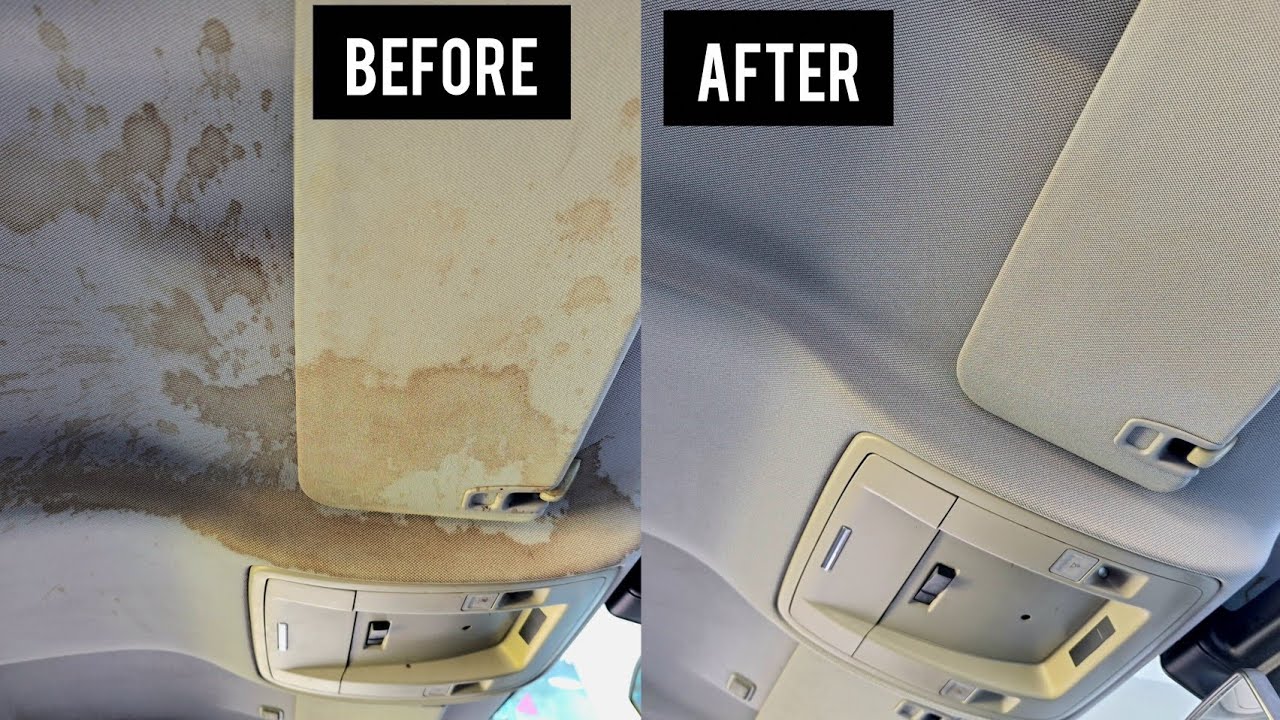
How to Clean Headliner Stains Step by Step
The safest method uses very little moisture. Work on a small area, check the result, and stop if the fabric or backing begins to change.
1. Park in a safe, dry place
Park the vehicle in a shaded, well-ventilated area. Avoid cleaning in direct sun because heat can make moisture dry unevenly and may increase the chance of water rings.
Keep the doors open if conditions allow. Do not work in heavy rain, high humidity, or an enclosed space with poor airflow.
2. Remove loose dust
Use a vacuum with a soft brush attachment. Hold the tool just above the fabric or use only light contact. Do not press hard against the headliner.
If you skip this step, loose dust can turn into muddy streaks when it meets the cleaner.
3. Test a hidden area
Dampen a corner of a white microfiber cloth with the chosen cleaner. Test it near a trim edge or another hidden spot.
Wait a few minutes and check for:
- Color transfer
- Fabric lightening
- Rough texture
- Foam showing through
- Adhesive softening
- A visible ring after drying
If the test area changes, do not use that product on the visible stain.
4. Apply cleaner to the cloth
Lightly dampen the cloth. It should feel moist but not wet enough to drip.
Do not spray the roof directly. Direct spraying can force liquid into the headliner board, lights, wiring, roof controls, or airbag areas.
5. Blot the stain
Press the damp cloth onto the mark for a few seconds. Lift the cloth rather than rubbing back and forth.
Repeat with a clean part of the cloth. Start at the outer edge and move inward. This helps keep the stain from spreading.
For a small spot, several light passes are safer than one wet pass.
6. Use a soft brush only when needed
If the stain remains, use a soft detailing brush with almost no pressure. Make short strokes in one direction.
Do not scrub in circles. Circular scrubbing can roughen the fabric and create a lighter or darker patch.
7. Remove cleaner residue
Use a second cloth that is barely damp with distilled water. Blot the area once or twice to lift leftover cleaner.
Do not rinse the headliner as you would rinse carpet. The goal is to remove residue while keeping the backing as dry as possible.
8. Dry the area fully
Press a dry towel against the cleaned spot. Then leave the doors open until the headliner is fully dry.
Do not use a heat gun or hair dryer on a hot setting. Excess heat can weaken adhesive and create a visible dry line.
9. Check the result after drying
A stain may look different while damp. Wait until the area is fully dry before deciding whether another pass is needed.
If the mark is lighter but still visible, repeat the process once. If the fabric begins to look fuzzy, pale, stiff, or loose, stop.

How to Remove Different Types of Headliner Stains
The best method depends on what caused the mark. A fresh water-based stain is usually easier to treat than old smoke, grease, or mildew damage.
| Stain type | First approach | Main risk |
|---|---|---|
| Fingerprints | Barely damp microfiber cloth | Spreading body oil |
| Food or drink | Blot, then use mild upholstery cleaner | Water rings |
| Grease | Small amount of fabric-safe cleaner | Dark halo |
| Water mark | Find and fix the leak, then blot | Repeated staining |
| Smoke film | Professional interior cleaning may be safer | Discoloration and odor |
| Mold or mildew | Address moisture source and seek professional help | Health and material damage |
| Ink or dye | Stop rubbing and use a professional | Permanent spreading |
Fingerprints and light dirt
For light marks, start with a dry microfiber cloth. If the mark remains, lightly dampen the cloth with distilled water and blot.
This simple method often works because fingerprints contain surface oils and dust rather than a deep chemical stain.
Coffee, soda, and food stains
Blot fresh spills as soon as possible with a dry cloth. Do not rub. Rubbing pushes the liquid deeper and widens the stain.
Once the excess liquid is gone, use a small amount of automotive upholstery cleaner. Work in short passes and dry the area well.
Sugary drinks can leave a sticky film. A barely damp cloth with distilled water may help lift residue after the first cleaning pass.
Grease and oily marks
Grease may need a fabric-safe upholstery cleaner. Apply the cleaner to the cloth and blot from the edge toward the center.
Use less product than you think you need. A large wet patch can leave a larger ring than the original stain.
Do not apply powder, cornstarch, or kitchen degreaser to the headliner unless the product specifically states that it is safe for automotive fabric and foam-backed materials.
Water stains
A water stain often points to a leak rather than a simple dirty spot. Common sources include:
- Sunroof drains
- Roof antenna seals
- Windshield seals
- Door seals
- Roof rack mounting points
- Failed weather stripping
Find and repair the leak before cleaning. Otherwise, the stain may return and the backing may continue to weaken.
After the leak is fixed, gently clean the mark using the low-moisture process. A severe brown ring may be permanent and may require headliner replacement.
Smoke and nicotine stains
Smoke can leave a yellow or gray film across a wide area, not just one spot. It can also create a strong odor in the fabric, foam, carpet, and ventilation system.
Spot cleaning may improve a small area, but it may not remove deep smoke residue. A professional detailer can assess whether the headliner can be cleaned without creating uneven color.
Avoid saturating the roof to chase the odor. Moisture can damage the headliner while leaving smoke residue in the foam.
Mold and mildew
Mold or mildew on a headliner usually means the interior stayed wet. Do not simply cover the smell with fragrance or soak the fabric with cleaner.
Find the moisture source and dry the vehicle. If mold covers a large area, returns after cleaning, or causes breathing irritation, consult a qualified automotive interior professional. Depending on the material and extent of damage, replacement may be more appropriate than surface cleaning.
Ink and dye stains
Ink can spread quickly when wet. Do not rub it and do not begin with a strong solvent.
Blot the area with a dry cloth and have a professional assess it. Solvents that dissolve ink may also dissolve the headliner adhesive or remove the fabric color.
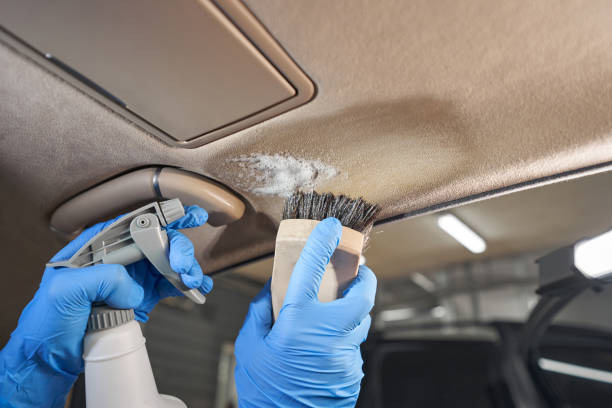
What to Do if the Headliner Starts Sagging
Do not clean a sagging headliner as if it were a firm fabric panel. Sagging usually means the foam or adhesive has failed. Moisture and scrubbing can make the loose section larger.
Avoid these quick fixes:
- Pins or thumbtacks
- Household spray adhesive
- Staples
- Duct tape
- Heavy glue
- Iron-on patches
These repairs can leave marks, damage the backing board, or interfere with trim and airbag components.
A small loose edge may be repairable by an automotive upholstery shop. A large sagging panel often needs removal, replacement of the old foam and fabric, and careful reinstallation.
If the sagging area is near a curtain airbag or airbag label, do not remove trim or attempt a full repair without the correct vehicle service information.
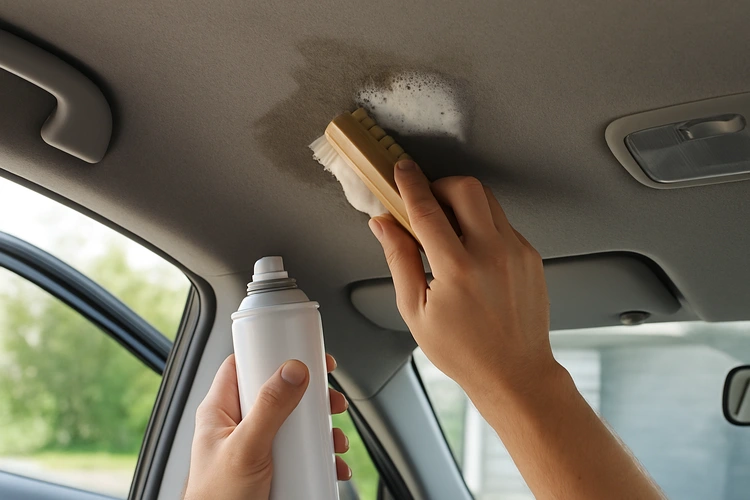
Common Mistakes When Cleaning a Car Headliner
Most headliner damage comes from too much moisture or too much force. Avoid these common errors.
Spraying cleaner directly on the roof
Direct spray can run behind the fabric. It may reach wiring, lights, switches, or trim joints.
Spray onto a cloth instead.
Scrubbing until the stain disappears
Headliner fabric has a surface nap that can become rough or patchy. If the stain does not respond after one or two light passes, more force is unlikely to solve the problem.
Using too much water
Water can spread the stain, weaken adhesive, and leave a large tide mark. Low moisture is the main rule.
Cleaning only the center of a water ring
A water mark may need treatment across the full affected area to prevent a new edge. However, expanding the wet area increases risk. Repair the leak first and consider professional cleaning for large rings.
Using a household carpet machine
Extraction machines can inject and remove a large amount of liquid. That approach may be acceptable for some carpets, but it is risky for a foam-backed headliner.
Using heat to speed drying
High heat can soften adhesive and contribute to sagging. Use ventilation, not intense heat.
Ignoring the cause
A recurring stain is a warning. Check for leaks, condensation, spills from roof-mounted equipment, or smoke residue before repeating the cleaning process.

When to Hire a Professional Detailer or Upholstery Shop
Professional help makes sense when the stain is large, old, widespread, or linked to water damage. It is also the safer choice when the headliner is loose or the vehicle has complex roof electronics.
Seek an automotive interior professional when:
- The headliner is sagging
- A water stain covers a large section
- The fabric has yellowed from smoke
- Mold or mildew is present
- Ink or dye has spread
- The backing board is visible
- Cleaning leaves a clear ring
- The stain returns
- The headliner is near airbag trim
- You cannot identify the source of moisture
Ask what process will be used and whether the shop will avoid saturating the headliner. A professional should inspect the material before promising that a stain can be removed.
No cleaning method can guarantee removal of a stain that has changed the fabric dye, damaged the foam, or soaked into the backing board. In those cases, replacement may provide a better result than repeated cleaning.

How to Keep a Headliner Clean
Prevention is easier than stain removal. Small habits reduce both dirt and moisture damage.
- Keep drinks in secure holders.
- Avoid touching the roof fabric with oily hands.
- Clean spills while they are fresh.
- Use the vehicle’s sun visor instead of pressing objects against the headliner.
- Check sunroof drains and roof seals if the vehicle has a leak.
- Keep windows closed during rain.
- Avoid smoking inside the vehicle.
- Vacuum lightly during routine interior cleaning.
- Do not hang heavy items from the headliner.
- Inspect a new water mark before cleaning it.
For routine care, a light vacuum and occasional spot cleaning are usually safer than frequent full-headliner washing.
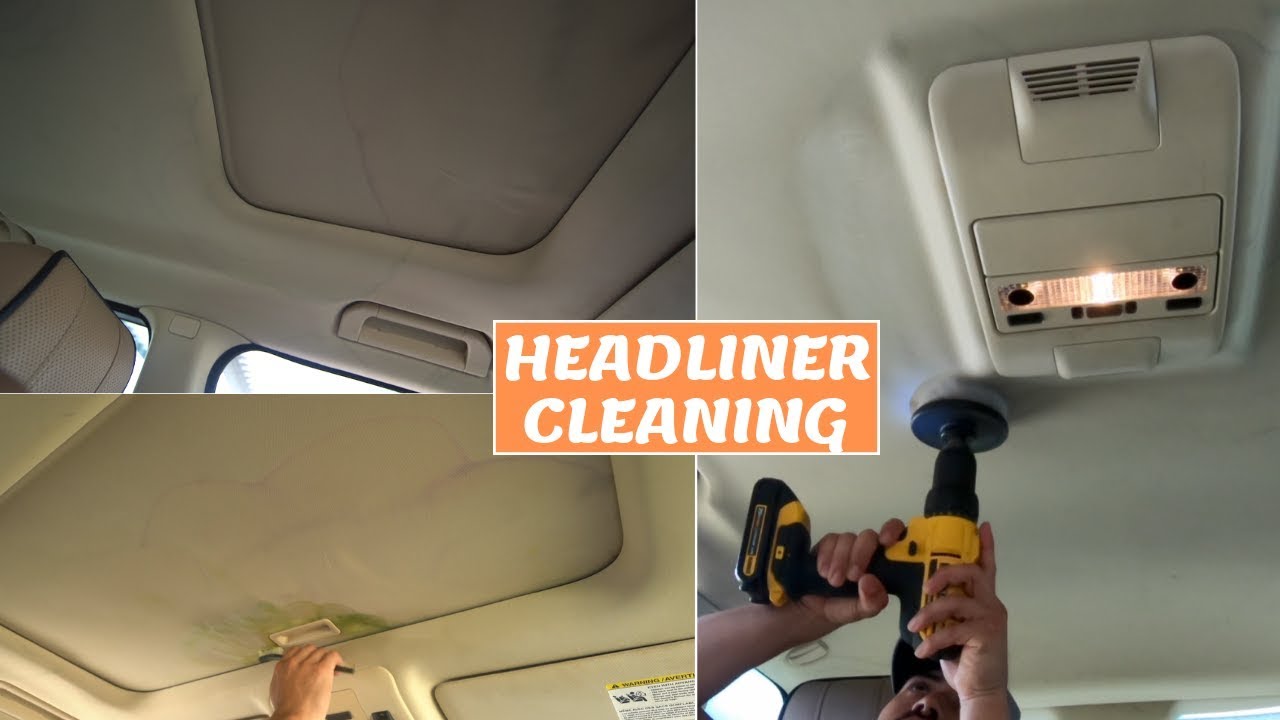
Quick Decision Guide
Use this simple sequence before choosing a cleaning method:
-
Is the fabric loose or sagging?
Stop and arrange an upholstery inspection. -
Is the stain wet, growing, or near a roof seam?
Find the leak or moisture source first. -
Is it a small, fresh surface mark?
Try a barely damp microfiber cloth. -
Did water alone fail?
Test a mild automotive upholstery cleaner in a hidden area. -
Did the fabric change, spread, or develop a ring?
Stop cleaning and let it dry fully. -
Is the stain caused by smoke, mold, ink, or old water damage?
Consider professional treatment.
The safest choice changes with the headliner’s condition. A clean, firmly attached panel can tolerate careful spot cleaning. A loose or water-damaged panel may need repair instead.

FAQs About Cleaning Headliner Stains
Can I use dish soap to clean a car headliner?
You can use a very weak solution only if the fabric passes a hidden-area test, but automotive upholstery cleaner is generally the better choice. Dish soap can leave residue and may create a visible cleaning ring if too much is used.
Can I use vinegar on a headliner?
Vinegar is not the first choice for headliner stains. Its acidity and smell may create problems, and it does not address every type of stain. Use a cleaner designed for automotive fabric and follow its label.
Can I use a steam cleaner on a headliner?
Steam is risky because heat and moisture can loosen the adhesive. Unless the vehicle or equipment manufacturer specifically approves the process for that headliner, use a low-moisture method instead.
How do I remove a yellow water stain from a headliner?
First repair the leak and dry the vehicle. Then test a mild automotive upholstery cleaner and blot gently. If the yellow mark remains, the water may have damaged the fabric or backing, and replacement or professional cleaning may be needed.
Why does my headliner look worse after cleaning?
The area may still be damp, or the cleaner may have spread dirt to the edge of the wet spot. Let it dry fully before judging it. If a ring remains, do not keep adding product; repeated wetting can increase the damage.
How long does a cleaned headliner take to dry?
Drying time depends on humidity, airflow, temperature, and how much moisture was used. With a low-moisture method and open doors, a small spot may dry fairly quickly. Do not close the vehicle or judge the final result until the fabric is completely dry.
Can I remove the headliner myself?
Removal varies by vehicle and may involve trim clips, roof electronics, wiring, and curtain airbag areas. Use the correct service information for the exact vehicle. If you are not familiar with interior trim or airbag safety procedures, use a qualified technician.
Conclusion
To clean headliner stains safely, use minimal moisture, spray cleaner onto a cloth, blot instead of scrub, and test every product first. Keep liquid away from lights, wiring, trim, and airbag areas.
A small fresh stain may respond well to careful spot cleaning. Recurring water marks, smoke damage, mold, ink, sagging fabric, and large discoloration need a professional assessment. When the headliner is loose or the stain points to a leak, repair the underlying problem before cleaning the surface.