
How Does A Car Battery Monitor Work: Explained
A car battery monitor measures voltage, current, temperature, and charge level to show how well the battery is performing.
Learning how does a car battery monitor work can save you from a dead battery, a failed start, or an expensive guess at the repair shop. These devices act like a health tracker for your car’s electrical system. They watch the battery during charging, driving, and parking, then turn electrical data into useful warnings.
What Is a Car Battery Monitor?
A car battery monitor is a small device that checks the condition of a vehicle’s battery. Most models connect to the battery terminals, while newer vehicles may use a built-in battery sensor near the negative terminal.
The monitor collects data such as:
• Battery voltage
• Charging and discharging current
• Battery temperature
• Estimated state of charge
• Estimated state of health
• Starting performance
• Parasitic drain while the car is parked
Some monitors show basic voltage through an LED display. Others connect to a smartphone through Bluetooth and provide charts, alerts, and long-term records.
The key point is simple: a car battery monitor does not merely ask whether the battery has power. It studies how the battery behaves over time.

How Does a Car Battery Monitor Work?
To understand how does a car battery monitor work, think of it as a careful electrical meter that never stops watching. It measures electrical values, compares them with normal ranges, and uses the results to estimate battery health.
A typical monitor works through these steps:
- It measures voltage at the battery terminals.
- It measures current flowing into or out of the battery.
- It checks battery temperature.
- It records changes during starting, driving, and parking.
- It uses an algorithm to estimate charge and health.
- It sends the information to a screen, app, or vehicle computer.
Voltage gives the monitor a quick view of battery pressure. Current shows whether the battery is charging or supplying power. Temperature helps the system correct its readings because batteries behave differently in cold and hot weather.
For example, a healthy 12-volt battery often rests near 12.6 volts when fully charged. A reading near 12.2 volts may suggest partial discharge. A reading below 12 volts usually deserves attention, but voltage alone cannot prove that a battery is healthy.
That is why the best battery monitors combine several measurements. A weak battery may show normal voltage after charging but lose voltage quickly under load. The monitor can identify that pattern more clearly than a single handheld check.
The Main Measurements a Battery Monitor Uses
A car battery monitor depends on more than one number. Each measurement answers a different question about the electrical system.
Voltage
Voltage shows the electrical pressure available at a given moment. It is useful, but it can also mislead you.
A surface charge may make a weak battery look healthy soon after driving. For a more useful resting reading, let the vehicle sit with the engine off for several hours. Turn off lights, accessories, and aftermarket devices before checking.
Approximate resting voltage for a conventional 12-volt lead-acid battery may look like this:
• 12.6 to 12.8 volts: fully charged
• 12.4 volts: about 75% charged
• 12.2 volts: about 50% charged
• 12.0 volts: about 25% charged
• Below 12.0 volts: deeply discharged or possibly damaged
These values are estimates. Battery design, temperature, age, and recent use can change the result.
Current
Current measures the flow of electricity in amps. When the engine runs, current should usually flow into the battery. When the engine is off, current may flow out to power systems such as the clock, alarm, and control modules.
Current data helps answer questions like:
• Is the alternator charging the battery?
• Is the battery supplying too much power while parked?
• Does the vehicle have a parasitic drain?
• How much current does the starter draw?
A current sensor often sits around the negative battery cable. It measures the magnetic field created by electrical flow. The monitor then converts that signal into a current reading.
Temperature
Temperature matters because chemical reactions inside a battery slow in cold weather and speed up in heat. Cold weather reduces available starting power. High heat can speed up battery aging and water loss in some battery designs.
A battery monitor may use a temperature sensor built into the device or placed close to the battery case. It uses that data to correct charge estimates and improve safety.
State of Charge
State of charge, or SOC, estimates how full the battery is. It is similar to a fuel gauge, but the estimate is more complex.
The monitor may combine voltage, current flow, time, and temperature. It tracks how much energy enters and leaves the battery. This method is often called coulomb counting.
SOC is useful for warning you that the battery is slowly losing charge. Still, it is an estimate. A battery can show a high state of charge and still have poor starting power if its internal plates are damaged.
State of Health
State of health, or SOH, estimates how much capacity and starting ability remain compared with the battery’s original condition.
As a battery ages, its usable capacity falls. Internal resistance often rises. The battery may still start the car on a warm morning but fail after a cold night.
A monitor estimates this decline by watching voltage drop, charging behavior, and current response. It cannot always replace a professional conductance or load test, but it can reveal trends early.

How a Battery Monitor Detects a Weak Battery
A smart battery monitor looks for patterns rather than one bad reading. This makes it more useful for real-world diagnosis.
For example, a monitor may detect:
• A large voltage drop during engine cranking
• Slow recovery after the engine starts
• Low charging current during a long drive
• High current draw while the car is parked
• Repeated low-charge events
• A battery that loses charge faster than expected
Suppose your battery reads 12.6 volts after a full charge. You might assume it is fine. However, if the voltage drops sharply during starting, the battery may have high internal resistance or low reserve capacity.
The monitor may also notice that the battery never reaches a healthy charge level. That could point to short trips, a weak alternator, corroded terminals, or an electrical drain.
This is one reason long-term monitoring is valuable. It turns a hidden problem into a visible trend.
How Does a Car Battery Monitor Work While the Engine Is Off?
When the engine is off, a car battery monitor watches the battery’s resting voltage and the vehicle’s standby current. This can help identify a parasitic drain.
Modern cars do not become completely inactive after you remove the key. Many systems remain ready for a while. Alarm systems, keyless entry modules, memory seats, computers, and communication units may use small amounts of power.
A normal standby draw varies by vehicle. Some cars settle at a low draw after several minutes. Others use more power because of connected features or accessories. The exact limit depends on the vehicle design.
A monitor can show whether the current draw drops after the car enters sleep mode. If the draw stays high, possible causes include:
• An interior light that remains on
• A dash camera wired incorrectly
• An aftermarket stereo or amplifier
• A remote starter
• A faulty control module
• A trunk, glove box, or vanity light
• A damaged relay
A battery monitor does not always identify the exact faulty component. It tells you that the battery is losing energy when it should be resting. Further testing is then needed.

How Does a Car Battery Monitor Work With the Alternator?
A battery monitor can help check alternator performance by watching voltage and current while the engine runs. In many conventional vehicles, charging voltage may sit around 13.5 to 14.8 volts, depending on temperature and vehicle design.
Newer vehicles often use smart charging systems. These systems may lower the charging voltage during some driving conditions to improve fuel economy and reduce emissions. As a result, one voltage reading cannot always prove that an alternator is faulty.
The monitor looks at the full pattern:
• Battery voltage before starting
• Voltage during cranking
• Charging voltage after startup
• Current entering the battery
• Changes during acceleration and deceleration
• Battery behavior during accessory use
If the battery stays low after a long drive, the cause may be the alternator, wiring, belt, battery sensor, or battery itself. A monitor helps narrow the search, but it does not replace a complete charging system test.
A useful practical lesson is to avoid replacing the battery first. If the alternator does not charge correctly, a new battery may also become weak. Diagnose the whole system before buying parts.
Battery Monitor Types
Different monitors suit different drivers and vehicles.
Plug-In Bluetooth Monitors
These units connect directly to the battery and send readings to a smartphone. They are popular because they are simple and affordable.
Common features include:
• Live voltage readings
• Charge alerts
• Low-voltage notifications
• Trip history
• Temperature data
• Multiple vehicle profiles
Bluetooth range may be limited. The app may also estimate battery health differently from another test tool.
Built-In Battery Sensors
Many modern vehicles have an intelligent battery sensor, often called an IBS. It is usually mounted on or near the negative battery terminal.
The sensor reports voltage, current, and temperature to the vehicle’s energy management system. The car uses this information to control charging and protect the battery.
If this sensor becomes loose or damaged, the vehicle may charge incorrectly or display battery-related warnings.
Dashboard Battery Monitors
Some vehicles show battery voltage or charging information on the dashboard. This is convenient, but the display may show only a limited view.
A dashboard reading may also be filtered by the vehicle computer. It may not show the raw voltage or current available at the battery terminals.
Professional Battery Testers
A workshop tester may use conductance, resistance, or a controlled load test. These tools can estimate cold cranking ability and remaining capacity.
They are useful when you need a clear pass, fail, or replace decision. A monitor is better for ongoing observation, while a professional tester is often better for a one-time diagnosis.
What Is the Difference Between a Battery Monitor and a Battery Tester?
A battery monitor watches the battery over time. A battery tester checks the battery at a specific moment.
This difference matters:
• A monitor shows trends and repeated events.
• A tester gives a controlled snapshot.
• A monitor can reveal overnight drain.
• A tester can measure starting performance under a known test.
• A monitor may remain connected for weeks.
• A tester is usually used during service or troubleshooting.
Neither tool does everything. The strongest diagnosis uses both long-term data and a direct test.
For example, a monitor may show that your battery loses 20% of its charge overnight. A technician can then use a multimeter and current clamp to find the circuit causing the loss.
Benefits of Using a Car Battery Monitor
A battery monitor can provide several practical benefits.
Early Warning
The monitor may warn you before the battery fails completely. This gives you time to charge it, test it, or replace it.
Better Troubleshooting
It helps separate battery problems from alternator problems and parasitic drains. That can reduce unnecessary parts replacement.
Useful for Infrequent Drivers
Cars that sit for long periods can develop low-charge problems. A monitor can tell you whether the battery is holding charge between trips.
Helpful for Campers and Recreational Vehicles
Extra lights, refrigerators, inverters, and electronics can drain batteries quickly. Monitoring current and charge level helps prevent deep discharge.
Protection for Expensive Batteries
Absorbent glass mat, lithium, and other specialty batteries may cost more than standard batteries. Tracking their use can support longer service life, although each battery type needs the correct charger and monitor settings.

Limitations and Common Mistakes
Knowing how does a car battery monitor work also means knowing what it cannot do.
A monitor may not give an exact battery lifespan. Battery health estimates depend on the device, battery type, temperature, calibration, and data quality.
Common mistakes include:
• Trusting voltage alone
• Checking immediately after driving
• Ignoring temperature
• Using the wrong battery profile in the app
• Installing the sensor backward or loosely
• Leaving the monitor connected to a weak battery for months
• Treating an estimate as a professional test result
• Assuming low voltage always means a bad battery
Installation errors can create false readings. Loose terminals add resistance and may cause voltage drops. Corrosion can also interfere with current measurement.
Always follow the monitor instructions. Keep the terminals clean and tight. Never short the battery terminals with a tool, and use care around sparks, flames, and damaged batteries.

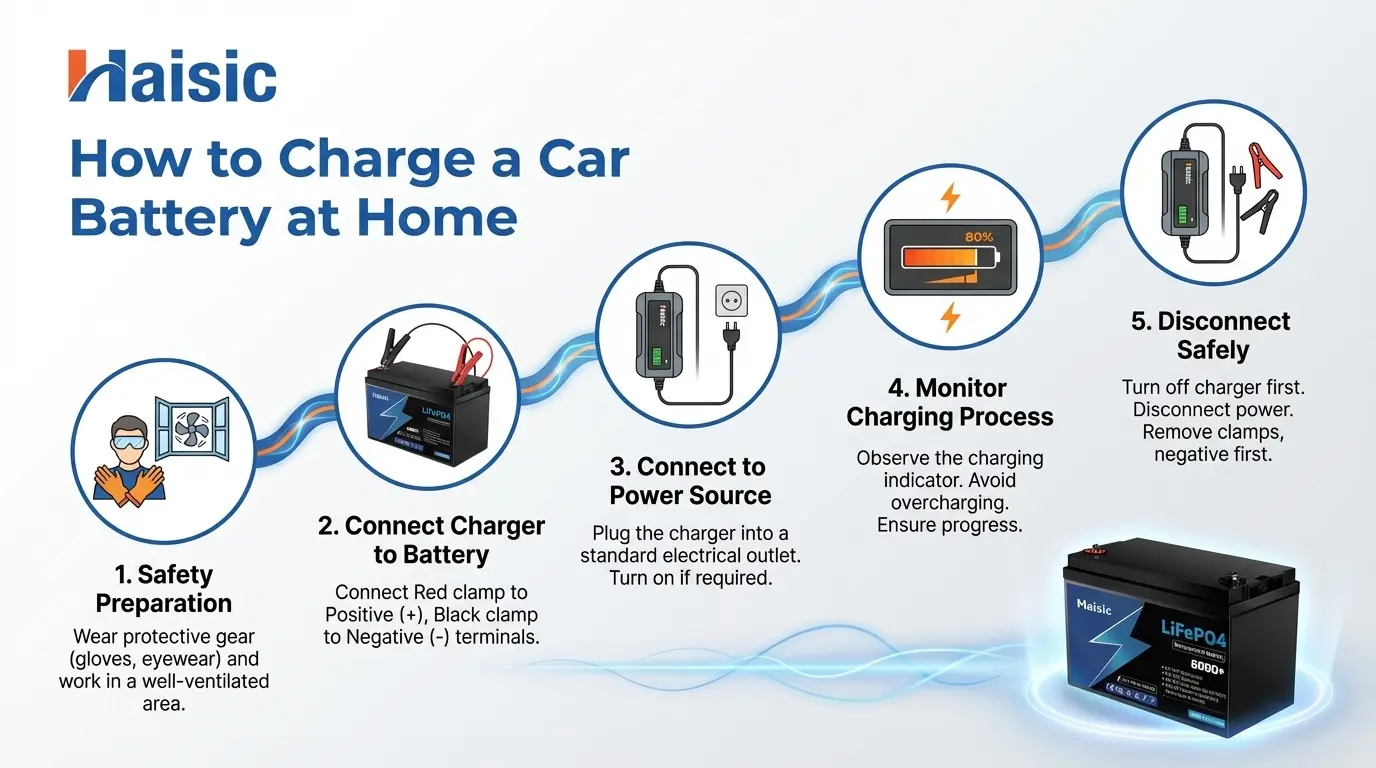
How to Install and Use a Car Battery Monitor
Most plug-in monitors are easy to install, but safe steps matter.
- Turn off the engine and all accessories.
- Find the positive and negative battery terminals.
- Connect the monitor as directed by its manual.
- Confirm that the positive and negative leads are correct.
- Secure the device away from belts, fans, and hot engine parts.
- Install the app if the monitor uses Bluetooth.
- Enter the correct battery type and rating.
- Record the first reading.
- Watch the battery during starting, driving, and parking.
- Compare readings over several days.
Do not place wires near moving parts. Do not force a connection onto a damaged terminal. If the battery is cracked, swollen, leaking, or hot, stop and seek professional help.
For the best results, record conditions beside each reading. Note the outside temperature, trip length, lights used, and time since the last drive. This context can explain changes that would otherwise seem confusing.

How to Read Common Battery Monitor Results
A single result needs context. Look for repeated behavior.
Low Resting Voltage
A low resting voltage may mean the battery is discharged. Recharge it fully, then check again after several hours.
If the voltage falls again without use, suspect a weak battery or parasitic drain.
Large Cranking Voltage Drop
A brief drop during starting is normal. A very deep or slow recovery may indicate a weak battery, poor terminal connection, or starter problem.
High Charging Voltage
High voltage may point to a charging system fault, but smart charging systems can change voltage by design. Test according to the vehicle maker’s procedure.
Normal Voltage but Poor Starting
This can happen when the battery has low reserve capacity. A load or conductance test can reveal the problem better than a resting voltage reading.
Battery Drains Overnight
Check for lights, accessories, connected devices, and control modules that fail to sleep. The monitor shows the symptom; circuit testing finds the cause.

Practical Lessons From Battery Monitoring
One useful lesson from real battery troubleshooting is that short trips are often overlooked. A car may use a large amount of energy during startup, then drive only a few minutes before shutting off. The alternator may not have enough time to replace that energy.
Another lesson is to avoid judging a battery after one successful start. A battery can start the car today and fail tomorrow, especially after cold weather or several days of sitting.
It also helps to check the simple things first:
• Clean and tighten the battery terminals.
• Check the ground cable.
• Inspect the serpentine belt.
• Confirm that lights switch off.
• Remove unnecessary plugged-in devices.
• Test the battery after a full charge.
• Compare readings across several days.
These small checks prevent many false conclusions. A monitor is most useful when you combine its data with careful observation.
When Should You Replace the Battery?
A battery may need replacement when it repeatedly loses charge, fails a proper load test, or cannot deliver enough starting power. Age also matters, although service life varies with climate, driving habits, battery type, and maintenance.
Hot climates can speed up battery wear. Cold climates expose weak batteries because starting requires more power. Frequent short trips can also keep a battery undercharged.
Replace the battery only after checking the charging system and connections. A new battery will not solve a failed alternator or a constant electrical drain.
Use the correct replacement size, terminal layout, capacity, and battery technology. Some vehicles require battery registration or computer reset after installation.

Frequently Asked Questions About How Does a Car Battery Monitor Work
Does a car battery monitor drain the battery?
A properly installed monitor uses very little power, but it still draws some current. If a vehicle sits for weeks, even a small draw can matter, especially when the battery is old or partly discharged.
Can a battery monitor tell me if my battery is bad?
It can identify warning signs such as low resting voltage, poor recovery, and unusual discharge. However, a professional load or conductance test may still be needed to confirm battery failure.
How accurate is a car battery monitor?
Accuracy depends on the device, wiring, calibration, battery type, and temperature. Monitors are excellent for trends, but their state-of-health estimates should not be treated as exact laboratory measurements.
Can a battery monitor detect a parasitic drain?
Yes, many monitors can show whether current remains high after the vehicle should enter sleep mode. The monitor usually cannot identify the exact circuit, so additional testing is needed.
Can I leave a battery monitor connected all the time?
Many Bluetooth monitors are designed for continuous use, but check the manufacturer’s instructions first. Do not leave one connected indefinitely to a weak battery without checking its power draw.
Does a battery monitor test the alternator?
It can provide useful information about charging voltage and current. It cannot always prove that the alternator is faulty because smart charging systems change their output under different conditions.
What voltage should a car battery show when the engine is off?
A fully charged 12-volt lead-acid battery often rests near 12.6 volts after sitting. Temperature, surface charge, battery age, and recent driving can change the reading.
Conclusion
A car battery monitor works by measuring voltage, current, temperature, and battery behavior over time. It can estimate charge, reveal starting problems, identify possible parasitic drains, and show whether the charging system needs attention.
The most important habit is to look for patterns instead of trusting one number. Use the monitor with clean connections, correct settings, and a proper battery test when the readings remain abnormal. Start tracking your battery today, and use the information to prevent surprise failures and make smarter repair decisions.




One Comment