How To Use Car Cleaning Slime: Easy Guide
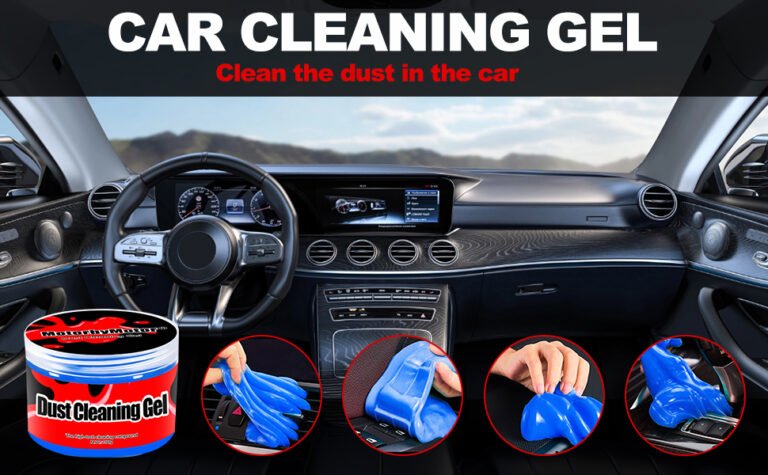
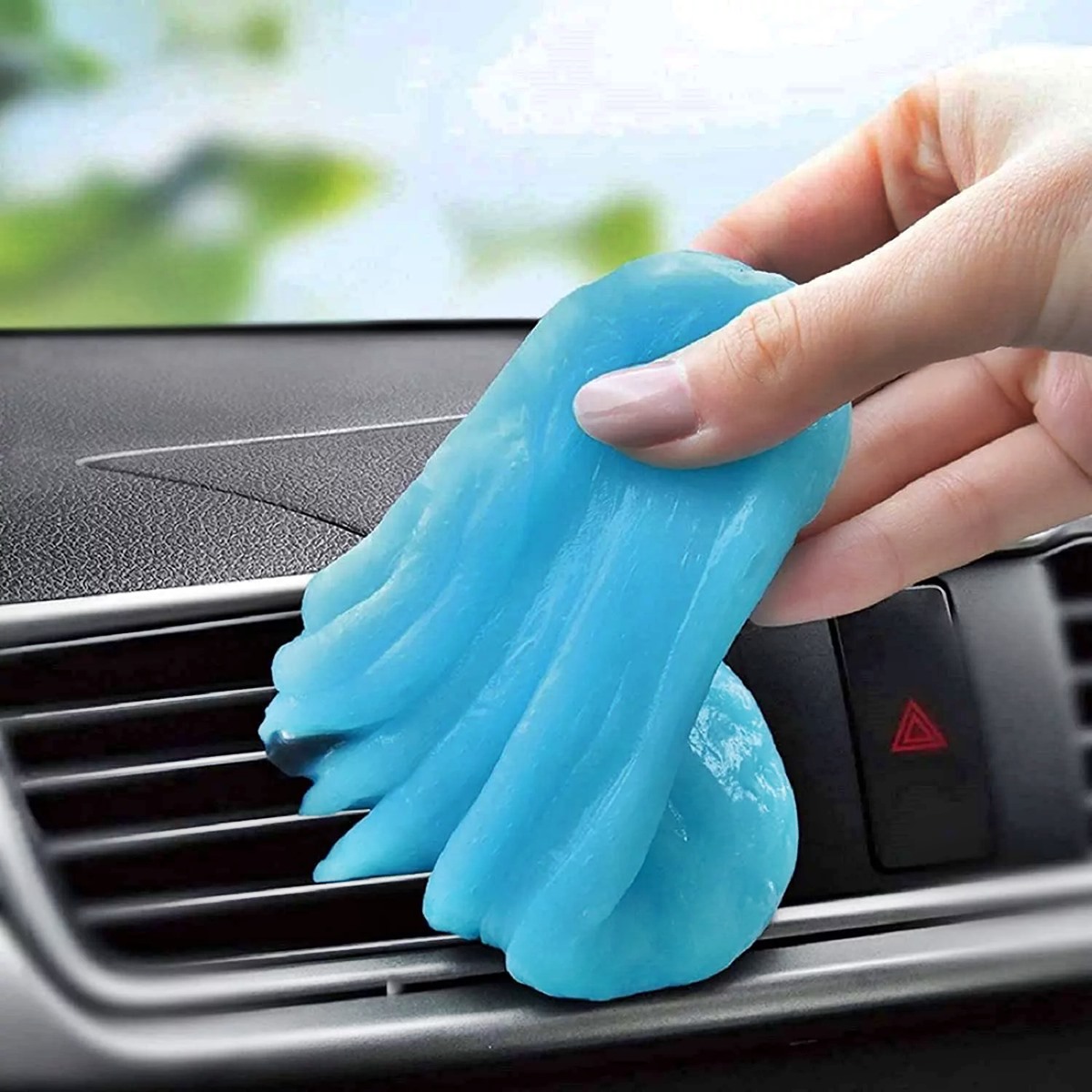
Car cleaning slime is a soft, reusable gel that lifts dust, crumbs, hair, and small bits of dirt from hard-to-reach areas in cars. In a U.S. vehicle, it works well around cup holders, air vents, dashboard seams, gear shifters, door pockets, and console buttons.
To use it, press a clean piece of slime lightly onto a dry, hard surface, lift it straight up, and repeat with a clean section. Do not rub it hard, stretch it over controls, or use it on hot, wet, fabric, leather, suede, or unfinished surfaces unless the product label says it is safe.
What Is Car Cleaning Slime?
Car cleaning slime is a moldable cleaning gel made to pick up loose debris from small gaps. It usually feels soft and slightly tacky, but it should not leave a heavy residue when used as directed.
It is sometimes called car dust cleaning gel, detailing gel, cleaning putty, or automotive cleaning slime. These names may describe similar products, but formulas can differ. Always check the package directions before using a new product.
Car cleaning slime is best for:
- Dust in air vents
- Crumbs in cup holders
- Dirt around console seams
- Debris near gear shifters
- Loose particles around dashboard buttons
- Hair and dust in door pockets
- Small gaps around trim
- Light dust on hard plastic surfaces
It is not a replacement for a vacuum, microfiber towel, interior cleaner, or detailing brush. Slime removes loose particles from narrow spaces. It does not dissolve grease, remove stains, disinfect a surface, or repair damaged trim.
What You Need Before You Start
Gather the slime, a microfiber towel, and a soft detailing brush or vacuum. The extra tools help you remove dirt that slime cannot reach.
Before cleaning, park the car in a shaded place. Turn off the engine, remove the key or fob from the work area, and let hot surfaces cool.
You will need:
- Car cleaning slime
- A clean microfiber towel
- A soft interior brush
- A small vacuum, if available
- Mild interior cleaner for surfaces that need washing
- A trash bag for used debris
Read the product label first. Some cleaning gels have limits for temperature, storage, and surface type. If the label does not list a surface, test a hidden spot before cleaning a visible area.
Check the surface
Use slime only on firm, nonporous surfaces unless the label gives different instructions. Good test areas include the lower part of a plastic door panel or the inside edge of a center console.
Avoid using it on:
- Cloth seats
- Carpets
- Floor mats
- Suede or Alcantara-style material
- Unsealed wood
- Soft, peeling, or cracked vinyl
- Sticky rubber coatings
- Wet surfaces
- Very hot surfaces
- Delicate screens
- Open speaker mesh
- Small holes or deep vents where the slime could become trapped
Check the slime
Do not use the product if it has dried out, melted, separated, smells unusual, or leaves an oily film. Do not mix it with water, cleaners, oils, or other gels.

How to Use Car Cleaning Slime
Use a light press-and-lift motion. The goal is to let the gel contact the dirt without forcing it into gaps.
1. Remove large debris first
pick up large crumbs, coins, leaves, and other loose items by hand. Vacuum the area if it has a heavy layer of dirt.
Slime works best as a finishing tool. Using it on a very dirty area can quickly cover the gel with debris and may spread grime to nearby surfaces.
2. Test a hidden spot
Press a small piece of slime onto an unseen area for a few seconds. Lift it and check the surface.
Stop if you see:
- Color transfer
- A shiny or dull patch
- Oily residue
- Peeling coating
- Changed texture
- Small pieces of slime left behind
If the test area looks normal, continue with a visible section.
3. Flatten a small piece
Take only the amount you can control with your fingers. Flatten it into a small pad.
A smaller piece is easier to guide around buttons and seams. It also reduces the chance of dropping the slime into a vent or narrow opening.
4. Press the slime onto the surface
Place the slime on the hard surface and press gently. Hold it in place for a moment so the gel can contact the dust.
Do not scrub in circles. Do not drag the slime across the panel. Rubbing can spread dirt and may transfer residue.
5. Lift straight up
Pull the slime away from the surface. Inspect the gel. You should see dust, crumbs, or small particles attached to it.
Fold the dirty part into the center of the slime. This exposes a cleaner section for the next press.
6. Repeat in small areas
Work one small section at a time. For example, clean one cup holder, then one vent, then one console seam.
Stop when the slime no longer picks up debris or when its surface becomes heavily soiled. Continued use of dirty slime can put grime back onto the interior.
7. Wipe the area
Use a dry microfiber towel to remove any remaining particles. If the surface is greasy, use an interior cleaner made for that material.
Spray cleaner onto the towel, not directly into buttons, vents, speakers, or electronic controls. Keep liquids away from openings.

How to Clean Car Air Vents With Slime
Car cleaning slime can pick up dust from the front edges of many plastic air vents. Use it only on the visible, solid parts of the vent.
Set the airflow controls to a position that gives you clear access. Press a small piece of slime onto each vent slat, then lift it away.
Follow these steps:
- Turn off the vehicle and the climate system.
- Adjust the vent so the slats are easy to reach.
- Use a small piece of slime.
- Press it lightly onto the front and top of each slat.
- Lift it straight up.
- Use a soft brush for dust deeper inside the vent.
- Wipe the surrounding dashboard with a microfiber towel.
Do not push slime into the vent openings. If it breaks apart inside the duct, it may be hard to remove. Do not use slime on a vent if the surface has a soft-touch coating that is already sticky or damaged.
For heavy dust, a soft detailing brush or low-suction vacuum is usually safer and more effective than forcing gel into the vent.

How to Clean Cup Holders and Center Consoles
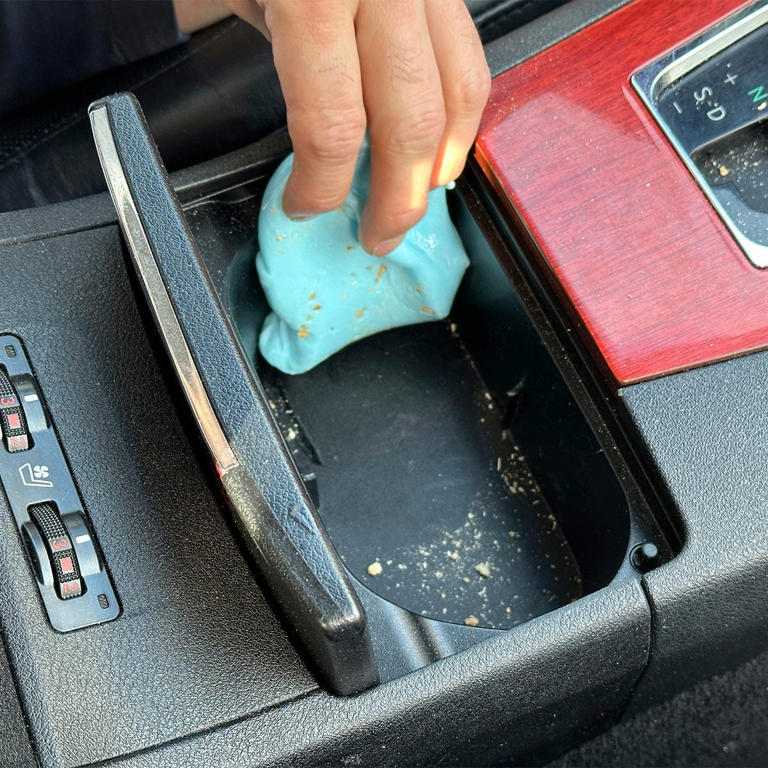
Cup holders and center consoles are among the best places to use cleaning slime because they often collect crumbs in tight corners.
First, remove coins, wrappers, and other objects. Wipe up spills before using slime. Wet syrup, coffee, and soda residue can make the gel sticky and may leave a film.
Press the slime into the corners without grinding it into the surface. Fold the dirty section inward after each few presses.
For a removable cup-holder insert, take it out if the vehicle manual allows it. Clean the insert separately with the correct cleaner and dry it fully before reinstalling it.
Do not use slime to remove dried food, grease, or liquid stains. Those soils need a material-safe cleaner and a towel.

How to Clean Buttons, Seams, and Gear Shifters
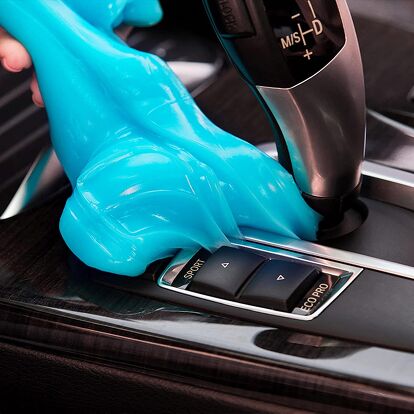
Use the smallest piece of slime for buttons and controls. Large pieces can catch on edges or pull into spaces between parts.
For dashboard buttons:
- Press lightly on the flat area.
- Lift the slime instead of sliding it.
- Avoid the gap around the button.
- Keep the gel away from switches that move.
- Check for residue after each section.
For a gear shifter, clean the hard plastic or metal trim around the base. Avoid leather, perforated material, stitching, and moving joints unless the product label approves them.
If dirt is packed into a seam, loosen it with a soft brush first. Do not force slime into the seam. A tool that becomes stuck can require trim removal.
Where You Should Not Use Car Cleaning Slime
The safest rule is simple: use slime only where the label permits it and where you can remove it fully.
Avoid these areas unless the manufacturer specifically approves them:
| Surface or area | Why caution is needed |
|---|---|
| Cloth and carpet | Fibers may trap the gel or transfer color |
| Leather and suede | The gel may affect finish or texture |
| Soft-touch plastic | Coatings can become tacky or mark easily |
| Touchscreens | Pressure and residue can affect the surface |
| Speaker grilles | Gel may enter the mesh |
| Seat belts | Residue may affect the belt webbing |
| Hot dashboards | Heat can soften or spread the gel |
| Wet surfaces | Moisture can change the gel and increase residue |
| Cracked trim | Slime may lodge in damaged areas |
| Deep vents | The product may break apart or become trapped |
Never use slime on safety-critical components. Keep it away from airbag seams, seat-belt hardware, steering-wheel controls, pedals, and brake or accelerator areas.
A vehicle owner’s manual may give special instructions for screens, coated trim, seats, and electronic controls. Follow those instructions if they conflict with general cleaning advice.

Common Problems and How to Fix Them
Most problems come from using too much pressure, cleaning the wrong surface, or continuing after the slime becomes dirty.
The slime leaves a sticky film
Possible causes include heat, an old product, a formula that does not suit the surface, or too much pressure.
Stop using the slime. Wipe the area with a clean, dry microfiber towel. If residue remains, use a cleaner approved for that surface. Test the cleaner in a hidden area first.
Do not use alcohol, solvent, or household degreaser unless the vehicle or product manufacturer says it is safe. These chemicals can damage coatings and plastic finishes.
The slime breaks apart
The product may be too old, too warm, chemically contaminated, or stretched too thin.
Pick up every visible piece. Do not press more slime onto the damaged section. A soft brush, towel, or vacuum may help remove small fragments.
If pieces enter a vent, speaker, button gap, or trim opening, do not push them farther inside. Stop and consider professional interior detailing if you cannot remove them safely.
The surface changes color or texture
Stop immediately. The surface may have a weak coating or may not be compatible with the gel.
Take a photo of the area and keep the product packaging. Contact the manufacturer if the label says the product is suitable for that surface. Do not scrub harder, since friction can increase the damage.
Dirt does not come out
Slime is designed for loose particles, not bonded dirt. Use a soft brush, vacuum, or material-safe cleaner instead.
For stains, grease, mold, or strong odors, identify the material first. A professional detailer may be the better choice, especially for leather, suede, headliners, and electronic areas.
How to Store and Dispose of Cleaning Slime
Store car cleaning slime in its original sealed container. Keep it away from direct sun, high heat, freezing conditions, food, children, and pets.
Do not leave it on the dashboard or inside a hot parked car. Vehicle interiors can become much hotter than the outdoor air, and heat may change the texture of the gel.
When the slime is heavily dirty, dried out, contaminated, or no longer reusable, place it in household trash unless the product label gives other disposal instructions. Do not flush it down a drain or rinse large amounts into a sink.
Wash your hands after use, especially if the product leaves a film or has a strong scent. Check the package safety information for more specific handling advice.

Car Cleaning Slime Compared With Other Interior Tools
Each tool has a different job. Slime is most useful for small, dry debris in narrow spaces.
| Tool | Best use | Main limit |
|---|---|---|
| Cleaning slime | Loose dust and crumbs in tight gaps | Not for stains or wet dirt |
| Microfiber towel | Dusting and wiping hard surfaces | Cannot reach deep seams well |
| Soft detailing brush | Vents, seams, and textured trim | May move dust into nearby gaps |
| Vacuum | Loose dirt, crumbs, and floor debris | Needs an accessible opening |
| Interior cleaner | Oils, spills, and marks | Must match the surface |
| Detailing clay bar | Bonded contamination on exterior paint | Not an interior dust tool |
Do not confuse interior cleaning slime with automotive clay. A clay bar is used with lubricant to remove bonded contamination from exterior paint, glass, or other approved surfaces. It is not designed for dashboard gaps or cup holders.

Key Takeaways
- Use car cleaning slime on cool, dry, hard surfaces.
- Press lightly, then lift straight up.
- Fold dirty sections inward as you work.
- Do not rub, stretch, or force slime into openings.
- Keep it away from fabric, leather, screens, speakers, airbags, and deep vents unless the label approves those areas.
- Use a vacuum, brush, towel, or surface-safe cleaner when slime is not the right tool.
- Stop if the gel leaves residue, changes the surface, or breaks apart.
Frequently Asked Questions
Can you use car cleaning slime on a dashboard?
Usually, yes, if the dashboard has a firm, nonporous surface and the product label permits it. Test a hidden area first. Avoid hot dashboards, soft-touch coatings, cracks, seams, and airbag panels.
Can car cleaning slime remove stains?
No. It may lift loose particles from a surface, but it does not reliably remove liquid stains, grease, dye, or bonded dirt. Use a cleaner made for the specific material.
Can you wash car cleaning slime and reuse it?
Do not wash it unless the manufacturer specifically says that washing is safe. Water can change the gel’s texture and performance. Fold dirty sections inward and replace the product when it becomes heavily soiled.
Is car cleaning slime safe for a car touchscreen?
It is safer to use a clean, dry microfiber cloth on a touchscreen. If the slime label specifically approves screens, use very light pressure and keep the gel away from edges, openings, and controls.
What should you do if slime gets stuck in a car vent?
Turn off the climate system and avoid pushing the slime deeper. Remove only the pieces you can reach without force. If the material is trapped inside the duct, speaker, or dashboard, seek help from an automotive detailer or service professional.
Conclusion
Car cleaning slime is a useful finishing tool for dry dust and small debris in hard-to-reach parts of a vehicle. The safest method is to use a small piece on a cool, dry surface, press gently, lift straight up, and check for residue as you go.
Start with a hidden-area test. If the surface passes, clean small sections and stop when the slime becomes dirty or changes texture. For stains, wet spills, fabric, leather, electronics, and deep openings, choose a tool and cleaner made for that specific job.