What To Clean Interior Of Car With Natural Products: Tips
Introduction
For drivers in the United States, the safest natural way to clean a car interior is to match a mild cleaner to each surface. Use a dry microfiber cloth for dust, a small amount of diluted mild soap for hard plastic and vinyl, and baking soda for odors in fabric. Use plain water on screens and follow the vehicle owner’s manual for leather, suede, wood trim, and coated surfaces.
“Natural” does not always mean safe for a car. Vinegar, essential oils, alcohol, hydrogen peroxide, and even excess water can damage finishes, remove dye, or leave residue. The best approach is simple: remove loose dirt first, use the least harsh cleaner that works, and test every homemade solution in a hidden spot.

The Best Natural Products for Car Interior cleaning
The best natural products are common household items used in small amounts. They should clean the surface without leaving a sticky film or changing its color.
| Interior area | Natural cleaning choice | Main caution |
|---|---|---|
| Dashboard and hard plastic | Distilled water or diluted mild soap | Do not soak vents or switches |
| Vinyl seats and door panels | Diluted mild soap and water | Rinse the cloth well |
| Cloth seats and carpet | Baking soda, water, and mild soap | Avoid over-wetting foam |
| Leather seats | Water-damp microfiber cloth; manual-approved leather care | Many kitchen cleaners can dry or stain leather |
| Glass | Distilled water and a clean microfiber cloth | Do not spray near electronics |
| Touchscreens | Dry or barely damp microfiber cloth | Never use vinegar or window cleaner unless the manual allows it |
| Rubber mats | Mild soap and water | Dry fully before reinstalling |
| Odors | Baking soda and fresh air | It masks some odors but does not fix mold or spills |
A clean microfiber cloth often does more work than a strong cleaner. Microfiber can trap dust and oils while reducing the need for chemical products.
What “natural” means in this guide
Natural products are simple substances such as water, baking soda, and mild soap. They are not automatically safer than commercial products. For example, vinegar is natural but acidic. It can harm some stone-like trim, protective coatings, leather finishes, and sensitive electronics.
The goal is not to avoid every manufactured cleaner. The goal is to use a mild product that is suitable for the material and needed for the soil.
What You Need Before You Start
Gather the tools before cleaning. This keeps you from using too much water or leaving a wet surface while you search for a cloth.
You will need:
- Three to six clean microfiber cloths
- A soft-bristle brush or clean toothbrush
- A vacuum with a crevice tool
- A small bucket or bowl
- Distilled water
- Mild unscented soap
- Baking soda
- A soft sponge for rubber mats
- Cotton swabs for narrow gaps
- Two spray bottles, if needed
- The vehicle owner’s manual
Use separate cloths for glass, dirty areas, and final wiping. A cloth used on a greasy door sill can spread grime onto the dashboard.
Before cleaning, move the car to a shaded, well-ventilated area. In the United States, hot sun can make plastic and glass too warm for safe cleaning. Keep doors open when possible, but secure the vehicle and keep children and pets away from the work area.
Check the owner’s manual first
The manual may list special care instructions for:
- Leather or synthetic leather
- Alcantara or suede-like trim
- Touchscreens
- Gloss-black trim
- Heated or ventilated seats
- Seat belts
- Airbag covers
- Wood or metal inlays
A vehicle manual takes priority over a homemade recipe. Some automakers advise against alcohol, bleach, ammonia, abrasive powders, or oil-based products on specific surfaces.
Step-by-Step Method for Cleaning a Car Interior Naturally
Start at the top of the cabin and work toward the floor. This prevents dust and crumbs from falling onto areas you already cleaned.
1. Remove trash and loose items
Take out cups, papers, child seats, floor mats, and personal items. Check under the seats and in the door pockets. Open the trunk as well if you want to remove odors from the full cabin.
Do not clean around hidden objects near seat tracks until you know they are safe to move. Be careful around wiring under the seats. Some vehicles have airbag or occupancy sensors in this area.
2. Vacuum before using water
Vacuum the seats, carpet, floor mats, console gaps, and door pockets. Use a soft brush around vents and screens. Vacuuming first matters because wet dirt can turn into a paste that spreads across fabric and plastic.
Use the crevice tool gently. Do not force it into buttons, speaker grilles, air vents, or seams. A soft brush can lift dust from these areas without scratching them.
3. Make a mild natural cleaner
For hard plastic and vinyl, mix:
- 2 cups of distilled water
- 1 teaspoon of mild unscented soap
Put the mixture in a bowl rather than spraying it directly on the interior. Dip the microfiber cloth into the solution, then wring it until it is damp, not wet.
This small amount of soap helps loosen skin oils and food residue. Too much soap can leave a film that attracts dust.
For light cleaning, use distilled water alone. It reduces the chance of mineral spots, especially on dark trim and glass.
4. Clean the dashboard and hard plastic
Wipe the dashboard, center console, door panels, steering-wheel trim, and cup holders with a damp microfiber cloth. Follow with a second cloth dampened with plain water if the surface feels slick.
Use a soft brush for seams and textured plastic. Keep moisture away from:
- Buttons and switches
- Air vents
- USB ports
- Instrument clusters
- Speaker grilles
- Seams around screens
- Steering-wheel controls
Never pour or spray cleaner onto the dashboard. Liquid can run behind a panel and reach electrical parts.
Avoid oils, furniture polish, and products that leave a glossy finish. They can create glare on the windshield and make the steering wheel or pedals slippery.
5. Clean vinyl seats and door panels
Use the mild soap solution on a damp cloth. Wipe one small area at a time, then remove soap residue with a clean, damp cloth.
For textured vinyl, use a soft brush with light pressure. Do not scrub hard. Friction can wear the surface, especially on seat bolsters that already receive daily use.
Dry the area with a clean microfiber cloth. Leave the doors open for a short time so trapped moisture can escape.
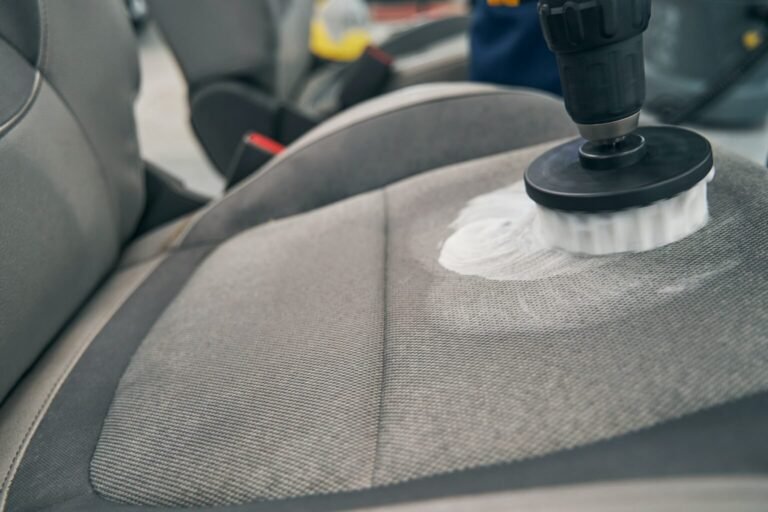
6. Clean cloth seats and carpet
First vacuum thoroughly. For a small stain, mix a few drops of mild soap into warm water. Dab the stain with a cloth rather than rubbing it in circles.
Work from the outside of the stain toward the center. Use as little liquid as possible. Car seats and carpets often have foam beneath the fabric, and excess water can remain inside for a long time. That may lead to a musty smell or support mold growth.
After cleaning, blot with a dry towel. Use ventilation to help the area dry. Do not reinstall wet floor mats or close the car while seats are damp.
For grease, place a small amount of baking soda on the spot after removing surface debris. Let it sit for several hours, then vacuum it. Baking soda may absorb some surface oil and odor, but it will not remove every grease stain.
7. Deodorize with baking soda
Baking soda can help reduce mild odors in fabric and carpet. Sprinkle a thin layer over dry carpet or cloth seats. Leave it for several hours, then vacuum it carefully.
Do not use large amounts near seat rails, vents, or electrical connectors. Do not pour baking soda into air vents. Fine powder can travel into places that are difficult to clean.
Baking soda will not solve the source of a strong odor caused by:
- A spilled drink inside the seat foam
- Water leaks
- Mold or mildew
- Smoke residue
- A dead animal
- A clogged cabin air filter
Find and remove the source first. If the odor returns after cleaning, inspect for moisture or have the vehicle checked.
8. Clean leather with extra care
Leather needs a more cautious method than vinyl or plastic. Start with a dry microfiber cloth to remove dust. Then use a barely damp cloth with plain water on a small hidden area.
If the vehicle manual permits mild soap, use only a very diluted amount. Wipe lightly and dry at once. Do not saturate perforated leather because liquid can enter the holes.
Avoid vinegar, baking soda paste, coconut oil, olive oil, essential oils, and household degreasers. These products may alter the finish, leave a residue, or attract more dirt. A purpose-made leather product approved for automotive leather may be safer than a kitchen ingredient.
9. Clean glass and mirrors
Use a clean, dry microfiber cloth for light dust. For fingerprints, dampen the cloth with distilled water and wipe the glass. Use a second dry cloth to remove streaks.
Do not spray liquid directly onto the windshield, rearview mirror, camera area, or dashboard. Liquid can run into electronics or leave cleaner on nearby trim.
If the inside of the windshield has a greasy film, use a small amount of mild soap solution on the cloth. Keep the cloth damp, not wet, and make a final pass with plain distilled water.
Clean glass in the shade. Heat can cause fast drying and streaks.
10. Clean rubber floor mats
Remove the mats from the vehicle. Shake or vacuum away loose dirt. Wash rubber mats with warm water and a small amount of mild soap.
Use a soft brush for grooves. Rinse with clean water and dry both sides before putting the mats back. Wet mats can create a damp smell and may become slippery.
Do not apply oil or wax to floor mats. A shiny mat can reduce traction under the driver’s feet.

Natural Cleaners to Avoid or Use With Care
Some popular home remedies are too harsh for modern vehicle interiors.
Vinegar
Vinegar contains acetic acid. It can help with some household mineral deposits, but that does not make it a universal car cleaner. Avoid using it on leather, touchscreens, protective coatings, glossy trim, and unknown materials.
If an owner’s manual specifically allows diluted vinegar for a certain glass surface, follow that instruction. Otherwise, distilled water and a microfiber cloth are the lower-risk choice.
Lemon juice
Lemon juice is acidic and can react with dyes, finishes, and some metals. It can also leave sugar-like residue as it dries. Do not use it as an all-purpose interior cleaner.
Essential oils
Essential oils add scent but do not reliably clean an interior. Some can stain fabric, soften certain plastics, or cause skin irritation. Do not place undiluted oil on seats, trim, vents, or air filters.
Hydrogen peroxide
Hydrogen peroxide can bleach or discolor some fabrics and trim. It may also affect dyes and coatings. Do not use it on a vehicle interior unless the material maker specifically approves it.
Bleach and ammonia
Never use bleach or ammonia-based cleaners inside a car unless the vehicle manufacturer gives clear instructions for a specific part. Never mix cleaning products. Mixing bleach with acids such as vinegar can produce dangerous gases.
Abrasive powders and rough tools
Baking soda is mild, but a thick paste can act as an abrasive when scrubbed. Avoid scouring pads, melamine foam, hard brushes, and gritty powders on plastic, screens, leather, and glossy trim.
A Simple Natural Cleaning Recipe Table
Use this table as a starting point, not as a replacement for the vehicle manual.
| Task | Recipe or method | How to apply it |
|---|---|---|
| Light dust | Distilled water | Dampen a microfiber cloth |
| Plastic and vinyl | 2 cups water plus 1 teaspoon mild soap | Apply to the cloth, not the surface |
| Small fabric stain | Warm water plus a few drops of mild soap | Dab, blot, and dry |
| Mild fabric odor | Dry baking soda | Sprinkle lightly, then vacuum |
| Interior glass | Distilled water | Wipe with one cloth and dry with another |
| Rubber mats | Warm water plus a small amount of mild soap | Brush, rinse, and dry |
| Leather | Plain water unless the manual permits mild soap | Test first and avoid saturation |
The amounts above are practical dilution guides, not universal manufacturer specifications. Stop if the material changes color, texture, gloss, or feel.
How to Clean Specific Car Interior Problems
Sticky cup holders
Remove loose debris first. Place a damp cloth over the residue for a few minutes to soften it. Wipe with diluted mild soap, then follow with a clean damp cloth.
Do not flood a removable cup-holder insert unless you can take it out and dry it fully.
Greasy steering wheel
Use a very small amount of diluted mild soap on a microfiber cloth. Wipe the wheel in sections, then remove residue with a clean damp cloth and dry it.
A steering wheel must remain dry and free of oil. Do not use coconut oil, polish, or wax.
Crumbs in seams
Use a soft brush to loosen crumbs while vacuuming. A clean, dry toothbrush works for narrow seams. Do not push dirt deeper into seat stitching.
Smoke odor
Baking soda may reduce a mild smell, but smoke can cling to fabric, carpet, headliners, and ventilation parts. Clean the interior surfaces, replace the cabin air filter if needed, and ventilate the vehicle. Persistent smoke odor may require professional detailing.
Mildew or water damage
Do not rely on baking soda alone. Find the leak and dry the vehicle. If mold is visible or the odor persists, professional cleaning may be safer. People with asthma, allergies, or other sensitivities should avoid disturbing heavy mold growth.
Common Mistakes That Damage Car Interiors
The most common mistake is using too much cleaner. More liquid does not mean more cleaning power. It increases drying time and the chance of stains, odors, and electrical damage.
Avoid these errors:
- Spraying cleaner directly onto the dashboard
- Using vinegar on every surface
- Scrubbing leather or fabric too hard
- Cleaning a hot surface in direct sun
- Leaving seats or carpets soaked
- Using oil to make plastic look shiny
- Cleaning screens with paper towels
- Ignoring the owner’s manual
- Using the same dirty cloth on every surface
- Mixing household cleaners
Clean from cleanest to dirtiest. For example, wipe the instrument area before the door sill. This reduces cross-contamination and saves time.

When Natural Cleaning Is Not Enough
A mild homemade cleaner is suitable for routine dust, light body oils, crumbs, and small fresh stains. It is not a complete solution for every condition.
Use professional help when:
- A seat has absorbed a large liquid spill
- Mold or mildew keeps returning
- A headliner is sagging or stained deeply
- Leather is cracked, peeling, or heavily discolored
- Smoke odor remains after surface cleaning
- A chemical has caused bleaching or melting
- Water has reached electrical components
- The vehicle has a biohazard or bodily-fluid spill
For bodily-fluid spills, serious mold, or unknown chemical contamination, avoid casual home cleaning. Specialized protective equipment and proper disposal may be needed.
How Often Should You Clean a Car Interior?
Light cleaning every one to two weeks can prevent buildup in a regularly used vehicle. Vacuuming can be done more often if you carry children, pets, food, or outdoor gear.
A practical schedule is:
- Weekly: Remove trash, shake mats, and wipe high-touch areas.
- Every two to four weeks: Vacuum seats, carpet, and gaps.
- Every few months: Clean glass, door panels, cup holders, and seat surfaces in more detail.
- After spills: Blot and clean the area as soon as possible.
- After water intrusion: Dry the cabin at once and inspect for hidden moisture.
The right schedule depends on use, climate, and the condition of the vehicle. Humid areas and wet winters may require more frequent drying and odor checks.
Frequently Asked Questions
Is vinegar safe for cleaning a car interior?
Vinegar is not a safe all-purpose interior cleaner. Its acidity may affect leather finishes, coatings, glossy trim, and sensitive surfaces. Use distilled water or a manual-approved cleaner instead.
Can I use baking soda on car seats?
You can use a light layer of dry baking soda on many cloth seats to help with mild odors. Vacuum it thoroughly afterward. Do not use it as a scrub on leather, screens, or glossy plastic.
What is the safest natural cleaner for a dashboard?
A clean microfiber cloth dampened with distilled water is the safest first choice for most dashboards. For greasy residue, use a small amount of diluted mild soap on the cloth and keep liquid away from vents, switches, and electronics.
Can I use dish soap inside my car?
A tiny amount of mild, unscented dish soap diluted in water may work on hard plastic, vinyl, and rubber. Too much can leave residue. Do not assume it is suitable for leather, suede-like trim, or screens.
How can I remove a bad smell from my car naturally?
Remove the source, vacuum the interior, clean any spill, and use a thin layer of baking soda on dry fabric or carpet. If the smell returns, check for moisture, mold, smoke residue, a dirty cabin air filter, or a hidden spill.
Can I steam-clean a car interior?
Steam can damage adhesives, electronics, leather finishes, and some fabrics if used incorrectly. Do not use steam near screens, switches, airbags, seat wiring, or headliners unless the vehicle and material instructions allow it.
Conclusion
The best natural car interior cleaning method is gentle and targeted. Use microfiber cloths and distilled water for routine dust, diluted mild soap for plastic and vinyl, baking soda for mild fabric odors, and minimal moisture on cloth seats and carpet.
Do not treat vinegar, oils, acids, or strong household cleaners as universal solutions. Test first, protect electronics, dry every surface fully, and follow the vehicle owner’s manual when it gives a different instruction.