How To Get Ink Out Of Car Headliner: Easy Fix
To get ink out of a car headliner, use a small amount of rubbing alcohol on a white cloth and blot the stain from the outside toward the center. Do not spray liquid onto the ceiling, scrub hard, or soak the fabric. Too much moisture can loosen the headliner adhesive and cause sagging.
This method works best on fresh ballpoint ink and small stains. Old ink, permanent marker, and stains that have spread into the foam backing may need a professional detailer.

What You Need Before You Start
Gather these supplies before cleaning:
- 70% isopropyl rubbing alcohol
- Two or three clean white microfiber cloths
- Mild dish soap
- Distilled water
- A small bowl
- Cotton swabs
- A soft toothbrush, used only if needed
- A dry towel
- A fan or open doors for ventilation
Use white cloths so dye from the cloth does not transfer to the headliner. Avoid paper towels that can leave lint or break apart when damp.
A car headliner is more delicate than a seat or floor mat. Most headliners have a thin fabric layer bonded to foam and a rigid backing board. Strong rubbing, excess water, heat, or harsh solvents can separate these layers.
Identify the ink first
The ink type changes the best cleaning approach:
| Ink type | Typical source | First method to try |
|---|---|---|
| Ballpoint ink | Pens used for notes or forms | Small amounts of isopropyl alcohol |
| Gel ink | Gel pens | Alcohol blotting, followed by mild soap if needed |
| Marker ink | Permanent or dry-erase markers | Professional cleaning is often safer |
| Printer ink | Paper or cartridge leaks | Blot first; use mild soap before stronger solvents |
| Unknown ink | Unclear source | Test alcohol on a hidden area first |
The table is a starting guide, not a guarantee. Headliner fabric varies by vehicle, age, color, and material.

How to Remove Ink From a Car Headliner
Work slowly. The goal is to lift the ink into the cloth, not spread it across the ceiling.
1. Check the vehicle manual and the headliner condition
Look at the vehicle owner’s manual for cleaning warnings. Some manufacturers advise against strong cleaners, excess moisture, or removing headliner trim.
Also inspect the area around the stain. Stop and use a professional if:
- The headliner is already sagging.
- The fabric has bubbles or loose edges.
- The stain is near a side-curtain airbag label or trim panel.
- The headliner feels soft, brittle, or loose.
- The ink covers a large area.
Do not pull down the headliner to clean behind it. Modern vehicles can have airbags, wiring, sensors, and clips behind the trim.
2. Test the cleaner in a hidden spot
Dampen a cotton swab with a small amount of 70% isopropyl alcohol. Test it on a hidden section, such as near the edge under a trim piece.
Wait several minutes. Check for:
- Color transfer
- Fading
- A darker water mark
- Fabric fuzzing
- Softening or lifting of the adhesive
If the test causes a problem, do not use alcohol on the visible stain. Try a tiny amount of diluted mild dish soap instead, or contact a professional detailer.
3. Protect the surrounding area
Place a dry towel over the seat, dashboard, and door panel below the stain. Keep the doors open or work in a well-ventilated area.
Do not spray cleaner above your head. Spray or pour liquids onto a cloth only. This prevents cleaner from running into lights, switches, wiring, and trim gaps.
4. Blot the outside edge of the ink
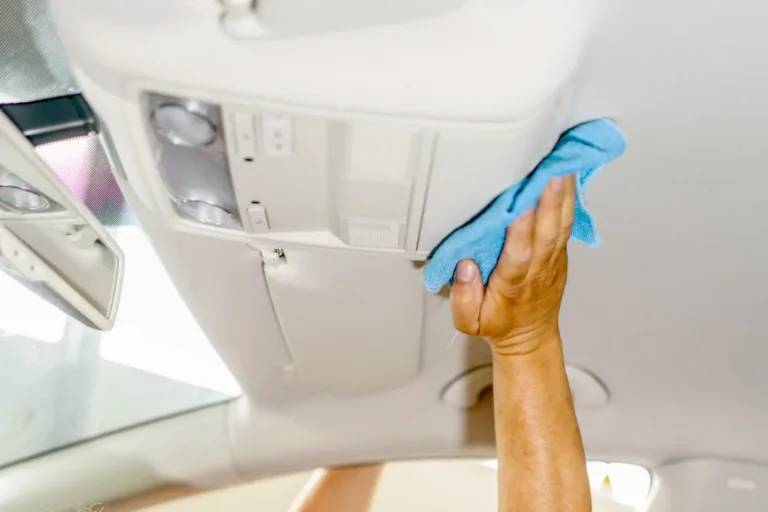
Fold a white microfiber cloth into a small, firm pad. Put a few drops of rubbing alcohol on the cloth. It should be damp, not wet.
Press the cloth gently against the outer edge of the stain. Lift the cloth straight up. Repeat with a clean section of the cloth after each blot.
Move around the outside of the mark before working toward the middle. This helps prevent the ink from spreading.
5. Use short, light passes
Continue blotting for a few seconds at a time. Do not rub back and forth.
If ink transfers to the cloth, the process is working. Turn to a clean section often. A dirty cloth can put the ink back onto the headliner.
Use a cotton swab for a very small mark. Replace the swab as soon as it shows ink.
6. Remove the cleaner residue
After the ink fades, mix a small amount of mild dish soap with distilled water. A good starting point is about one teaspoon of soap in one cup of water.
Dampen a clean cloth with the mixture. Wring it out well, then lightly blot the treated area. Follow with another cloth dampened with plain distilled water.
Use as little water as possible. The headliner should not become soaked.
7. Dry the headliner naturally
Press a dry towel against the area to absorb moisture. Leave the vehicle doors open or run a fan near the open door.
Do not use a heat gun, hair dryer, or high-heat setting. Heat can soften the adhesive and increase the risk of sagging.
Let the area dry fully before judging the result. A damp headliner may look darker than the surrounding fabric.

What to Do if the Ink Does Not Come Out
If one careful treatment does not remove the stain, do not keep adding alcohol. Repeated wetting can create a larger ring, weaken the adhesive, or discolor the fabric.
Use this troubleshooting guide:
| Result | Likely cause | Next step |
|---|---|---|
| Ink spreads outward | Too much liquid or rubbing | Stop, let it dry, then seek professional help |
| Fabric turns pale | Cleaner removed dye | Stop using alcohol |
| Dark ring remains | Excess moisture or residue | Lightly blot with distilled water, then dry |
| Headliner begins to sag | Adhesive has been affected | Stop immediately; do not press it back with heat |
| Little or no ink transfers | Stain is old or solvent-resistant | Have a detailer assess it |
| Fabric becomes fuzzy | Scrubbing damaged the surface | Stop brushing or rubbing |
Permanent marker is especially difficult because its dyes or pigments may bond strongly to the fibers. A stronger solvent may remove the mark but damage the headliner fabric, foam, paint, plastic, or adhesive.
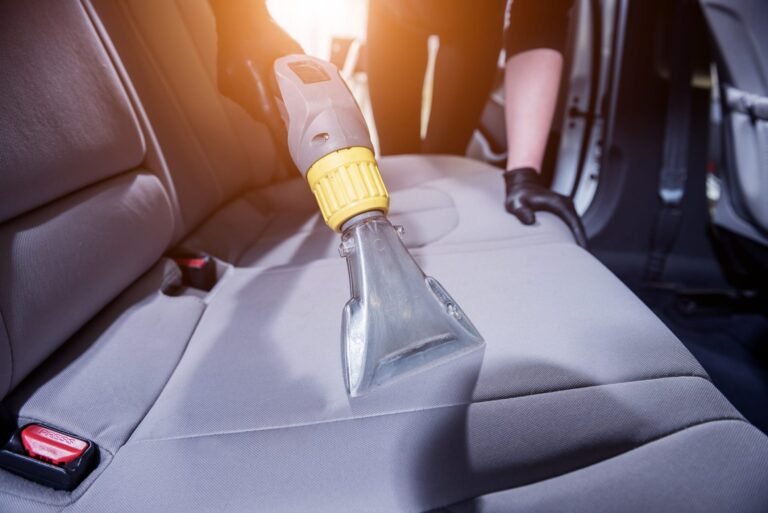
A professional auto detailer may use a controlled extraction or fabric-cleaning process. Ask whether the technician has experience with automotive headliners. Carpet-cleaning methods are not always safe for overhead fabric.

Which Cleaners Should You Avoid?
Avoid cleaners that can dissolve adhesive, bleach fabric, or leave a greasy film.
Do not use acetone or nail polish remover
Acetone can damage synthetic fibers, coatings, plastic trim, and foam. It may also create a larger discolored patch than the original ink.
Do not use bleach
Chlorine bleach and oxygen-based whitening products can change the headliner color. They may also weaken the fabric.
Do not use a magic eraser
A melamine sponge works like a very fine abrasive. It may remove the surface texture and leave a shiny or fuzzy spot.
Do not use hairspray as a first choice
Older cleaning advice often recommends hairspray for ink. Many modern hairsprays contain water, oils, fragrance, and resins that can leave residue. The alcohol content also varies, so the product is hard to control on a headliner.
Do not steam the headliner
Steam adds heat and moisture at the same time. That combination can loosen the foam-backed fabric and cause permanent sagging.
Do not saturate the ceiling
A wet headliner can develop water marks, adhesive failure, odors, or hidden moisture around electrical parts. Small amounts applied to a cloth are safer than spraying the surface.

How Long Does It Take to Remove Ink?
A small, fresh ballpoint mark may improve within five to ten minutes of careful blotting. The full area may take longer to dry.
Older stains can require several controlled passes. Do not repeat the process continuously. Let the fabric dry between attempts so you can see the true result.
The time also depends on:
- Ink type
- Headliner color
- Fabric texture
- Age of the stain
- Size of the mark
- Whether the ink reached the foam
- Whether a previous cleaner was already used
A light-colored headliner may show a faint halo even after most of the ink is gone. Trying to make the area perfectly uniform with more solvent can cause more damage than the original stain.

How to Prevent a Larger Headliner Stain
Small technique choices make the biggest difference.
- Use a cloth, not a spray bottle.
- Work from the edge toward the center.
- Blot instead of scrubbing.
- Change to a clean part of the cloth often.
- Keep the cloth only slightly damp.
- Test every cleaner in a hidden area.
- Let the headliner dry between treatments.
- Keep solvents away from lights, switches, and trim gaps.
- Stop if the fabric changes color or texture.
If the pen leaked while sitting on the ceiling, first lift any wet ink with a dry cloth. Do not wipe across the mark. A quick blot can reduce how far the ink travels.

When Should You Call a Professional?
Professional cleaning is the safer choice when the stain is large, old, or close to vehicle safety equipment.
Contact an auto detailer if:
- The ink covers more than a small hand-sized area.
- The stain is permanent marker.
- The headliner has started to sag.
- The fabric is beige, light gray, or another color that shows rings easily.
- Several cleaners have already been applied.
- The mark is near a side-curtain airbag or roof-mounted electrical part.
- You need the stain removed before returning a leased vehicle.
Ask for a spot test first. A responsible technician should inspect the material and explain whether cleaning may leave a faint mark. No cleaning method can guarantee that a solvent will remove ink without changing the surrounding fabric.
Replacing a headliner may be necessary when the foam backing has broken down or the adhesive has failed. Cleaning cannot restore a liner that is already separating.

Common Questions About Ink on Car Headliners
Can I use rubbing alcohol on every car headliner?
No. Isopropyl alcohol is a useful first option for many small ballpoint stains, but it can affect some dyes, coatings, and adhesives. Always test a hidden area first and use the smallest amount possible.
Will vinegar remove ink from a headliner?
Vinegar is not a reliable first choice for ink. It may help with some odors or mild residue, but it is not a strong ink solvent. Excess liquid can still damage the headliner adhesive.
Can I use a carpet cleaner on the headliner?
Only if the product and vehicle manufacturer allow it, and only in a very controlled amount. Many carpet-cleaning methods use more water than a headliner can safely handle.
How do I remove a pen mark without leaving a ring?
Use a nearly dry cloth, blot from the outside inward, and avoid treating a much larger area than necessary. After cleaning, lightly blot the spot with a separate cloth dampened with distilled water, then dry it with a towel.
What if the headliner starts sagging after cleaning?
Stop immediately. Do not add more liquid, press the fabric with heat, or use glue without checking the vehicle design. A headliner near an airbag or trim system should be inspected by a qualified automotive upholstery or repair professional.

Final Takeaway
The safest way to remove ink from a car headliner is to test first, then blot with a small amount of 70% isopropyl alcohol on a white cloth. Keep liquid off the ceiling, avoid scrubbing, and let the fabric dry naturally.
If the stain spreads, the color changes, or the headliner begins to sag, stop cleaning. The cost of professional spot treatment is usually lower than replacing a damaged foam-backed headliner.