What Is A Car Jump Starter: How It Works
A car jump starter is a portable battery device that starts a vehicle when its main battery is too weak.
Understanding what is a car jump starter can help you avoid a stressful roadside delay. This compact tool can deliver a short burst of power to your vehicle’s starter motor without needing another car. In this guide, you will learn how it works, how to use it safely, what features matter, and when a jump starter cannot solve the problem.

What Is a Car Jump Starter?
A car jump starter is a portable power pack made to start a vehicle with a weak or dead 12-volt battery. It sends electrical power through jumper cables to the vehicle’s battery terminals. That power helps the starter motor turn the engine over.
Older jump starters were large lead-acid boxes. Many modern models use lithium-ion batteries. These lithium units are lighter, smaller, and easier to keep in a glove box or trunk.
A jump starter does not fully repair or recharge a damaged car battery. It gives the battery enough extra power to start the engine. Once the engine runs, the alternator may recharge the battery, but the battery still needs testing if it often loses power.
In simple terms, think of a car jump starter as an emergency power reserve. It acts like a helpful second battery when your vehicle’s battery cannot provide enough current.
How Does a Car Jump Starter Work?
A vehicle needs a strong burst of electrical current to start. The starter motor can draw hundreds of amps for a few seconds. A weak battery may still power the lights, radio, or dashboard, but it may not have enough energy to crank the engine.
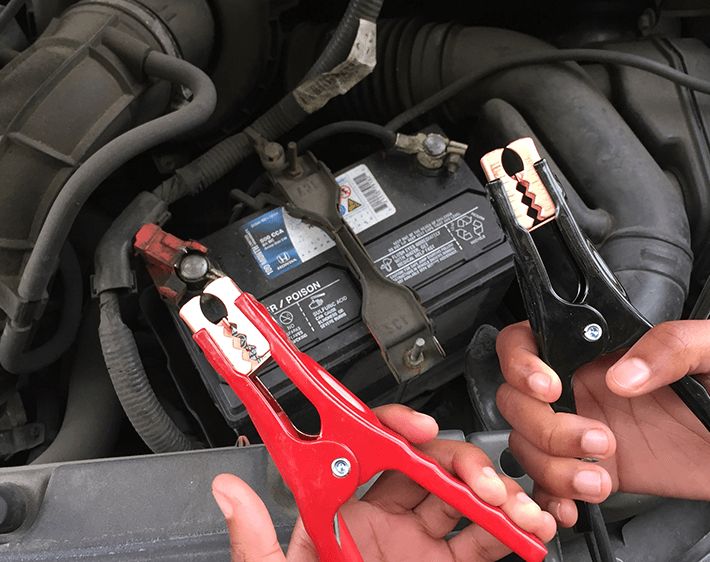
A car jump starter supplies that missing burst. Its internal battery sends current through clamps connected to the vehicle’s positive and negative terminals. This allows the starter motor to turn the engine.
The basic process works like this:
- The jump starter stores energy in its internal battery.
- You connect the red clamp to the positive battery terminal.
- You connect the black clamp to the negative terminal or a suitable metal ground.
- The jump starter sends power to the vehicle’s electrical system.
- You turn the ignition or press the start button.
- The engine starts if the vehicle has no major mechanical or electrical fault.
Most quality models include safety circuits. These may detect reversed polarity, a short circuit, excessive heat, or a poor connection. However, safety features do not replace careful use.
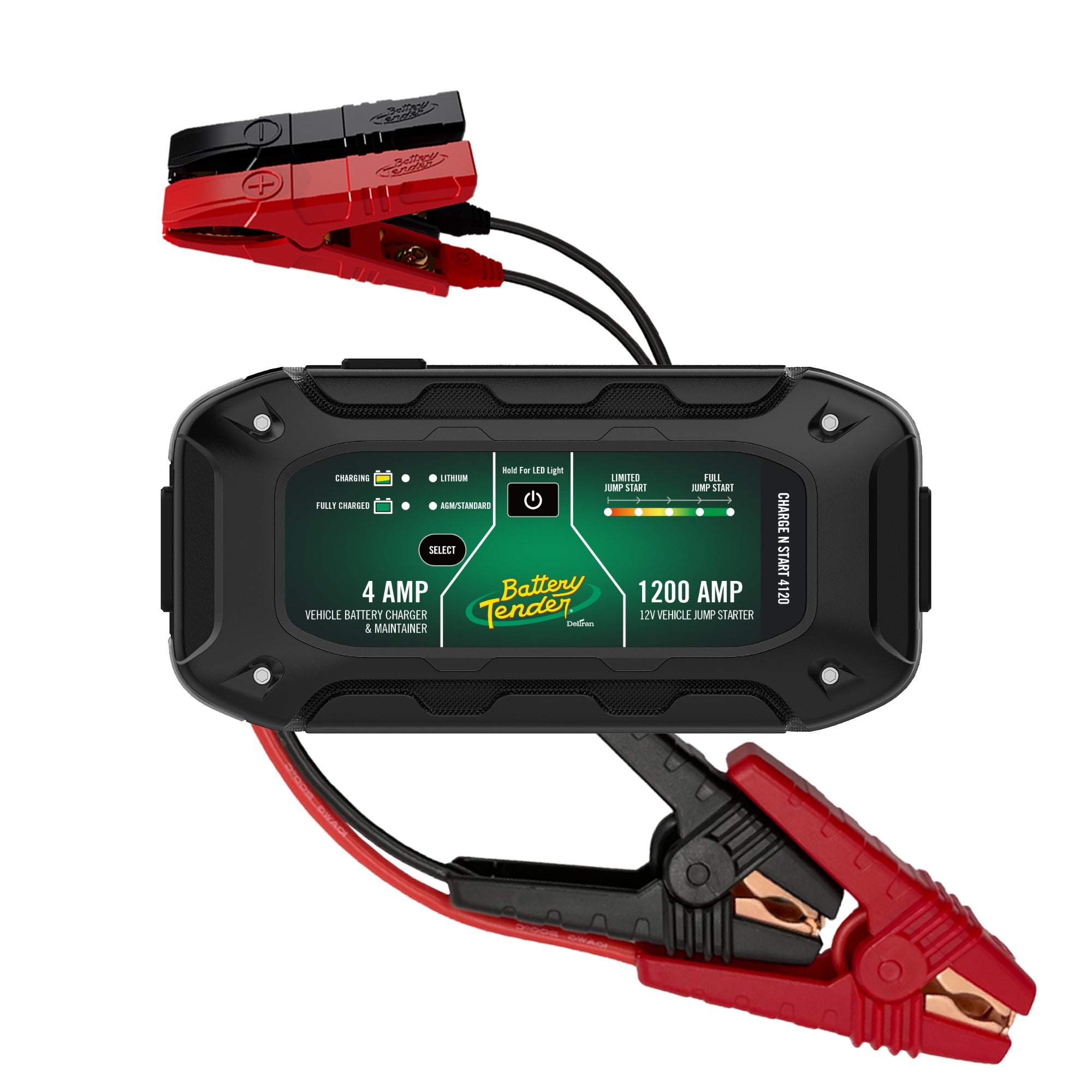
Many jump starters list peak amps and starting amps. Peak amps show a brief maximum output. Starting amps are often more useful because they describe the power the device can deliver during the starting process.

What Can a Car Jump Starter Power?
A car jump starter can do more than start a car. Many models include USB ports, 12-volt outlets, and built-in lights. These extras can help during travel, camping, storms, or roadside emergencies.
Common uses include:
• Starting cars, SUVs, pickup trucks, and some vans
• Charging phones, tablets, and other USB devices
• Powering small 12-volt accessories
• Providing light through an LED flashlight
• Sending an emergency signal with a flashing or red light mode
• Running a small tire inflator on models with that feature
The correct capacity depends on the vehicle. A small four-cylinder car may need less starting power than a large diesel truck. Cold weather also makes starting harder because engine oil thickens and battery performance drops.
Check the product instructions before using a jump starter on a motorcycle, boat, lawn tractor, recreational vehicle, or diesel engine. Some models support these applications, while others do not.
A jump starter can also help with vehicles that use automatic start-stop systems, but compatibility matters. Hybrid and electric vehicles require special care. A 12-volt jump starter may support the low-voltage system in some hybrids and EVs, but it does not charge the high-voltage drive battery.

Car Jump Starter vs. Jumper Cables
A car jump starter and jumper cables solve a similar problem, but they work in different ways.
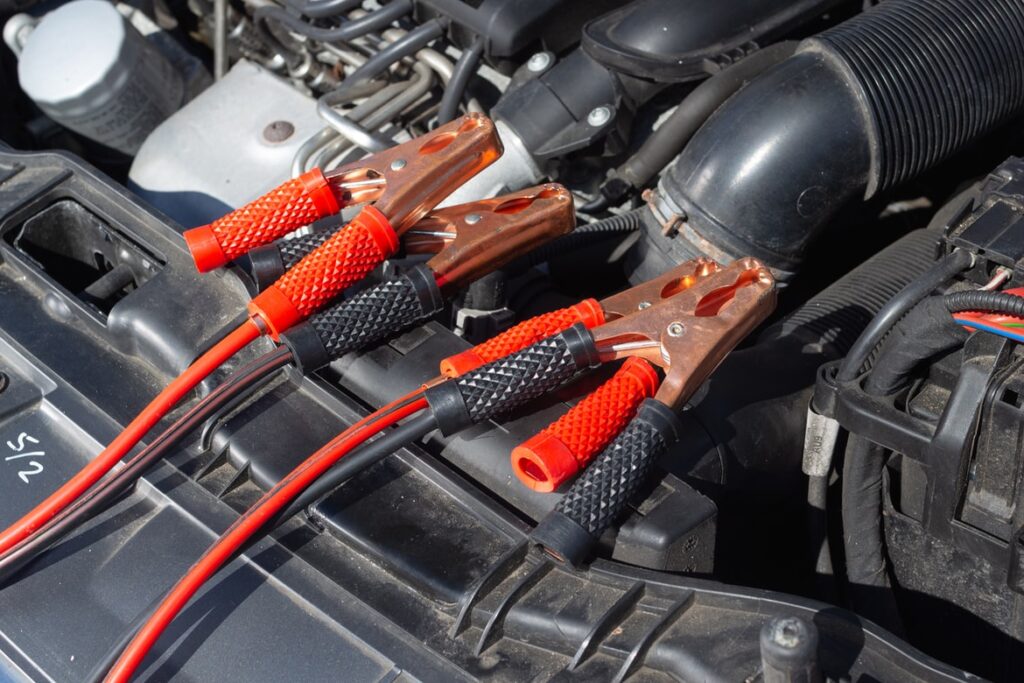
Jumper cables connect your dead battery to a second vehicle’s working battery. They are simple and often inexpensive. However, you need another vehicle, enough space to park safely, and a person willing to help.
A car jump starter has its own battery. It does not need a second vehicle. This makes it useful when you are alone, parked in a garage, or stopped on a quiet road.
Here is a simple comparison:
| Feature | Car jump starter | Jumper cables |
|---|---|---|
| Needs another vehicle | No | Yes |
| Works alone | Yes | Usually no |
| Storage size | Compact to medium | Compact |
| Maintenance | Must be charged | Little maintenance |
| Cost | Higher | Lower |
| Main risk | Using a low charge or wrong connection | Incorrect connection between vehicles |
In practical use, a jump starter offers more independence. Jumper cables remain valuable as a backup, especially if you already carry them. Some drivers keep both because cables do not lose charge while sitting unused.
A common mistake is buying a jump starter and never checking it again. Lithium batteries slowly lose charge over time. Store the unit according to the manual and check its charge every few months.
How to Use a Car Jump Starter Safely
Learning what is a car jump starter is only the first step. Safe operation matters just as much as choosing the right model.
Before connecting anything, park the vehicle in a safe place. Turn off the ignition, lights, radio, climate controls, and other accessories. Keep the jump starter away from moving belts, fans, and hot engine parts.
Follow these steps:
- Read the jump starter instructions.
- Confirm that the vehicle uses a compatible battery system.
- Turn off the vehicle and remove the key or keep the key away from the start position.
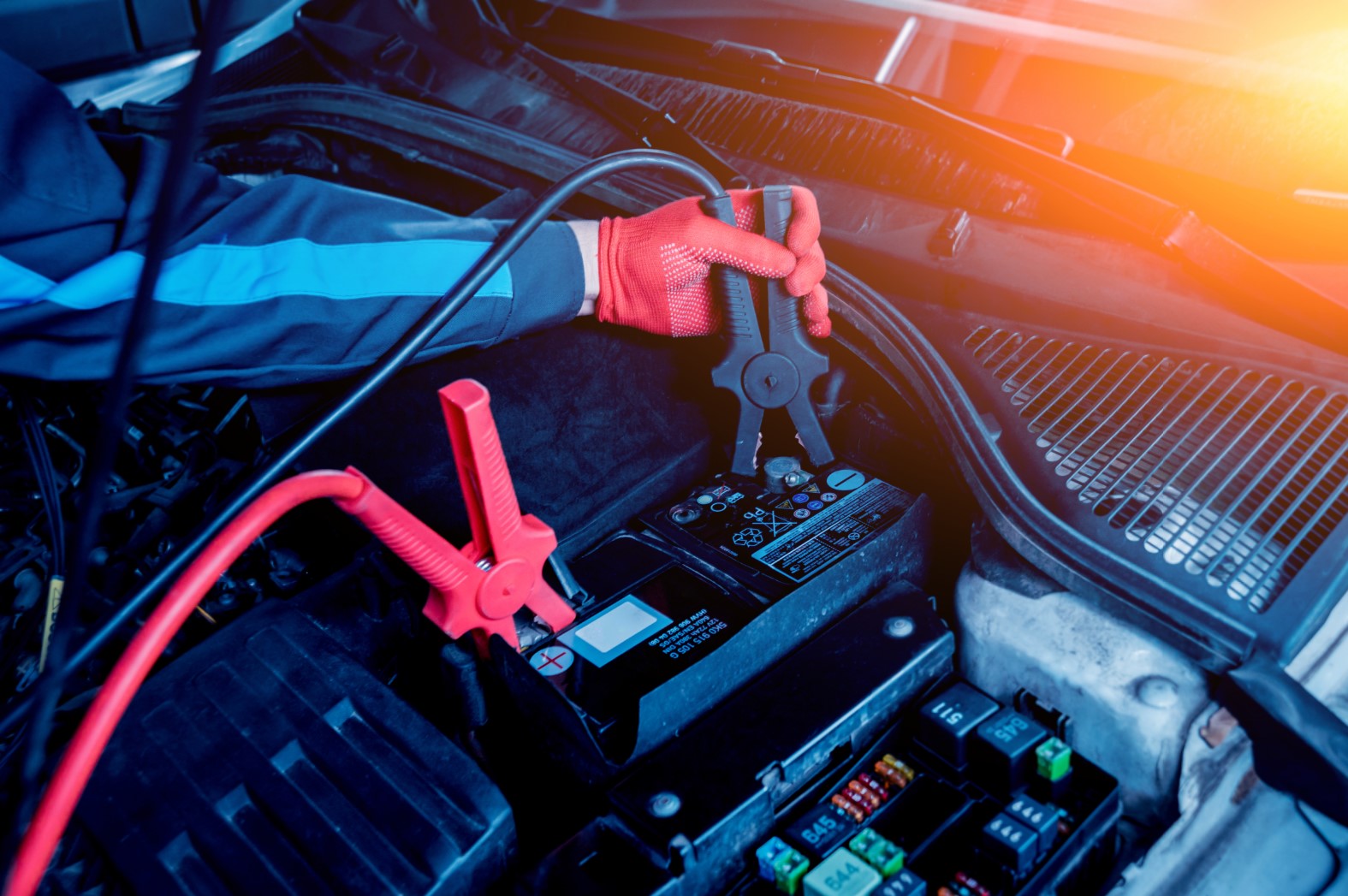
- Connect the red clamp to the positive battery terminal.
- Connect the black clamp to the negative terminal or an approved unpainted metal ground.
- Turn on the jump starter if its design requires it.
- Wait for the ready indicator.
- Start the vehicle for no more than a few seconds.
- If the engine does not start, wait several minutes before trying again.
- Turn off the jump starter before removing the clamps.
- Remove the black clamp first, then the red clamp.
- Let the engine run or drive as recommended in the vehicle manual.
Never allow the red and black clamps to touch. Do not connect the clamps to the wrong terminals. Reversed polarity can damage the vehicle, the jump starter, or both.
Stop if you notice sparks, smoke, swelling, a strong chemical smell, leaking fluid, or unusual heat. A damaged battery may be unsafe to jump. Call roadside assistance when the situation looks dangerous.
From a practical standpoint, the biggest mistake people make is rushing. They see a dead car, feel pressure, and connect the clamps without checking the symbols. Taking 30 seconds to identify positive and negative terminals can prevent expensive damage.
How to Choose the Best Car Jump Starter
The best car jump starter depends on your vehicle, climate, and needs. A small unit may work well for a compact sedan but struggle with a large diesel engine.
Consider these features before buying:
Starting power
Look for a model rated for your engine size. Gas engines usually require less starting power than diesel engines. Larger engines and cold climates call for more reserve power.
Do not choose based only on the highest peak amp number. Compare starting amps, battery capacity, and vehicle compatibility. Manufacturer ratings are not always measured in exactly the same way.
Battery capacity
Capacity is often shown in milliamp-hours, or mAh, or watt-hours. More capacity may allow more starting attempts and more device charging.
Capacity does not tell the whole story. A jump starter also needs to deliver high current quickly. A large capacity rating with weak output may not start a vehicle.
Cable length and clamp quality
Thick cables and strong clamps create a better connection. Clamps should grip the terminals firmly and have enough insulation to reduce accidental contact.
Short cables can be hard to use in vehicles with an awkward battery location. Check whether the jump starter includes extension cables or a remote positive terminal connection.
Safety protection
Useful protections include:
• Reverse-polarity alerts
• Short-circuit protection
• Overcurrent protection
• Overcharge protection
• Overheat protection
• Spark-resistant connection design
These features reduce risk, but they cannot make an unsafe connection safe in every situation.
Weather performance
Cold temperatures reduce battery performance. If you live in a region with harsh winters, choose a unit designed for low-temperature use and store it in a moderate environment when possible.
Do not leave a lithium jump starter in a hot vehicle for long periods. Extreme heat can shorten battery life and create safety concerns.
Extra functions
A built-in light, USB-C charging, a power bank, or a tire inflator can add value. However, extra features should not distract from the main purpose: reliable engine starting.

How Many Amps Does a Car Jump Starter Need?
The required amperage depends on engine size, fuel type, battery condition, and temperature. A small gasoline car may work with a compact jump starter. A large truck, diesel vehicle, or vehicle in freezing weather may need a stronger model.
As a broad guide:
• Small four-cylinder gas engines often suit a lower-output model.
• Larger six- and eight-cylinder gas engines may need medium or high output.
• Diesel engines often need more starting power than similar-size gas engines.
• Heavy-duty trucks and commercial vehicles may require a professional-grade unit.
These are general guidelines, not guarantees. Always compare the jump starter’s specifications with the vehicle manufacturer’s requirements.
If your battery is completely damaged, swollen, frozen, or internally shorted, more amperage may not solve the issue. A jump starter can assist a weak battery, but it cannot fix broken battery plates, bad cables, a failed starter, or a faulty alternator.
Can a Car Jump Starter Recharge a Car Battery?
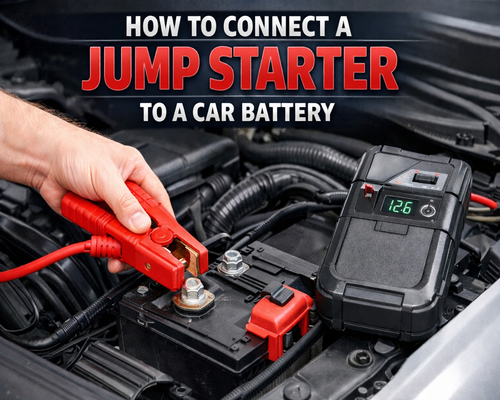
A car jump starter usually starts the engine. It does not function like a full battery charger unless the product specifically includes a charging mode.
After a successful start, the alternator supplies power to the vehicle. However, driving for a short time may not fully recharge a deeply discharged battery. A smart battery charger is better for a slow, complete recharge.
You should test the battery if:
• The vehicle needs a jump more than once.
• The battery is more than a few years old.
• The headlights dim while starting.
• The engine cranks slowly.
• The battery warning light appears.
• The vehicle dies again soon after starting.
The charging system also needs inspection. A worn alternator, loose battery terminal, corroded cable, or parasitic electrical drain can cause repeated starting problems.
One useful lesson from roadside situations is that a successful jump does not prove the vehicle is fixed. It only proves that the engine received enough power to start at that moment.
Limitations of a Car Jump Starter
A car jump starter is useful, but it is not a universal repair tool. Knowing its limits can help you make safer decisions.
A jump starter may not work when:
• The battery has severe internal damage.
• The battery is frozen.
• Battery terminals are heavily corroded.
• The starter motor has failed.
• The alternator is not charging.
• The engine has a mechanical problem.
• The fuel system has a fault.
• The vehicle’s security system prevents starting.
• The jump starter is not charged or is incompatible.
A frozen lead-acid battery can crack or explode if charged or jumped. If the battery case looks swollen, split, wet, or damaged, do not connect a jump starter.
Some vehicles place the battery in the trunk, under a seat, or in another difficult location. Use the designated jump points shown in the owner’s manual. Do not guess which metal part is safe.
Hybrid and electric vehicles need special attention. Their 12-volt systems may still require a jump, but the high-voltage battery system is different. Follow the vehicle manufacturer’s instructions or contact a qualified technician.
Car Jump Starter Maintenance and Storage
A car jump starter only helps if it has enough charge when you need it. Make maintenance part of your routine.
Use these simple habits:
• Charge the unit after every use.
• Check the charge level every two to three months.
• Inspect cables and clamps for cuts, cracks, or corrosion.
• Keep the ports covered when the unit is stored.
• Store it in a dry place away from direct heat.
• Follow the charging time and storage instructions.
• Do not use the unit if the case is swollen or damaged.
Avoid storing a lithium jump starter in extreme heat. A closed car can become dangerously hot in summer. If possible, keep the device in a temperature-controlled place and move it to the vehicle when traveling.
Many people store a jump starter under the trunk floor and forget about it. A calendar reminder can prevent that problem. A quick charge check before a long trip is also wise.
Common Mistakes to Avoid
Even a high-quality car jump starter can cause problems when used incorrectly. Most errors are easy to prevent.
Avoid these mistakes:
• Connecting the clamps before reading the manual
• Reversing the positive and negative connections
• Letting the clamps touch each other
• Trying to start the engine repeatedly without pause
• Using a small model on a large diesel engine
• Jumping a visibly damaged or frozen battery
• Leaving the jump starter connected after the engine starts
• Storing the unit for years without charging it
• Ignoring corrosion on the battery terminals
• Assuming the battery is the only possible problem
If the vehicle does not start after a few careful attempts, stop and inspect the situation. More attempts can drain the jump starter and place stress on the starter motor.
Clean, tight battery connections are important. Corrosion can block current flow and make a good jump starter seem ineffective. If you are unsure, ask a trained technician for help.
Frequently Asked Questions About What Is a Car Jump Starter
What is a car jump starter used for?
A car jump starter provides temporary electrical power to help start a vehicle with a weak or discharged battery. It does not repair the battery or replace a failed starter, alternator, or fuel system.
Can a car jump starter start a completely dead battery?
It may start a battery that is deeply discharged, but success depends on the battery’s condition and the jump starter’s output. If the battery has internal damage, is frozen, or is shorted, the jump starter may not work and could create a safety risk.
How long should I leave a car jump starter connected?
Most units need only a short connection before you attempt to start the engine. Follow the product instructions, and remove the clamps after the vehicle starts or after the unit indicates that you should stop.
Can a car jump starter damage my car?
Incorrect connections, poor-quality equipment, or use on an incompatible vehicle can cause damage. Choose a model with reverse-polarity and short-circuit protection, then connect the clamps exactly as the vehicle and product manuals explain.
How often should I charge a car jump starter?
Charge it after each use and check it every few months. Even when unused, the internal battery can lose charge over time, so regular checks help ensure it is ready for an emergency.
Is a car jump starter better than jumper cables?
A car jump starter is more convenient because it does not need another vehicle or another driver. Jumper cables cost less and do not need charging, so carrying both can provide useful backup.
Can I use a car jump starter on a diesel truck?
Some high-output models can start diesel engines, but not every model is suitable. Check the manufacturer’s engine-size and diesel ratings before connecting the unit.
Conclusion
A car jump starter is a portable power source that can give a weak vehicle battery the burst of current needed to start an engine. It offers more independence than jumper cables, but it cannot repair a bad battery, alternator, starter, or engine problem.
Choose a model that matches your vehicle, check its charge often, and learn the correct connection order before an emergency occurs. Keep the unit accessible, follow safety instructions, and stop if the battery appears damaged or unsafe.
A well-maintained jump starter can turn a stressful roadside delay into a simple fix. Review your vehicle manual, compare compatible models, and share your own jump-start tips or questions in the comments.