Can You Use Wheel Cleaner On Muffler: Safe Guide
A muffler often collects road salt, mud, brake dust, oil mist, and black soot. That makes many owners wonder if a wheel cleaner can restore its look. The short answer is yes, but only in limited cases. A wheel cleaner may help clean the outside of a cool, removable exhaust tip or muffler shell. It can also stain, etch, or corrode metal when the formula is too strong or left on too long.
The safe choice depends on the cleaner, the exhaust metal, and the type of dirt. A mild, non-acid wheel cleaner is less risky than an acid-based product. Stainless steel usually tolerates careful cleaning better than polished aluminum, chrome, or older aluminized steel. The muffler must be fully cool before you spray anything on it.
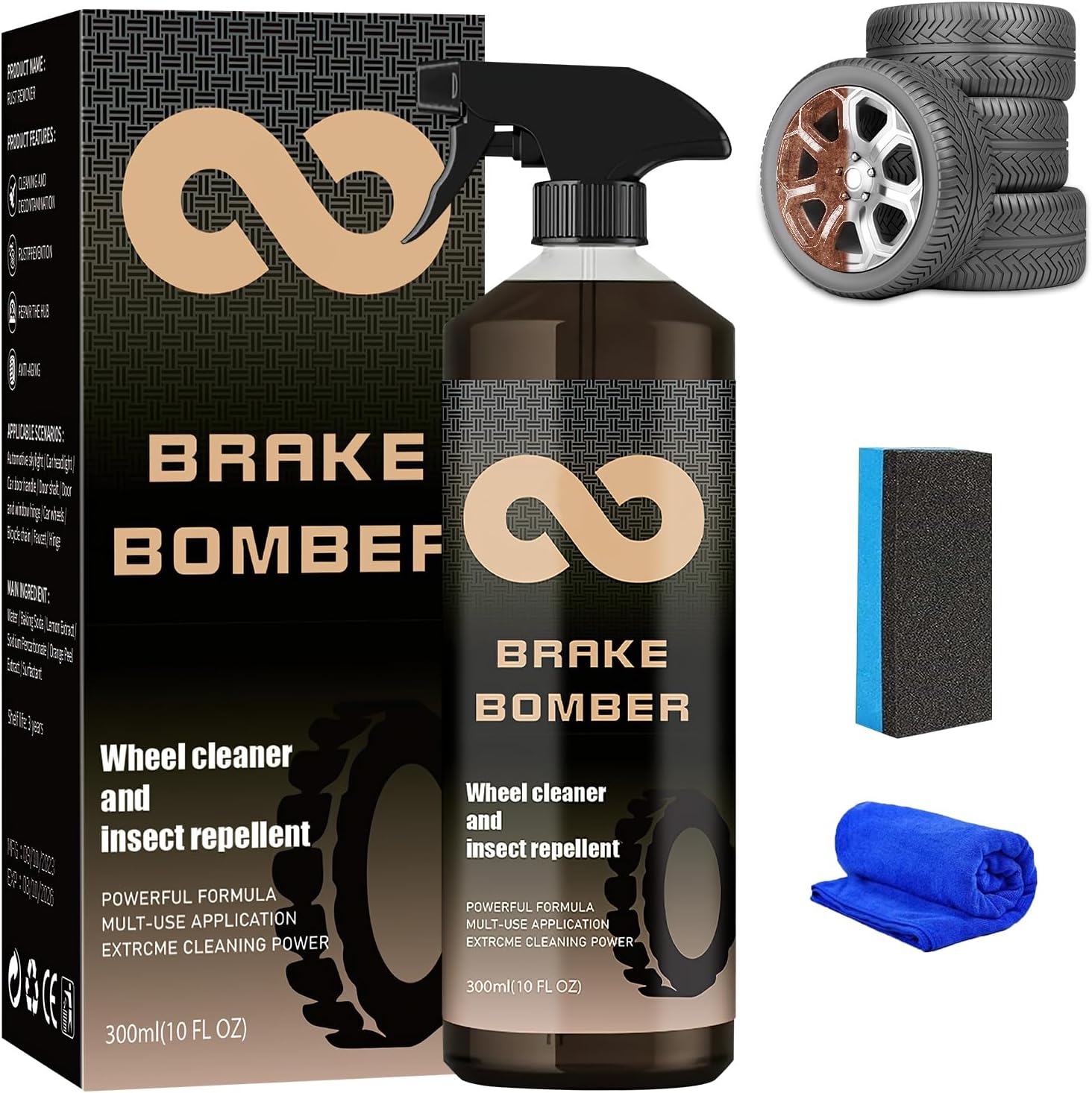
Quick answer: Can you use wheel cleaner on a muffler?
You can use a mild, non-acid wheel cleaner on the outside of a cold muffler, but it is not the first product I would choose. Check the label first, dilute it if the label allows, test a hidden spot, and rinse it well. Never spray cleaner into the tailpipe, use it on a hot exhaust, or let it dry on the metal. A dedicated metal or automotive degreaser is usually safer.

The best way to clean a muffler is to use the least aggressive product that removes the dirt. Start with car shampoo, warm water, and a soft brush. Move to a water-based automotive degreaser only if grease or oil remains. Use wheel cleaner as a last step, not as a default.
This advice suits three types of readers. A new driver needs a low-risk method. An experienced DIYer may want to remove baked-on grime from a truck or performance car. A parent or gift buyer should choose simple, low-chemical detailing supplies that reduce the chance of burns, stains, and costly mistakes.
Why mufflers get dirty and stained
A muffler sits under the vehicle near the road surface. It faces water, salt, sand, exhaust soot, and heat cycles every time you drive. On a truck or SUV, the larger ground clearance helps a little, but mud and road spray still reach the exhaust.
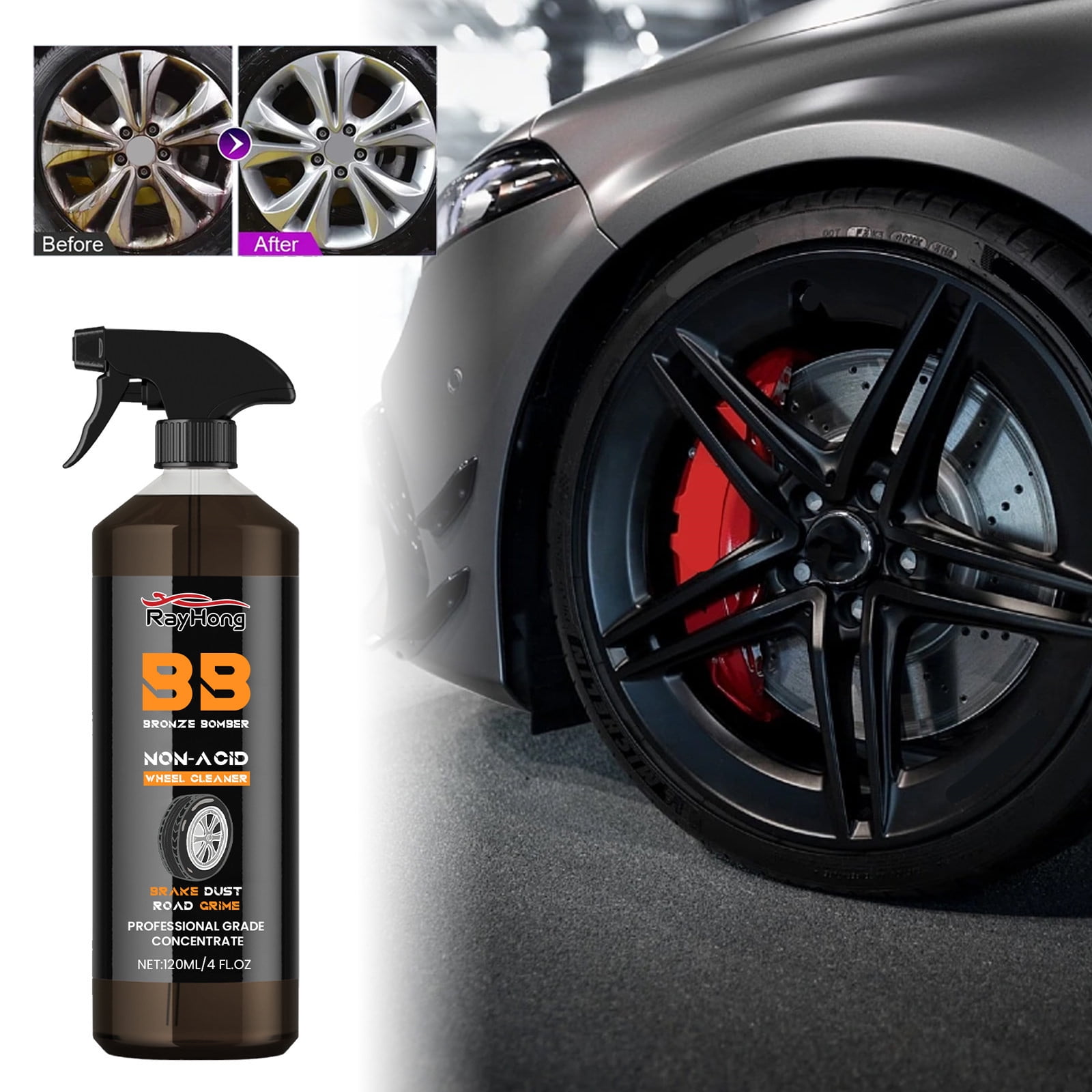
A muffler does not usually become dirty because it needs a special performance treatment. Most dirt is cosmetic. Surface grime may include:
- Road film and dust
- Salt residue
- Mud and clay
- Brake dust
- Oil mist from a small engine leak
- Soot near the tailpipe
- Rust scale
- Water spots
- Old dressing or underbody coating
The exhaust also changes temperature often. It may be cold at startup and very hot after a long drive. This repeated heating and cooling can bake dirt onto the metal. A cleaner that works well on a cool wheel may flash dry too fast on an exhaust part.
The metal matters more than the label
“Muffler” describes a part, not one metal type. The shell may be stainless steel, aluminized steel, mild steel, or a coated material. The exhaust tip may use chrome, polished stainless steel, or plated aluminum.
The most common materials have different risks:
| Exhaust surface | Main cleaning risk | Safer starting choice |
|---|---|---|
| Stainless steel | Water spots and scratches | Car shampoo and microfiber |
| Aluminized steel | Staining and corrosion after coating damage | Mild soap and soft brush |
| Mild steel | Rust and coating loss | Gentle wash and dry at once |
| Chrome or plated metal | Peeling, pitting, and dull spots | Product labeled safe for chrome |
Stainless steel is often the easiest to clean, but it is not immune to damage. A harsh acid can dull the finish. A rough brush can leave fine scratches that show in bright light. Aluminized steel can lose its protective layer if you use strong chemicals or abrasive pads.
The dirt matters, too
A wheel cleaner is made to break down brake dust, metallic particles, and road film. That does not mean it is ideal for every exhaust stain. It may help with loose road grime, but it will not repair rust or remove deep heat discoloration.
If the muffler has oily residue, find the oil leak first. Oil near a hot exhaust can create smoke and a fire risk. Cleaning the muffler without fixing the leak only hides the warning sign for a short time.
Wheel cleaner types and their risks
The main difference between wheel cleaners is their chemical strength and target surface. Some are pH-neutral. Some are alkaline. Others use acids to dissolve mineral deposits and brake dust. The label, safety sheet, and surface directions matter more than the product color or brand name.
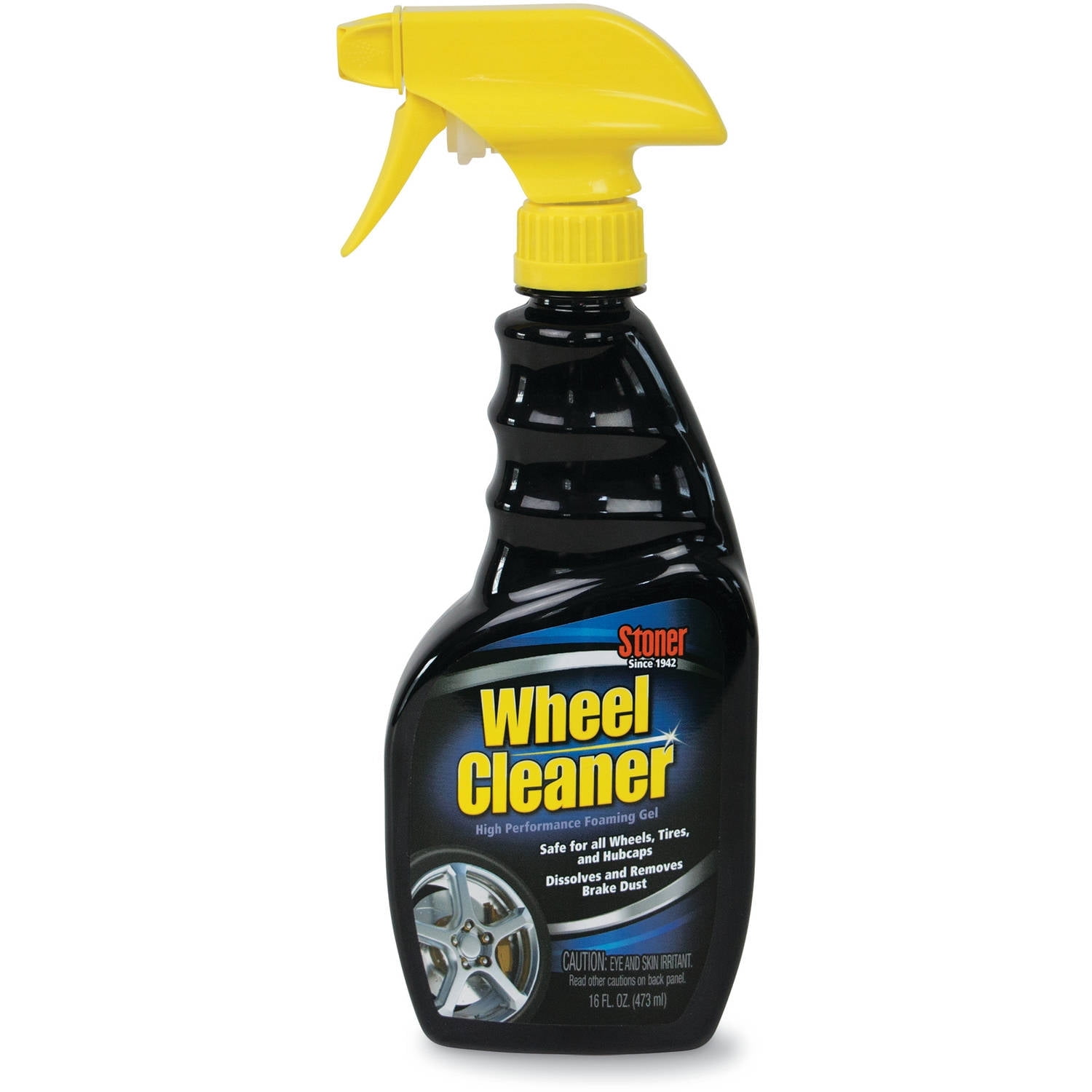
A pH-neutral cleaner is usually the lowest-risk option. “pH-neutral” means it is close to the middle of the acid-to-alkaline scale. It may clean normal road film without attacking metal as quickly as a strong acid.
An alkaline cleaner has a higher pH. It can cut greasy dirt well, but it may dry out rubber, dull some finishes, or leave a white residue. An acid wheel cleaner can work fast, but it has the highest risk of etching or staining an exhaust surface.
| Wheel cleaner type | Muffler suitability | Key limitation |
|---|---|---|
| pH-neutral | Best option for light grime | May need brushing |
| Mild alkaline | Sometimes suitable when diluted | Can dull sensitive finishes |
| Strong alkaline | Usually skip for exhaust metal | Higher corrosion risk |
| Acid-based | Avoid unless the label allows it | Can etch or stain metal |
| Iron-removing formula | Usually unnecessary | May leave odor or residue |
Always read the label before use. If it says “for wheels only,” “do not use on bare metal,” or “avoid hot surfaces,” follow that warning. A product made for coated alloy wheels is not automatically safe for a bare muffler.
Why acid wheel cleaner can harm a muffler
Acid reacts with mineral deposits and some metals. That reaction can remove dirt, but it can also attack a thin protective layer. On chrome, aluminum, or worn coatings, the result may be haze, dark spots, or uneven color.
Acid residue can also remain in seams, brackets, and welds. If you do not rinse it away, the chemical may continue working after the visible surface looks clean. Road salt can make that problem worse in winter climates.
Why strong alkaline cleaner is not risk-free
Alkaline products are not always gentle. A strong degreaser can strip wax, stain aluminum, and dry rubber parts. It may also attack nearby paint, powder coating, wiring insulation, or plastic splash shields if overspray spreads.
Use the smallest amount needed. Cover or rinse nearby surfaces. Never mix wheel cleaner with bleach, acids, ammonia, or other chemicals. Mixing cleaners can create harmful fumes or a dangerous reaction.
⚠️ Safety Warning: Never clean an exhaust system while it is hot. Exhaust parts can stay hot long after the engine is shut off. Let the vehicle cool fully, wear eye protection and chemical-resistant gloves, and keep the vehicle on level ground.
Is wheel cleaner safe for stainless steel, chrome, and aluminum?
Wheel cleaner is most likely to be safe on stainless steel when it is mild, used briefly, and rinsed well. Chrome and aluminum require more care. If you cannot identify the surface, assume it is sensitive and begin with soap and water.
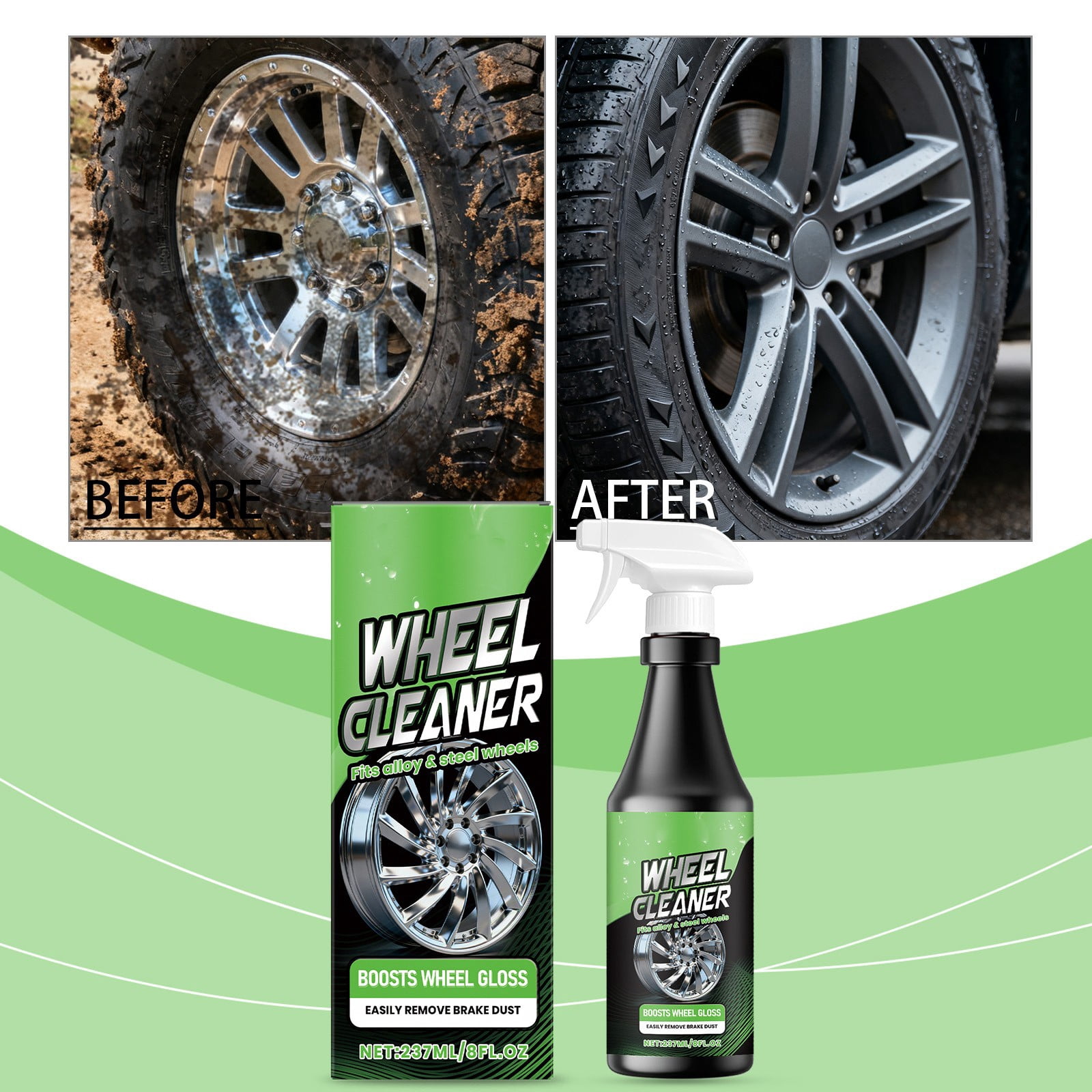
A magnet can sometimes help identify steel, but it cannot tell you whether the surface has plating or a coating. Your vehicle service information or muffler manufacturer may provide better details. On an older vehicle, assume the protective coating may already be thin.
Stainless steel mufflers
Stainless steel resists rust better than ordinary steel. It can still show brown heat tint, water spots, and fine scratches. Use a microfiber towel or soft nylon brush. Do not use steel wool or a hard wire brush unless you plan to refinish the part.
A mild wheel cleaner may help with road film. Spray it on the towel or brush rather than flooding the entire underside. That approach gives you more control and reduces chemical contact with clamps, rubber hangers, and nearby parts.
Aluminized and mild steel mufflers
Aluminized steel uses an aluminum coating to slow corrosion. Scratches, acid exposure, and harsh scrubbing can damage that layer. Mild steel can rust quickly where paint or coating has failed.
For these surfaces, use car wash soap first. Dry the muffler well. If you see bubbling, flakes, holes, or a deep rust line, cleaning is not the repair. A mechanic should inspect the exhaust for leaks and structural weakness.
Chrome and polished exhaust tips
Chrome is a thin plated finish. A strong wheel cleaner can leave permanent marks. Polished aluminum can also stain if the cleaner dries on the surface.
For a shiny tip, use a product labeled safe for chrome or aluminum. A dedicated metal polish may help after washing, but avoid polish on a matte or brushed finish unless the maker approves it. Polishing changes the look of the surface.
The safest products for muffler cleaning
The safest first product is often not wheel cleaner. A pH-balanced car shampoo, clean water, and a soft brush can remove more dirt than many people expect. The goal is to step up in strength only when the first method fails.

Here is a practical product order for most sedans, SUVs, trucks, hybrids, and older gasoline cars:
| Cleaning job | Product to try first | Why it suits the job |
|---|---|---|
| Dust and light road film | Car wash soap | Low risk and easy to rinse |
| Greasy dirt | Water-based automotive degreaser | Cuts oil with less abrasion |
| Brake-dust-like residue | Mild pH-neutral wheel cleaner | Helps with bonded road grime |
| Rust scale | Rust treatment or repair inspection | Cleaner alone will not restore metal |
| Water spots on stainless steel | Diluted vinegar or metal-safe product | Use only after a hidden-spot test |
Do not assume a product is safe because it is sold for cars. Read the surface list. Product makers may approve a cleaner for painted wheels but not bare aluminum, chrome, or exhaust parts.
Soap and water
Car shampoo is the best choice for a beginner or teen driver. It has a wide safety margin when used as directed. It may not remove baked-on carbon, but it can remove loose soil without placing nearby parts at much risk.
Use a separate wash mitt or brush for the underside. Do not use that tool on the paint later. Grit from the muffler can scratch clear coat.
Automotive degreaser
A water-based degreaser can help remove oily road film. Choose one with clear dilution directions. Do not use engine cleaner on a hot exhaust. Avoid solvent-heavy products near rubber hangers, wiring, and painted parts.
Metal polish
Metal polish is for appearance, not repair. It can improve the look of some stainless steel or chrome tips. It cannot fix holes, severe pitting, rust-through, or a damaged coating. Check whether the product is made for polished, brushed, or plated metal.
💡 Pro Tip: Put a small piece of painter’s tape near the test area. Clean only the hidden section inside the tape. This makes it easy to compare the treated metal with the untreated metal before committing to the whole muffler.
How to use wheel cleaner on a muffler safely
The best method is slow, cool, and controlled. Do not spray a strong product over the whole underside and hope for the best. Work in a shaded area, rinse often, and stop if the metal changes color.
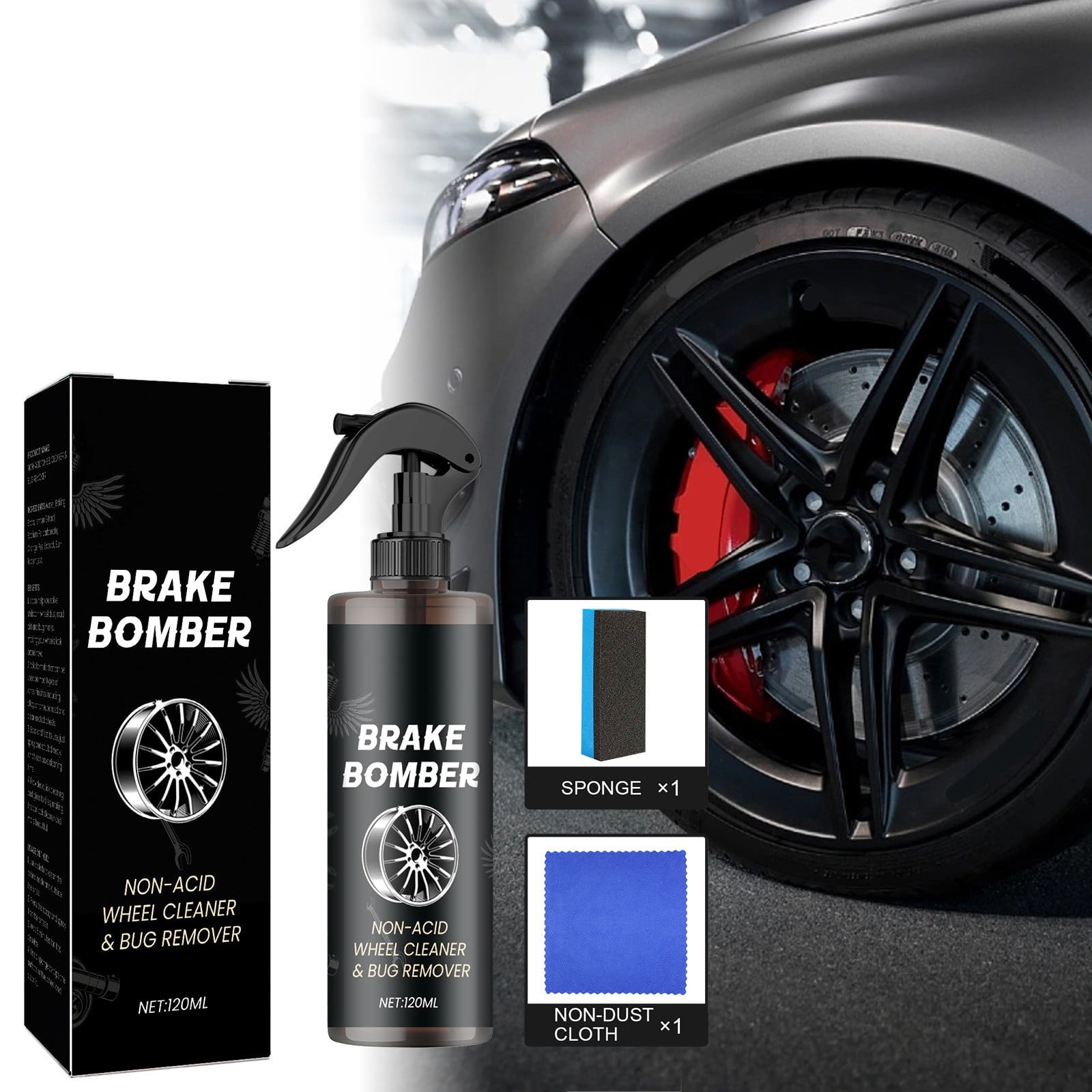
Tools and materials
You do not need a pressure washer or a large detailing kit. A short list is safer and easier to manage.
| Item | Suggested specification or type | Purpose |
|---|---|---|
| Cleaner | Mild, non-acid wheel cleaner | Breaks down stubborn road film |
| Bucket | Clean plastic bucket | Holds rinse water |
| Brush | Soft nylon detailing brush | Reaches seams and curves |
| Towels | Clean microfiber towels | Dry the metal without grit |
| Hose | Gentle water flow | Rinses away chemical residue |
| Protection | Gloves and safety glasses | Limits skin and eye contact |
A pressure washer can help with mud, but keep the nozzle back. High pressure may force water into electrical connectors, damage loose heat shields, or push dirt into seams. A regular hose is enough for most mufflers.
Step-by-step cleaning process
-
Park on level ground. Set the parking brake. Keep children and pets away from the work area.
-
Let the exhaust cool fully. Do not trust the outside temperature alone. Touch-free cooling time varies with the vehicle, weather, and recent drive. If in doubt, wait longer.
-
Inspect the muffler first. Look for holes, loose hangers, cracked welds, heavy rust, and oil dripping from above. Do not scrub a part that may be unsafe.
-
Rinse off loose dirt. Use cool or lukewarm water. Avoid a forceful spray into the tailpipe.
-
Wash with car shampoo. Use a soft brush or microfiber towel. Rinse and check your progress.
-
Test the wheel cleaner. Apply a small amount to a hidden area. Follow the label’s dwell time. Do not let it dry.
-
Use a light application. Spray the brush or towel when possible. Keep the cleaner away from painted panels, rubber hangers, sensors, and electrical connectors.
-
Brush gently. Use short strokes. Let the cleaner do the work. Do not grind grit into the surface.
-
Rinse very well. Flush the top, bottom, seams, brackets, and nearby areas. Chemical residue is a common cause of later staining.
-
Dry the muffler. Use clean microfiber towels or let the vehicle air-dry in a safe, ventilated place. Drying helps limit water spots and surface corrosion.
-
Inspect after drying. If the finish looks dull, patchy, or discolored, stop. Do not apply more cleaner to chase a cosmetic change.
Never crawl under a vehicle supported only by a jack. If you need more access, use rated jack stands on level ground and follow the owner’s manual for lifting points. For a basic outside wash, keep all wheels on the ground when possible.
What to do about the inside of the tailpipe
Do not pour wheel cleaner into the tailpipe. The product may travel into the muffler, resonator, catalytic converter, or oxygen sensor area. It can also remain inside and produce odor or smoke when heated.
Clean only the visible outer lip with a damp cloth or a product approved for the tailpipe finish. Black soot inside the pipe can be normal. Thick, wet, or oily soot may point to an engine or fuel problem.
Common problems after using wheel cleaner
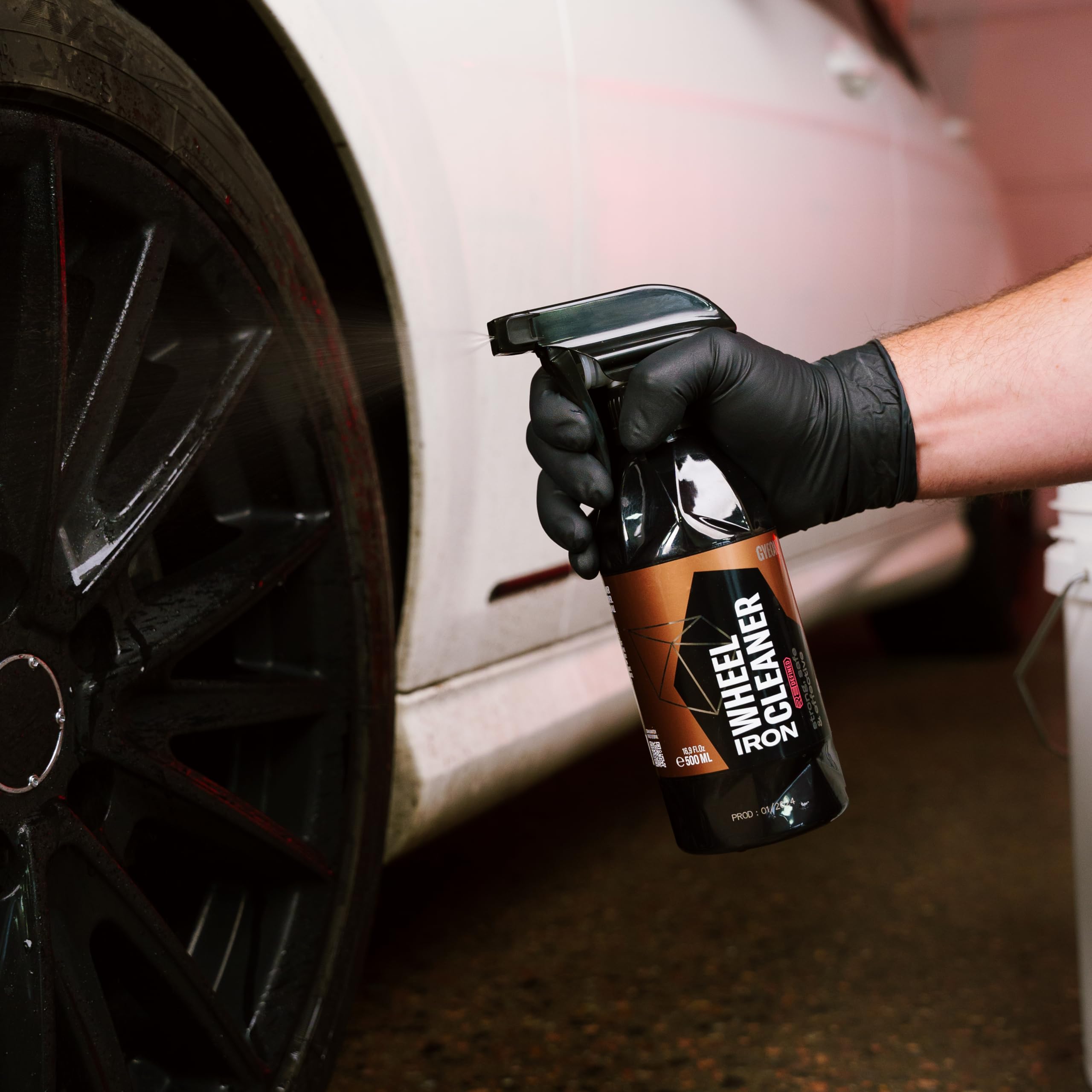
Most cleaning damage comes from heat, dwell time, chemical strength, or poor rinsing. The cleaner may be safe on the label but unsafe in the way it was applied.
| Problem | Likely cause | What to do next |
|---|---|---|
| White haze | Cleaner dried on the metal | Rinse and wash again with mild soap |
| Dark or rainbow stain | Chemical reaction or heat tint | Stop using the product; seek metal-care advice |
| Dull chrome | Acid or abrasive damage | Do not polish aggressively |
| Rust spots | Coating damage or trapped moisture | Inspect and protect the surface |
| Strong odor or smoke | Residue on a hot exhaust | Park safely and let it cool |
| Scratches | Hard brush or trapped grit | Stop scrubbing; assess the finish |
Do not try to fix a chemical stain with a stronger chemical. That often makes the affected area larger. Take a photo and note the product, dilution, contact time, and metal type. A professional detailer or the product maker may need those details.
Cleaner dried on the muffler
If the cleaner dried, rinse the area with plenty of water. Wash it with mild car shampoo and a soft microfiber towel. Do not start the engine to “burn it off.” Heated residue can create smoke and may damage nearby finishes.
The muffler turns black or brown
Brown, blue, purple, or black heat colors can occur on stainless steel. They may appear after high exhaust temperatures, hard towing, or a rich-running engine. A cleaner may not remove them.
If the color change appeared with a loud exhaust, loss of power, a check engine light, or an unusual smell, have the vehicle inspected. A muffler appearance issue can sometimes sit beside a catalytic converter or fuel-system problem.
Rust keeps returning
Repeated rust means moisture, salt, or coating damage remains. Cleaning removes some surface dirt but does not stop rust inside the metal. Check for rust at welds, seams, hangers, and the lowest part of the muffler.
A rusty muffler may become noisy before it becomes unsafe. A hole can allow exhaust gases under the vehicle. Carbon monoxide is a colorless, odorless gas that can enter the passenger area through leaks or open windows.
📜 Check Local Laws: Exhaust noise, missing mufflers, emissions equipment, and modified exhaust systems are regulated in many states and cities. Confirm your local rules with your state DMV or inspection authority before replacing, removing, or modifying exhaust parts.
Wheel cleaner versus other muffler-cleaning methods
Wheel cleaner is only one option. The right choice depends on the finish and the dirt. A gentle wash is enough for a daily driver with normal road film. A detailer may choose a metal-safe cleaner for a show car or polished exhaust tip.

| Method | Best use | Main drawback |
|---|---|---|
| Car shampoo | Light dirt on any common finish | Slow on baked-on grease |
| Mild degreaser | Oil film and heavy road grime | Can harm nearby rubber or coatings |
| Non-acid wheel cleaner | Stubborn surface dirt | Still needs a spot test |
| Metal polish | Dull stainless or chrome tip | Can change a matte finish |
| Steam cleaning | Controlled professional detailing | Needs care near wiring and coatings |
| Abrasive pad | Heavy rust or refinishing work | Easy to scratch or remove coating |
Steam can clean an exhaust surface, but it should be used by someone who understands heat and electrical risks. Steam is not a cure for rust-through. It may also push moisture into areas that are hard to dry.
A pressure washer is useful for mud under a truck, but it is not a substitute for inspection. Keep a wide spray pattern and avoid forcing water into the tailpipe, sensors, clamps, and heat-shield gaps.
When a dedicated exhaust cleaner makes sense
A dedicated exhaust or metal cleaner may be worth the money for a stainless performance exhaust, a motorcycle exhaust, or a vehicle that is displayed often. These products may give clearer instructions for brushed or polished finishes.
They still require care. “Dedicated” does not mean safe on every metal. Confirm the product’s approved surfaces and follow its directions.
When a professional detailer is a better choice
A professional detailer suits an owner with a high-value vehicle, a polished exhaust, or a delicate ceramic-coated surface. It may also suit a gift buyer who wants a safe result without buying several products.
A mechanic is the better choice when the muffler is noisy, loose, cracked, rusty through, or coated with fresh oil. Detailers improve appearance. Mechanics diagnose exhaust faults.
Does muffler cleaning improve performance?
Cleaning the outside of a muffler usually does not increase horsepower, fuel economy, or engine life. It mainly improves appearance and helps you spot rust, cracks, leaks, or loose hardware.

An exhaust system can affect engine operation when it is blocked, cracked, or modified. A dirty outer shell is not the same as an internal restriction. If the vehicle has poor acceleration, a check engine light, loud rattling, or a sulfur smell, seek diagnosis instead of stronger cleaner.
This point matters for DIYers who maintain trucks, older cars, hybrids, and performance vehicles. A clean muffler may look better at a car show, but it cannot repair a failed catalytic converter or a damaged resonator.
Cleaning and exhaust inspection
While the muffler is visible, check:
- Rubber hanger condition
- Clamp tightness
- Rust at seams
- Heat-shield rattles
- Black soot around a joint
- Cracks near welds
- Oil or coolant contamination
- A tailpipe that hangs lower than normal
Black soot near a joint can suggest an exhaust leak. Do not place your hand near a running exhaust to search for leaks. A shop can use safe test methods.
Hybrid and electric vehicle notes
Many hybrids use gasoline engines and still have mufflers. Their exhaust may stay cool during low-speed electric operation, then heat quickly when the engine starts. Avoid touching or spraying parts while the vehicle is in a ready state.
A fully electric vehicle does not have a gasoline exhaust or muffler. It may still have wheel cleaners, brake dust, and underbody panels, but wheel cleaner has no role in cleaning an EV muffler because there is none. Always identify the vehicle type before buying exhaust-care products.
A simple maintenance plan for the exhaust
A clean exhaust is easier to inspect. You do not need to detail the muffler every week. A quick look during tire rotation or an oil service is more useful than frequent chemical cleaning.

| Timing | Check or task | Why it helps |
|---|---|---|
| Monthly | Look for hanging parts and fresh soot | Finds leaks early |
| After winter roads | Rinse salt from the underside | Limits corrosion |
| During tire changes | Inspect hangers and clamps | Gives better access |
| Before towing | Check the exhaust path | Helps spot loose or damaged parts |
| Twice a year | Wash and dry the muffler | Removes built-up road film |
| After deep water | Inspect for trapped mud | Mud holds moisture against metal |
Road salt is especially harsh on older vehicles. Rinse the underside after salt exposure, but avoid spraying electrical connectors with high pressure. If you live near the coast, salt air can also speed corrosion.
Truck owners should inspect the exhaust after off-road trips. Rocks can dent a muffler or bend a hanger. SUV owners should check for mud packed around heat shields. Drivers in wet climates should watch seams and low points where water collects.
Protection after cleaning
A metal-safe protectant may help the appearance of some exposed exhaust tips. Do not apply ordinary wax, tire dressing, or oily protectant to a part that becomes hot. These products can smoke, attract dirt, or create an odor.
Some high-temperature coatings are made for exhaust parts, but preparation is critical. The surface must be clean, dry, and free of rust. Follow the coating maker’s temperature and curing instructions. A coating job may be more work than the muffler deserves on an older daily driver.
🌿 Eco or Disposal Note: Do not pour leftover wheel cleaner, degreaser, or rinse water into a storm drain. Follow the product label and local rules for chemical disposal. Store chemicals away from children, pets, food, and heat.
Product choices by driver and vehicle
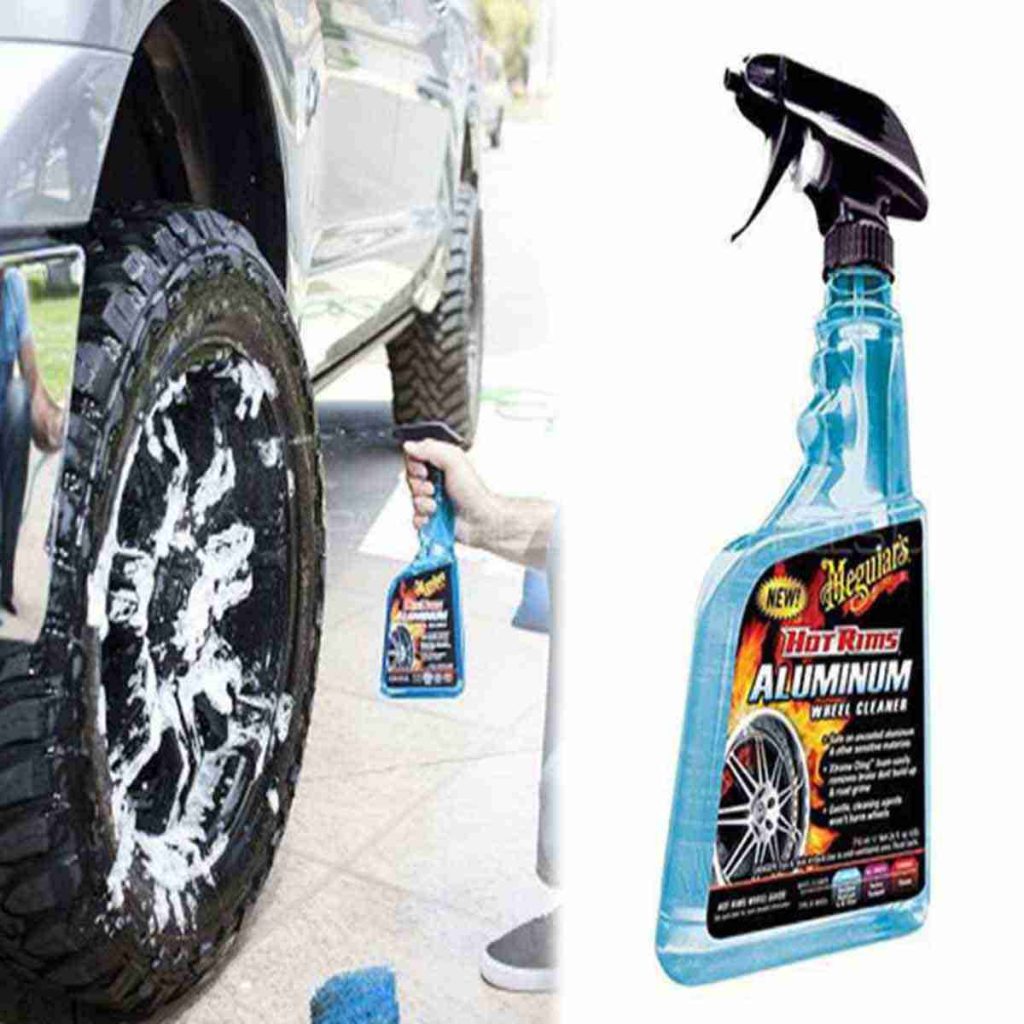
The best muffler-cleaning method is not the same for every owner. A new driver may value a wide safety margin. A DIY owner may accept more work for a polished finish. A parent may want a product that is easy to use without crawling under the car.
| Driver or vehicle | Recommended approach | Who should skip wheel cleaner |
|---|---|---|
| Beginner with a sedan | Soap, water, and a soft brush | Anyone unsure of the metal type |
| DIY truck owner | Rinse, mild degreaser, then spot-tested cleaner | Owners with severe rust or oil leaks |
| Performance-car owner | Metal-safe product for the exact finish | Anyone with polished or plated parts without approval |
| Parent buying for a teen | Mild, non-acid cleaner and gloves | A teen working near a hot exhaust |
| Hybrid owner | Cool-down check and gentle wash | Anyone cleaning while the car is ready |
| EV owner | Clean wheels and underbody only | Anyone searching for a muffler that is not present |
For most daily drivers, the lower-risk method is also the best value. You can buy car shampoo, microfiber towels, and a soft brush for other tasks such as cleaning wheels, floor mats, and door jambs.
An experienced DIYer may prefer a pH-neutral wheel cleaner because it works faster on bonded road film. That choice is reasonable only when the cleaner is approved for the metal and the user can control dwell time and rinsing.
A gift buyer should avoid a large set of strong chemicals. A small kit with pH-neutral soap, gloves, microfiber towels, and a soft brush is more useful for a new driver than an aggressive wheel-cleaning bundle.
Price and value
Muffler cleaning can cost very little if the goal is a normal wash. The cost rises when the surface needs metal polish, rust treatment, professional correction, or exhaust repair. A more expensive cleaner is not automatically safer.

| Spending level | What it can include | Best fit |
|---|---|---|
| Low | Car shampoo, brush, and microfiber towels | Beginners and regular commuters |
| Mid-range | pH-neutral wheel cleaner and metal-safe care product | DIY owners with stubborn road film |
| Higher | Professional detailing or exhaust refinishing | Show vehicles and delicate finishes |
| Repair budget | Exhaust inspection, welding, or replacement | Rust-through, leaks, and loose parts |
Check the current price on Amazon or another trusted retailer, and read the latest label before buying. Formulas can change. The same product name may also come in different strengths or sizes.
The money is rarely worth spending on a strong chemical if the muffler has structural rust. Put that budget toward an inspection. A clean-looking but leaking muffler is like a polished cracked helmet: appearance does not solve the safety issue.
Common mistakes to avoid
Most muffler-cleaning mistakes are easy to prevent. They happen when a person treats the exhaust like a wheel, forgets the heat, or uses more product than needed.

Avoid these errors:
- Spraying cleaner on a hot muffler
- Using acid cleaner without checking the label
- Letting the product dry
- Applying cleaner inside the tailpipe
- Scrubbing with steel wool or a wire brush
- Using a dirty towel with trapped grit
- Ignoring oil dripping onto the exhaust
- Cleaning over a storm drain
- Starting the engine to dry chemical residue
- Working under a car held only by a jack
- Mixing wheel cleaner with another chemical
- Assuming all stainless, chrome, and aluminum look alike
Do not chase perfect color on a heat-stained exhaust. Some discoloration is normal. Aggressive scrubbing can remove more metal or coating than the stain itself.
If the muffler is under warranty or part of a custom exhaust system, check the manufacturer’s care instructions. A harsh cleaner may affect a finish warranty.
When to stop cleaning and call a mechanic
Cleaning is a cosmetic task until you find a leak, hole, loose part, or unusual exhaust symptom. At that point, safety and diagnosis matter more than shine.
Ask a qualified mechanic to inspect the vehicle if you notice:
- A new loud exhaust sound
- Rattling inside the muffler
- A visible hole
- Heavy rust at a seam
- Exhaust smell in the cabin
- Soot around a joint
- A loose or dragging exhaust pipe
- A check engine light
- Loss of power or poor acceleration
- Smoke from oil or cleaner after the vehicle warms
Never run a car in a closed garage while cleaning or inspecting it. Carbon monoxide can build up quickly. If the vehicle breaks down on the roadside, use hazard lights and warning triangles when safe, and stay away from moving traffic.
A roadside kit, tire pressure gauge, jump starter, tire inflator, phone mount, and flashlight can help with basic travel problems. None of these items repairs a leaking muffler. Carrying safety gear is useful, but it should not replace proper service.
Frequently asked questions
Q: Can I use spray-on wheel cleaner on a muffler?
A: You can use a mild, non-acid spray wheel cleaner on the outside of a fully cool muffler if the label allows it. Test a hidden area first. Keep the product away from the tailpipe interior, rubber hangers, wiring, painted panels, and sensitive coatings. Rinse it completely before the exhaust heats up.
Q: Can wheel cleaner remove black soot from an exhaust?
A: It may remove loose soot and road film from the outer metal. It will not fix a rich-running engine, an exhaust leak, or soot caused by oil contamination. Heavy wet soot or soot around a joint deserves a mechanical inspection.
Q: Is acid wheel cleaner safe on stainless steel?
A: It can damage or stain stainless steel, especially if it dries or remains on the surface. Use car shampoo or a pH-neutral cleaner first. If you use an acid formula, follow the label exactly, test a hidden spot, and rinse at once.
Q: Can I clean the muffler while it is warm?
A: No. Wait until the muffler and nearby exhaust parts are fully cool. A warm surface can cause the cleaner to dry quickly, create fumes, and increase the chance of skin burns or finish damage.
Q: Can I spray wheel cleaner inside the tailpipe?
A: No. Do not pour or spray wheel cleaner into the tailpipe. It can travel into the muffler and other exhaust parts. Wipe only the visible outer lip with a suitable product.
Q: What is better for a muffler: wheel cleaner or degreaser?
A: A mild water-based degreaser is often better for oily road film. A pH-neutral wheel cleaner may help with bonded brake-dust-like dirt. Neither product repairs rust or exhaust leaks. Choose the product that matches the dirt and surface.
Q: Can pressure washing damage a muffler?
A: High pressure can damage loose coatings, force water into seams, and disturb wiring or heat shields. Use a normal hose or a wide pressure-washer spray from a safe distance. Never aim a strong stream into the tailpipe.
Q: How often should I clean my muffler?
A: Most daily drivers need only an underside rinse after heavy salt, mud, or off-road use. Inspect the muffler during tire changes or routine service. Clean it when dirt blocks inspection, not simply because a calendar says to.
Q: Can cleaning a muffler improve gas mileage?
A: Outside cleaning does not normally improve fuel economy. Mileage problems usually involve tires, alignment, engine operation, fuel control, or driving conditions. A clean muffler is mainly a cosmetic and inspection benefit.
Q: How do I clean a rusty muffler?
A: Wash away loose dirt and inspect the rust. Light surface rust may be treated after proper preparation. Flaking metal, holes, cracked seams, or a loose muffler need a mechanic. Do not cover structural rust with paint and assume the part is safe.
Q: Is wheel cleaner safe on a motorcycle muffler?
A: It depends on the muffler finish. Motorcycles often use polished aluminum, chrome, carbon fiber, or coated stainless steel. Use a product approved for that exact finish, keep it off hot parts, and test a hidden area.
Q: Can I use wheel cleaner on an exhaust tip?
A: A mild product may be suitable for an exterior exhaust tip when the label approves its finish. Chrome and polished aluminum need special care. Avoid abrasive brushes and rinse the tip thoroughly.
Q: What should I do if wheel cleaner stained my muffler?
A: Rinse the surface well, wash it with mild car shampoo, and stop using the cleaner. Do not add a stronger chemical. If the stain remains, identify the metal and product, then ask a professional detailer or the manufacturer for advice.
Q: Does an EV have a muffler?
A: A fully electric vehicle has no gasoline engine exhaust system and no muffler. Hybrids usually do have an exhaust system because they use a gasoline engine. Check the vehicle type before buying muffler-cleaning products.
Q: Can I use household bathroom cleaner on a muffler?
A: It is better to avoid it. Household cleaners may contain acids, bleach, ammonia, or solvents that are not approved for automotive metal. Use a car shampoo or automotive product with clear surface directions.
Final thoughts
Yes, you can use wheel cleaner on a muffler, but only with restraint. Choose a mild, non-acid formula, confirm that it suits the metal, and apply it to a cold exterior surface. Test first, keep the contact time short, rinse well, and never spray inside the tailpipe.
For most drivers, soap and water are the smarter starting point. A beginner or teen driver should use that low-risk method. A DIY owner with a stainless muffler can step up to a pH-neutral wheel cleaner when road film remains. A parent or gift buyer should focus on gloves, microfiber towels, a soft brush, and clear instructions rather than the strongest chemical on the shelf.
If you find holes, heavy rust, loose hangers, exhaust fumes, or a check engine light, stop cleaning and arrange an inspection. A clean muffler can look better and make problems easier to see, but it cannot replace safe exhaust repair.
Affiliate disclosure: This article may contain affiliate links. If you buy a product through one of these links, we may earn a commission at no extra cost to you. Product prices, availability, formulas, and fitment can change, so check the current listing and manufacturer instructions before buying or using any automotive chemical.