How To Remove Cigarette Burns From Car Headliner: Quick Fix
Introduction
A small cigarette burn in a car headliner can often be repaired at home. The usual fix is to trim away the charred fibers, add a small piece of matching headliner fabric, and secure it with a light coat of fabric adhesive.
This method works best for a shallow burn or a hole smaller than a dime. A large hole, loose headliner, melted foam, or damage near a roof-mounted airbag needs professional repair. The headliner is more than a cloth roof cover. It may hide wiring, lights, sensors, and safety equipment.
This guide applies to vehicles in the United States. Always check your owner’s manual before removing trim or working near an airbag.

Quick Answer: The Best Way to Fix a Small Cigarette Burn
To remove a small cigarette burn from a car headliner:
- Park the vehicle outdoors or in a well-ventilated area.
- Let the headliner cool completely.
- Vacuum away ash and loose fibers.
- Trim the black, melted, or raised edges with small scissors.
- Cut a tiny patch from matching headliner material.
- Apply a small amount of headliner-safe adhesive.
- Press the patch into place without soaking the fabric.
- Let the repair cure with the vehicle doors open.
- Brush the fibers gently so the patch blends in.
Do not pour cleaner onto the headliner. Excess liquid can loosen the fabric, stain the foam backing, or cause the headliner to sag.
For a deep burn, use a professional upholstery or automotive interior repair shop instead. If the burn is near a side-curtain airbag, do not remove the headliner yourself.

First, Check the Burn and the Headliner
The size and depth of the burn determine whether a patch will work. Inspect the area in good daylight before buying supplies.
Look for these signs:
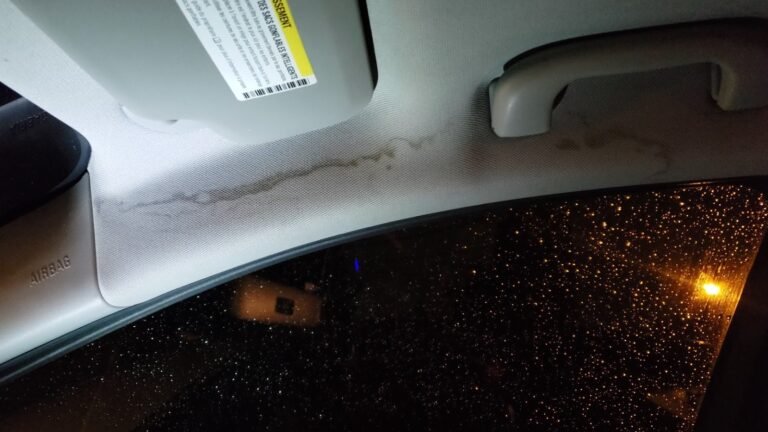
- Brown or yellow discoloration: The fabric may only be scorched.
- Black, hard fibers: The surface has charred.
- A small hole: The fabric has burned through.
- Exposed yellow, gray, or white foam: The backing is damaged.
- A loose or sagging area: The adhesive or foam may have failed.
- A burn near a trim panel or airbag label: Extra caution is required.
A simple surface mark may need only careful cleaning. A true hole needs a fabric patch. If the foam is burned away, a patch may show a dip unless the area is rebuilt first.
Repair decision guide
| Damage | Best approach | Home repair? |
|---|---|---|
| Light brown mark with no hole | Gentle spot cleaning | Usually |
| Small hole under about 1/4 inch | Matching fabric patch | Often |
| Hole about the size of a dime | Larger patch or upholstery repair | Sometimes |
| Burn larger than a dime | Replace the affected panel or seek a professional | Usually not |
| Burned foam or deep crater | Professional repair | Recommended |
| Sagging fabric | Headliner replacement or reattachment | Usually not |
| Damage near a curtain airbag | Professional inspection | Yes |
These sizes are practical guidelines, not factory limits. The color, texture, and location also matter. A small repair in the center of a light gray roof may be less visible than the same repair beside a sun visor or dome light.

What You Need to Remove a Cigarette Burn
Gather the tools before you start. Most small repairs need only basic supplies.
Recommended tools and materials
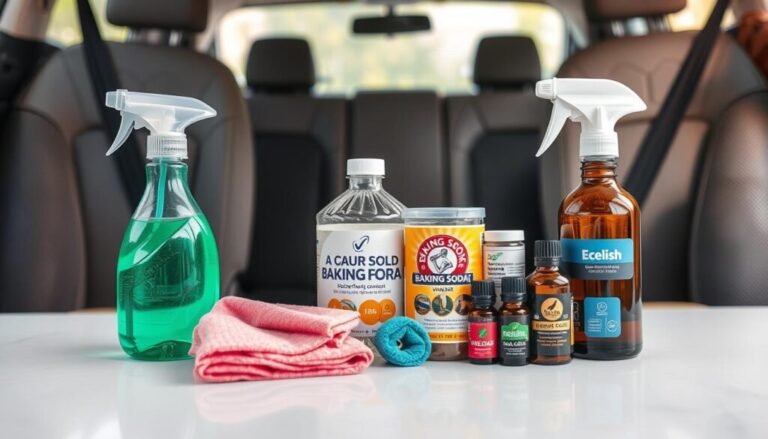
- Small sharp scissors
- Fine tweezers
- A soft brush
- A vacuum with a clean brush attachment
- Matching headliner fabric
- Automotive headliner adhesive
- A clean cotton swab or small artist’s brush
- Wax paper or clean plastic film
- A clean, flat object for light pressing
Use adhesive made for automotive headliners when possible. Headliner glue must bond fabric without damaging the foam backing. A general craft glue may soak through the fabric, leave a hard spot, or fail when the vehicle gets hot.
Avoid these products:
- Super glue
- Hot glue
- Spray paint
- Acetone
- Lacquer thinner
- Strong household solvents
- Heavy upholstery glue applied in thick layers
Solvents can dissolve foam and change the color of the fabric. Hot glue can form a hard lump under the cloth. Super glue may leave a shiny stain and make later repairs harder.

Step-by-Step: How to Repair a Small Cigarette Burn
1. Park and prepare the vehicle
Park on a level surface in a dry, shaded place. Open the doors or windows for ventilation. Turn off the ignition and remove the key.
Do not work on a hot headliner. Heat can soften the adhesive and make the fabric easier to stretch or stain.
If the repair is close to an overhead light, microphone, grab handle, sun visor, or airbag trim, review the owner’s manual first. Do not pull down the headliner just to reach the burn.
2. Remove loose ash and debris
Use a vacuum with a soft brush attachment. Hold the nozzle close to the area without pressing it into the fabric.
If ash remains, lift it with clean tweezers. Do not rub the ash into the cloth. Rubbing can spread the dark mark and push debris into the foam.
If the fabric smells of smoke, deal with the burn repair first. Strong sprays can stain or loosen the headliner.
3. Trim the burned fibers
Use small, sharp scissors to remove loose, black, or melted fibers. Cut only the damaged material.
Work slowly. It is better to make several small cuts than one large cut. Do not pull the fabric away from the roof. Pulling can enlarge the hole or cause a wrinkle.
If the burn has left a hard raised edge, trim the edge until the surface is as level as possible. Stop if the foam begins to tear.
4. Clean a surface scorch, if no hole exists
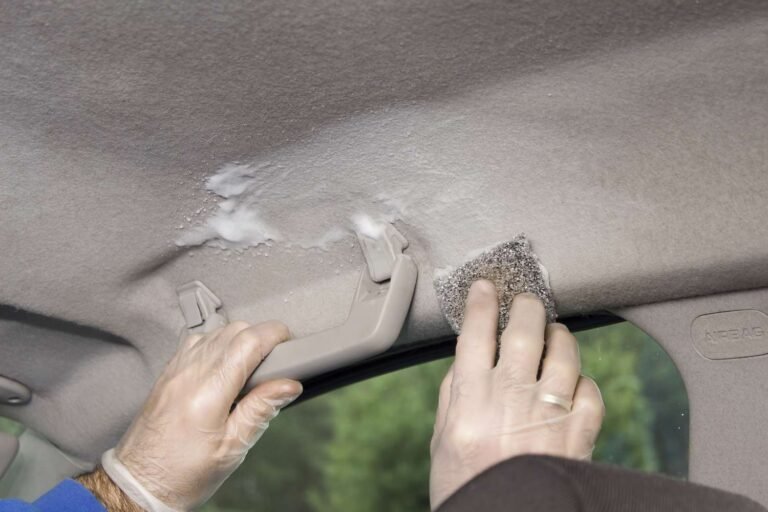
If no fabric is missing, use a barely damp cotton swab with a small amount of mild upholstery cleaner. Test the cleaner first in a hidden area, such as beneath a trim edge.
Blot the mark. Do not scrub. Do not saturate the headliner.
Allow the area to dry fully. If the brown or black mark remains, a small fabric patch may look better than continued cleaning. Repeated wet cleaning can create a larger stain than the original burn.
5. Find matching replacement fabric
The patch should match the headliner in color, texture, thickness, and direction.
Possible sources include:
- A small piece from a hidden edge
- A leftover piece from a previous headliner repair
- Matching automotive upholstery fabric
- A fabric sample from an interior repair shop
Do not cut a visible section from the headliner unless you have a plan to hide the new opening. Hidden areas may include the back edge of a trim panel, but removing trim can involve clips or airbags.
For the best blend, match the fabric under the same lighting where the repair will be seen. Gray, tan, and beige materials can look different in sunlight and garage light.
6. Cut the patch
Cut the patch slightly larger than the damaged area. A round or oval patch often looks more natural than a square patch.
If the hole is very small, make the patch only large enough to cover the missing fibers. A patch that is too large can create a visible outline.
Trim the patch edges with a slight taper if the fabric allows it. Thin edges blend better than a thick, blunt edge.
7. Apply adhesive sparingly
Lift one edge of the patch with tweezers. Apply a very thin layer of headliner adhesive beneath the patch.
Use a small brush or cotton swab for control. Keep adhesive away from the visible surface.
Do not spray adhesive directly over the entire headliner. Overspray can leave a dark ring, and the spray may reach glass, trim, electronics, or the airbag area.
8. Set the patch in place
Place the patch over the hole. Align its texture with the surrounding fabric.
Press the patch down lightly with a clean finger covered by wax paper or plastic film. Hold it for the time stated on the adhesive label.
Do not slide the patch once it touches the glue. Sliding can smear the adhesive and twist the fabric.
If the patch lifts, add only a tiny amount of adhesive beneath the loose edge. More glue is not always better.
9. Let the repair cure
Leave the vehicle doors open or windows down while the adhesive cures. Follow the product label for the full cure time.
Do not touch, brush, or clean the patch too soon. The area may look uneven while the adhesive is still soft.
Once fully cured, use a soft brush to blend the fibers. Brush in the same direction as the surrounding headliner.
10. Inspect the result
A successful repair should have:
- No loose black fibers
- No wet or shiny glue
- No lifted edges
- No new sagging
- A patch that follows the fabric direction
- A stable bond after curing
The goal is not to make the damage vanish from every angle. The goal is to prevent further tearing and make the mark less noticeable.

When a Cigarette Burn Needs Professional Repair
A professional repair is the safer choice when the burn has damaged the foam, caused sagging, or sits near safety equipment.
Contact an automotive upholstery shop if:
- The hole is larger than a dime.
- The foam has melted or disappeared.
- The fabric has pulled away from the backing.
- The headliner is sagging in more than one place.
- The damage is beside a side-curtain airbag.
- You must remove an overhead trim panel.
- The roof has a sunroof, wiring, sensors, or a camera near the damage.
- The patch would sit in a highly visible location.
- The headliner is made from a difficult-to-match material.
Modern U.S. vehicles may have side-curtain airbags in the roof rail area. These airbags can deploy from behind or beside the headliner. The headliner can also conceal wiring for dome lights, microphones, antennas, and sensors.
Do not cut, staple, screw, or glue across an airbag deployment path. Do not change the way the headliner hangs near an airbag. A professional can remove and refit the panel using the vehicle’s correct procedures.
If the headliner is sagging, replacement may be more reliable than spot repair. A sagging roof liner often has failed foam or adhesive. Gluing only the visible edge may create a stiff, uneven area and may not hold in high summer heat.

Common Mistakes That Make the Damage Worse
Scrubbing the mark
Scrubbing spreads soot and roughens the fabric. Blot instead, and stop if the stain grows.
Using too much water
Headliner fabric is often bonded to foam. Water can weaken the bond and create a sag.
Applying glue to the visible side
Glue on the surface can leave a dark, shiny, or stiff spot. Apply adhesive beneath the patch only.
Using a patch with the wrong texture
A color match is not enough. A smooth patch can stand out against a looped or woven headliner.
Cutting a large circle around the burn
Large cuts remove more original material and make the repair easier to see. Trim in small steps.
Pulling down the roof fabric
The fabric may be attached to a foam board. Pulling can cause a tear that spreads beyond the burn.
Ignoring the smell of smoke
A headliner can hold smoke odor. Heavy odor may also remain in the seats, carpet, door panels, and ventilation system. Repairing the hole alone will not remove the source.
Covering the burn with a sticker
A sticker may hide the mark for a short time, but its adhesive can stain the fabric. It can also look out of place and make later repair harder.

Cleaning Smoke Odor After the Repair
Repair the burn before trying to remove smoke odor from the headliner. Cleaning first may wet or weaken the damaged area.
For light odor:
- Vacuum the headliner gently.
- Wipe hard interior surfaces with a suitable interior cleaner.
- Wash removable floor mats and fabric items.
- Replace the cabin air filter if the owner’s manual permits and the filter is due.
- Ventilate the vehicle in a dry, safe place.
- Use a headliner-safe odor product only after testing it in a hidden area.
Never soak the headliner. Avoid chlorine bleach, strong ammonia, and harsh degreasers.
Ozone treatment is sometimes offered by detail shops, but it has safety and material concerns. Do not run an ozone generator in an occupied vehicle. Remove people and pets, follow the equipment directions, and ventilate the vehicle fully afterward. Ozone is not a substitute for cleaning smoke residue from all affected surfaces.

Key Takeaways
- A small cigarette burn can often be repaired with a matching fabric patch.
- Trim charred fibers before applying adhesive.
- Use automotive headliner adhesive in a very thin layer.
- Avoid water, solvents, super glue, and hot glue.
- Do not remove the headliner near a roof-mounted airbag unless you are qualified.
- Deep burns, missing foam, and sagging usually need professional repair.
- Match the patch by color, texture, thickness, and fabric direction.
- Let the adhesive cure fully before brushing or cleaning the area.
FAQs
Can toothpaste remove a cigarette burn from a car headliner?
No. Toothpaste may leave moisture, grit, or a pale residue on the fabric. It cannot restore burned fibers or missing foam. A light scorch may respond to careful spot cleaning, but a hole needs a patch.
Can I use a magic eraser on a headliner burn?
It is not recommended. A melamine sponge can abrade the fabric and create a lighter, fuzzy spot. If you clean the area, use a soft cloth or cotton swab with a headliner-safe cleaner and very little moisture.
What fabric should I use for a headliner patch?
Use automotive headliner fabric with a similar color, weave, thickness, and stretch. Ordinary cotton may absorb adhesive differently and may not match the texture. A hidden piece from the same vehicle usually gives the best match.
How do I repair a cigarette burn in a black headliner?
Trim the charred edge, then use black automotive headliner fabric with the same texture. Black fabric can still show a patch if the sheen differs, so test the material in the vehicle before gluing it.
Can I replace only part of a car headliner?
Sometimes. An upholstery shop may repair a section, replace the fabric on the existing board, or install a replacement board. The best option depends on the vehicle design, the burn location, foam damage, and the condition of the original fabric.
Will insurance cover a cigarette burn in a car headliner?
Coverage depends on the policy, deductible, cause of damage, and insurer. Many policies treat cigarette burns as interior damage or exclude certain types of wear and accidental damage. Check your policy and ask the insurer before filing a claim.
How much does professional headliner repair cost?
There is no single U.S. price because labor, vehicle design, material, and damage size vary. A small upholstery patch usually costs less than removing and recovering the entire headliner. Request a written estimate that includes trim removal, materials, and airbag-related precautions.
Conclusion
The safest home repair for a small cigarette burn is a careful fabric patch. Remove only the damaged fibers, use a matching automotive material, and apply adhesive sparingly. Avoid soaking or pulling the headliner.
If the burn is deep, the foam is damaged, the fabric is sagging, or the area is close to a roof-mounted airbag, stop and use a qualified automotive upholstery professional. A clean, stable repair is more important than forcing a quick fix that could damage the interior or interfere with vehicle safety equipment.