How To Clean Slime Off Car: Easy Safe Removal
If slime gets on your car in a U.S. school parking lot, driveway, or grocery store lot, clean it soon. Fresh slime is much easier to remove than dried slime. Use warm water, car-wash soap, and a soft microfiber towel first. Do not scrape with a knife, use boiling water, or rub hard.
The safest method is:
- Remove loose slime with a plastic card or your fingers.
- Soak the spot with warm, soapy water.
- Wipe gently with a clean microfiber towel.
- Repeat until the slime is gone.
- Wash, rinse, and dry the area.
- Check for dye, glue, or oily residue.
The right method depends on where the slime landed. Painted panels, glass, plastic trim, cloth seats, and leather need different care.

What Slime Can Do to a Car
Most homemade slime contains glue, water, a thickener, and food coloring. Some recipes also use borax, liquid starch, baking soda, or contact lens solution. Store-bought slime may contain oils, glitter, dyes, or other additives.
Slime usually does not damage clear coat at once. The main risks are:
- Dye stains from bright slime
- Glue residue
- Dried particles that scratch when rubbed
- Oil or glitter left in small gaps
- Staining on porous cloth or unfinished plastic
- Residue in door seals, vents, and seat seams
Heat can make slime softer, but a hot surface can also bake dye or glue into the finish. This is why a warm, shaded work area is safer than cleaning a hot car in direct sun.
Do not assume that a strong solvent is better. Harsh cleaners can dull plastic, soften trim, stain upholstery, or affect a wax or sealant.

Supplies You Need
Gather these items before you start:
- Clean microfiber towels
- A bucket of warm water
- pH-neutral car-wash soap
- A soft wash mitt or microfiber cloth
- A plastic gift card or plastic scraper
- A soft detailing brush
- A vacuum for loose dry pieces
- Distilled water for final wiping, if available
- Mild dish soap for interior fabric only, used in a small amount
- Isopropyl alcohol, preferably diluted, for stubborn residue on hard surfaces only
Use a new or clean towel. Dirt trapped in an old towel can scratch automotive paint.
Avoid these tools and products:
- Razor blades
- Metal scrapers
- Abrasive sponges
- Magic Eraser on painted surfaces or clear plastic
- Acetone or nail polish remover
- Paint thinner
- Gasoline
- Boiling water
- High-pressure spray at close range
- Large amounts of oil-based products
Always test a cleaner on a hidden area first. Check for color transfer, dullness, swelling, or sticky residue before using it on a visible spot.
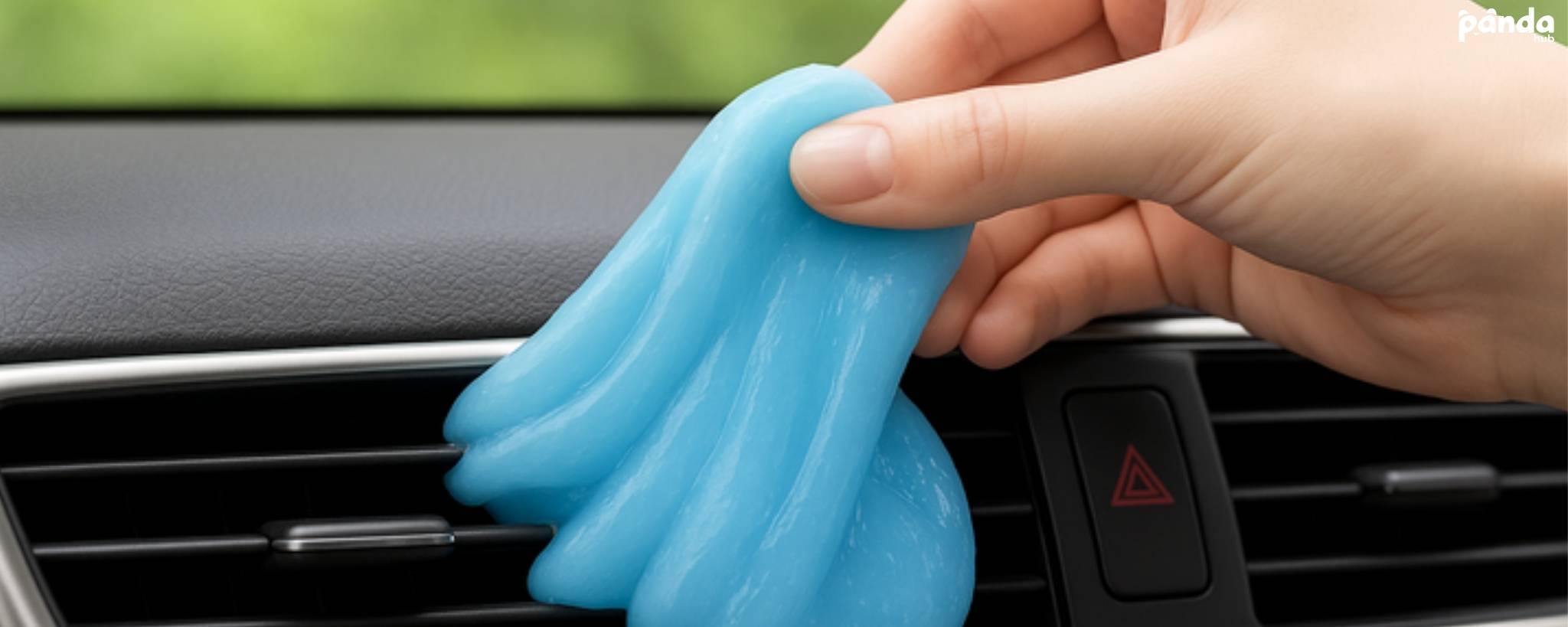
How to Clean Fresh Slime Off Car Paint
Fresh slime on clear coat usually comes off with soap and warm water. Work in the shade if possible. The car panel should be cool to the touch.
Step 1: Remove the loose slime
Lift large pieces with your fingers or a plastic card. Pull the slime upward instead of dragging it across the paint.
If the slime is sticky, place a damp microfiber towel over it for two to five minutes. This helps soften the mass and reduces the need to scrub.
Step 2: Make a soapy solution
add the amount of car-wash soap listed on the product label to a bucket of warm water. Do not use very hot water.
Soak a microfiber towel in the solution. Wring it out until it is wet but not dripping.
Step 3: Press and lift
Place the towel over the slime. Let the soap and water work for a few minutes. Then lift the residue with short, gentle strokes.
Use a fresh part of the towel each time. This keeps removed slime from spreading back over the panel.
Step 4: Rinse the panel
Rinse with clean water. Look at the panel from several angles. Clear slime residue can look like a dull or greasy patch.
Repeat the soak and wipe process if needed. Do not increase pressure just because the first pass did not remove everything.
Step 5: Dry and inspect
Dry the panel with a clean microfiber towel. If the paint feels smooth and looks even, the main job is done.
If a thin sticky film remains, apply a small amount of diluted isopropyl alcohol to a towel. Test first. Wipe one small area, then wash that area with car soap and water.

How to Remove Dried Slime From Car Paint
Dried slime needs more soaking time. Do not chip it off with a sharp tool.
- Park the car in the shade.
- Place a warm, wet microfiber towel over the dried slime.
- Leave the towel in place for five to 10 minutes.
- Lift softened pieces with your fingers or a plastic card.
- Wash the spot with car soap.
- Rinse and dry the panel.
- Repeat if glue or dye remains.
A plastic card should stay nearly flat against the paint. Keep the edge moving in one direction. Stop if you feel grit under the card.
If dried slime has been on the car for days, the dye may have marked the clear coat. A light stain may respond to a paint-safe cleaner or very mild polish, but polishing removes a small amount of finish. Use a professional detailer if the mark does not improve with gentle cleaning.
Do not use rubbing compound as a first step. It can create dull spots or visible differences in gloss.

How to Clean Slime From Car Windows
Glass is more resistant than paint, but slime can still leave glue, dye, and oily streaks.
- Rinse the glass with water.
- Lay a warm, wet towel over the residue.
- Wipe with car-wash soap or glass cleaner.
- Use a plastic scraper for softened pieces.
- Rinse and dry with a clean glass towel.
Avoid metal razor blades unless you know the glass is plain, uncoated glass and you can use the blade safely. Some vehicles have window films, coatings, or special glass treatments. A metal blade can scratch or damage them.
Do not let cleaner run into the door panel. Liquid can reach switches, speakers, or trim clips.
For a final film, use an automotive glass cleaner on the towel rather than spraying heavily near the window seals.

How to Clean Slime From Plastic Trim and Rubber Seals
Slime often collects around door handles, window trim, cup holders, and rubber seals. These areas need gentle tools because rough scrubbing can leave shiny marks.
Use this method:
- Remove large pieces by hand.
- Wipe with warm water and car-wash soap.
- Work around grooves with a soft detailing brush.
- Use cotton swabs for narrow seams.
- Wipe away soap with a clean damp towel.
- Dry the trim and seals.
For stubborn residue on hard plastic, apply a small amount of diluted isopropyl alcohol to a towel. Never pour it into a seam or spray it near electronics.
Do not use silicone shine products to hide a sticky patch. They may leave an oily surface that attracts dust and makes the problem worse.
If slime entered a door seal, lift the seal gently with your fingers. Clean only the exposed area. Do not pull the seal from its channel unless you know how to reinstall it.
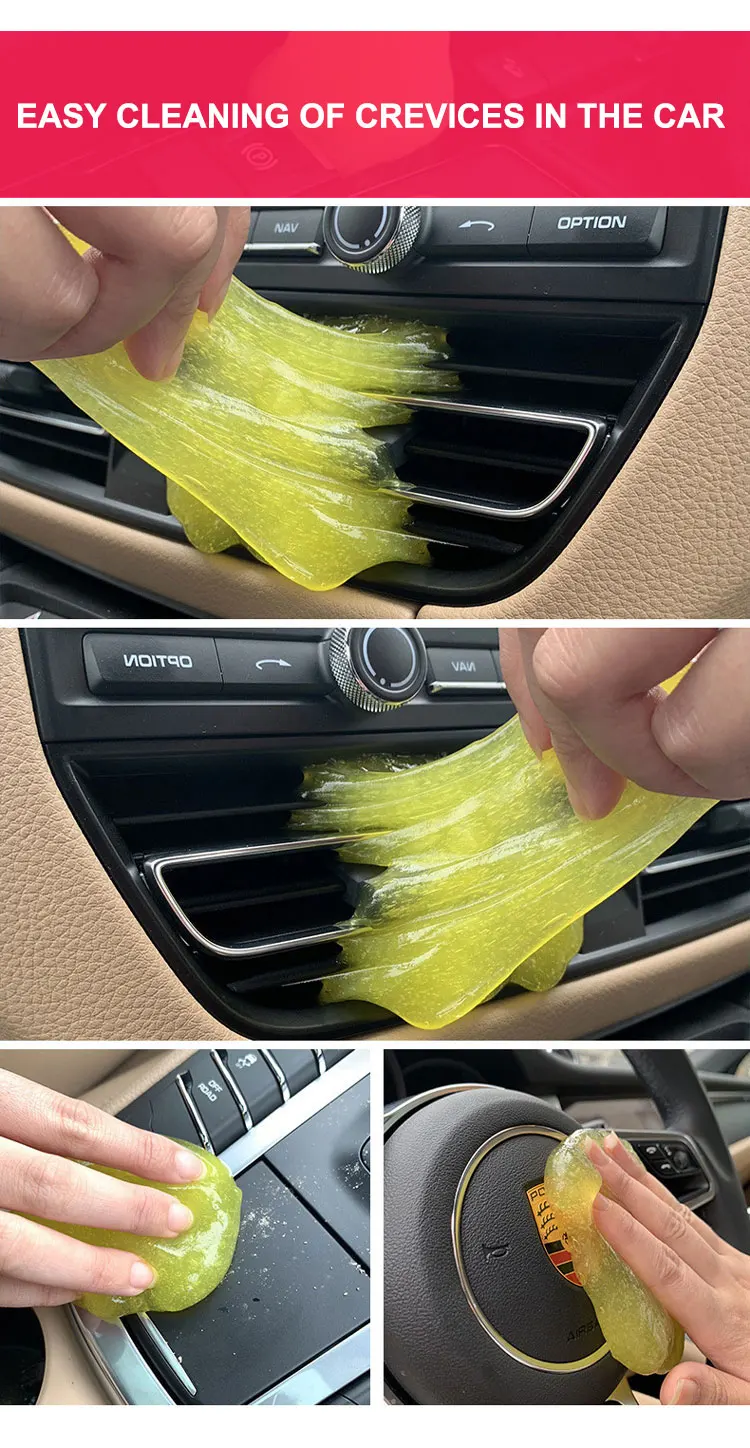
How to Clean Slime From Cloth Seats and Carpet
Cloth and carpet can absorb dye and glue. The goal is to lift the slime without spreading it deeper into the fibers.
For fresh slime
- Pick up the bulk with a plastic card.
- Blot the area with a dry towel.
- Mix a small amount of mild dish soap with warm water.
- Dab the spot from the outside toward the center.
- Blot with a clean damp towel.
- Press with a dry towel to remove moisture.
- Let the area air-dry fully.
Do not scrub in circles. Scrubbing can push dye into the fabric and spread the stain.
For dried slime
Cover the area with a warm, damp towel for several minutes. Lift the softened pieces with a plastic card. Then use the same mild soap solution and blotting method.
Vacuum the area only after the slime is dry and loose. Wet slime can spread inside a vacuum and make the machine harder to clean.
Check the owner’s manual before using vinegar, steam, stain removers, or an upholstery machine. Some seat fabrics have protective coatings that react poorly to strong cleaners or excess water.
If dye remains after gentle cleaning, an automotive upholstery cleaner may help. Follow its label and test it under the seat or on another hidden area first.

How to Clean Slime From Leather or Vinyl Seats
Leather and vinyl do not absorb slime in the same way as cloth, but seams and textured surfaces can hold residue.
- Lift the slime with a plastic card.
- Wipe the area with a damp microfiber towel.
- Add a small amount of mild soap to the towel if needed.
- Clean the seam with a soft brush.
- Wipe away all soap.
- Dry the surface.
- Apply a leather conditioner only if the material is real leather and the care guide allows it.
Do not soak leather. Do not use alcohol, acetone, bleach, or household degreasers unless the vehicle or cleaner maker specifically approves them.
Vinyl may tolerate mild soap better than leather, but it can still discolor. Test first, especially on light-colored seats.
If slime contains glitter, remove it with tape or a vacuum nozzle after the surface dries. Do not press glitter into the grain or stitching.
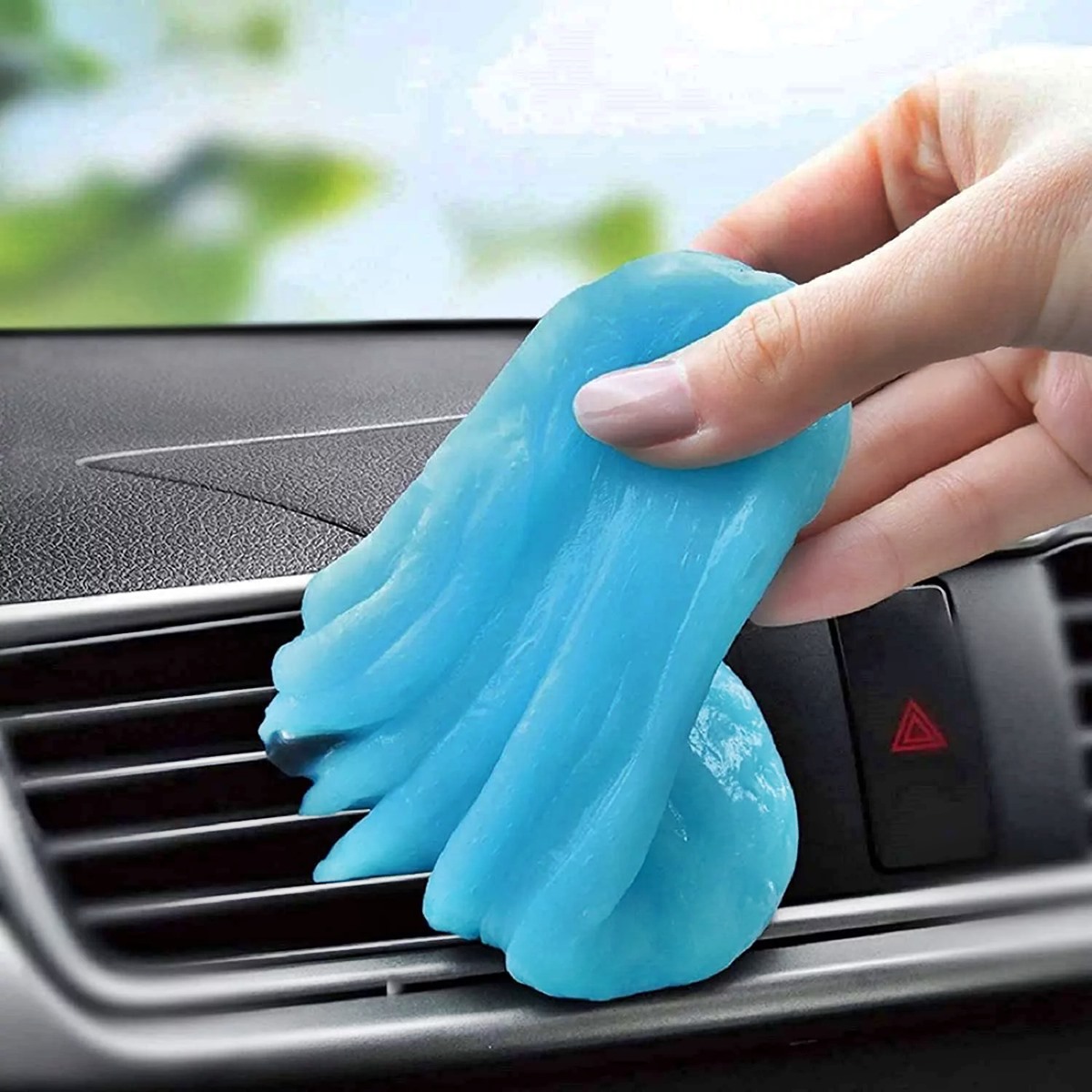
What to Do About Slime Dye or a Sticky Film
Dye and sticky film require different treatment.
| Problem | First choice | Avoid |
|---|---|---|
| Fresh slime | Warm water and car soap | Hard rubbing |
| Dried slime | Warm wet towel and plastic card | Metal tools |
| Glue film on paint | Soap, then tested diluted alcohol | Acetone |
| Dye on upholstery | Blotting with mild soap solution | Scrubbing |
| Residue in trim | Soft brush and damp towel | Abrasive pads |
| Glitter | Tape or careful vacuuming | Pressing it deeper |
If dye remains on painted metal, wash the area again before trying any paint cleaner. A residue that looks like a stain may still be sitting on top of the clear coat.
If the paint feels smooth but the color remains, the dye may have bonded to or marked the surface. A professional detailer can assess whether cleaning, polishing, or touch-up work is suitable.
If the surface feels rough, do not keep rubbing. Contamination or dried particles may be present. More pressure can create fine scratches.

Common Mistakes That Damage Car Surfaces
The most common mistake is rubbing before removing the loose slime. That spreads the material and can drag dirt over the paint.
Avoid these errors:
- Cleaning a hot panel in direct sunlight
- Using a dirty towel
- Scraping with keys or a knife
- Spraying strong chemicals without testing
- Using household glass cleaner on tinted windows without checking the label
- Flooding seat seams with water
- Applying heat from a hair dryer
- Using a clay bar before washing away grit
- Polishing before cleaning the surface
- Letting dye sit for several days
Do not mix cleaners. In particular, never mix bleach with ammonia, acids, or other household products. Vehicle cleaning rarely requires dangerous chemical combinations.
Stop and seek professional help if the slime is inside:
- Air-conditioning vents
- Seat-belt retractors
- Power-seat switches
- Window switches
- Speaker grilles
- Dashboard seams
- Child-seat anchor points
A professional detailer may need to remove trim or use controlled extraction. Do not force liquid into these areas.
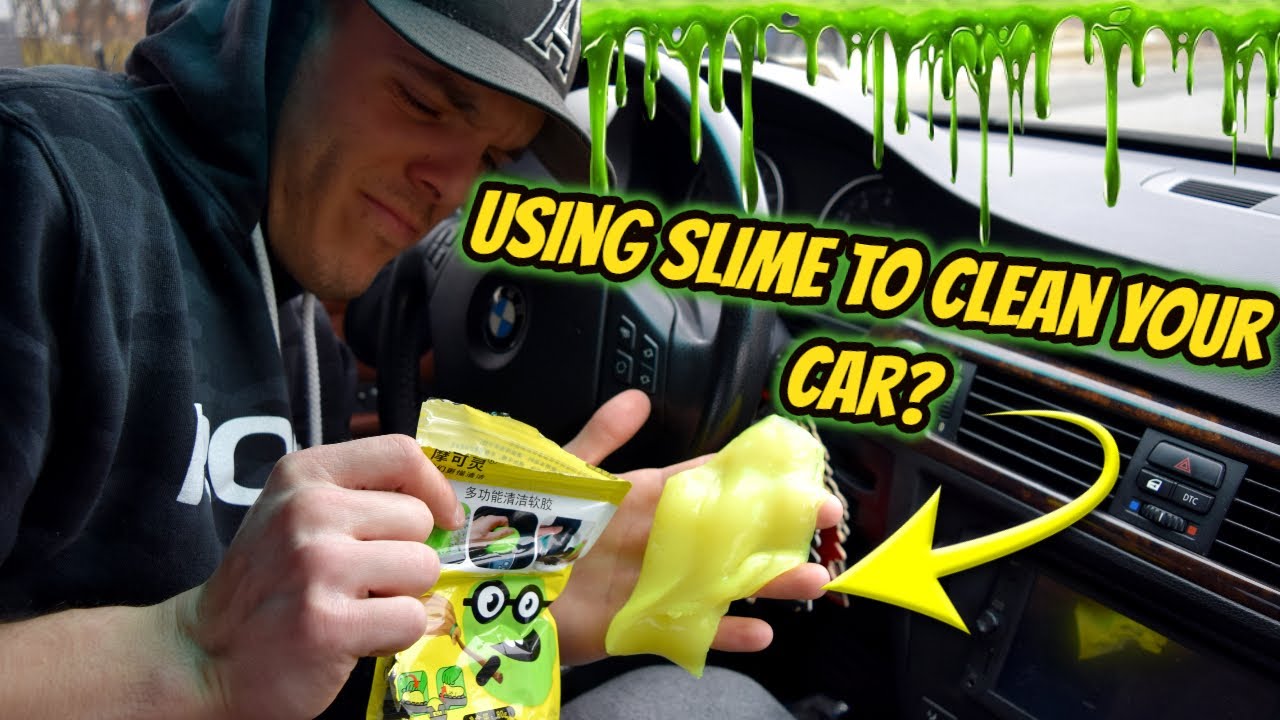
When Should You Use a Professional Detailer?
Contact a professional if gentle cleaning does not work or if the affected area is large.
Professional help is useful when:
- The slime has dried for several days
- Bright dye remains on paint
- The clear coat looks cloudy or dull
- The slime covers a large seat area
- The material has entered vents or electronics
- The car has delicate leather, suede, or specialty trim
- You see scratches after removal
- You are unsure whether the surface has a coating or protective film
Ask the detailer to inspect the material before authorizing polishing or solvent use. The correct repair may be simple cleaning, while more severe marks may need stain treatment or paint correction.
A dealer is not always required. A reputable automotive detailer with experience in paint, fabric, and leather may be the better first call for a cosmetic issue.
Key Takeaways
- Remove slime as soon as you can.
- Start with warm water, car soap, and a clean microfiber towel.
- Soften dried slime before lifting it.
- Use plastic tools, not metal blades.
- Treat paint, glass, plastic, cloth, leather, and vinyl in different ways.
- Test any stronger cleaner in a hidden spot.
- Do not use acetone, bleach, gasoline, or boiling water.
- Get professional help if slime reaches electronics, vents, or delicate materials.
FAQs
Can I use WD-40 to remove slime from a car?
It may loosen some sticky residue, but it can leave an oily film and may affect trim, rubber, or surface protection. Try car soap first. If you use a solvent-type product, test it on a hidden hard surface, use very little, and wash the area afterward.
Will vinegar remove slime from car upholstery?
A mild vinegar solution may help with some water-based residue, but it can affect dyes, coatings, or odors. Check the upholstery care instructions first. Mild soap and careful blotting are the safer starting steps.
Can I use rubbing alcohol on car paint?
Diluted isopropyl alcohol can help with a small amount of stubborn residue on some hard automotive surfaces. It may remove wax or affect sensitive finishes. Test first, use a small amount, and wash the area afterward.
How do I remove slime from a car seat belt?
Pull the belt out as far as it safely extends. Wipe the slime with a damp cloth and mild soap. Do not soak the belt or use bleach, solvents, or strong degreasers. Let it dry fully before retracting it. If slime entered the retractor, have the belt inspected.
What if slime stained the car’s clear coat?
Wash the area first and let it dry. If the stain remains but the surface is smooth, a paint-safe cleaner or professional paint correction may help. Do not jump straight to abrasive compound. A detailer can tell whether the mark is residue, dye, or clear-coat damage.
Can a car wash remove slime?
A car wash may remove fresh surface residue, but it may not remove dried glue, dye, or slime trapped in trim and seams. Rinse loose material first and tell the wash staff about the affected area. Hand cleaning is usually more controlled.
Conclusion
The safest way to clean slime off a car is to soften it, lift it, and wash away the residue without force. Start with warm water, car soap, and a clean microfiber towel. Use a plastic card for dried pieces and treat interior materials with blotting rather than scrubbing.
If the slime leaves dye, enters a seam, or affects paint gloss, stop using stronger chemicals. A professional detailer can remove the remaining mark while reducing the risk of permanent damage.