How To Get Rid Of Car Cleaning Fluid Inside Car: Safely
If car cleaning fluid spills inside your car, act fast. Blot the liquid, remove the source, rinse only when the product allows it, and dry the area fully. Do not rub the spill, mix cleaners, or use heat until you know what the fluid contains.
In the United States, check the product label and Safety Data Sheet (SDS) before cleaning a chemical spill. If the fluid causes breathing trouble, burns, dizziness, or eye exposure, leave the vehicle and call 911 for a serious emergency or Poison Control at 1-800-222-1222 for exposure advice.

First, Identify the Car Cleaning Fluid
The safest cleanup method depends on the product. “Car cleaning fluid” may mean windshield washer fluid, interior cleaner, glass cleaner, upholstery shampoo, degreaser, disinfectant, or a solvent-based product.
Read the bottle label if it is available. Look for warnings such as flammable, corrosive, harmful if inhaled, or keep away from heat.
| Fluid type | Main concern | Usual first step |
|---|---|---|
| Windshield washer fluid | Alcohol, dyes, and strong odor | Blot, ventilate, then clean with mild soap and water if the label permits |
| Glass or interior cleaner | Surfactants, fragrance, and residue | Blot and wipe with a damp microfiber cloth |
| Upholstery or carpet cleaner | Excess moisture and sticky residue | Extract or blot, then rinse lightly and dry |
| Degreaser | Strong chemicals and surface damage | Follow the label; use gloves and test a hidden spot |
| Solvent or adhesive remover | Flammability and material damage | Remove ignition sources and follow the SDS |
| Unknown fluid | Uncertain chemical risk | Do not mix or spread it; contact the manufacturer or Poison Control |
If the fluid is unknown, do not guess. Keep the container nearby, take a photo of its label, and avoid using another chemical on the spill.
Move the car to a safe place
Park outdoors or in a well-ventilated area. Turn off the engine and keep cigarettes, flames, heaters, and sparks away from the vehicle. Open the doors and windows if weather and security allow.
Wear nitrile gloves when handling concentrated cleaner. Use safety glasses if the liquid may splash.
How to Remove Fresh Car Cleaning Fluid
Fresh spills are easier to remove because less liquid has reached the padding beneath the carpet or seat. Work from the outside edge toward the center so the spill does not spread.
- Remove the source. Take out the bottle, soaked towels, floor mats, or cleaning tools.
- Blot the liquid. Press clean paper towels or absorbent cloths onto the spill. Lift the cloth straight up instead of rubbing.
- Bag wet materials. Place soaked towels and disposable gloves in a sealed bag until you know how to dispose of them.
- Check below the surface. Lift the floor mat or carpet edge if possible. Liquid may collect under the mat or in the padding.
- Use the correct rinse. For a water-based cleaner, use a small amount of clean water on a cloth. Do not pour water directly into the seat or carpet.
- Blot again. Remove the diluted cleaner with dry towels or a wet-dry vacuum.
- Dry the area. Use fans and open doors. Keep the cabin ventilated until the surface and padding feel dry.
A wet-dry vacuum can help remove liquid from carpet, but it does not make a chemical product safe by itself. Empty and clean the vacuum according to its instructions. Never use a regular household vacuum on a wet spill.
If the spill is on carpet or a floor mat
Remove the mat from the vehicle. Clean it outdoors or in a place where runoff will not enter a storm drain. Blot first, then rinse with a small amount of water if the product label allows it.
For carpet attached to the vehicle, use a damp cloth instead of soaking the area. Press with dry towels until no more moisture transfers. If the carpet still smells strong after drying, repeat a light rinse and extraction rather than adding fragrance.
If the spill is on a fabric seat
Blot the seat quickly. Avoid flooding the cushion because the foam can hold moisture for days. Use a slightly damp microfiber cloth only if the cleaner is water-based and the label does not warn against water.
Leave the doors open and use moving air. Do not sit on the seat until it is dry.
If the spill is on leather or vinyl
Wipe the liquid from the surface with a clean, damp cloth. Dry it with another cloth. Avoid household bleach, abrasive powders, alcohol-based solvents, and strong degreasers unless the material maker specifically approves them.
Test any cleaner on a hidden area first. Some chemicals can strip protective coatings, dull vinyl, or remove leather dye.
If the spill reached electronics
Keep liquid away from switches, USB ports, speakers, screens, seat controls, and airbag areas. Do not spray cleaner into vents or buttons.
Turn off the vehicle and avoid using affected electronics until the area is dry. If fluid entered a control panel, dashboard, seat wiring, or airbag component, have the vehicle inspected by a qualified automotive technician. Do not remove airbag trim yourself.
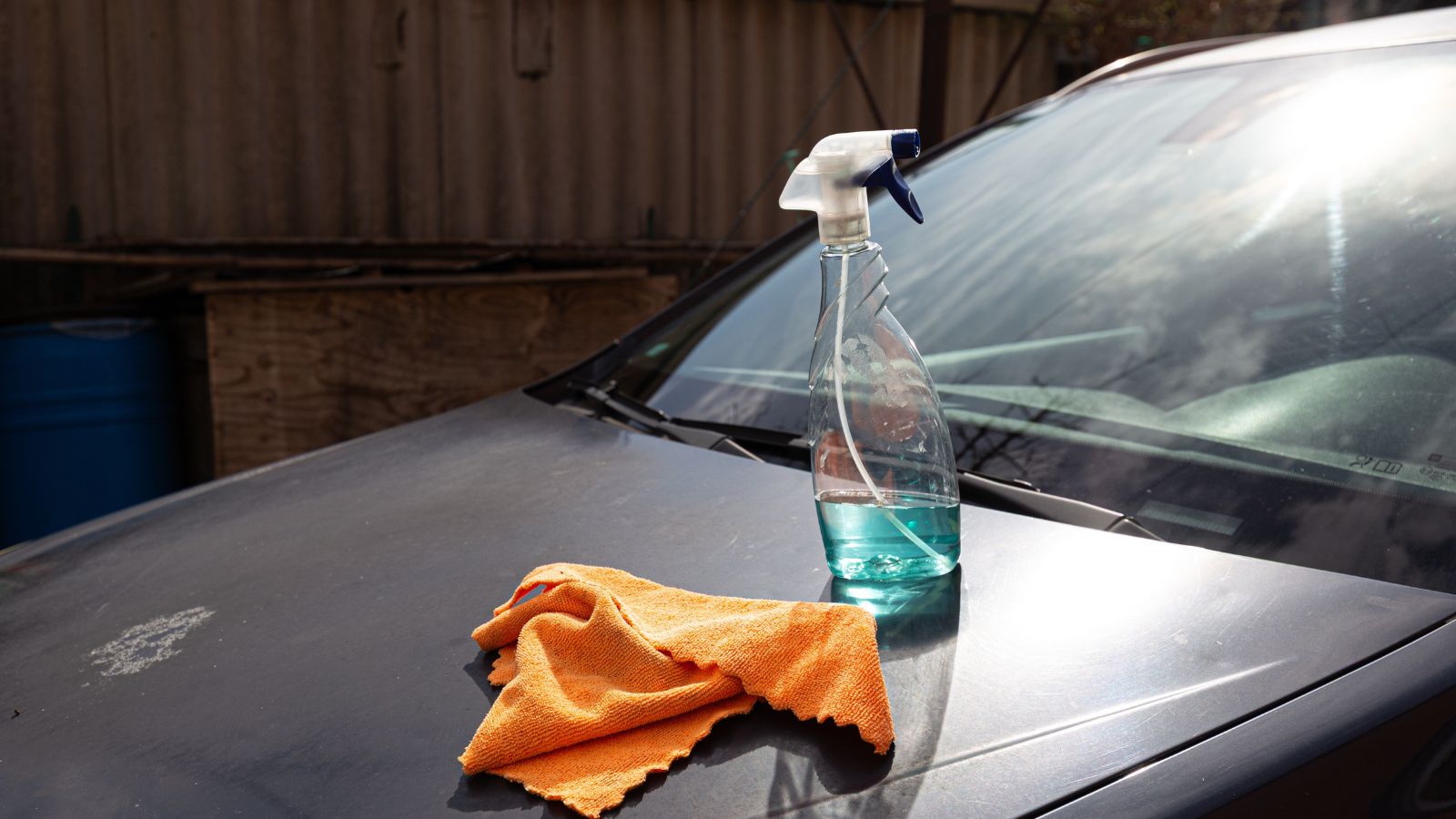
How to Remove Dried Cleaner and Sticky Residue
Dried cleaner often leaves a white film, sticky patch, dull mark, or strong scent. The safest method is to soften the residue with a small amount of water only when the product is water-based.
- Vacuum loose dust from the area.
- Dampen a microfiber cloth with warm water.
- Press the cloth on the residue for a few seconds.
- Wipe gently in one direction.
- Rinse the cloth often.
- Dry the surface at once.
Do not scrape hard surfaces with a knife or metal tool. Use a plastic scraper only on a surface that can tolerate it, and keep the edge nearly flat.
For fabric, do not keep adding cleaner to fight a cleaner stain. This can create a larger wet area and push residue deeper into the padding. Light rinsing and extraction work better than repeated spraying.
Remove a strong odor
A chemical smell usually means residue remains or the padding is still damp. First remove the source and dry the area. Air movement is more useful than masking the smell with an air freshener.
Do not use ozone generators in an occupied vehicle. Ozone can irritate the lungs and may damage some rubber, plastic, and interior materials. If the odor remains after proper cleaning and drying, an auto detailer can inspect the padding, carpet backing, and air vents.
Deal with a greasy film
A greasy film may come from a degreaser, dressing, solvent, or engine-related product. Use the product label as the guide. A mild, pH-neutral interior cleaner may work on compatible vinyl or plastic, but always test first.
Avoid using dish soap on leather, coated dashboards, or sensitive trim unless the material maker allows it. Soap can leave its own residue and may change the surface finish.
What to Do When the Spill Is Large or Unknown
A large spill needs more caution than a few drops. Stop cleaning if the smell causes headache, throat irritation, coughing, dizziness, or nausea. Leave the vehicle, move to fresh air, and seek medical advice if symptoms continue.
For an unknown or concentrated product:
- Do not mix it with bleach, ammonia, vinegar, alcohol, peroxide, or another cleaner.
- Do not use a heat gun, hair dryer, or steam cleaner.
- Do not start the vehicle in a closed garage.
- Keep children and pets away.
- Save the product container or label.
- Call the manufacturer for its spill instructions.
- Call Poison Control at 1-800-222-1222 for exposure guidance in the United States.
If the product is flammable, keep the car away from flames and sparks. If a large amount soaked into carpet, seat foam, or a vehicle ventilation system, professional cleaning may be safer than home treatment.
When to call a professional
Contact an automotive detailer or technician when:
- Cleaner entered seat wiring, airbag parts, dashboard controls, or vents.
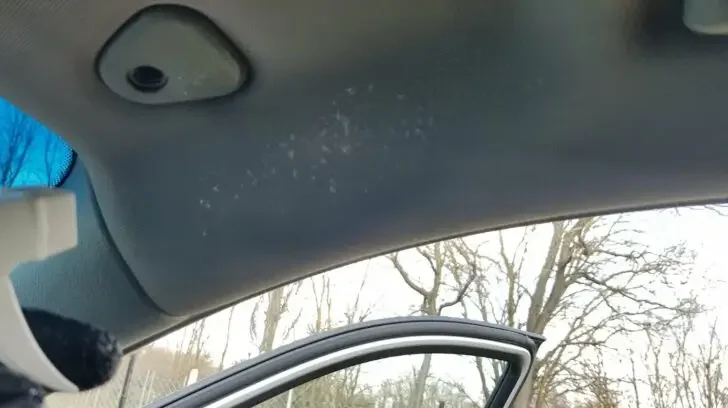
- The spill reached the headliner and keeps spreading.
- The seat foam or carpet padding remains wet.
- The surface is discolored, swollen, cracked, or sticky after cleaning.
- The product was solvent-based, corrosive, or strongly flammable.
- You cannot identify the fluid.
- The odor remains after the interior is fully dry.
A professional can remove trim and padding without damaging clips, wiring, or safety systems.
How to Clean Different Interior Materials
Use the least aggressive method that removes the spill. More product does not mean better cleaning.
| Interior material | Safer approach | Avoid |
|---|---|---|
| Rubber floor mat | Remove, blot, rinse if allowed, and dry outdoors | Leaving cleaner trapped underneath |
| Cloth carpet | Blot, lightly rinse, extract, and air-dry | Soaking the padding |
| Fabric seat | Blot and use a damp cloth | Saturating foam |
| Leather | Wipe with a damp cloth and dry | Solvents and harsh degreasers |
| Vinyl trim | Wipe with a damp microfiber cloth | Abrasive pads |
| Plastic dashboard | Use a lightly damp cloth | Spraying into seams or buttons |
| Glass | Use a small amount of glass cleaner on the cloth | Spraying near electronics |
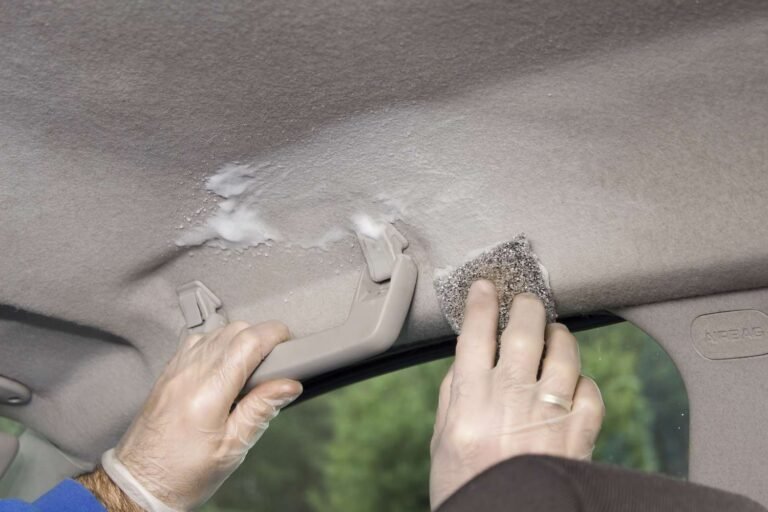
| Headliner | Blot gently with minimal moisture | Scrubbing or soaking |
Always spray cleaner onto a cloth rather than directly onto the dashboard, screen, door panel, or control area. This reduces the chance that liquid will enter seams.
Test before treating a visible mark
Choose a hidden spot, such as beneath a seat or on the lower edge of a trim panel. Apply a small amount of the intended cleaner and wait until it dries.
Stop if the test area changes color, becomes dull, feels tacky, or transfers dye to the cloth.
How to Dry the Interior Completely
Drying is part of the cleanup, not an optional final step. Moisture trapped under carpet or in seat foam can create mildew odors and damage electrical parts.
Use this process:
- Remove wet mats and loose items.
- Blot the surface with dry towels.
- Extract remaining moisture with a wet-dry vacuum if suitable.
- Open doors or windows in a safe, dry place.
- Aim a fan into the cabin.
- Check under mats and along seat edges.
- Recheck the area later the same day and the next day.
Do not leave the vehicle running in a closed garage to power the air conditioner. Vehicle exhaust contains carbon monoxide, an odorless gas that can kill.
The area is ready when it feels dry, has no chemical odor, shows no new haze or residue, and does not leave moisture on a clean paper towel pressed against it.
Common Mistakes to Avoid
Rubbing the spill
Rubbing pushes liquid into carpet fibers and seat foam. Blotting removes more liquid with less spread.
Adding another cleaner
Mixing products can create dangerous vapors or damage the interior. Use one product at a time, and rinse away residue before using anything else.
Using heat
Heat can increase fumes, set stains, damage plastics, and create a fire risk with flammable products. Use ventilation and moving air instead.
Spraying the dashboard directly
Liquid can travel through seams into switches, screens, speakers, and wiring. Spray onto a cloth instead.
Covering the smell
Air fresheners only mask an odor. They do not remove chemical residue or moisture.
Throwing chemical-soaked materials in the wrong place
Follow the product label and your local waste rules. Do not pour concentrated cleaner onto soil, into a storm drain, or into a waterway. If the label calls the product hazardous or flammable, ask your local household hazardous-waste program how to dispose of it.
Frequently Asked Questions
Can I use vinegar to remove car cleaning fluid?
Not automatically. Vinegar can react with some products and may damage certain materials. Do not use it unless the product maker and the vehicle-material maker both indicate that it is suitable.
Can I use baking soda for the smell?
Baking soda may absorb some surface odors, but it will not remove wet chemical residue or clean soaked padding. Dry the area and remove the source first.
What if windshield washer fluid spills inside the car?
Blot it at once, ventilate the cabin, and remove the floor mat if affected. Washer fluid may contain alcohol and other additives, so keep it away from flames and follow the product label before rinsing.
How long should I ventilate the car?
Ventilate until the surface is dry and the chemical smell is gone. The time depends on the amount spilled, the product, temperature, humidity, and whether the padding became wet.
Can a car detailer remove the spill?
Yes, a detailer can often extract liquid from carpet and upholstery. Use an automotive technician instead when the fluid reached wiring, electronics, airbag parts, or other safety systems.
Final Recommendation
Start with the product label, fresh air, and blotting. Use only a small amount of clean water when the product and material allow it, then extract and dry the area fully. If the fluid is unknown, concentrated, flammable, or inside electronics, stop home cleaning and get product-specific or professional help.