What Spray Do Car Detailers Use: Best Products Explained
Professional car detailers do not use one magic spray for every job. They use different products for paint, glass, wheels, tires, plastic, leather, and fabric. The right choice depends on the surface, the type of dirt, the vehicle’s finish, and the level of protection the owner wants.
A detailer may reach for an all-purpose cleaner (APC) to remove road grime, a rinseless wash to clean light dust, an iron remover to dissolve brake dust, or a spray sealant to add gloss and water beading. A high-quality microfiber towel is just as important as the spray itself. The wrong chemical or towel can leave streaks, dull trim, or create scratches.
This guide explains what spray car detailers use, when they use it, which products fit beginners and DIY owners, and where professional products are worth the money. It also covers sedans, SUVs, trucks, EVs, hybrids, older cars, daily drivers, and vehicles with ceramic coatings.

Affiliate Disclosure: This article may contain affiliate links. If you buy through one, we may earn a commission at no extra cost to you. Always check the current product label, safety data, and vehicle fitment before use.
Quick answer: What spray do car detailers use?
Car detailers use several types of spray, not one universal product. The most common are rinseless wash spray, quick detailer, all-purpose cleaner, interior cleaner, glass cleaner, tire dressing, iron remover, tar remover, spray wax, and ceramic detail spray. Each one has a different job. For routine care, a pH-neutral car wash or rinseless wash is the safest starting point for most sedans, SUVs, trucks, hybrids, and EVs.
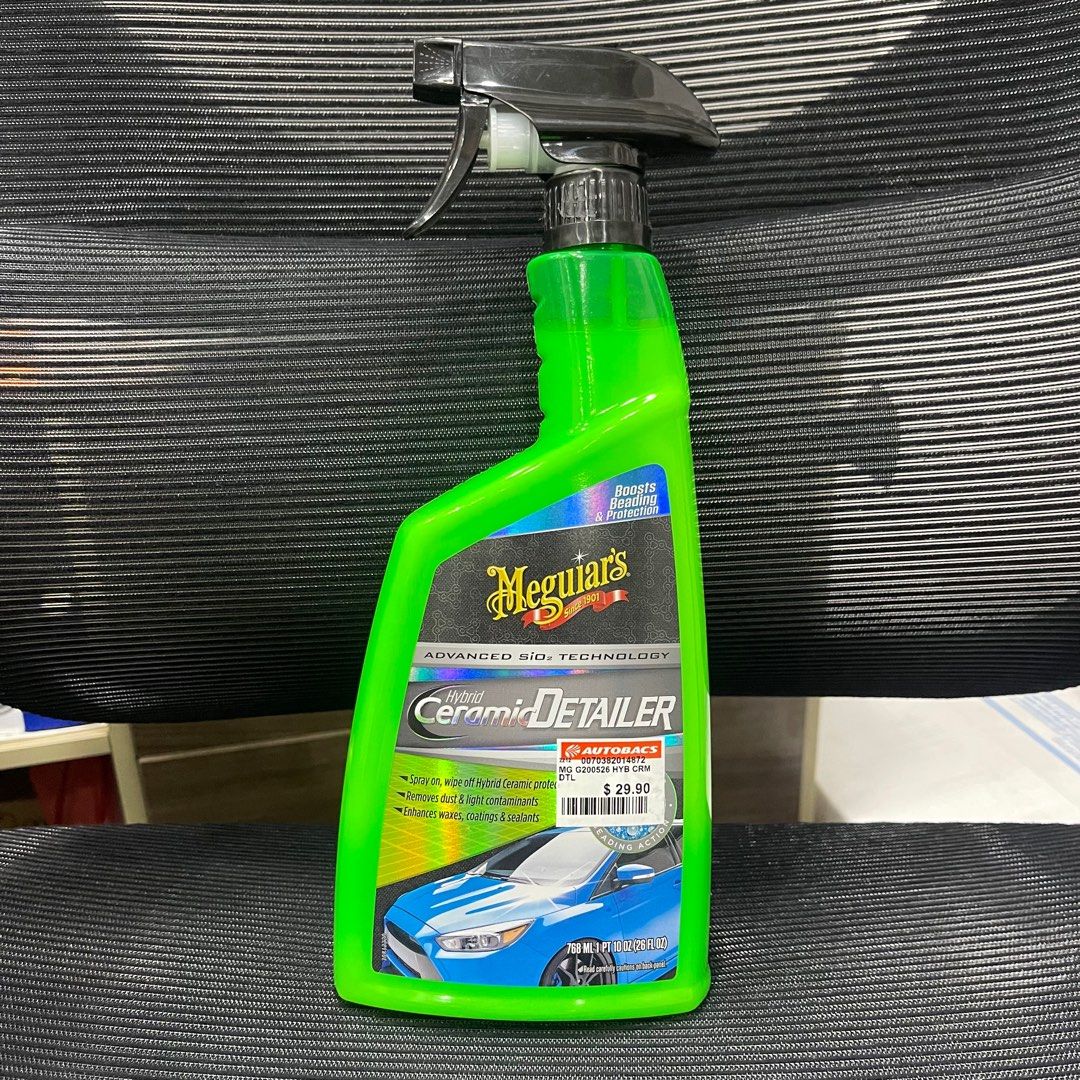
The best spray depends on the surface:
- Paint: rinseless wash, quick detailer, spray wax, or ceramic detail spray
- Wheels: wheel cleaner or iron remover
- Tires: water-based or solvent-based tire dressing
- Glass: automotive glass cleaner
- Interior plastic: interior cleaner or diluted APC
- Leather: pH-balanced leather cleaner
- Fabric: upholstery or carpet cleaner
- Engine bay: diluted APC designed for automotive use
- Tar and adhesive: tar remover
- Water spots: mineral deposit remover
A professional detailer chooses the least aggressive product that can do the job. That habit protects clear coat, trim, rubber, screens, and delicate interior materials.
The sprays found in a professional detailer’s kit
A detailer’s spray bottles may look similar, but the formulas can be very different. Some products clean. Others lubricate, protect, restore gloss, or remove a specific contaminant. Reading the label matters more than the color of the bottle.
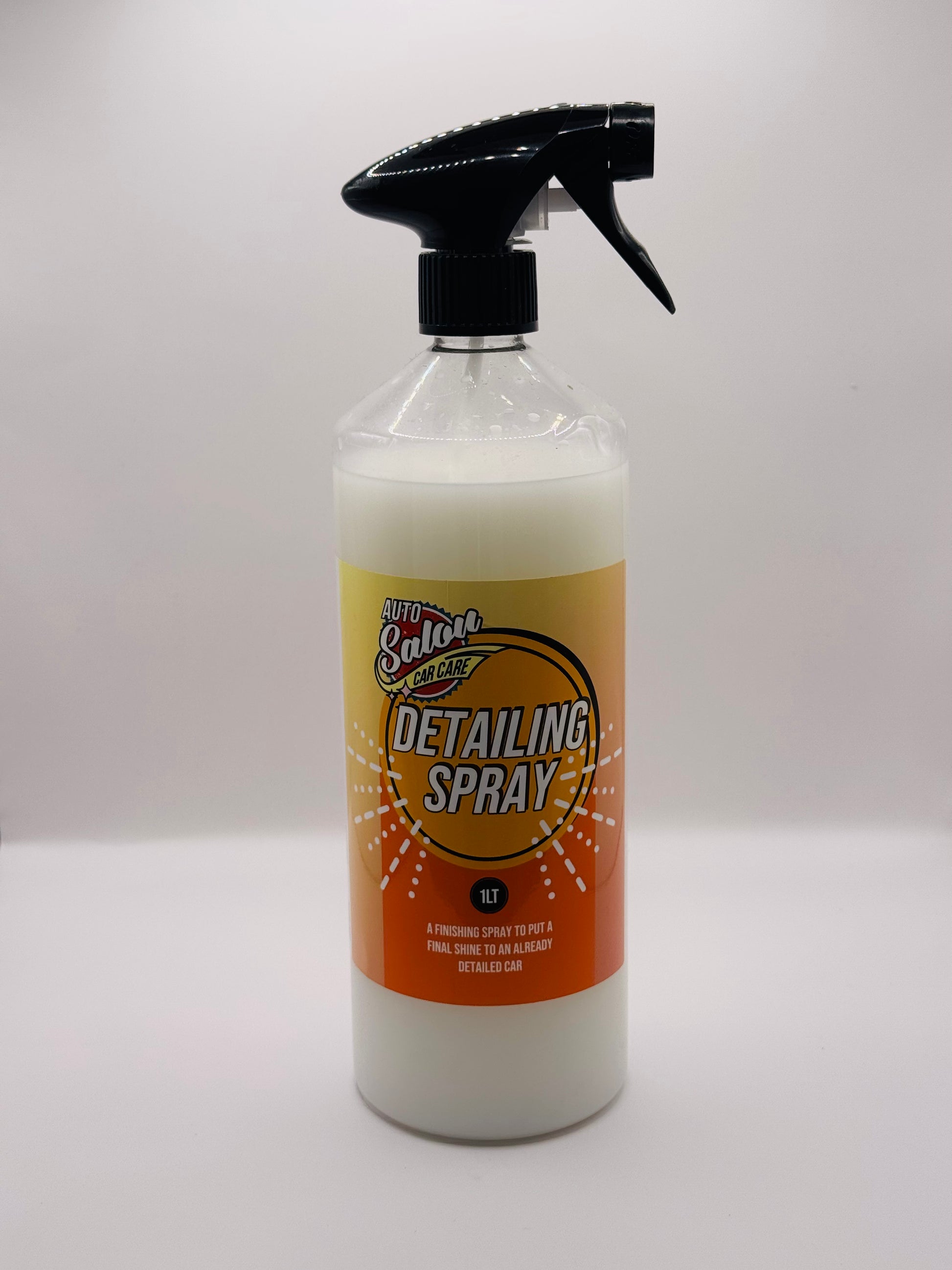
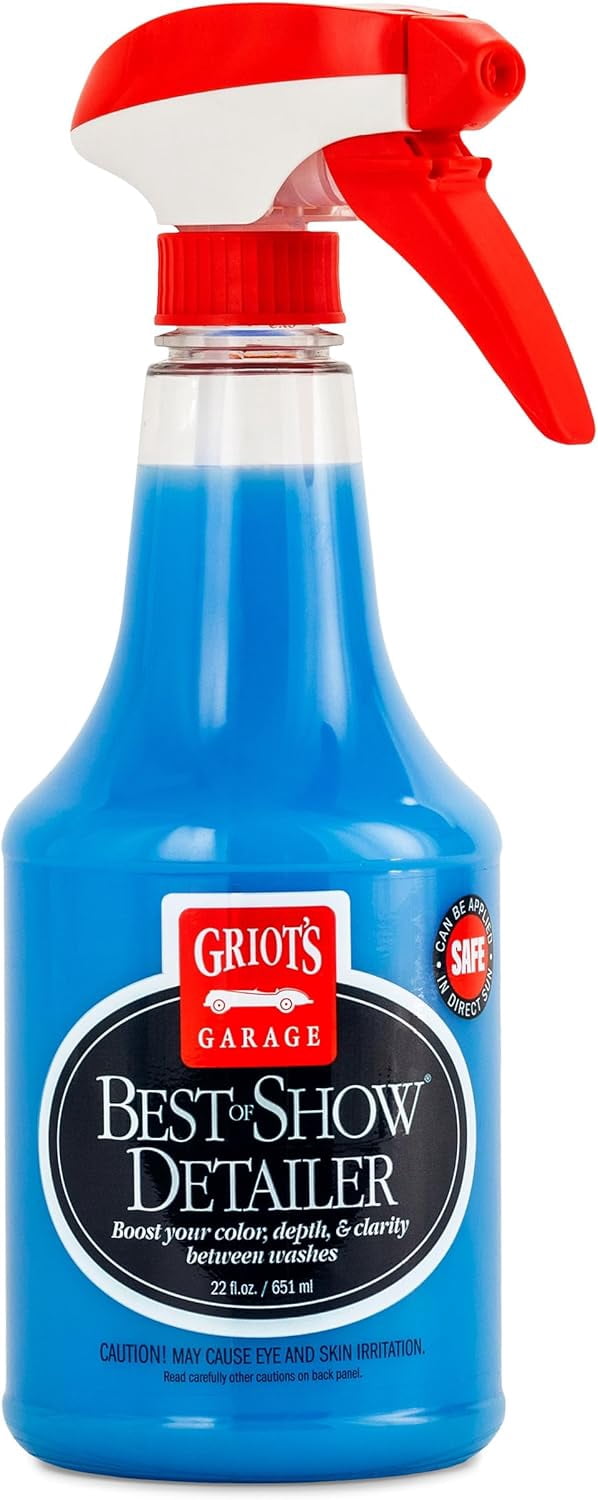
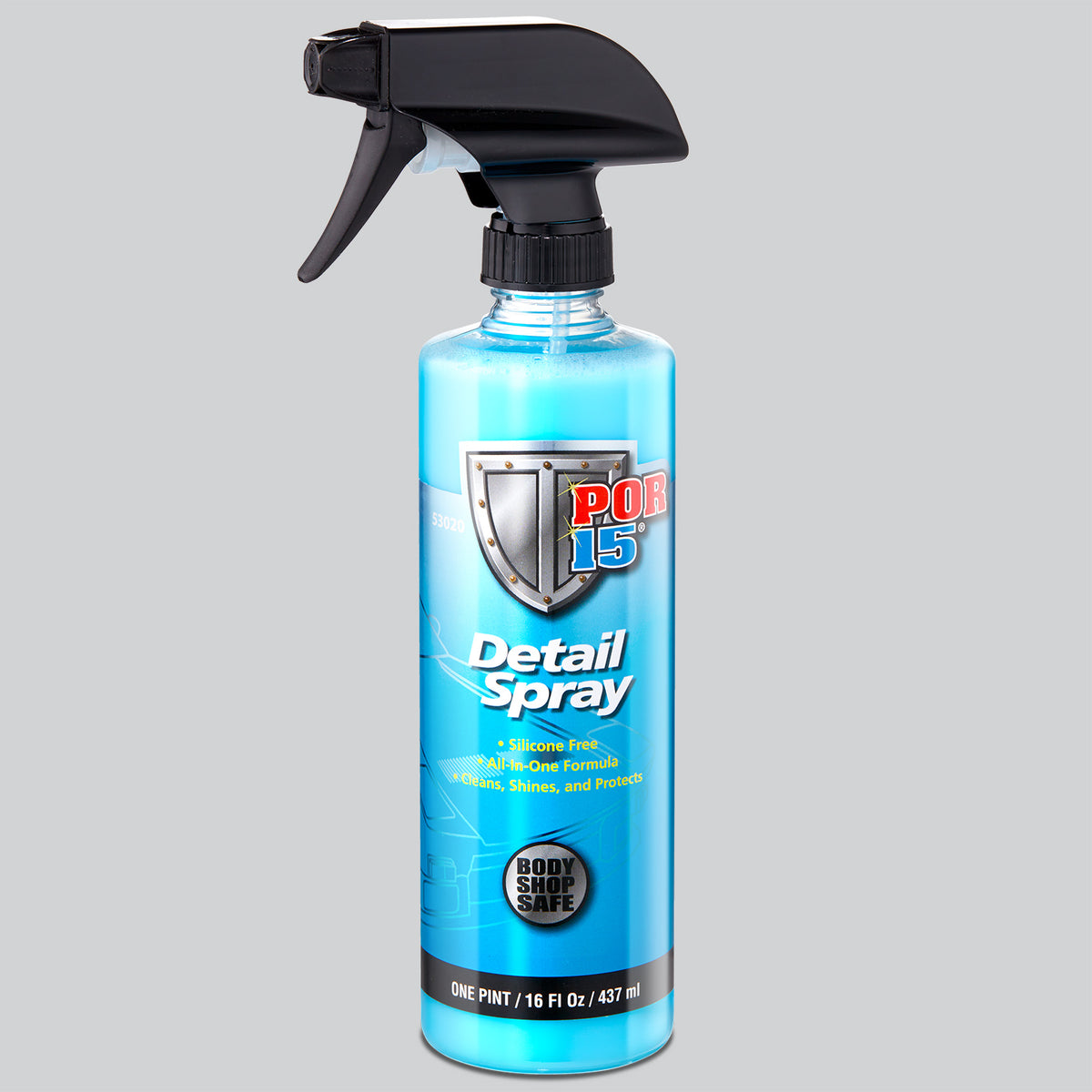
Quick detailer spray
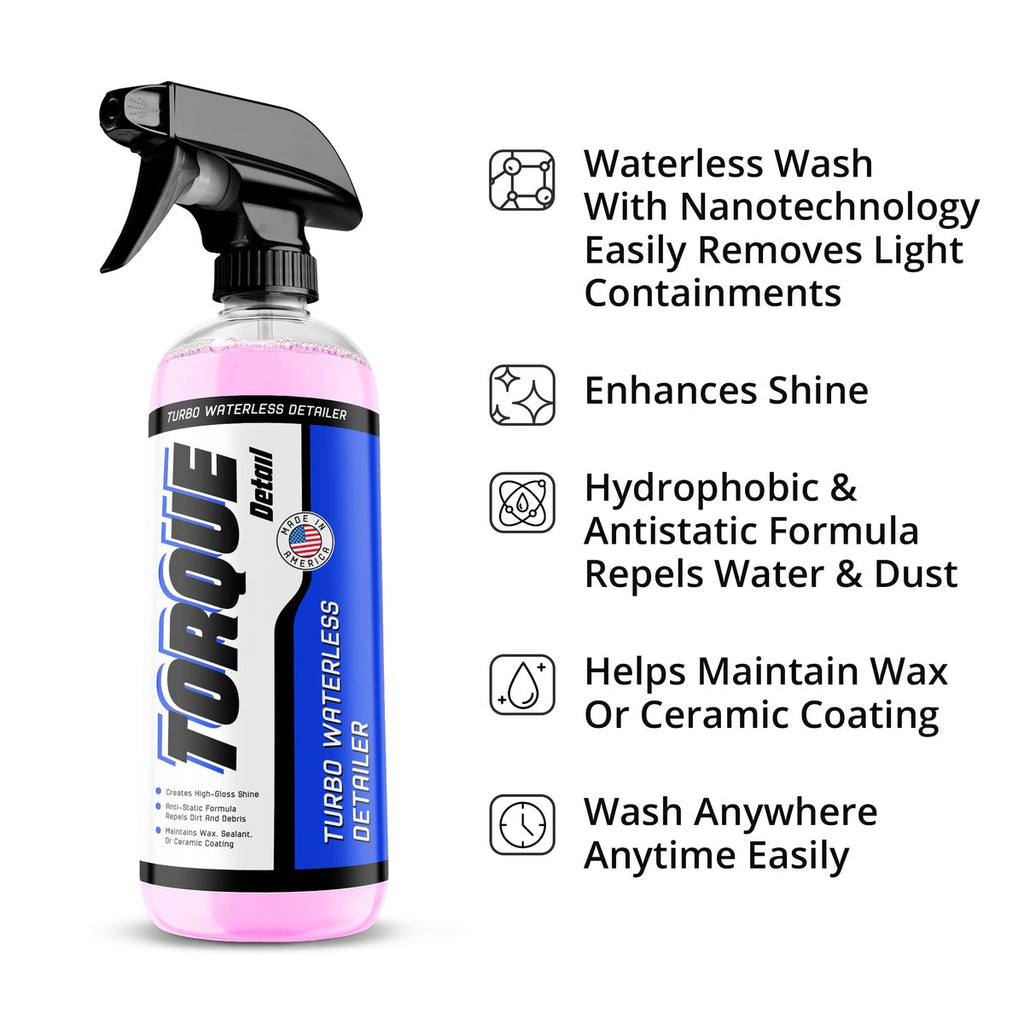
A quick detailer is a light cleaning and gloss product for removing fingerprints, light dust, and fresh smudges. It adds lubrication between the towel and the paint. That can help reduce the risk of marring when the surface is only lightly dirty.
Quick detailer spray is best for a clean or nearly clean vehicle. It is not a replacement for a full wash. Using it on muddy paint or heavy road film can drag grit across the clear coat.
This product suits experienced DIYers, show-car owners, and drivers who keep their vehicle clean between washes. It also makes a useful gift for a car enthusiast who already owns wash supplies.
Rinseless wash spray
Rinseless wash products are concentrated soaps that mix with water. Many can be used in a bucket, pump sprayer, or spray bottle. They provide cleaning power and lubrication without needing a hose.
A rinseless wash is useful for apartments, winter washing, travel, and water-restricted areas. It works well on daily-driven sedans, SUVs, trucks, hybrids, and EVs when the vehicle has light to moderate dirt.
It is not the right first choice for thick mud, heavy sand, or loose chunks of grit. A pressure washer or regular pre-rinse may be safer before contact washing in those cases.
All-purpose cleaner
All-purpose cleaner, often called APC, is a stronger cleaner for tires, wheel wells, floor mats, door jambs, engine-bay parts, and some interior plastics. Detailers usually dilute it based on the job.
A mild mix may work on interior plastic. A stronger mix may handle greasy tire walls or dirty rubber floor mats. Never assume one dilution works for every surface.
APC is best for DIY owners who clean several types of vehicles. Beginners should buy a product with clear dilution instructions and test it on a hidden area first.
Interior cleaner
Interior cleaner is designed for dashboards, door panels, vinyl, plastic, and other cabin surfaces. It is often safer for modern interiors than a strong APC. Some formulas leave a matte finish, while others add a mild dressing.
Avoid products that leave a slippery film on the steering wheel, pedals, shifter, or floor. A clean, low-shine finish is safer and closer to the factory appearance.
Interior cleaner suits new drivers, families, rideshare owners, and anyone who wants a simple weekly cleaning spray. It is often a better gift than a high-strength exterior chemical.
Automotive glass cleaner
Glass cleaner removes fingerprints, smoke film, road haze, and interior plasticizer residue. Professional detailers often use a low-residue formula that does not leave a greasy film.
Use separate towels for glass. A clean, short-pile microfiber towel helps prevent lint and streaks. Spray onto the towel when cleaning near dashboards, screens, speakers, and switches.
Some glass cleaners contain ammonia. Ammonia can damage certain window films, tint, rubber, and trim over time. An ammonia-free automotive glass cleaner is a safer choice for most vehicles.
Wheel cleaner and iron remover
Wheel cleaner targets brake dust and road grime. Iron remover reacts with embedded iron particles and may turn purple as it works. The color change is a chemical reaction, not proof that every contaminant has been removed.
Detailers use these products on wheels and, when the label allows, painted body panels. Check the product directions before use on polished aluminum, anodized finishes, chrome, powder coating, or aftermarket wheels.
Iron remover often has a strong smell. It should not dry on the vehicle. Rinse it well and use it in a shaded area.
Tire dressing
Tire dressing restores a dark appearance to clean rubber. It may be water-based or solvent-based. Water-based dressings often offer a natural satin look and are easier to clean. Solvent-heavy products may create a darker, glossier finish but can sling onto paint if overapplied.
A detailer cleans the tire first. Dressing dirty rubber only traps grime under the product. Apply a thin layer with a foam or microfiber applicator and wipe away excess.
Tire dressing suits owners who want a finished look before a car show, sale, or weekend event. It is less important for a work truck or a vehicle used on muddy roads.
Spray wax and spray sealant
Spray wax adds gloss and short-term protection. Spray sealants usually last longer than a basic quick detailer, though durability varies with the formula, weather, washing routine, and surface preparation.
These products can help water run off the paint and make future washing easier. They do not repair deep scratches, peeling clear coat, rust, or neglected paint.
Spray wax is a good low-cost choice for beginners. A spray sealant may suit a DIY owner who wants more durability without installing a full ceramic coating.
Ceramic detail spray
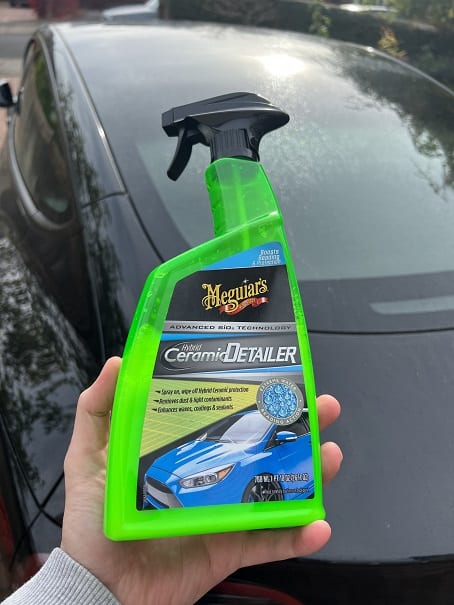
Ceramic detail sprays often contain silica-based ingredients. They can add gloss, slickness, and water behavior to painted surfaces. Some are designed to maintain an existing ceramic coating rather than replace it.
A ceramic detail spray is not the same as a professional ceramic coating. It does not provide the same application process or expected lifespan. Using too much can cause streaks or high spots that require polishing.
This product fits an experienced DIY detailer who follows prep and application directions. Beginners may prefer a simple spray sealant first.
Tar, adhesive, and bug remover
Tar remover dissolves asphalt spots. Adhesive remover helps with old stickers and tape residue. Bug remover softens insect remains on the front bumper, mirrors, and windshield.
These sprays are targeted tools. They should not be used as a general wash soap. Keep them away from unapproved plastics, fresh paint, rubber, and sensitive trim unless the label allows it.
| Spray type | Main job | Best fit |
|---|---|---|
| Quick detailer | Light dust, fingerprints, gloss | Clean daily drivers and show cars |
| Rinseless wash | Low-water cleaning | Apartments, winter, travel |
| APC | Strong cleaning | Tires, mats, wheel wells |
| Glass cleaner | Streak-free windows | Every vehicle type |
| Iron remover | Embedded brake dust | Wheels and contaminated paint |
| Spray sealant | Paint protection | DIY owners |
| Tire dressing | Darker tire finish | Appearance-focused owners |
The key takeaway is simple: cleaning sprays are not interchangeable. A product that works well on rubber may damage leather, screens, or delicate trim.
Which spray should you use on each vehicle surface?
The safest product is the one made for the surface and used at the lowest effective strength. Paint, rubber, glass, leather, fabric, and plastic each respond to chemicals in different ways.
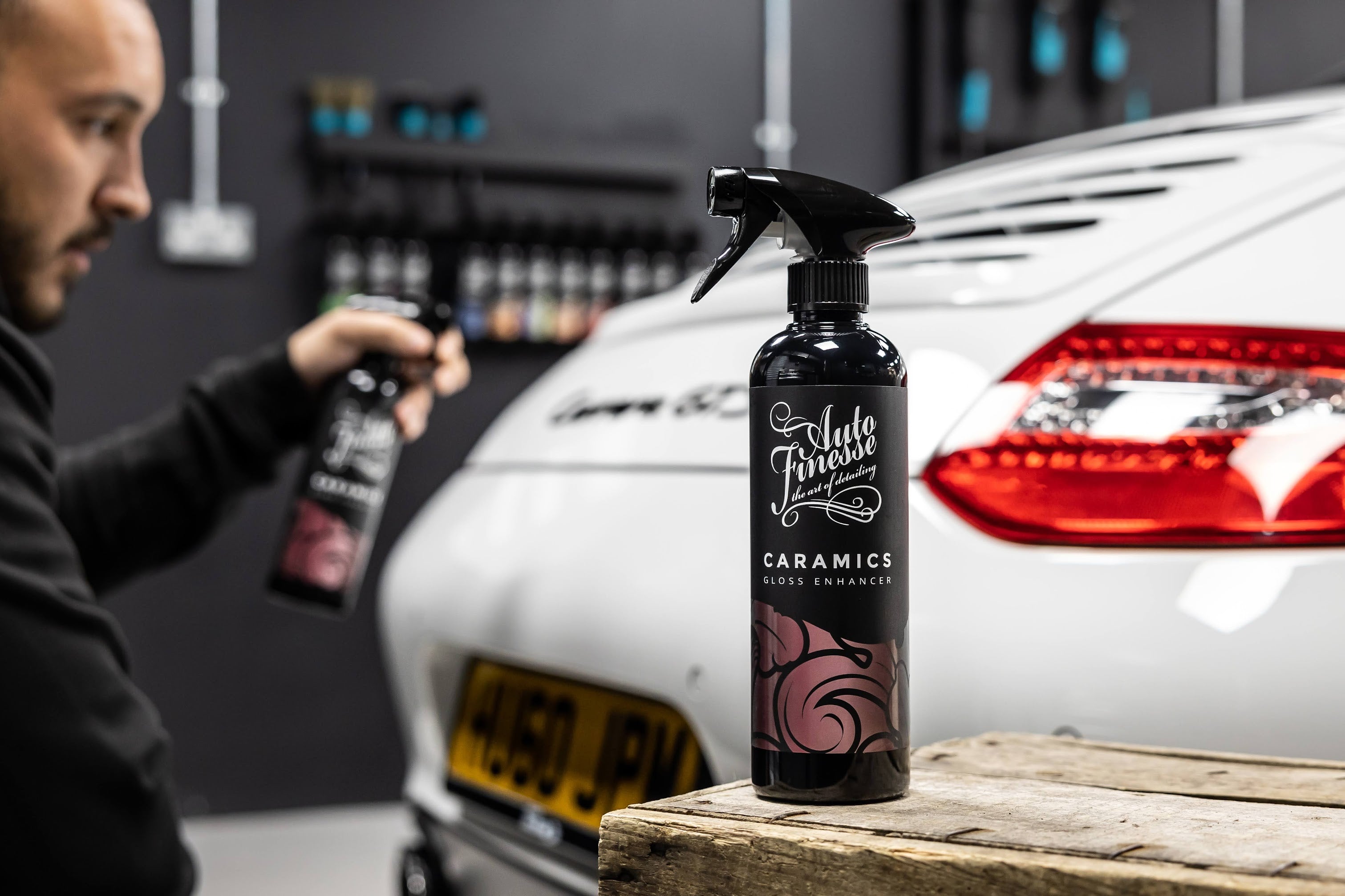
Painted body panels
For light dust, use a quick detailer with a clean microfiber towel. For normal dirt, use a rinseless wash or regular car wash. For added protection, use a spray wax or spray sealant after cleaning.
Do not use household window cleaner, kitchen degreaser, or harsh bathroom cleaner on automotive paint. These products may leave residue or affect trim and protection layers.
On a vehicle with a ceramic coating, use a coating-safe wash and maintenance spray. Check the coating maker’s instructions. Some coatings require a specific topper, while others can be maintained with a pH-neutral wash alone.
Wheels and wheel wells
Use a wheel cleaner that matches the wheel finish. Brake dust can bond strongly to hot wheels, so clean them when they are cool to the touch.
For heavy iron contamination, an iron remover can help. A soft wheel brush reaches behind spokes, but do not use the same brush on paint and wheels. Wheel brushes collect grit quickly.
Tires and rubber
Use a tire cleaner or diluted APC. Scrub until the runoff is less brown or gray. Brown runoff can come from old dressing, dirt, and rubber residue.
After the tire dries, apply a thin tire dressing. Avoid spraying directly near brake rotors, brake pads, or the tire tread.
Interior plastic and vinyl
Use an interior cleaner on the dashboard, door panels, center console, and hard plastic trim. Wipe the surface dry. A matte finish is usually better than a shiny finish because it reduces glare on the windshield.
Do not spray directly on instrument clusters, infotainment screens, vents, buttons, or electronic controls. Spray onto a towel instead.
Leather and synthetic leather
Use a cleaner labeled for leather or synthetic leather. Modern seats may contain protective coatings that can be harmed by strong solvents or stiff brushes.
A leather conditioner is not always needed. Some newer leather surfaces have a factory topcoat, and excessive conditioner can leave a greasy film. Follow the seat maker’s care advice when available.
Fabric, carpets, and floor mats
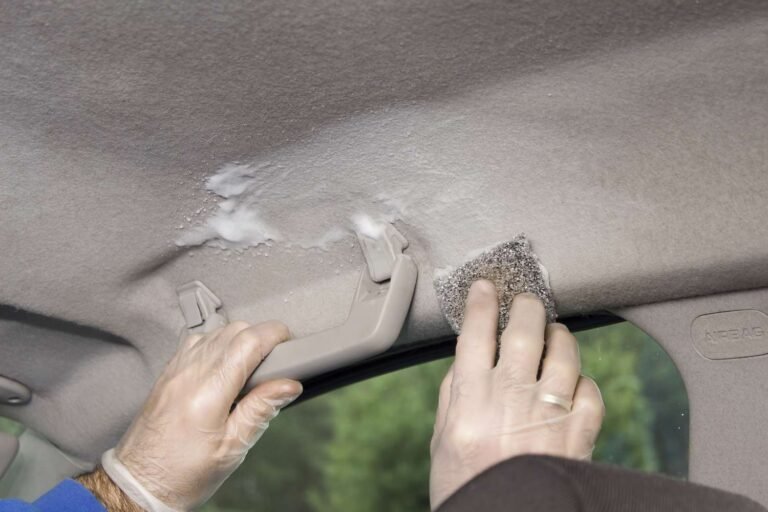
Use a fabric or carpet cleaner. Remove loose dirt first with a vacuum. Do not soak seats or carpet unless you have a way to extract and dry them.
Wet fabric can develop odor if it stays damp. Open doors in a safe place and allow the interior to dry fully.
Glass, mirrors, and camera lenses
Use automotive glass cleaner on windows and mirrors. For backup cameras and driver-assistance camera lenses, use a clean damp microfiber towel or a product approved for the lens area.
Never use an abrasive pad on camera lenses. A dirty camera can affect image quality, but harsh cleaning can create permanent damage.
| Surface | Safer spray choice | Product to avoid |
|---|---|---|
| Clear-coated paint | Rinseless wash or spray sealant | Household degreaser |
| Wheels | Wheel cleaner matched to finish | Strong acid without training |
| Tires | Tire cleaner and tire dressing | Thick dressing on tread |
| Dashboard | Interior cleaner | Greasy shine product |
| Leather | Leather-safe cleaner | Solvent-based APC |
| Window tint | Ammonia-free glass cleaner | Ammonia glass cleaner |
| Camera lens | Lens-safe cleaner or damp towel | Abrasive compound |
A surface-specific product is often worth the money. Replacing damaged tint, stained leather, or cloudy trim costs more than buying the correct spray.
What sprays are best by driver and vehicle type?
The best spray for a beginner is not always the best spray for a professional. Product choice should match time, storage space, climate, vehicle finish, and comfort with detailing.
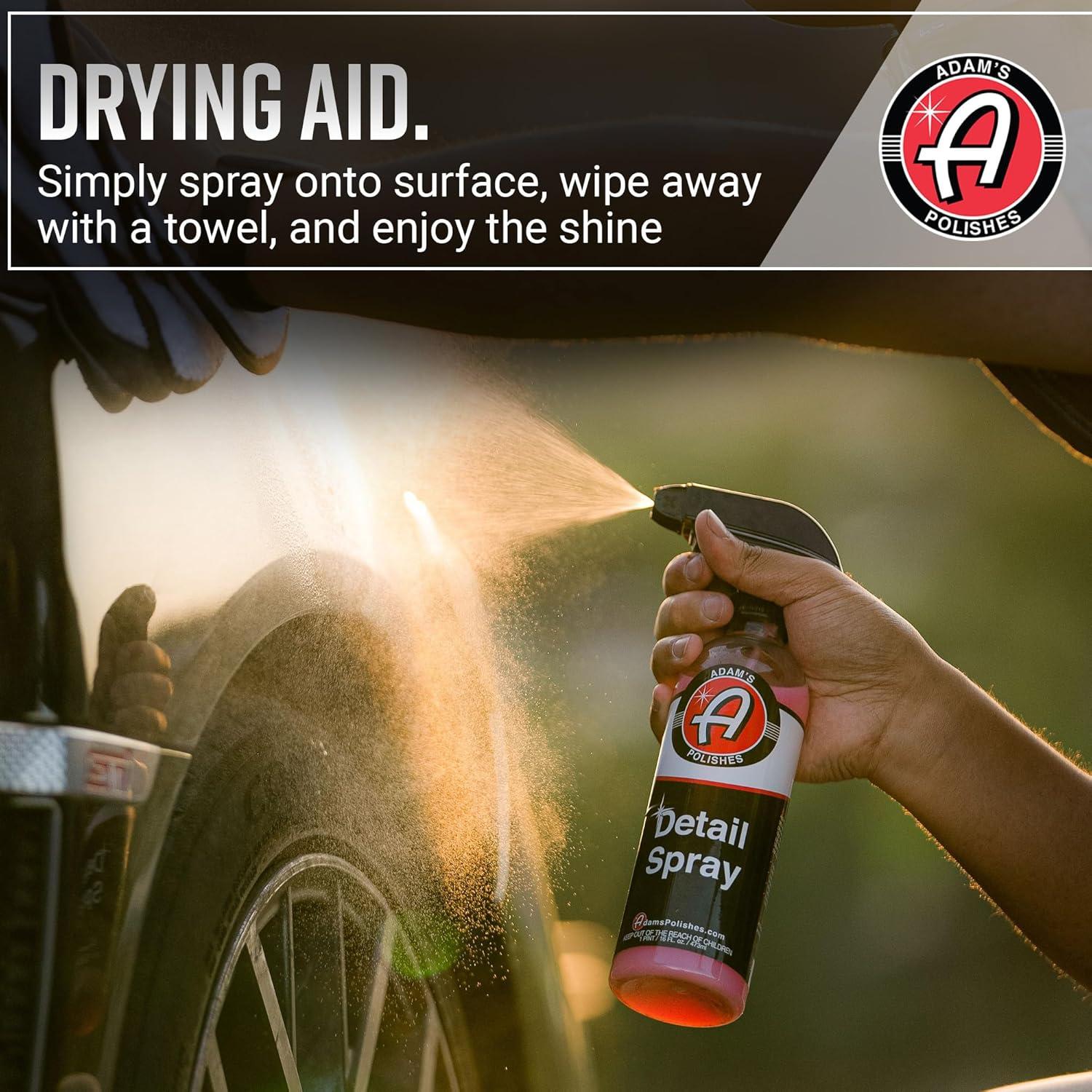
Best basic setup for beginners
A beginner can maintain most vehicles with five products:
- pH-neutral car wash or rinseless wash
- Automotive glass cleaner
- Interior cleaner
- Tire cleaner
- Spray wax or spray sealant
Add several clean microfiber towels and separate towels for wheels, paint, glass, and the interior. This setup suits a first car, an older sedan, a family SUV, or a used truck.
A beginner should skip strong acid wheel cleaners, aggressive compounds, and high-strength degreasers. Those products can work well in trained hands but leave less room for error.
Best setup for experienced DIY detailers
An experienced owner may add an iron remover, tar remover, clay lubricant, plastic dressing, leather cleaner, carpet cleaner, and ceramic detail spray.
This setup suits someone who already understands washing, towel care, dilution, and test spots. It can help maintain a newer truck, performance car, luxury sedan, or ceramic-coated vehicle.
Best sprays for trucks and off-road vehicles
Trucks often collect grease, mud, road salt, bugs, and tire dressing residue. A quality APC, wheel cleaner, bug remover, and rinseless wash can handle most routine needs.
For work trucks, focus on cleaning power and easy rinsing. Gloss products matter less than a formula that removes grime without harming rubber, bed liners, or textured plastic.
For off-road vehicles, remove mud before wiping. Dry mud contains sand and small rocks that can scratch paint.
Best sprays for SUVs and family vehicles
SUVs often need interior cleaner, fabric cleaner, glass cleaner, and a mild exterior wash. Families may also need a safe way to clean crumbs, milk spills, sunscreen, and fingerprints.
Choose a low-odor interior cleaner with a matte finish. A spray that leaves a slick dashboard can create glare and make the steering wheel unsafe to hold.
Best sprays for EVs and hybrids
EVs and hybrids can use the same exterior detailing sprays as gasoline vehicles. The high-voltage system does not mean the paint needs a special soap.
Do use care around charging ports, seals, cameras, sensors, and electronic controls. Do not flood connectors or spray chemicals into openings. Follow the owner’s manual during engine-bay or under-hood cleaning.
Best sprays for older vehicles
Older vehicles may have faded trim, weak clear coat, single-stage paint, cracked rubber, or damaged seals. Start with mild products and inspect the surface.
A spray wax can improve appearance, but it will not stop clear-coat failure. Avoid aggressive scrubbing on oxidized paint. A professional may need to assess whether polishing is safe.
| Driver or vehicle | Useful spray group | Who should skip the stronger options |
|---|---|---|
| New driver | Interior cleaner, glass cleaner, rinseless wash | Anyone without a shaded work area should avoid products that dry fast |
| Family SUV | Fabric cleaner, APC, glass cleaner | Skip high-gloss interior dressings |
| Work truck | APC, wheel cleaner, bug remover | Avoid overspending on show-car toppers |
| EV or hybrid | Rinseless wash, glass cleaner, coating-safe spray | Avoid spraying into charging ports or electronics |
| Older car | Mild wash, spray wax, trim-safe cleaner | Skip aggressive chemicals on fragile trim |
| Ceramic-coated car | Coating-safe wash and topper | Do not assume every wax is coating-safe |
The right kit should make care easier, not turn a Saturday wash into a shelf full of unused chemicals.
How detailers apply spray products without causing damage
Good technique matters as much as the product. Detailers control heat, pressure, towel type, product amount, and wiping direction.

Start with a clean work area
Work in the shade when possible. The surface should be cool enough that the product does not dry before you can wipe it. Keep bottles capped and away from direct sun.
Rinse loose grit before touching paint. Use separate towels for paint, glass, interior surfaces, and wheels. Wash dirty microfiber towels apart from clothes.
Use the least product that works
More spray does not mean more cleaning. Too much product can cause streaks, residue, and wasted money. Start with a small amount and add more only when needed.
For a quick detailer, one or two light sprays on the towel may be enough for a small panel. Product directions vary, so follow the label.
Use the right towel
A plush microfiber towel can hold dust and provide lubrication. A short-pile towel often works well for glass and final buffing. A waffle-weave towel can help dry windows.
Do not use a towel that has touched wheels on painted body panels. Tiny metal particles and grit can scratch clear coat.
Work in small sections
Clean one panel or one small area at a time. Wipe in straight, overlapping passes. Turn the towel to a clean side as it becomes dirty.
If a product dries or streaks, do not rub harder. Add a small amount of the same product or use a clean damp towel, depending on the label.
Test an unseen spot
Test new chemicals behind a door, under a seat, or on a small section of trim. Look for color change, stickiness, whitening, or staining before using the product on the whole vehicle.
This step is especially important for older plastics, aftermarket wheels, leather, suede-like materials, and vinyl wraps.
💡 Pro Tip: Keep a small color-coded towel system. For example, use one color for glass, one for interior work, one for paint, and one for wheels. This simple habit prevents many cross-contamination mistakes.
A simple spray-detailing process for a daily driver
The best way to detail a car is to move from less dirty and less aggressive work to more dirty and more aggressive work. This keeps grime from spreading.
1. Inspect the vehicle
Look for mud, sand, tree sap, bird droppings, grease, brake dust, and water spots. Check whether the paint has a wax, sealant, ceramic coating, or vinyl wrap.
Do not rub bird droppings or dried bugs while dry. Soak them first with a safe cleaner or damp towel.
2. Clean the wheels first
Clean cool wheels with the correct wheel spray. Use a separate brush and towel. Rinse thoroughly.
If the wheels are heavily contaminated, use iron remover as directed. Keep the product wet and rinse before it dries.
3. Wash or rinse the exterior
Use a normal wash, rinseless wash, or pressure rinse based on the dirt level. A pressure washer can help remove loose grit, but it cannot replace proper washing.
Do not aim high-pressure water at damaged seals, loose trim, charging ports, or sensitive sensors from close range.
4. Dry the paint
Use a clean drying towel or air blower. Do not let hard-water spots dry on hot paint. If water spots already exist, use a mineral deposit remover approved for automotive paint.
5. Apply protection
Use spray wax, spray sealant, or a coating maintenance spray. Apply a thin layer to a small section, then buff it as directed.
Avoid applying paint protection to glass unless the product is made for glass. Avoid dressing the tire tread, brake parts, steering wheel, pedals, and floor surfaces.
6. Clean the interior
Vacuum first. Apply interior cleaner to a towel, not directly onto electronics. Wipe the dashboard, door panels, console, and hard trim.
Use fabric cleaner only where needed. Allow wet areas to dry before closing the car for a long time.
7. Finish the glass and tires
Clean the inside and outside of windows with a glass towel. Apply tire dressing to the sidewall only, then wipe away excess.
Check the vehicle from several angles. Look for streaks, missed areas, sling, and residue.
| Task | Spray used | Important limit |
|---|---|---|
| Light exterior dust | Quick detailer | Do not use on gritty or muddy paint |
| Normal wash | Rinseless wash | Pre-rinse heavy dirt |
| Brake dust | Wheel cleaner or iron remover | Do not let it dry |
| Paint protection | Spray wax or sealant | Thin layers work better |
| Interior wipe-down | Interior cleaner | Avoid spraying electronics |
| Tire finish | Tire dressing | Keep off tread and brakes |
A careful process gives better results than buying the most expensive bottle. Technique protects the vehicle.
Common mistakes with car detailing sprays
Most spray-related damage comes from using the wrong product, too much product, or too much force. Detailers prevent problems by reading labels and working in small areas.
Using household cleaners
Kitchen degreaser, bathroom spray, furniture polish, and household glass cleaner may contain solvents or additives that do not belong on automotive surfaces. They may affect coatings, tint, rubber, plastic, or leather.
Use a product made for the surface. Automotive formulas are not always stronger, but they are usually labeled for the materials found in a vehicle.
Wiping a dirty car with a quick detailer
A quick detailer is not a magic eraser. Heavy dirt needs a wash. Wiping through grit can create swirl marks that are hard to remove.
Letting chemicals dry
Iron removers, wheel cleaners, APC, and bug removers can stain or etch surfaces if left to dry. Work in shade and rinse as directed.
Applying tire dressing to the tread
Tire dressing on the tread can reduce grip, especially when wet. Keep it on the sidewall. Wipe off sling before driving.
Spraying directly onto electronics
Liquid can enter buttons, vents, screens, speakers, and control modules. Spray the towel instead.
Mixing chemicals
Never mix detailing chemicals unless the manufacturer specifically says it is safe. Mixing acids, bases, solvents, or bleach products can create dangerous fumes or damage surfaces.
| Mistake | What can happen | Better approach |
|---|---|---|
| Too much spray | Streaks and residue | Use a light mist |
| Dirty towel | Scratches or lint | Use clean towels |
| Hot panel | Product dries too fast | Work in shade |
| Strong cleaner on trim | Fading or staining | Test first |
| Dressing on tread | Reduced traction risk | Apply to sidewall only |
| Product mix | Fumes or damage | Use one product at a time |
The safest detailer is not the person with the strongest chemicals. It is the person who knows when not to use them.
How long do professional detailing sprays last?
Spray durability depends on the formula, surface prep, climate, washing method, and storage. A quick detailer may last only until the next wash. A spray wax may last several weeks. A spray sealant or ceramic maintenance product may last longer when applied to clean, smooth paint.
Heat, strong detergents, automatic brush washes, road salt, and frequent rain can reduce durability. A vehicle parked outside usually loses protection faster than a garaged vehicle.
Do not judge protection by shine alone. Water behavior, surface feel, and easier cleaning can provide clues, but none is a perfect measurement. Follow the product maker’s stated maintenance plan.
Storage and shelf life
Store sprays in a cool, dry place away from direct sunlight. Keep caps tight. Do not leave bottles in a hot car during summer.
Some products separate or change texture over time. Shake only when the label says to do so. If a product smells different, forms lumps, or changes color, check with the manufacturer before use.
Cost and value
Current pricing ranges from budget concentrates to premium ready-to-use products. Concentrates can cost less per use, but they require correct measuring and clean bottles.
A beginner may get better value from a small set of reliable products. An experienced detailer may save money with concentrates and larger containers. A gift buyer should favor clear labels, useful accessories, and simple instructions.
| Price tier | What you usually get | Best for |
|---|---|---|
| Budget | Basic wash, glass cleaner, APC | Beginners and older cars |
| Mid-range | Better towels, sealant, wheel cleaner | DIY owners |
| Premium | Coating toppers, specialty removers | Experienced detailers |
| Professional concentrate | More uses per bottle | Shops and skilled DIYers |
The most expensive spray is not automatically the best choice. Buy for the job, not the label.
What car detailers use instead of spray products
Sprays are convenient, but they are not the only tools detailers use. A pressure washer, foam cannon, bucket wash, clay bar, polish, vacuum, extractor, or air blower may be better for certain tasks.

A pressure washer can remove loose mud and sand before contact washing. It cannot replace careful hand washing. A clay bar or synthetic clay towel can remove bonded contamination, but it needs proper lubrication and light pressure.
A machine polisher can correct paint defects, but it requires training. It should not be used to hide peeling clear coat or deep scratches that reach the base coat.
For interiors, a vacuum and soft brush may remove more dirt than extra chemical. For glass, a clean towel often matters more than a premium bottle.
🔧 Quick Fix: If a spray leaves streaks, stop adding product. Use a clean, slightly damp microfiber towel to remove residue, then buff with a dry glass or short-pile towel.
Safety, environmental care, and legal notes
Detailing chemicals can irritate skin, eyes, and lungs. Wear gloves and eye protection when the label calls for them. Use ventilation when cleaning interiors or working with strong solvents.

Keep chemicals away from children, pets, food, and open flames. Never transfer a chemical into an unlabeled bottle. Store products upright and follow the safety data sheet for professional concentrates.
Do not pour wheel cleaner, solvent, oil, coolant, or other chemicals into a storm drain. Collect dirty runoff where local rules require it. Take unused chemicals, batteries, tires, and other hazardous waste to an approved collection site.
Some detailers clean engine bays, but modern cars contain sensors, fuse boxes, connectors, and control modules. Follow the owner’s manual. Do not spray directly into alternators, air intakes, charging equipment, or exposed electrical connections.
📜 Check Local Laws: Do not use products or modifications that affect legal visibility or lighting, such as dark window tint, colored LED bulbs, underglow, or obstructed camera and sensor areas. Confirm tint, lighting, and windshield-mount rules with your state DMV.
A clean car should remain safe to drive. Keep the windshield, mirrors, lights, cameras, license plates, pedals, steering wheel, and tires free of residue.
A practical spray kit for home, travel, or gifting
A useful kit should match the driver’s habits. A teen driver may need interior cleaner, glass cleaner, microfiber towels, and a tire pressure gauge more than ceramic spray. A road-trip driver may value a rinseless wash, bug remover, glass cleaner, and a compact roadside kit.
A parent buying for a new driver should choose simple, low-risk products. Add a phone mount that follows local laws, a tire inflator, a tire pressure gauge, a jump starter, and a basic roadside kit. These items support safe ownership better than a shelf of strong chemicals.
An experienced DIY owner may want a pressure washer, foam sprayer, battery maintainer, paint-safe iron remover, and coating maintenance spray. Confirm that each product suits the vehicle’s finish.
Do not confuse detailing gear with emergency equipment. A spray bottle will not replace a properly rated jack, jack stands, a torque wrench, a spare tire, or roadside assistance.
| Kit type | Core contents | Best driver |
|---|---|---|
| Beginner wash kit | Rinseless wash, glass cleaner, interior cleaner, towels | New driver |
| Family kit | Interior cleaner, fabric cleaner, APC, glass cleaner | Parents and SUV owners |
| Truck kit | APC, wheel cleaner, bug remover, tire cleaner | Work and off-road truck owners |
| Road-trip kit | Quick detailer, glass cleaner, towels, tire gauge | Frequent travelers |
| Advanced kit | Iron remover, tar remover, sealant, coating spray | Skilled DIY detailers |
Start with a small kit. Add specialty sprays only after you know which problems your vehicle actually has.
Frequently asked questions
Q: What is the most common spray used by car detailers?
A: A professional detailer commonly uses a mix of rinseless wash, quick detailer, APC, glass cleaner, wheel cleaner, tire dressing, and spray sealant. The most common product changes with the task. There is no single spray that safely replaces all of them.
Q: Can I use quick detailer spray on a dirty car?
A: Use it only for light dust, fingerprints, and fresh marks. If the paint has mud, sand, road salt, or heavy film, wash it first. Quick detailer spray is not a substitute for removing gritty contamination.
Q: What spray gives a car the most shine?
A: A clean surface followed by spray wax, spray sealant, or a ceramic detail spray can add gloss. Paint condition matters more than the spray alone. Oxidation, scratches, and water spots may require professional polishing.
Q: Is ceramic detail spray worth it?
A: It can be worth it for an experienced DIY owner who wants added gloss and maintenance for a ceramic-coated or well-prepared vehicle. It may not be worth the extra cost for a neglected work truck or a beginner who has not mastered basic washing.
Q: Can I use all-purpose cleaner inside my car?
A: You can use a properly diluted, surface-approved APC on some interior plastics and rubber. It may be too strong for leather, screens, soft-touch coatings, fabric, and delicate trim. An interior cleaner is usually safer for routine cabin work.
Q: What spray do detailers use on tires?
A: They use a tire cleaner before dressing and a water-based or solvent-based tire dressing afterward. The dressing should go on the sidewall, not the tread, brakes, or wheels. Wipe away excess to reduce sling.
Q: What is the best spray for a truck?
A: For most trucks, a rinseless wash, APC, wheel cleaner, bug remover, and tire cleaner cover routine needs. The best choice depends on whether the truck is a daily commuter, work vehicle, or off-road vehicle.
Q: What spray is safe for an EV?
A: EVs can use normal automotive wash, glass, wheel, tire, and interior products. Keep liquids away from the charging port, high-voltage components, cameras, and electronic openings. Follow the owner’s manual for under-hood cleaning.
Q: Can car detailer spray remove scratches?
A: No. A detail spray may hide very light marks temporarily by adding gloss or oils, but it does not remove scratches. Deep scratches, peeling clear coat, and exposed metal need a professional assessment.
Q: How often should I use spray wax?
A: Use it based on the product directions and how the vehicle is stored and washed. Outdoor parking, road salt, heat, and automatic brush washes may shorten protection. Applying more product than directed does not always improve durability.
Q: Do detailers use household glass cleaner?
A: Many use automotive glass cleaner because it is made for vehicle glass, tint, and low residue. Ammonia-free formulas are a safer choice for many tinted windows. Always check the tint manufacturer’s instructions.
Q: What spray removes brake dust?
A: A wheel cleaner can remove normal brake dust. An iron remover can help with bonded iron particles. Use the product only on approved wheel finishes, keep it wet, and rinse it completely.
Q: Can I use tire dressing on plastic trim?
A: Some products are labeled for exterior plastic, while others are made only for rubber. Use a trim-safe product for textured plastic. Tire dressing may streak, attract dirt, or leave an uneven finish on trim.
Q: How many microfiber towels do I need?
A: A beginner can start with at least eight to twelve clean towels, separated by task. Use different towels for paint, glass, wheels, and interiors. Wash them without fabric softener and retire towels that become rough or contaminated.
Q: Should I buy concentrated or ready-to-use spray?
A: Ready-to-use spray is easier for beginners and gift buyers. Concentrate can offer better value for frequent users, but only when mixed at the correct ratio. Use a measuring tool and label every diluted bottle.
Final advice
Car detailers use sprays as a system. They match the chemical to the surface, the dirt, and the desired finish. A quick detailer helps with light dust, APC handles tougher grime, glass cleaner clears windows, wheel cleaner targets brake dust, tire dressing improves sidewall appearance, and spray sealant adds paint protection.
For most new drivers, start with a rinseless wash, interior cleaner, glass cleaner, tire cleaner, microfiber towels, and a mild spray sealant. For a truck, add APC and bug remover. For an EV or hybrid, focus on safe washing around cameras, sensors, seals, and charging equipment. For a ceramic-coated car, use products approved for that coating.
The best spray is the one that solves the actual problem without creating a new one. Read the label, test a small area, use clean towels, and keep strong chemicals away from sensitive surfaces. Good detailing is less about having every bottle and more about using the right one with care.