How To Get Lipstick Out Of Car Headliner: Easy Fix
Lipstick on a car headliner can leave an oily, colored stain. The safest fix is to remove the solid residue first, then lift the remaining mark with a small amount of mild cleaner. Work slowly and keep the headliner as dry as possible. Too much liquid can loosen the adhesive and cause the fabric to sag.
This guide applies to most cars, trucks, and SUVs in the United States with a fabric headliner. Always check your vehicle owner’s manual before using a cleaner, and test any product in a hidden spot first.

What You Need Before You Start
Gather the following items:
- A clean plastic card or dull spoon
- White microfiber cloths
- Cotton swabs
- Mild liquid dish soap
- Distilled water
- A small bowl
- 70% isopropyl alcohol, used with care
- A soft toothbrush or soft detailing brush
- A vacuum with a soft brush attachment
- A dry towel
Use white cloths so dye does not transfer to the headliner. Avoid rough paper towels, stiff brushes, and colored rags.
Why the Headliner Needs Special Care
A vehicle headliner is more than a piece of cloth. It usually has a thin fabric layer bonded to foam and a rigid backing board. Liquid can soak through the fabric and weaken the glue.
That is why cleaning a headliner is different from cleaning a seat or floor mat. Do not spray cleaner directly onto the roof. Apply it to a cloth instead.
Check the Stain First
Look at the mark before cleaning:
- Raised or thick residue: Remove the excess first.
- Bright red or dark pigment: Expect more than one light cleaning pass.
- Greasy halo: The lipstick oil may have spread beyond the visible color.
- Old, crushed-in stain: A professional detailer may be safer than aggressive home cleaning.
- Sagging, bubbling, or loose fabric: Do not wet the area. The adhesive may already be failing.

Step-by-Step: How to Remove Lipstick From a Car Headliner
The best method is a low-moisture cleaning process. Never rub the stain hard or soak the fabric.
1. Protect the Vehicle Interior
Park the vehicle in a shaded, well-ventilated place. Keep the doors open if weather and security allow. Remove items from the seats and cover nearby trim with a clean towel.
Turn off interior lights near the work area. If you use isopropyl alcohol, keep it away from flames, sparks, and hot surfaces. Do not smoke while cleaning.
2. Remove Any Solid Lipstick
If the lipstick is soft, place a sealed bag of ice over it for a few minutes. The cold can make the residue firmer and easier to lift.
Use a plastic card or dull spoon to gently lift the lipstick. Work from the outside of the stain toward the center. Wipe the tool after each pass.
Do not use a razor, knife, or metal scraper. These tools can cut the fabric or leave a shiny scrape on the backing.
3. Vacuum Loose Particles
Use a soft brush attachment to remove crumbs or dry pieces. Keep the vacuum nozzle slightly above the fabric if the headliner feels loose.
Do not press the nozzle into the roof. Strong suction can pull at weak fabric or worsen a loose section.
4. Make a Mild Cleaning Solution
Mix:
- 1 cup of distilled water
- 1 or 2 drops of mild dish soap
The solution should be weak. More soap does not mean more cleaning power. Extra soap can leave a film that attracts dust.
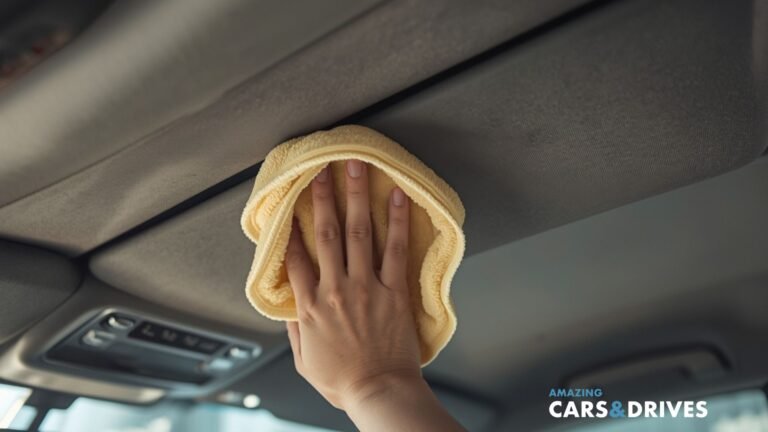
Dip a white microfiber cloth into the solution. Wring it out until it feels only damp.
5. Blot the Outer Edge of the Stain
Start at the outer edge and move inward. Use short, gentle dabs. Lift the cloth after each dab instead of dragging it across the fabric.
This method helps keep the pigment from spreading. Turn to a clean part of the cloth as soon as color transfers.
Do not scrub. Scrubbing can push lipstick deeper into the foam and create a larger mark.
6. Treat the Greasy Residue
If the color fades but an oily spot remains, use a fresh cloth with a very small amount of the mild soap solution. Blot the oily area, then use another cloth dampened with plain distilled water to remove soap residue.
Keep the damp area smaller than the original stain. Avoid making a wide wet ring around it.
7. Consider Isopropyl Alcohol Only for a Stubborn Mark
For a persistent pigment stain, test 70% isopropyl alcohol on a hidden area first. Check for:
- Color transfer
- Fading
- Fabric roughness
- A change in texture
- Softening or damage to the adhesive
If the hidden test shows no damage, put a small amount of alcohol on a cotton swab or white cloth. Dab the stain lightly. Do not pour or spray alcohol onto the headliner.
Alcohol may affect some dyes, coatings, plastics, and adhesives. Stop if the fabric changes or the color begins to lift from the headliner.
8. Dry the Headliner
Press a dry white towel against the cleaned area. Do not rub.
Leave the vehicle in a dry, ventilated place until the fabric is fully dry. A fan can help, but do not use a heat gun or hold a hair dryer close to the roof.
Heat can soften the adhesive and cause the headliner to sag.
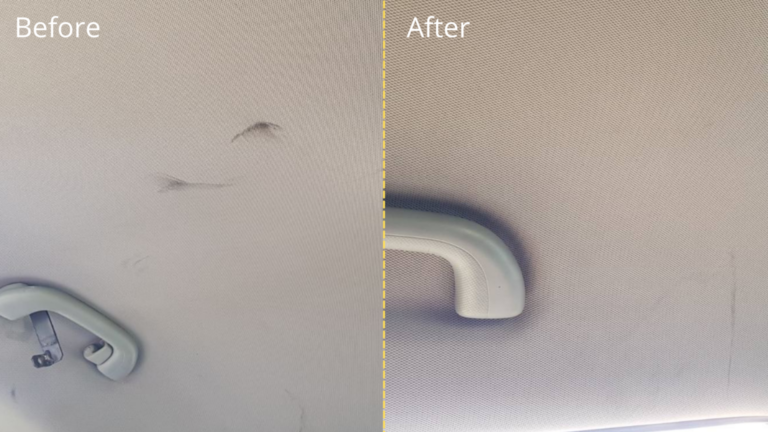
9. Inspect the Result
Once dry, check the area in normal daylight. A faint mark may look worse while the fabric is wet. If the stain is still visible, repeat the mild soap method once rather than using a stronger chemical.
Stop after two or three gentle passes. Repeated wetting can harm the headliner even when each pass seems small.

Which Cleaner Should You Use?
Use the least aggressive option that fits the stain. This table gives a practical order of choice.
| Stain condition | First choice | Main risk |
|---|---|---|
| Fresh lipstick residue | Dull plastic card, then mild soap solution | Spreading the stain |
| Light color mark | Damp microfiber cloth with diluted mild soap | Water ring |
| Oily residue | Mild soap solution, followed by a plain-water blot | Soap film |
| Deep pigment | Tested 70% isopropyl alcohol on a cloth or swab | Dye or adhesive damage |
| Large or old stain | Professional automotive detailer | Higher cost |
| Loose or sagging headliner | Professional repair shop | Making the sag worse |
A dedicated automotive upholstery cleaner may work, but read its label first. Choose a product that says it is suitable for fabric or automotive upholstery. Do not assume that a carpet cleaner, household degreaser, or leather product is safe for a bonded headliner.
Why Household Solvents Can Cause Trouble
Lipstick contains waxes, oils, pigments, and other ingredients. That may tempt you to use acetone, nail-polish remover, paint thinner, or a strong degreaser.
Do not use these products on a car headliner unless the vehicle or material manufacturer specifically approves them. They can dissolve adhesive, bleach fabric, damage foam, or create a larger permanent mark.
Bleach is also a poor choice. It can weaken fibers and leave a light patch that is more noticeable than the original lipstick.

Common Mistakes That Make the Stain Worse
Avoid these common cleaning errors:
Spraying Cleaner Directly on the Roof
Direct spraying can push liquid into the foam and backing board. Spray onto a cloth only, and use a small amount.
Rubbing in Circles
Circular rubbing spreads oil and pigment. It can also raise the fabric nap, making the cleaned area look different.
Using Too Much Water
A soaked headliner may develop a water ring, loose fabric, or a sagging panel. Low moisture is safer than a deep wet clean.
Using Heat to Dry the Area
High heat can soften the glue that holds the headliner fabric in place. Let the area air-dry instead.
Cleaning Only the Red Color
Lipstick can leave oil behind after the visible pigment is gone. Blot the area with a mild soap solution and rinse the cloth with plain water to remove leftover cleaner.
Ignoring a Loose Headliner
If the fabric is already peeling or bubbling, cleaning may pull it down. Repair the headliner first or ask a professional to handle the stain.
Using a Colored Cloth
A red, blue, or black cloth may transfer dye. White microfiber is the safer choice.

What to Do If the Lipstick Stain Will Not Come Out
Some stains cannot be removed fully without changing the color or texture of the fabric. This is especially true when lipstick has been heated into the material, pressed in by rubbing, or left for a long time.
Stop home cleaning if:
- The headliner fabric begins to pill or fuzz.
- The area becomes lighter than the surrounding fabric.
- The adhesive feels soft or the fabric starts to loosen.
- The stain spreads after each pass.
- A strong chemical smell remains.
- The stain covers a large area.
A professional automotive detailer can assess the material and use a controlled upholstery-cleaning process. If the headliner is sagging, choose an automotive upholstery or headliner repair shop rather than treating it as a simple stain.
A replacement headliner may be needed when the foam backing has broken down or the fabric has detached over a broad area. Cleaning cannot restore failed adhesive.

How to Prevent Lipstick Stains in the Car
The simplest prevention step is to apply lipstick before entering the vehicle or after reaching your destination. Keep makeup in a closed bag rather than loose in a door pocket or center console.
If lipstick touches the headliner, avoid pressing it into the fabric. Remove the excess as soon as possible with a plastic card and a clean cloth.
Keep a small interior-cleaning kit in the vehicle with:
- White microfiber cloths
- Distilled water
- Mild soap
- A plastic card
- Disposable gloves
Do not store alcohol or other flammable cleaners in a hot vehicle. Keep cleaning products sealed and follow the product label.

Quick Takeaways
- Remove solid lipstick before applying liquid.
- Use a damp, not wet, white microfiber cloth.
- Blot from the outside toward the center.
- Test any cleaner in a hidden area.
- Use isopropyl alcohol only as a cautious last step for pigment.
- Never use acetone, bleach, or strong solvents on the headliner.
- Do not scrub, soak, or apply high heat.
- Stop if the fabric loosens, fades, or begins to pill.
Frequently Asked Questions
Can I use makeup remover to clean lipstick from a car headliner?
Most makeup removers are not designed for automotive headliner fabric. They may contain oils, alcohols, fragrances, or solvents that can leave a larger mark or damage the adhesive. Use a mild soap solution first, and test any alternative product in a hidden spot.
Will rubbing alcohol remove lipstick from a headliner?
It may remove some pigment, but it can also affect fabric dye or adhesive. Test 70% isopropyl alcohol on an unseen area first. Apply a tiny amount to a cloth or cotton swab, never directly to the roof.
Can I use a Magic Eraser on a car headliner?
It is better to avoid it. A melamine sponge is mildly abrasive and may roughen or lighten the headliner fabric. If used at all, it should be tested very carefully, but a soft cloth is the safer first choice.
How do I remove a lipstick stain from a black headliner?
Use the same low-moisture process: lift residue, blot with diluted mild soap, and dry the area. Black fabric may hide some color but can show a pale cleaning mark if you use too much liquid or rub too hard.
Should I replace the headliner after a lipstick spill?
Usually not. A small stain can often be treated without replacement. Replacement becomes more likely when the headliner is already sagging, the foam backing has failed, or cleaning causes permanent discoloration.
How long does a cleaned headliner take to dry?
A lightly damp spot may dry within a few hours in a warm, ventilated vehicle. Drying time depends on humidity, airflow, and how much liquid was used. Do not use high heat to speed up the process.
Final Recommendation
Start with the least aggressive method: remove the lipstick residue, blot with a weak soap solution, and let the headliner air-dry. Use only small amounts of moisture, and treat alcohol as an optional last step after a hidden-spot test. If the headliner is loose, badly stained, or damaged during cleaning, stop and contact an automotive detailer or headliner repair professional.