What Do Car Washes Use To Clean Wheels: Best Wheel Cleaners
Wheel cleaning is one of the most important steps in a professional car wash. Wheels collect brake dust, road salt, mud, tar, grease, and metal particles faster than almost any other part of a vehicle. A normal car shampoo may remove loose dirt, but it often cannot break down baked-on brake dust or oily road film.
So, what do car washes use to clean wheels? Most use a mix of wheel cleaner, water, pressure, brushes, and special tools. The exact product depends on the wheel finish, the type of dirt, the vehicle, and the wash method. A touchless wash may use a strong alkaline cleaner and high-pressure water. A detail shop may use a pH-balanced wheel cleaner, soft brushes, an iron remover, and a microfiber towel.
Understanding these products helps you choose the right service or clean your own wheels without damaging clear coat, paint, chrome, or sensitive brake parts. It also helps parents buying a car-care kit for a teen driver, DIY owners caring for a truck or SUV, and experienced detailers comparing wheel cleaners.

Quick Answer: Car Washes Use Wheel Cleaners, Brushes, and Pressure
Professional car washes usually use a dedicated wheel cleaner, high-pressure water, and soft or medium-stiff brushes. The cleaner may be alkaline, acidic, pH-neutral, or iron-reactive. Many shops add an iron remover for heavy brake dust and a degreaser for oily grime. The safest choice depends on the wheel’s finish and the type of dirt.
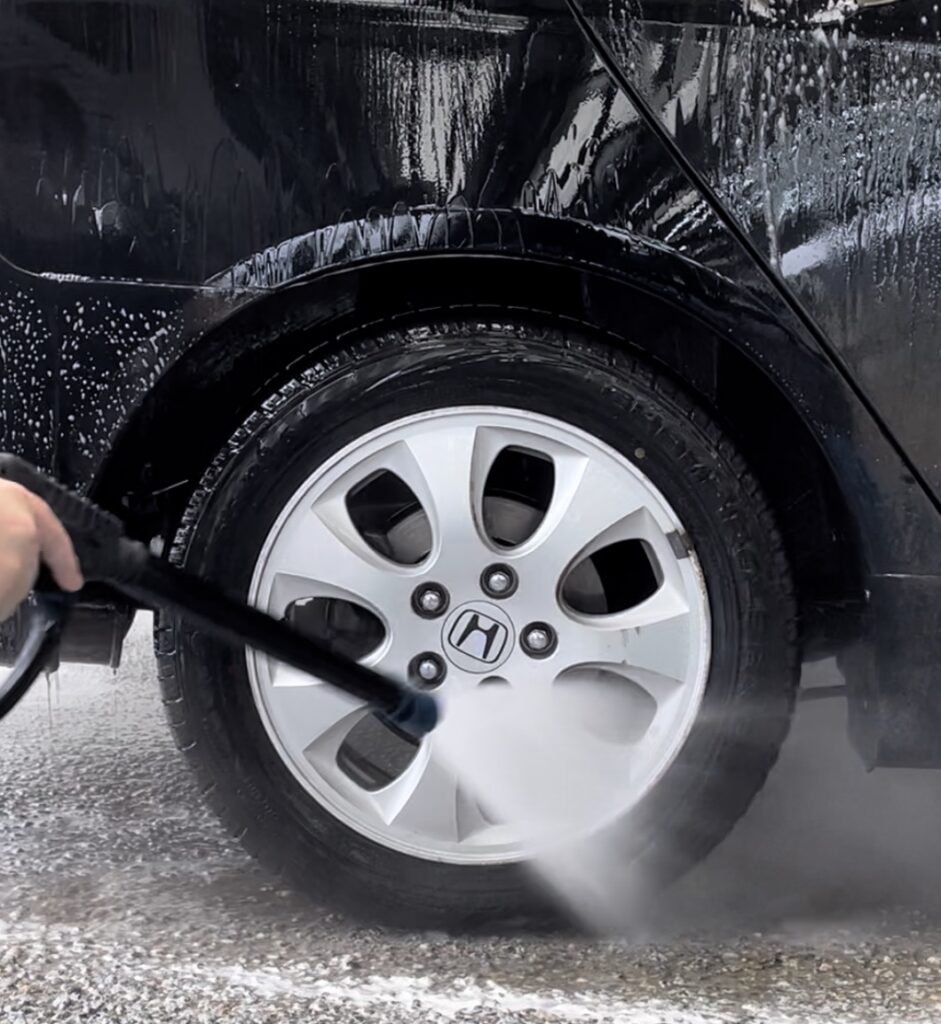
A good wheel cleaning process has three parts: loosen the dirt, agitate the surface, and rinse away the residue. Water pressure alone rarely removes every contaminant. Brushes help reach the inner barrel, lug nuts, spokes, and tight areas around the brake caliper.
The Main Chemicals Used on Wheels
Wheel cleaners fall into a few broad groups. Each group has a useful purpose and a risk if used on the wrong surface.
| Cleaner type | Best use | Main caution |
|---|---|---|
| pH-neutral wheel cleaner | Regular cleaning and sensitive finishes | May need more brushing |
| Alkaline cleaner | Heavy road film, grease, and mud | Can dry trim or stain some finishes |
| Acid wheel cleaner | Severe mineral deposits and some commercial work | Can damage bare metal or polished surfaces |
| Iron remover | Embedded iron and brake dust | Strong odor and slower action |
| Citrus or solvent cleaner | Tar, oil, and adhesive residue | May affect coatings or rubber if misused |
The safest starting point for most drivers is a pH-neutral wheel cleaner made for the wheel’s finish. Stronger products can work faster, but they leave less room for mistakes.
What “pH-Neutral” Means
pH describes how acidic or alkaline a water-based product is. A pH-neutral cleaner is close to the middle of that scale. It is designed to clean without using a very strong acid or base.
“pH-neutral” does not mean harmless on every surface. A product can still irritate skin, harm eyes, or stain a hot wheel if it dries. Always follow the label and test an unseen spot when the finish is unknown.
How Professional Wheel Cleaning Works
Professional wheel cleaning is more than spraying on a bright-colored liquid. A shop first identifies the wheel finish and the type of dirt. It then chooses a chemical, allows the cleaner to work for a short time, agitates the surface, and rinses the wheel well.
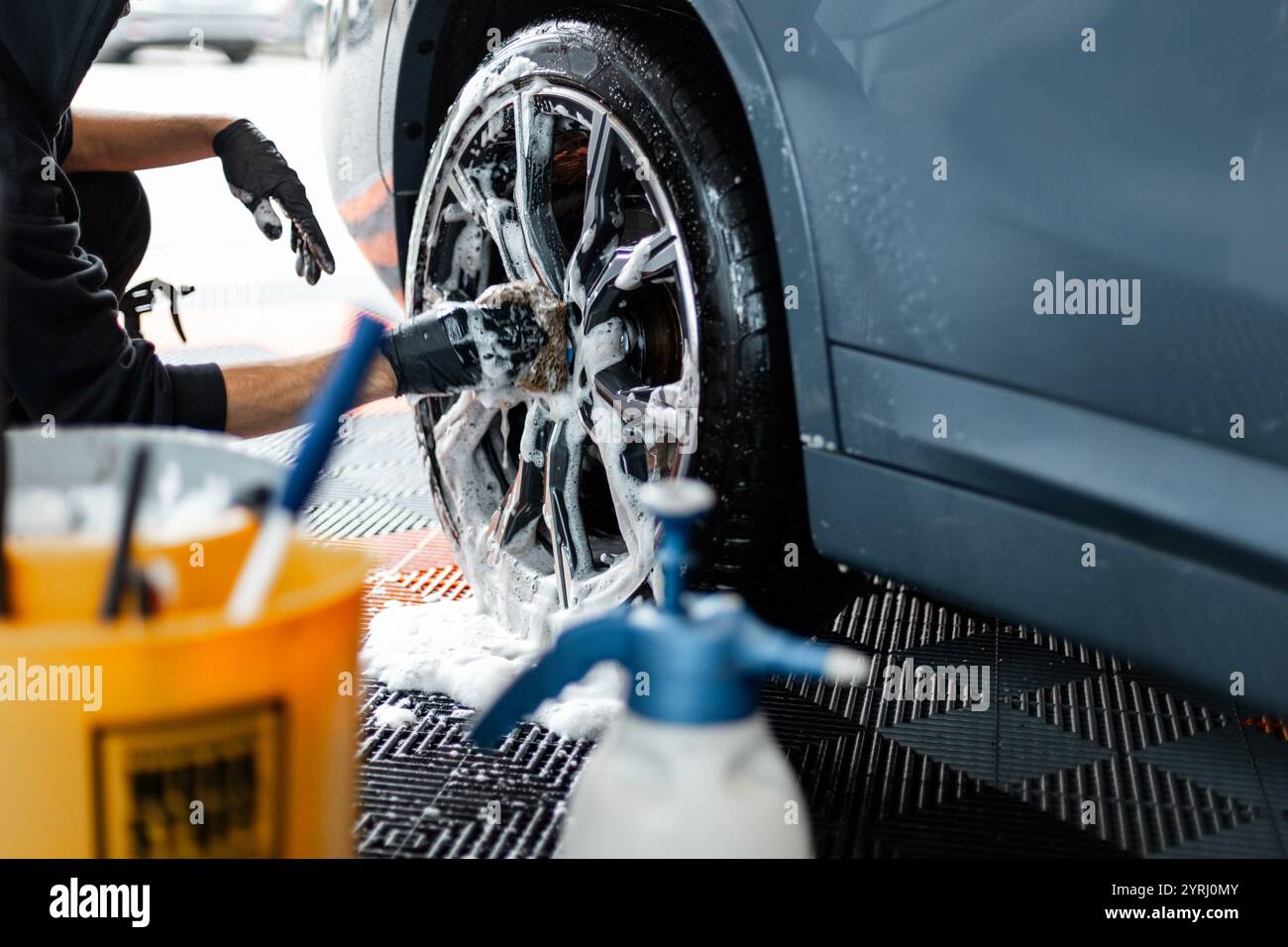
The process changes between a full-service tunnel wash, a self-service bay, and a high-end detailing shop. A tunnel wash needs speed and repeatable results. A detailer has more time to inspect the wheel and use several tools.
Step 1: Cool and Rinse the Wheel
Technicians often rinse the wheel first to remove loose sand, salt, and mud. They also try to avoid applying cleaner to a very hot wheel. Heat can dry the chemical too fast and may increase the chance of spotting.
A cool rinse also reduces the risk of dragging sharp grit across the finish. This matters most on black painted wheels, gloss wheels, and polished aluminum.
Step 2: Apply the Correct Wheel Cleaner
The cleaner is sprayed on the face of the wheel, inside the barrel, and near the lug nuts. Some shops use a foaming sprayer because foam clings to vertical surfaces. Other shops use a pump sprayer or a pressure washer foam cannon.
The product must stay wet for its stated dwell time. Dwell time is the short period during which the cleaner works before it is rinsed. Letting a wheel cleaner dry can cause streaks, stains, or dull patches.
Step 3: Agitate With Brushes
A wheel brush breaks the bond between dirt and the surface. A detailer may use a soft face brush, a long barrel brush, a lug-nut brush, and a small spoke brush.
The brush should match the surface. A soft microfiber or flagged-tip brush is better for delicate painted and coated wheels. A stiffer brush may help with truck wheels that have thick mud, but it can scratch a polished or clear-coated finish.
Step 4: Rinse From Top to Bottom
Most technicians rinse from the top of the wheel downward. This carries dirty water away from clean areas. High pressure helps remove cleaner from the spokes, barrel, brake caliper, and lug holes.
A pressure washer can make wheel cleaning easier, but it is not always required. A normal hose with a focused nozzle can work for light dirt when paired with a suitable cleaner and brush.
Step 5: Dry and Inspect
Drying prevents water spots and reveals leftover brake dust. Shops may use compressed air around lug nuts and wheel edges, followed by a clean microfiber towel.
A wheel should be inspected before a protectant is applied. A tire dressing belongs on the tire sidewall, not on the brake rotor or tread. Overspray on the rotor can cause temporary braking noise or reduced friction.
The Different Wheel Finishes Need Different Cleaners
The wheel’s finish matters more than the vehicle’s badge. A painted steel wheel, chrome wheel, polished aluminum wheel, and ceramic-coated alloy wheel should not receive the same treatment.

If you do not know the finish, use a mild cleaner and test a hidden area. You can also check the owner’s manual, wheel manufacturer’s care guide, or the vehicle’s service information.
Clear-Coated and Painted Alloy Wheels
Many factory alloy wheels have paint covered by a clear coat. The clear coat acts as a protective layer, much like clear paint on a vehicle body.
A pH-neutral wheel cleaner is usually the best routine option. A diluted all-purpose cleaner may work on heavy road grime, but the label must say it is safe for the surface. Avoid abrasive pads and harsh acids unless the wheel maker approves them.
Chrome Wheels
Chrome has a thin plated surface that can look bright but may react poorly to harsh chemicals. Acid cleaners can cause clouding, discoloration, or peeling if the plating is damaged.
Use a product labeled safe for chrome. A soft brush and a clean microfiber towel are important. Do not use steel wool or rough scouring pads.
Polished Aluminum Wheels
Polished aluminum has little or no protective paint over the polished metal. It can oxidize and lose its shine if exposed to strong chemicals or abrasive tools.
A mild cleaner is the safer choice. Some owners use a dedicated aluminum polish after cleaning, but polishing removes a tiny amount of metal. It should not become a weekly task unless the wheel maker recommends it.
Black Gloss, Matte, and Satin Wheels
Gloss black wheels show dust, water spots, and fine scratches easily. Matte and satin finishes are even more specific. A polishing product can create shiny patches on a matte wheel.
Use a cleaner made for the finish. Do not use wax, glaze, or polish on matte wheels unless the product is specifically approved. A soft towel and gentle washing method help preserve the uniform look.
Powder-Coated Wheels
Powder coating is a durable finish often found on custom wheels, off-road wheels, and some factory parts. It still needs care. Chips, scratches, and exposed metal can allow corrosion to start.
A mild wheel cleaner works for most routine cleaning. If the coating has cracks or deep chips, a stronger chemical can reach the exposed material. Repairing the coating may be more useful than changing to a more aggressive cleaner.
Ceramic-Coated Wheels
A ceramic coating creates a slick protective layer over the wheel. It can make brake dust easier to rinse away, but it does not make the wheel immune to dirt or scratches.
Use a coating-safe shampoo or wheel cleaner. Avoid very strong degreasers unless the coating maker allows them. A coated wheel often needs less scrubbing, which can reduce the chance of fine marks.
Wheel Cleaner Types Compared
The best wheel cleaner depends on the dirt you are trying to remove. Brake dust, mud, tar, and mineral spots need different approaches.

This table gives a practical starting point. Always read the product label because formulas vary between brands.
| Dirt or contaminant | Useful product | Why it works |
|---|---|---|
| Loose dust and road film | Car shampoo or pH-neutral wheel cleaner | Lifts light dirt without strong chemistry |
| Heavy mud | Alkaline cleaner and pressure rinse | Breaks down organic grime and soil |
| Oily road film | Diluted degreaser | Helps dissolve grease and oil |
| Brown brake dust | Iron remover or wheel cleaner | Reacts with iron particles |
| Tar and asphalt spots | Tar remover or citrus solvent | Softens sticky petroleum residue |
| White mineral spots | Mild acid water-spot remover | Dissolves mineral deposits |
| Salt residue | Mild cleaner and plenty of water | Removes water-soluble salt before it sits |
The main difference between an iron remover and a normal wheel cleaner is the target. Iron remover reacts with iron particles. It does not replace a brush, rinse, or normal wash step.
Alkaline Wheel Cleaners
Alkaline cleaners have a higher pH. They are common in commercial car washes because they can work quickly on mud, grease, and road film.
They are often useful for trucks, SUVs, fleet vehicles, and wheels that have not been cleaned for months. They may be too strong for delicate finishes, old chrome, bare aluminum, or wheels with damaged coatings.
Acid Wheel Cleaners
Acid cleaners can dissolve mineral deposits and some stubborn brake-related residue. Commercial shops may use them under controlled conditions, especially on certain durable factory finishes.
Acid is not a good first choice for a beginner. It can damage polished aluminum, chrome, anodized surfaces, brake components, and nearby paint if used incorrectly. Never mix an acid cleaner with bleach, ammonia, or another chemical.
⚠️ Safety Warning: Wear eye protection and chemical-resistant gloves when using wheel cleaners. Keep the product off hot surfaces, avoid breathing spray mist, and follow the label’s dilution and rinse instructions.
Iron-Removing Wheel Cleaners
Iron removers contain chemicals that react with iron particles. The product may turn purple or dark red as it reacts with brake dust. This color change is sometimes called “bleeding.”
The color is not proof that every contaminant has disappeared. The wheel may still need agitation and a full rinse. Iron removers also have a strong odor, so use them outdoors with good airflow.
Degreasers and All-Purpose Cleaners
A degreaser can help remove oily road film, grease, and thick dirt. Professional shops often dilute it to match the job. A product that is safe for an engine bay may still be too strong for a wheel’s clear coat.
Beginners should choose a labeled wheel cleaner instead of guessing at dilution. Experienced DIY detailers can use a measured dilution, but they should still test the product and avoid letting it dry.
Tools Car Washes Use on Wheels
Chemicals do only part of the work. The right tool reaches the back of the wheel without scratching the face or touching the brake rotor.
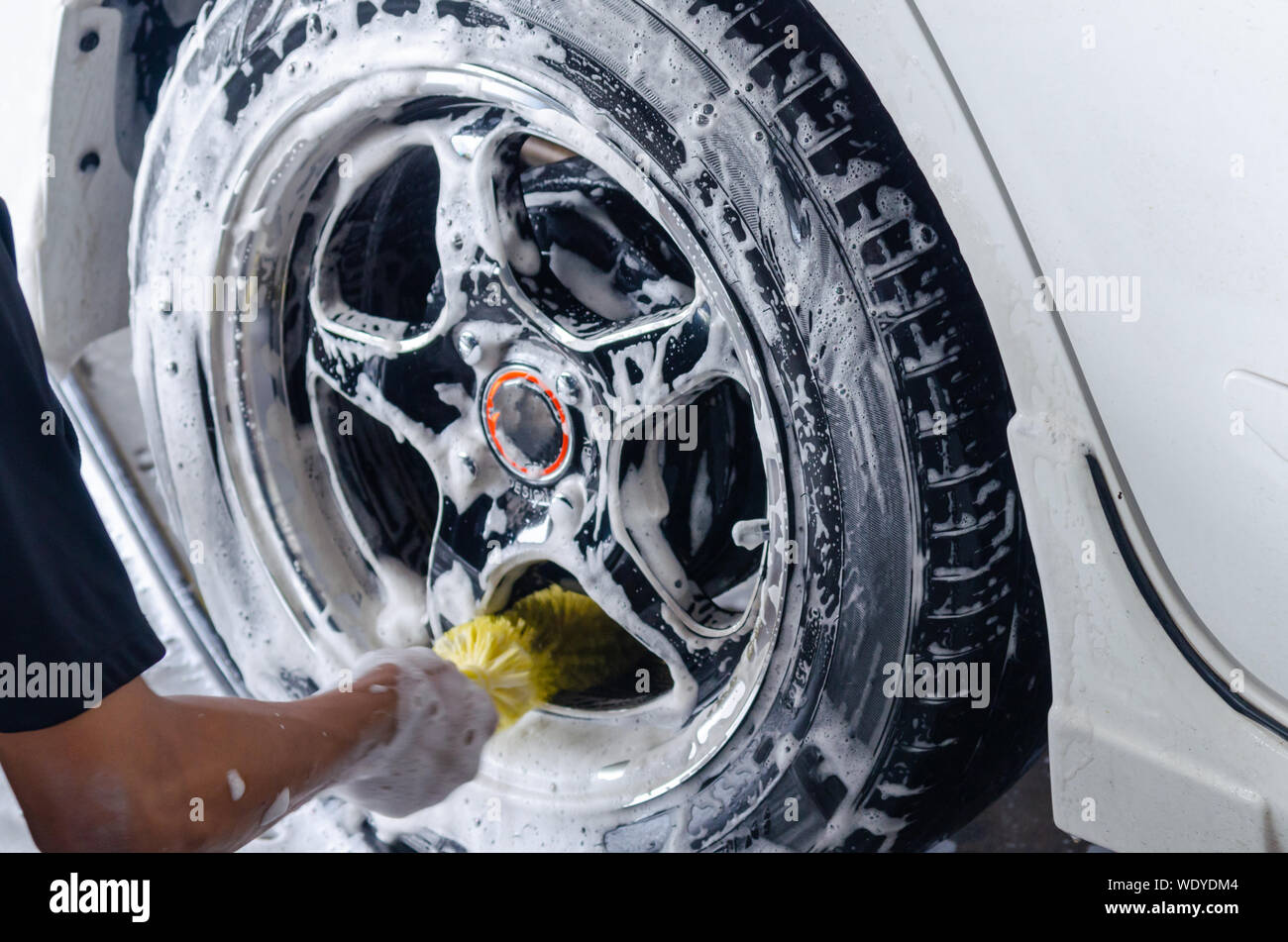
Tool choice also depends on the vehicle. A small sedan with 17-inch factory wheels has different access needs than a lifted truck with deep aftermarket wheels.
| Tool | Main job | Best fit |
|---|---|---|
| Pressure washer | Removes loose and softened dirt | Heavy soil and off-road trucks |
| Wheel face brush | Cleans spokes and outer surfaces | Most factory wheels |
| Barrel brush | Reaches behind spokes | Deep alloy wheels |
| Lug-nut brush | Cleans around fasteners | Tight lug pockets |
| Microfiber towel | Dries and wipes residue | Painted and coated wheels |
| Soft detailing brush | Reaches seams and logos | Intricate wheel designs |
| Hose and nozzle | Rinses without high equipment cost | Beginners and home washing |
A pressure washer is helpful but not essential. If you use one, keep the nozzle at a safe distance and avoid spraying directly into wheel bearings, tire valve cores, damaged rubber, or electrical sensors.
Wheel Brushes
A good wheel brush has soft, nonmetal fibers and a handle that does not rub against the rim. Some brushes have a flexible shaft for reaching the inner barrel. Others are short and wide for cleaning the wheel face.
Do not use the same brush on the wheel and the tire if the brush holds greasy dirt. Labeling brushes can prevent cross-contamination.
Microfiber Towels
Microfiber towels trap dirt and reduce the chance of dragging grit over the finish. Use separate towels for wheels and paint. A towel used on a dirty wheel should not return to the hood or windshield.
Wash wheel towels separately. Do not use fabric softener because it can reduce microfiber’s ability to absorb and trap particles.
Pressure Washers
Pressure washers provide strong rinsing power. Many home units operate in a range suitable for car care, but the pressure at the nozzle depends on the machine, tip, distance, and water flow.
High pressure does not equal better cleaning. Too much force can push water into seals, damage loose paint, or remove tire lettering. Use a wide spray pattern and keep the wand moving.
What Car Washes Use for Brake Dust
Brake dust is a mix of fine particles from brake pads, rotors, road dirt, and other material. On some vehicles, the dust contains a large amount of iron. Heat can bake it onto the wheel surface.

Routine wheel cleaner can remove fresh brake dust. Older or heavily bonded dust may need an iron remover, a soft brush, and repeated treatment. The wheel may also have permanent etching if the dust sat on the finish while wet.
Why Brake Dust Returns Quickly
Some brake pads create more visible dust than others. Driving style also matters. Stop-and-go traffic, hills, towing, and repeated hard braking can increase dust.
A wheel cleaner cannot prevent brake dust from forming. A wheel coating may make future cleaning easier, but it will not stop normal brake wear. If one wheel suddenly becomes much dirtier than the others, have the brakes inspected.
When Brake Dust Signals a Problem
Uneven dust can point to a sticking caliper, dragging brake pad, or other brake issue. Heat from one wheel, a burning smell, pulling during braking, or unusual noise also needs attention.
Do not spray a wheel cleaner on a hot brake assembly to solve a mechanical problem. Let the vehicle cool and arrange a brake inspection with a qualified technician.
Choosing a Wheel Cleaner for Your Vehicle
The best wheel cleaner for a vehicle depends on the finish, use, climate, and owner’s skill. A new driver may need a simple pH-neutral product. An experienced DIYer may want a separate iron remover and a coating-safe maintenance cleaner.

The product should also fit the vehicle’s environment. Road salt, desert dust, coastal air, mud, and winter grime create different cleaning needs.
| Driver or vehicle | Good starting choice | Product to skip first |
|---|---|---|
| Beginner with a sedan | pH-neutral cleaner and soft brush | Strong acid cleaner |
| Parent buying for a teen | Simple labeled kit with gloves and towels | Complex chemical system |
| DIY detailer | pH-neutral cleaner plus iron remover | Unlabeled bulk chemical |
| Truck or SUV owner | Cleaner suited to mud and road film | Very soft shampoo alone |
| EV owner | Coating-safe cleaner and gentle brushes | Harsh cleaner used near hot brakes |
| Classic-car owner | Finish-specific mild cleaner | Generic acid product |
| Winter driver | Frequent mild cleaning and salt rinse | Letting salt sit for weeks |
A teen driver is usually better served by a simple kit than by five strong chemicals. Clear instructions, gloves, labeled towels, and a soft brush reduce the chance of damage.
Best Choice for Beginners
Choose a pH-neutral wheel cleaner that lists compatibility with painted, clear-coated, and factory alloy wheels. Add one soft wheel brush, a hose, and two microfiber towels.
This setup works well for most sedans, crossovers, hybrids, and newer SUVs. It is also a practical gift for a new driver because it does not require a pressure washer or advanced technique.
Best Choice for Trucks and SUVs
Trucks and SUVs often collect more mud, sand, salt, and grease. A stronger cleaner may help, but start with a product labeled safe for the wheel finish.
A pressure washer can save time on off-road wheels. Use a separate stiff tire brush for the tire sidewall and a softer brush for painted alloy wheels.
Best Choice for EVs and Hybrids
EVs and hybrids can create significant brake dust in some driving conditions, though regenerative braking may reduce friction-brake use during normal driving. Wheel care is the same basic process: cool the wheel, use the right cleaner, agitate gently, and rinse fully.
Do not assume an EV wheel needs a special chemical. Focus on the finish and the contamination. Follow the vehicle maker’s instructions if the wheels have special coatings or aero covers.
Best Choice for Older or Custom Wheels
Older wheels may have weakened clear coat, corrosion, pitting, or exposed metal. A harsh cleaner can make the damage worse.
Start with a mild product and a small test area. If the wheel is valuable, rare, or already peeling, professional detailing may cost less than replacing a damaged finish.
What Happens at Different Types of Car Washes
Not all car washes use the same wheel-cleaning method. Service level, equipment, labor, and wash time affect the result.

A quick tunnel wash may clean the visible face of a wheel but miss the inner barrel. A hand wash or detail service usually reaches more areas because a person can change brushes and inspect the surface.
| Car wash type | Typical wheel process | Common limitation |
|---|---|---|
| Automatic tunnel wash | Chemical spray, wheel brushes, rinse | May miss inner barrels |
| Touchless wash | Strong cleaner and high-pressure rinse | May not remove bonded dust |
| Self-service bay | User-applied soap and spray wand | Quality depends on technique |
| Hand wash | Cleaner, brushes, rinse, dry | More labor and higher cost |
| Detail shop | Finish-specific chemicals and deep cleaning | Takes more time |
| Mobile detailer | Portable water, brushes, and cleaners | Equipment varies by provider |
A touchless wash reduces brush contact, which may help limit swirl marks on the body. However, it often uses stronger chemicals and may not remove baked-on brake dust without manual agitation.
A hand wash is usually better for detailed wheel cleaning. Ask whether the service includes the inner barrel, lug pockets, drying, and an inspection of the finish.
A Safe DIY Wheel-Cleaning Method
You can clean most factory wheels at home with basic tools. Work on one wheel at a time so the cleaner does not dry.

Before you begin, park on level ground away from direct sun. Set the parking brake, let the brakes cool, and read the cleaner label. Do not clean wheels immediately after a long downhill drive, towing trip, or hard braking session.
Tools and Materials
The following setup works for most beginners and experienced DIY owners.
| Item | Suggested use | Important note |
|---|---|---|
| Wheel cleaner | Loosens brake dust and road film | Match it to the finish |
| Hose or pressure washer | Rinses dirt and chemical | Use safe distance |
| Soft wheel brush | Cleans spokes and face | Avoid metal bristles |
| Barrel brush | Reaches behind the spokes | Check for exposed hardware |
| Tire brush | Cleans rubber sidewall | Keep separate from wheel brush |
| Microfiber towels | Dries the wheel | Use clean towels only |
| Gloves and eye protection | Protects skin and eyes | Wash hands after use |
You may also use a bucket, grit guard, detailing brush, and wheel sealant. A ceramic coating is optional. It can help water and dirt release more easily, but it does not remove the need for washing.
Step-by-Step Process
-
Check the wheel. Look for peeling clear coat, exposed metal, cracks, curb damage, and loose trim. If the wheel is damaged, use a mild cleaner and avoid aggressive scrubbing.
-
Rinse the wheel. Start with the inner barrel and then rinse the face. Remove as much loose grit as possible.
-
Apply the cleaner. Spray an even coat. Keep the wheel wet during the stated dwell time.
-
Clean the tire separately. Use a tire cleaner and tire brush on the rubber. Do not use a wheel brush covered in tire dressing on the wheel face.
-
Agitate the wheel. Use a soft brush on the face, a narrow brush around the lug nuts, and a barrel brush behind the spokes.
-
Rinse fully. Rinse from the top down. Flush the lug holes and inner barrel.
-
Repeat only when needed. A second mild cleaning is usually safer than one very aggressive scrubbing session.
-
Dry the wheel. Use compressed air or a clean microfiber towel. Remove water from the lug pockets and valve stem area.
-
Inspect the result. Look for remaining tar, iron deposits, and water spots. Treat those areas with a suitable product.
-
Protect the finish. Apply a wheel sealant or approved ceramic maintenance product if desired. Keep all tire dressing away from the tread.
💡 Pro Tip: Clean wheels from top to bottom, but rinse the inner barrel early. Dirt from the barrel can run onto the spokes and make the face look dirty again.
Common Wheel-Cleaning Mistakes
Most wheel damage comes from the wrong chemical, too much heat, poor tools, or rushed rinsing. A careful process is usually more valuable than a stronger product.
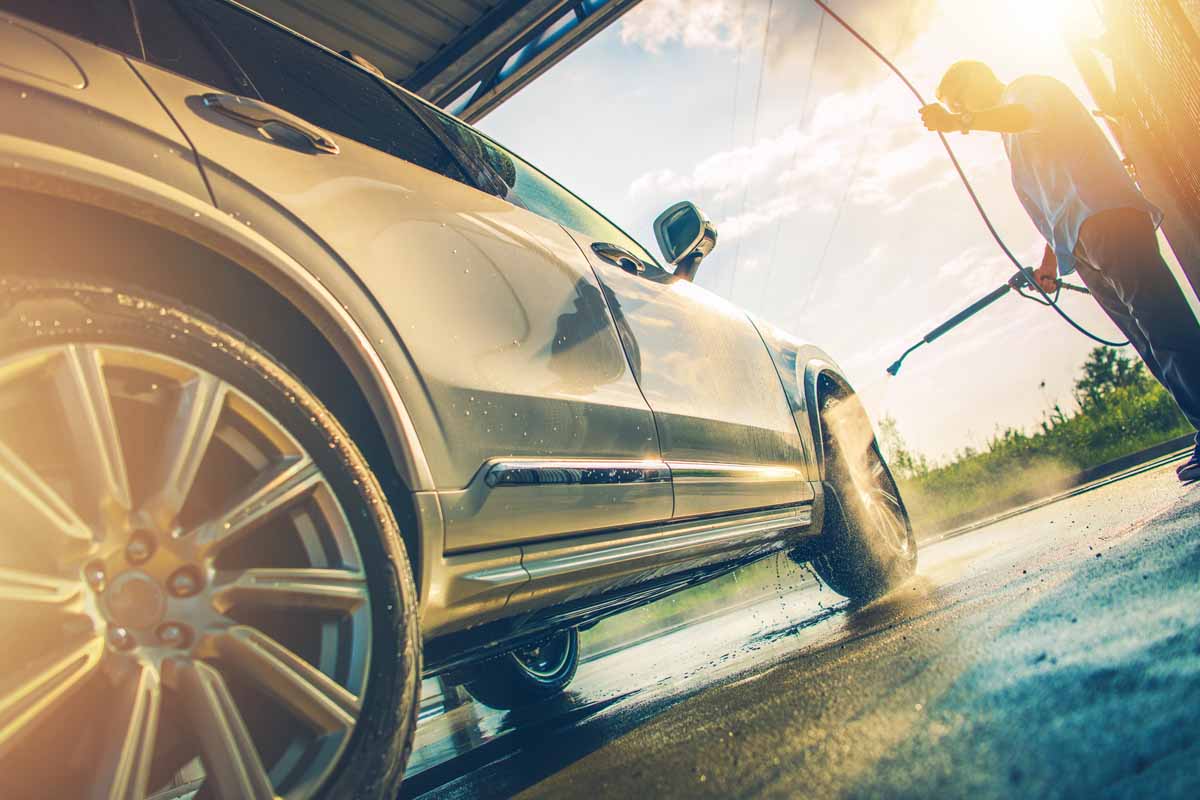
These mistakes affect beginners and experienced DIYers alike.
| Mistake | What can happen | Better approach |
|---|---|---|
| Cleaning a hot wheel | Cleaner dries and spots | Wait until the wheel is cool |
| Using acid on unknown metal | Finish can discolor or etch | Start with pH-neutral cleaner |
| Using a metal brush | Clear coat can scratch | Use soft, nonmetal fibers |
| Letting cleaner dry | Streaks or stains may form | Work in small sections |
| Using one towel everywhere | Grit can scratch paint | Keep wheel towels separate |
| Spraying tire dressing on tread | Traction may be reduced | Apply only to sidewalls |
| Skipping the inner barrel | Dust remains hidden | Use a barrel brush |
| Mixing chemicals | Harmful fumes or reactions | Use one product at a time |
Do not assume a product is safe because a car wash uses it. Professional cleaners may rely on dilution ratios, training, and fast rinsing. A concentrated chemical used at home can produce a very different result.
Wheel Protection Can Reduce Cleaning Effort
Wheel protection does not replace cleaning, but it can make maintenance easier. Options include wheel sealants, synthetic protectants, and ceramic coatings.

A sealant creates a temporary barrier that can help dirt release during washing. A ceramic coating is a more durable chemical layer when correctly prepared and applied. Both can fail early if the wheel is not clean before application.
Wheel Sealants
Sealants are often simpler and less costly than coatings. They may last weeks or months, depending on the product, washing method, weather, and wheel heat.
They suit beginners, parents, and drivers who want a simple maintenance routine. They are not a repair for peeling clear coat or corrosion.
Ceramic Coatings
A ceramic coating can help reduce the bond between brake dust and the wheel. It does not prevent chips, curb rash, brake dust, water spots, or corrosion.
Coating application needs careful cleaning and surface preparation. An experienced DIYer may apply a consumer product. A high-value custom wheel may be better handled by a professional.
Wax and Body Paint Products
Some car waxes can be used on painted wheels if the label allows it. Do not use a product that leaves a glossy film on matte or satin finishes.
Car wax is not the same as a wheel-specific coating. Brake heat, wheel cleaners, and road debris can reduce its life.
Seasonal Wheel-Cleaning Advice
Climate changes how often wheels should be cleaned. Salt and moisture create a different risk than dry dust or summer tar.

Regular light cleaning is often safer than waiting until contamination forms a thick, baked layer.
| Season or climate | Main wheel threat | Useful response |
|---|---|---|
| Winter snow areas | Road salt and brine | Rinse often, including inner barrels |
| Coastal areas | Salt air and moisture | Wash and dry more often |
| Hot climates | Heat-baked dust and tar | Clean cool wheels in the shade |
| Desert areas | Fine sand and dust | Rinse before brushing |
| Rainy regions | Mud and mineral spots | Dry wheels after washing |
| Off-road use | Clay, grit, and packed mud | Use pressure rinse and safe brushes |
Winter salt deserves special attention. It can collect behind spokes and around wheel weights, valve stems, and exposed metal. A rinse after a storm can help limit buildup.
In hot weather, the wheel may stay warm long after the car is parked. Touch it with the back of your hand only if safe, and never apply a strong chemical to a surface that feels hot.
🌿 Eco or Disposal Note: Do not pour concentrated wheel cleaner, degreaser, or solvent into a storm drain. Follow the label and local rules for chemical disposal. Use only the amount needed and rinse responsibly.
Safety and Environmental Concerns
Wheel cleaners can irritate skin, eyes, and airways. Some formulas can damage plants, concrete, uncoated metal, and painted surfaces.

Use gloves, eye protection, and ventilation. Keep children and pets away from the work area. Never mix wheel cleaner with bleach, ammonia, or another chemical.
Protecting Brakes and Tires
Avoid spraying directly into the brake caliper or rotor for long periods. A normal rinse is part of wheel cleaning, but a concentrated chemical should not sit on brake parts.
Keep dressing off the tire tread. If overspray reaches the tread, wipe it off with a suitable cleaner before driving. A slick tread can reduce grip, especially in rain.
Protecting the Driveway
Some wheel cleaners can stain concrete. Rinse the work area with plenty of clean water when allowed by local drainage rules. A wash mat or approved containment system can help catch runoff.
Never clean wheels near an open storm drain without checking local requirements. Commercial shops may have oil-water separators and wastewater controls that home users do not.
When to Stop and Call a Professional
Stop if the finish changes color, becomes cloudy, feels rough, or shows streaks that do not rinse away. Also stop if the wheel has deep corrosion, loose plating, peeling paint, or structural damage.
A professional detailer can identify the finish and reduce the chance of making the problem worse. A wheel repair shop is the right choice for cracks, bends, severe curb damage, and structural concerns.
Is Professional Wheel Cleaning Worth the Money?
Professional wheel cleaning can be worth the cost when the wheels are heavily soiled, delicate, expensive, or difficult to access. It is also useful for drivers who lack a safe washing area or do not want to handle strong chemicals.

For routine cleaning, DIY care usually costs less. A basic wheel cleaner, brush, gloves, and towels can serve a sedan or crossover for many washes. The tradeoff is time, water use, and the need to learn the correct technique.
A professional service is a better fit for:
- A vehicle with expensive aftermarket wheels
- Wheels with polished aluminum or old chrome
- A truck with heavy mud and brake dust
- A car being prepared for sale
- A driver with limited mobility
- A vehicle with a ceramic coating that needs safe maintenance
- A wheel with unknown or failing finish
A beginner should not feel pressured to buy a pressure washer or a large chemical set. A mild cleaner and one good brush can handle many routine jobs.
Wheel-Cleaning Costs and Product Tiers
Prices change by brand, size, concentration, and service level. Check the latest listing for updated features, instructions, and fitment claims.
| Price tier | Usually includes | Suits |
|---|---|---|
| Budget | Basic cleaner and simple brush | Beginners and light dirt |
| Mid-range | Better brush, towels, and finish-safe cleaner | Regular DIY maintenance |
| Premium | Concentrated cleaner, specialty brushes, iron remover, sealant | Enthusiasts and custom wheels |
A low-cost product is not automatically poor. It may be a good choice for a commuter car with factory painted wheels. A premium system makes more sense when the owner cleans several vehicles or cares for costly custom wheels.
Gift buyers should prioritize safe instructions and useful tools over a large bottle of harsh chemical. A small kit that gets used correctly is better than an advanced kit that stays in the garage.
How to Read a Wheel-Cleaner Label
The label tells you more than the color or foam. Look for clear surface compatibility, dilution directions, dwell time, and warnings.
A product should identify whether it is safe for painted wheels, clear-coated wheels, chrome, polished aluminum, anodized aluminum, powder coating, or ceramic coatings. If it lists none of these, choose another product.
Check for:
- Surface compatibility
- Ready-to-use or concentrate status
- Dilution ratio
- Maximum dwell time
- Hot-surface warning
- Required gloves or eye protection
- Rinse instructions
- Storage and disposal directions
- Instructions for use around brakes and tires
Avoid products that rely only on dramatic color, strong odor, or aggressive marketing. A cleaner should have clear instructions and a known use case.
Wheel Cleaner Alternatives
You do not always need a dedicated wheel cleaner. Mild car shampoo can handle light dust on frequently washed wheels. It is often the safest choice for coated wheels and routine maintenance.
Other alternatives have limits:
- Car shampoo: Good for light dirt, but weak on baked brake dust.
- Diluted all-purpose cleaner: Useful for road film when the label allows it.
- Steam cleaning: Can loosen grime, but needs care around bearings and sensitive parts.
- Waterless wash product: May work on light dust, but avoid wiping heavy grit.
- Clay bar: Can remove bonded surface material, but needs lubrication and careful use.
- Professional decontamination: Useful for severe iron, tar, and mineral deposits.
Do not use household bathroom cleaner, oven cleaner, abrasive powder, or unknown solvent on wheels. These products may attack the finish and leave permanent damage.
Frequently Asked Questions
Q: What soap do car washes use on wheels?
A: Many car washes use a dedicated wheel cleaner rather than ordinary car soap. The formula may be pH-neutral, alkaline, or acidic. Touchless systems often use a stronger cleaner with high-pressure water, while hand-wash shops may use a mild wheel cleaner and brushes.
Q: Is wheel cleaner safe for all wheels?
A: No. Wheel finishes vary. Chrome, polished aluminum, matte paint, powder coating, and clear-coated alloy may need different products. Read the label and test a hidden spot before cleaning the entire wheel.
Q: Can I use dish soap to clean car wheels?
A: Dish soap can remove light grease, but it is not the best regular wheel cleaner. It may strip protection and may not remove baked brake dust. A finish-safe automotive wheel cleaner is usually a better choice.
Q: Do car washes remove brake dust?
A: They can remove loose and moderate brake dust. A basic tunnel wash may not remove dust baked into the finish or hidden inside the barrel. Heavy contamination may need a hand wash, brush agitation, or an iron remover.
Q: Why does wheel cleaner turn purple?
A: Some iron removers react with iron particles and turn purple, red, or dark violet. The color shows a chemical reaction, but it does not prove the wheel is fully clean. You still need to rinse and often agitate the surface.
Q: Can wheel cleaner damage brake rotors?
A: A properly used product should rinse away, but strong chemicals can cause problems if they dry or remain on metal. Keep the wheel cool, follow the label, rinse thoroughly, and do not use cleaner as a substitute for brake service.
Q: How often should I clean my wheels?
A: Many drivers should clean wheels every one to four weeks, depending on mileage, brake dust, weather, and road salt. Frequent light cleaning is safer than allowing thick contamination to bake onto the finish.
Q: Do I need a pressure washer for wheel cleaning?
A: No. A hose, safe nozzle, wheel cleaner, and brush can clean most wheels. A pressure washer saves time on mud and inner barrels, but excessive pressure can damage rubber, loose paint, and seals.
Q: What is the best wheel cleaner for beginners?
A: A pH-neutral, ready-to-use cleaner labeled safe for painted and clear-coated wheels is a strong starting choice. Pair it with a soft brush, gloves, eye protection, and separate microfiber towels.
Q: What is the best wheel cleaner for trucks?
A: Truck owners often benefit from a cleaner designed for heavy road film and mud, plus a pressure rinse and separate tire brush. Confirm that the product is safe for the truck’s painted, powder-coated, chrome, or aftermarket wheel finish.
Q: Can I use iron remover every time I wash?
A: Usually, routine iron remover use is unnecessary. It is best for embedded iron contamination or periodic deep cleaning. Frequent maintenance with a mild wheel cleaner is often simpler and less expensive.
Q: Should I clean the wheels before washing the car?
A: Yes. Wheels are among the dirtiest parts of the vehicle. Cleaning them first helps prevent wheel grime from splashing onto freshly washed paint. Use separate tools so brake dust does not reach the body.
Q: Can wheel cleaner remove rust?
A: It may remove surface iron contamination, but it cannot repair deep rust, pitting, peeling chrome, or corroded metal. Structural or severe finish damage needs inspection and possible wheel repair.
Q: Is a ceramic coating worth it for wheels?
A: It can be worth it for enthusiasts, custom-wheel owners, and drivers who want easier maintenance. It costs more and needs proper preparation. It does not stop brake dust, curb damage, chips, or corrosion.
Q: How long does wheel cleaner last?
A: A ready-to-use bottle may last several washes, while a concentrate can last much longer when diluted correctly. Actual use depends on wheel size, soil level, spray pattern, and whether you clean four, six, or more wheels.
Q: What should I give a teen driver for wheel care?
A: Give a mild labeled wheel cleaner, soft brush, microfiber towels, gloves, and simple instructions. A tire-pressure gauge, tire inflator, roadside kit, and basic maintenance guide are also useful safety gifts.
Final Thoughts
Car washes use more than one product to clean wheels. The typical system combines a dedicated wheel cleaner, water pressure, brushes, and drying tools. Stronger products such as alkaline cleaners, acid cleaners, degreasers, and iron removers have specific uses and should not be treated as interchangeable.
For most drivers, the safest routine is simple: clean cool wheels, rinse first, use a finish-safe cleaner, brush gently, rinse well, and dry with a clean towel. Choose a pH-neutral product for regular care unless the wheel maker recommends something else.
Beginners and teen drivers should start with a mild cleaner and basic tools. Truck and SUV owners may need stronger road-film control. DIY detailers and custom-wheel owners can add iron remover, barrel brushes, and wheel protection. When the finish is rare, damaged, or unknown, professional help is often the wise choice.
Affiliate disclosure: This article may contain affiliate links. If you buy a product through one of these links, we may earn a commission at no extra cost to you. Product availability, pricing, ingredients, and fitment can change, so check the latest product listing and manufacturer instructions before buying or using any wheel-cleaning product.