Does Iron Remover Remove Wax: What It Really Does
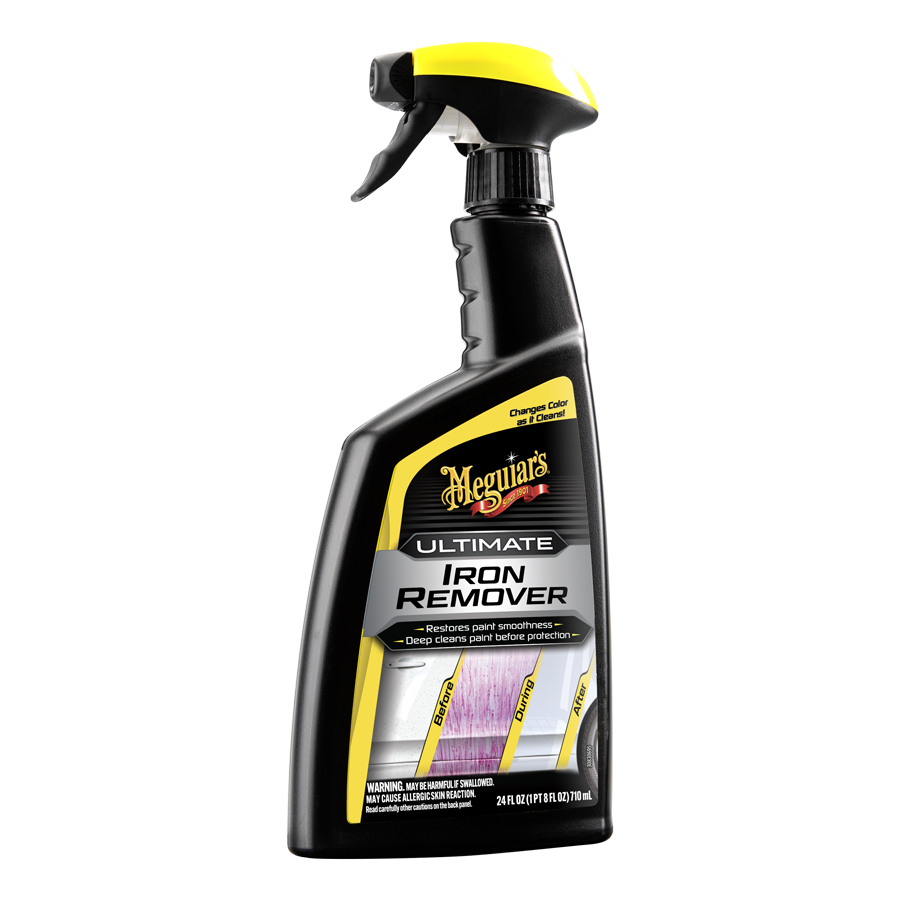
Iron remover is designed to dissolve embedded iron particles, not to remove car wax. It targets ferrous brake dust and industrial fallout that cling to paint, wheels, and other exterior surfaces. A good iron remover can weaken or reduce some wax protection, especially after repeated use, but it should not be treated as a reliable wax stripper.
That distinction matters when you plan a full detail. If you want to remove old wax before applying a new layer, use a suitable strip wash, diluted all-purpose cleaner, dedicated wax remover, clay treatment, or light polish. If you only want to remove rust-colored specks, iron remover is often the right tool.
Affiliate Disclosure: This article may contain affiliate links. If you buy through one of these links, we may earn a commission at no extra cost to you. Product availability and features can change, so check the current product page and follow the label.
Quick answer: Does iron remover remove wax?
Iron remover does not directly remove wax in the same way as a wax stripper or polish. Its main job is to dissolve iron particles bonded to the surface. However, its chemicals, dwell time, agitation, and repeated use can reduce or weaken some waxes and paint sealants.

A single careful application may leave part of a wax layer intact. A strong product used several times on a warm panel may reduce protection much more. The result depends on the product formula, wax type, paint temperature, dilution, dwell time, and how much you scrub.
| Question | Short answer | Best choice |
|---|---|---|
| Will iron remover remove all wax? | Usually no | Use a dedicated wax remover or polish |
| Can it weaken wax? | Yes, it can | Rinse well and avoid long dwell times |
| Is it safe for ceramic coating? | Often, but check the label | Use a coating-safe product |
| Does it remove iron contamination? | Yes, that is its main purpose | Use it before clay or polishing |
The key takeaway is simple: use iron remover for iron contamination, not as your main wax-removal product. Using the right chemical for the right job saves time and protects the clear coat.
What iron remover actually does
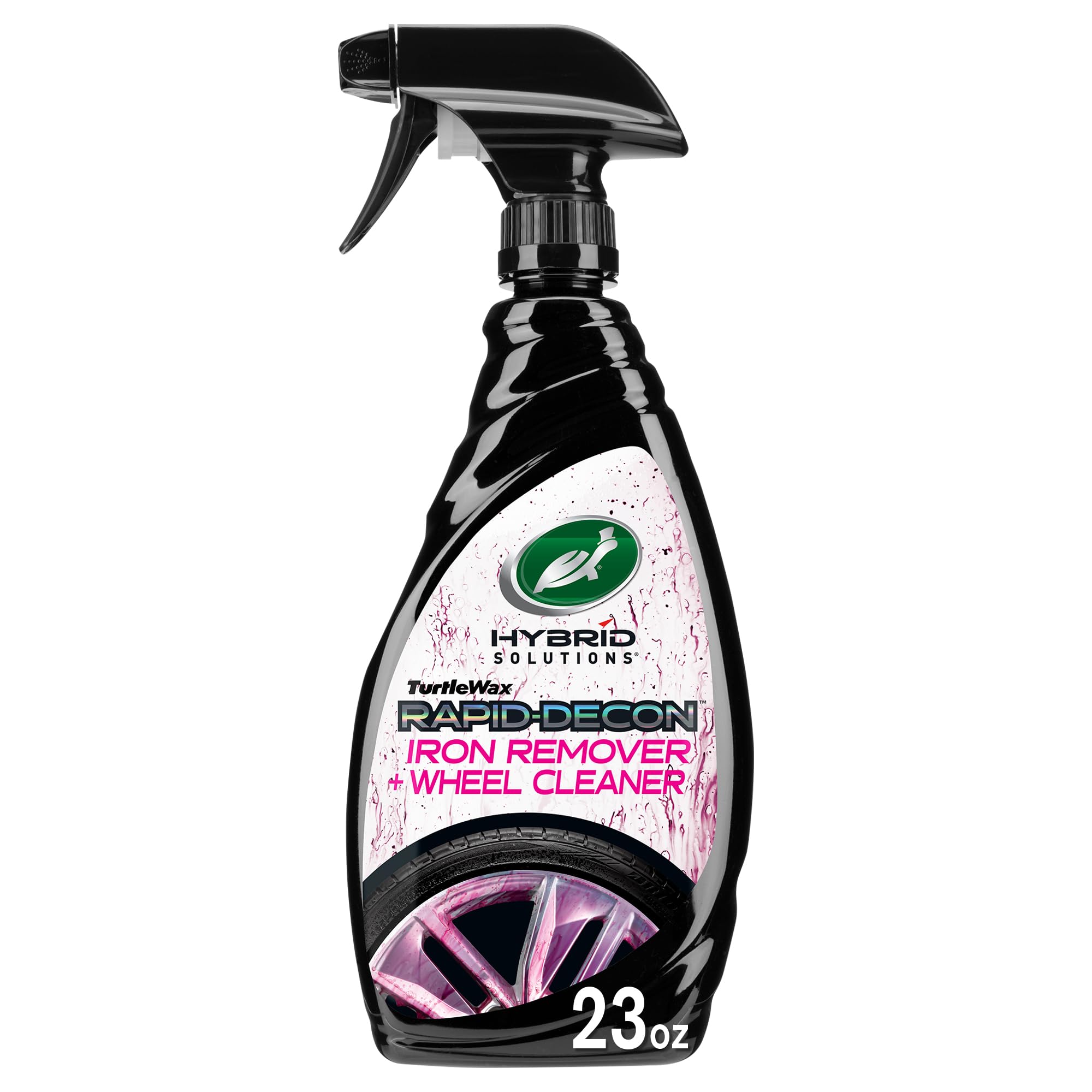
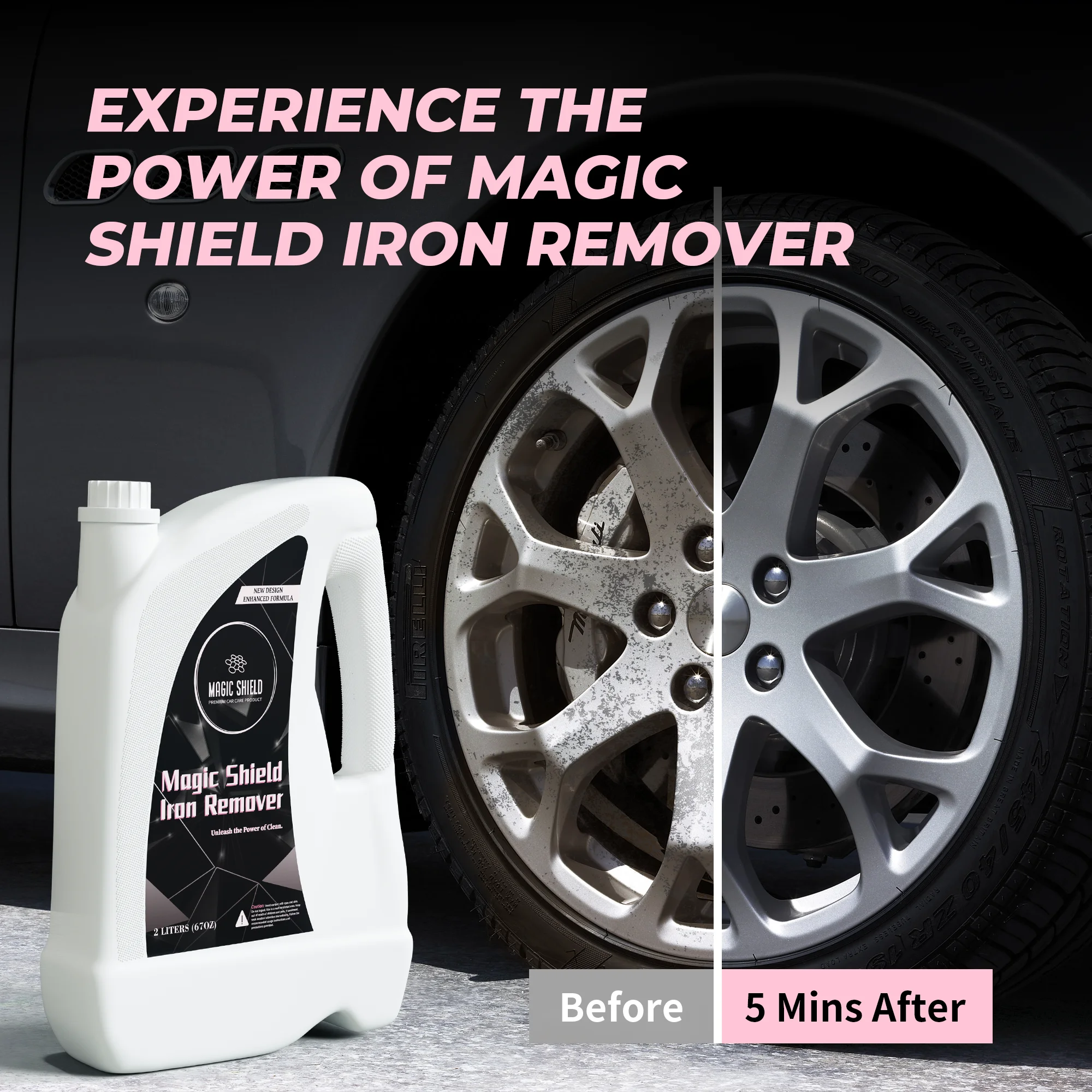
Iron remover uses chemicals that react with iron particles. These particles often come from brake rotors, rail dust, factories, construction areas, and road dust. When the product reaches the particles, they may dissolve and turn purple, violet, or dark red.

The color change is called a reaction indicator. It shows that the product is working on iron-based contamination. It does not prove that the surface is clean, and it does not show that all wax has disappeared.
Why brake dust bonds to paint
Brake pads and rotors shed very small metal particles. Some are hot when they leave the braking system. They can land on wheels, paint, glass, and trim before cooling.
Normal washing may remove loose dust. It may not remove particles that have bonded to the surface. Over time, these particles can feel like tiny rough bumps under a clean hand.
Iron remover helps dissolve those particles. It does not melt the paint, and it does not act like a sanding product. It works through a chemical reaction rather than physical cutting.
What iron remover does not target
Iron remover is not made to dissolve every type of dirt. It is also not a complete cleaner for oil, road film, tree sap, tar, or mineral water spots.
| Contamination | Does iron remover target it? | Better option |
|---|---|---|
| Brake dust and rail dust | Yes | Iron remover |
| Road film and grease | Limited | Car shampoo or degreaser |
| Tree sap | No | Tar and sap remover |
| Tar spots | No | Solvent-based tar remover |
| Water spots | No | Mineral deposit remover or polish |
| Old wax | Not reliably | Strip wash, wax remover, or polish |
A common mistake is to spray iron remover on every dirty panel and expect it to replace a full wash. It cannot. Wash first, remove iron contamination second, and use other products for other problems.
Iron remover versus wax remover
Iron remover and wax remover may appear similar because both can change how water behaves on paint. Their chemistry and purpose are different.
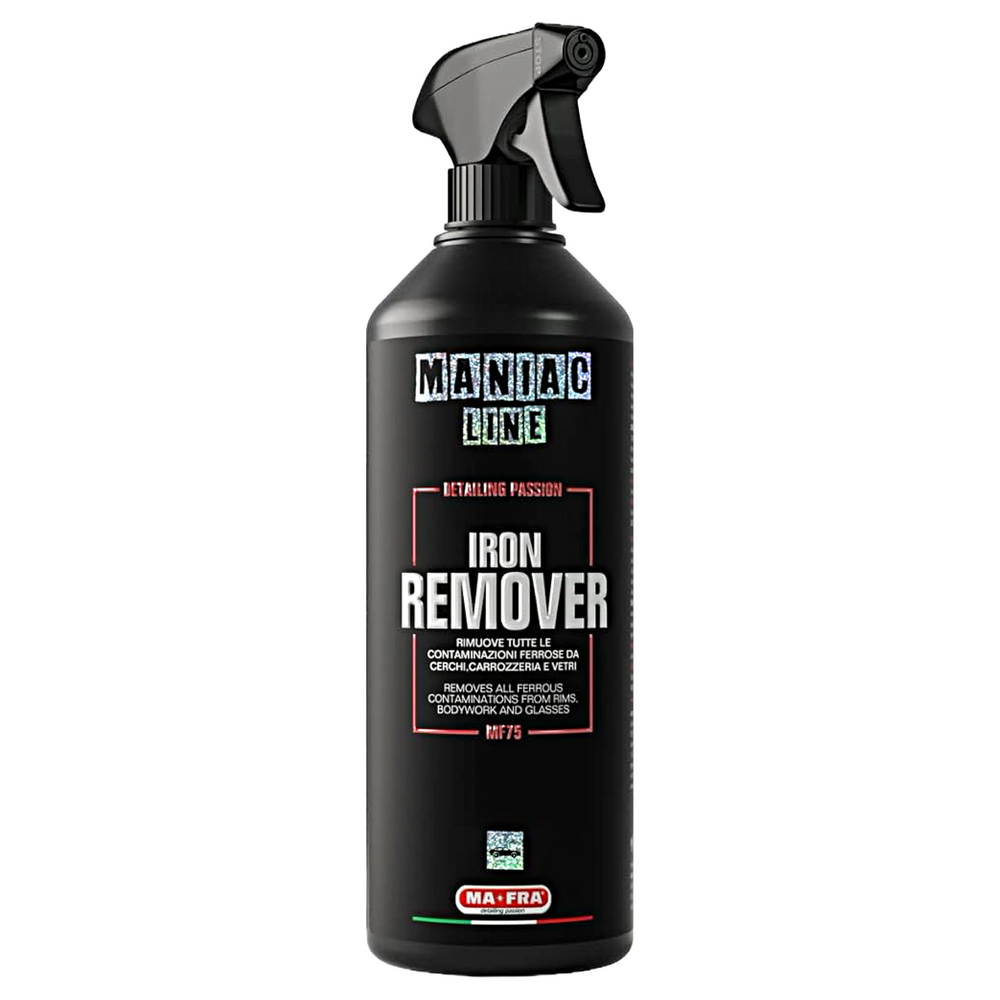
A wax remover is made to break down oils, polymers, or natural waxes. An iron remover is made to react with metal particles. One product may affect the other type of material as a side effect, but that does not make the products interchangeable.
Main differences
| Feature | Iron remover | Wax remover or strip product |
|---|---|---|
| Primary target | Ferrous metal particles | Wax, oils, and old protection |
| Typical use | Before decontamination or polishing | Before a new wax or coating |
| Color reaction | Often purple or red | Usually no color reaction |
| Best surface | Paint, wheels, and approved trim | Usually exterior paint |
| Main risk | Staining or drying if misused | Trim damage or paint dulling if too strong |
The main difference between iron remover and wax remover is the target material. Iron remover attacks metal contamination. Wax remover attacks protection and oily residue.
Why some iron removers affect wax
Many iron removers contain surfactants. A surfactant helps liquid spread and lift soil. Some formulas also have solvents, detergents, or a low-pH balance.
These ingredients can disturb a wax layer. Agitation from a wash mitt can disturb it further. Heat, sun, hard water, and long dwell times can make the effect stronger.
Still, the outcome is not predictable enough to use iron remover as your only wax-removal step. Some waxes may survive one treatment. Others may lose beading after one aggressive application.
💡 Pro Tip: If the goal is to install a new wax, do not judge the old wax only by water beading. Beading can change from dirt, shampoo, oils, and surface shape. Use a controlled cleaning process instead.
Will iron remover strip different types of protection?
The answer changes with the protection on the vehicle. Natural carnauba wax, synthetic sealants, spray waxes, and ceramic coatings do not respond in the same way.

The safest approach is to identify the existing product before choosing a chemical. If you do not know what is on the paint, assume that an aggressive cleaner may reduce its performance.
Carnauba wax
Traditional carnauba wax is often less durable than a synthetic sealant or ceramic coating. Iron remover may reduce its water behavior, especially when combined with a strong wash and mechanical agitation.
That does not mean the wax is fully gone. Some residue can remain in pores, trim edges, and small surface defects.
If you plan to apply fresh wax, wash the car, use iron remover only where needed, clay the paint if needed, and then inspect the surface. A light polish may give you a more complete reset.
Synthetic sealants
Synthetic sealants use polymers that can last longer than many natural waxes. They may resist a mild iron remover better than a soft paste wax.
Even so, repeated chemical decontamination can reduce their durability. If the sealant is important, choose a product labeled safe for waxes and sealants, and avoid unnecessary treatment.
Spray waxes and drying aids
Spray waxes often create a thin layer. Some are easy to weaken with strong shampoo, degreaser, or iron remover.
If you use a spray wax after every wash, you may not need to remove it before applying another compatible product. Check the maker’s instructions. A simple wash may be enough.
Ceramic coatings
A ceramic coating is a cured protective layer, not a traditional wax. A coating-safe iron remover usually should not remove a properly cured coating when used as directed.
However, a strong cleaner can reduce slickness or hydrophobic behavior. It may also remove a topper or maintenance spray sitting over the coating.
| Existing protection | Likely effect from iron remover | Recommended approach |
|---|---|---|
| Carnauba wax | May weaken it | Use only when iron removal is needed |
| Synthetic sealant | May reduce performance over time | Check product compatibility |
| Spray wax | Can reduce or remove some protection | Reapply after the process |
| Ceramic coating | Usually remains, if product is coating-safe | Follow coating maker’s directions |
| Paint protection film | Usually safe when approved | Test a hidden spot and avoid drying |
A coating can remain on the paint while its topper disappears. That is why a change in water behavior does not always mean the main coating has failed.
Does iron remover remove wax from wheels?
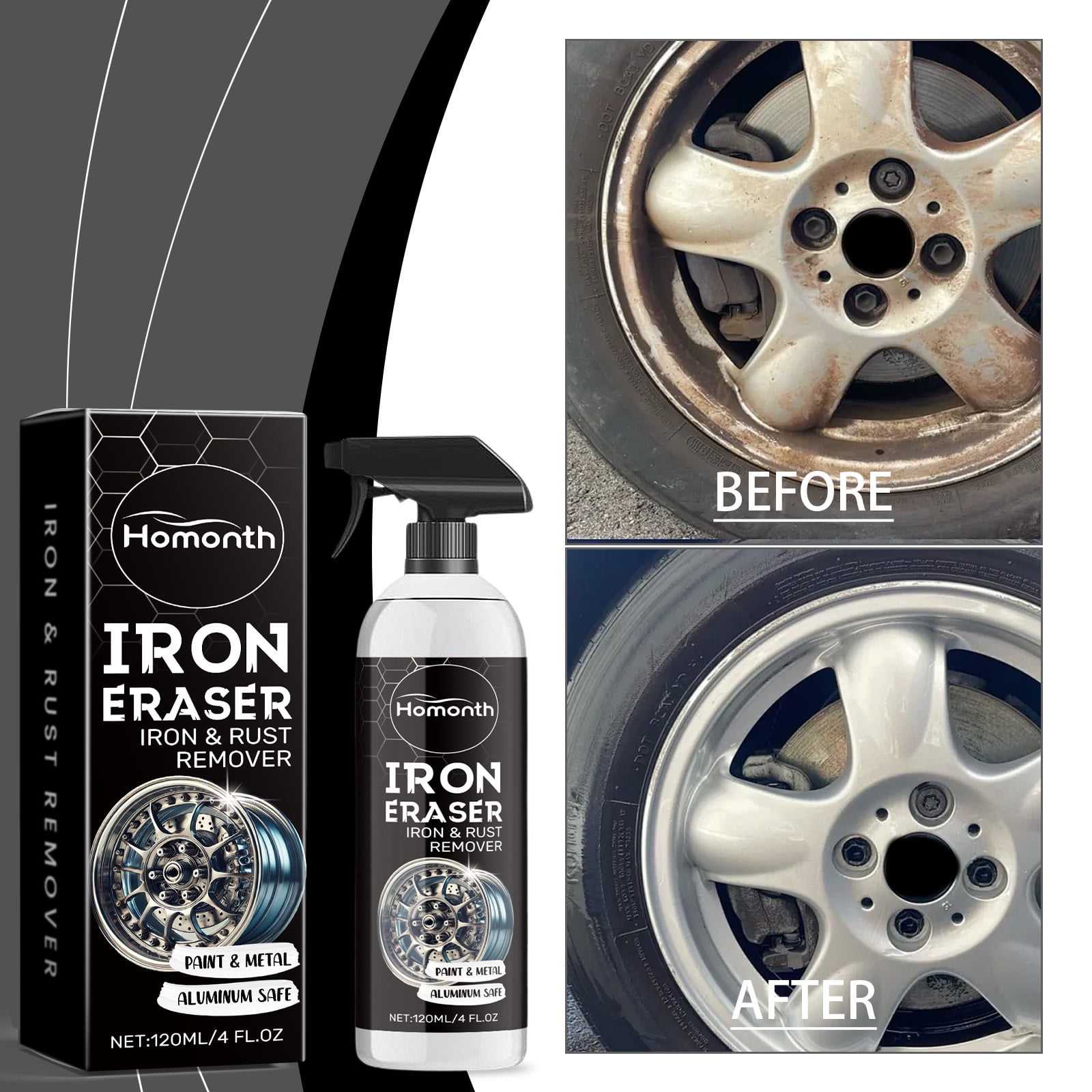
Iron remover can reduce wax or sealant on wheels, but wheel use has a separate concern: finish type. Painted wheels, clear-coated alloy wheels, polished metal, chrome, anodized finishes, and aftermarket coatings can react differently.

Many wheel cleaners are stronger than paint-safe iron removers. Some are acidic. Others are alkaline. An iron remover labeled for wheels is not automatically safe for every wheel finish.
Wheel finish matters
| Wheel finish | Main concern | Safer practice |
|---|---|---|
| Clear-coated alloy | Cleaner drying on a hot surface | Use on cool wheels and rinse well |
| Painted wheel | Staining or loss of gloss | Follow label directions |
| Polished aluminum | Etching or haze | Use a product approved for polished metal |
| Chrome | Surface spotting or finish damage | Test first |
| Anodized finish | Permanent discoloration | Avoid unapproved chemicals |
| Powder coat | Usually durable, but not universal | Check product compatibility |
Iron remover may be useful before applying a wheel sealant. Yet it is not a dependable wheel-wax stripper. If you need to remove old wheel wax, clean the wheel first, then use a compatible prep product.
Never spray any chemical onto hot wheels or brake components. The liquid can dry before you rinse it, which increases the risk of spotting.
The right way to remove wax before detailing
The best way to remove old wax is to use a mild process first and increase cleaning strength only when needed. You do not need the harshest chemical for every vehicle.

A proper reset often includes washing, chemical decontamination, clay treatment, and polishing. The exact steps depend on whether you are applying another wax, a sealant, or a ceramic coating.
Method 1: Use a strip wash
A strip wash is a car shampoo or cleaner made to remove old protection more strongly than a normal maintenance soap. It may contain stronger surfactants or a high-pH formula.
Use it according to the label. Do not assume that more soap makes it better. Stronger is not always safer for rubber seals, trim, or nearby surfaces.
Method 2: Use an all-purpose cleaner carefully
A diluted all-purpose cleaner can reduce wax and road film. It is useful on heavily soiled vehicles, trucks, SUVs, and work vehicles.
The dilution matters. A product that is safe at one ratio may be too strong at another. Never use a concentrated cleaner on paint unless the label specifically allows it.
Method 3: Use a dedicated wax remover
A dedicated wax remover is a good choice when you want to remove old protection without polishing. It can help before applying a new sealant or coating.
Read the surface list. Some products are for paint only. Others may damage plastic, rubber, matte finishes, or uncoated metal.
Method 4: Polish the paint
A light polish can remove oxidation, minor haze, and remaining protection from the upper paint surface. It also improves the surface before a new wax or coating.
Polishing removes a very small amount of clear coat. Use a clean pad, the least aggressive product that works, and a machine speed suited to your tool.
Beginners should practice on a small area. If the paint has deep scratches, peeling clear coat, or severe oxidation, a professional detailer may be the safer choice.
Method 5: Use iron remover as part of the process
Iron remover can be part of a wax-removal process, but it should serve its real purpose. Use it to dissolve iron contamination before clay or polishing.
A clean, decontaminated surface allows the next product to bond more evenly. The iron remover is not the main wax stripper.
A safe wax-removal workflow
The best workflow starts with a cool surface and moves from low risk to higher cleaning power. This protects the paint and helps you see what each step does.
What you need
| Item | Purpose | Notes |
|---|---|---|
| pH-balanced car shampoo | Removes loose dirt | Use two buckets if possible |
| Microfiber wash mitt | Lifts dirt with less marring | Keep clean |
| Iron remover | Dissolves ferrous particles | Use on a cool surface |
| Clay towel or clay bar | Removes bonded residue | Use plenty of lubricant |
| Wax remover or strip wash | Reduces old protection | Follow the dilution |
| Microfiber towels | Dry and inspect | Avoid dirty or rough towels |
| New wax or sealant | Adds fresh protection | Apply to clean, dry paint |
You do not need every item for every vehicle. A lightly used garage-kept sedan may need only a wash and inspection. A truck driven near rail lines may need chemical and mechanical decontamination.
Step-by-step process
-
Work in shade.
Choose a cool panel and avoid strong wind. Do not work on hot paint, wheels, or glass. -
Rinse the vehicle.
Remove loose sand and grit before touching the paint. A pressure washer can help, but keep the nozzle at a safe distance and use moderate pressure. -
Wash from top to bottom.
Use a clean mitt and rinse it often. The lower doors, rocker panels, and rear bumper hold more grit. -
Rinse completely.
Do not let soap dry. Dry the vehicle with clean microfiber towels or a safe air blower. -
Apply iron remover to selected areas.
Start with the wheels or the lower panels. Avoid spraying the entire vehicle if only a few areas have contamination. -
Allow the stated dwell time.
Most products need time to react. Do not let the product dry. Add no extra time unless the manufacturer allows it. -
Rinse very well.
Flush seams, badges, mirrors, grille openings, and wheel spokes. Leftover chemical can stain or irritate surfaces. -
Inspect the paint by touch.
Use a thin plastic bag over your hand. A rough feel suggests bonded contamination remains. -
Clay only if needed.
Use clay lubricant and light pressure. Stop when the surface feels smooth. -
Use a wax remover or polish if required.
Choose the least aggressive option that meets your goal. Test a small area first. -
Panel wipe if applying a coating.
Use the coating maker’s approved prep product. Do not guess with household alcohol or glass cleaner. -
Apply new protection.
Follow the product’s cure time. Keep the vehicle dry for the period stated on the label.
This process suits beginners who want a careful plan. It also suits experienced DIY detailers who want to preserve clear coat and avoid needless chemical use.
⚠️ Safety Warning: Wear gloves and eye protection. Keep chemicals off your skin, eyes, food, pets, and children. Do not mix detailing chemicals. Follow the product label and contact local hazardous-waste services for chemical disposal guidance.
How to tell whether the wax is gone
Water behavior can offer clues, but it is not a perfect test. Beading, sheeting, and slickness can change because of dirt, oils, shampoo residue, and surface temperature.

A clean panel may still bead water after wax is gone. Paint texture and clear-coat condition can create similar behavior. Instead of relying on one sign, use several observations.
Signs of remaining protection
- Water forms tight beads.
- The surface feels slick after a clean wash.
- Dirt releases easily during washing.
- A compatible maintenance spray spreads evenly.
- The paint resists light water spotting.
Signs protection may be weak
- Water spreads into a flat sheet.
- The paint feels less slick after a clean wash.
- Dirt sticks more easily.
- The surface looks dry or uneven.
- A product that once lasted several weeks fades quickly.
These signs still do not prove that every molecule of wax is gone. If you need a fully clean surface for a ceramic coating, use the coating maker’s full preparation process.
What can go wrong when using iron remover?
Iron remover is useful, but it is not risk-free. Most problems come from heat, drying, poor rinsing, wrong surfaces, or excessive use.

A quality product cannot correct unsafe technique. Read the label each time, even if you have used a similar product before.
| Problem | Likely cause | Solution |
|---|---|---|
| Purple product dries on paint | Panel was too hot or dwell time was too long | Rinse at once and inspect |
| Staining on trim | Product was not approved for the trim | Flush with water and seek product guidance |
| Wax performance drops | Strong product or repeated treatment | Reapply suitable protection |
| Rough paint remains | Iron was only one type of contamination | Use clay or another decontamination step |
| Wheel finish looks dull | Wrong cleaner or hot wheel | Stop use and contact the manufacturer |
| Poor reaction color | Little iron contamination or weak coverage | Inspect by touch and do not overapply |
If a product dries, do not immediately scrub hard. Re-wet the area, rinse with plenty of water, and inspect it in good light. Aggressive scrubbing can create more damage than the original spot.
Paint, plastic, glass, and rubber
Paint-safe does not mean safe for every material. Textured plastic, rubber seals, satin trim, chrome, and aftermarket finishes may need separate care.
Glass may show residue if the product dries. Rubber can discolor after repeated exposure. Plastic trim may become uneven if a strong cleaner removes surface dressing.
Cover delicate surfaces when practical. If overspray reaches them, rinse promptly.
Iron remover in different climates and vehicle types
Climate and use change how often contamination builds. A car near the ocean may face salt and minerals. A car in a cold city may collect heavy brake dust and road salt. A truck near a rail yard may collect more iron particles than a commuter sedan.

Electric vehicles and hybrids also produce brake dust, even though regenerative braking can reduce the use of friction brakes. Tire wear, rotor use, and road conditions still create contamination.
| Vehicle or climate | Common issue | Sensible approach |
|---|---|---|
| Winter commuter car | Salt, grit, and brake dust | Wash often and rinse wheel wells |
| Coastal vehicle | Salt and mineral residue | Use gentle washes and dry fully |
| Pickup truck | Mud, metal dust, and work-site film | Pre-rinse and treat lower panels |
| SUV | Large painted area and wheel contamination | Work in small sections |
| EV or hybrid | Brake dust plus road film | Use wheel-safe products and inspect brakes |
| Older vehicle | Thin or damaged clear coat | Avoid harsh chemicals and test first |
Older paint needs extra care. If clear coat is peeling or the paint is already failing, chemical cleaning will not repair it. A professional assessment may prevent further damage.
For a teen driver or gift recipient, a simple wash kit with a mild shampoo, microfiber towels, tire pressure gauge, and safe wheel cleaner is often more useful than a strong chemical bundle. The best product is the one the driver can use correctly.
Can you use iron remover before ceramic coating?
You can use iron remover before a ceramic coating when the product is approved for paint and the coating maker permits it. It can help remove iron particles that would otherwise interfere with polishing and paint preparation.
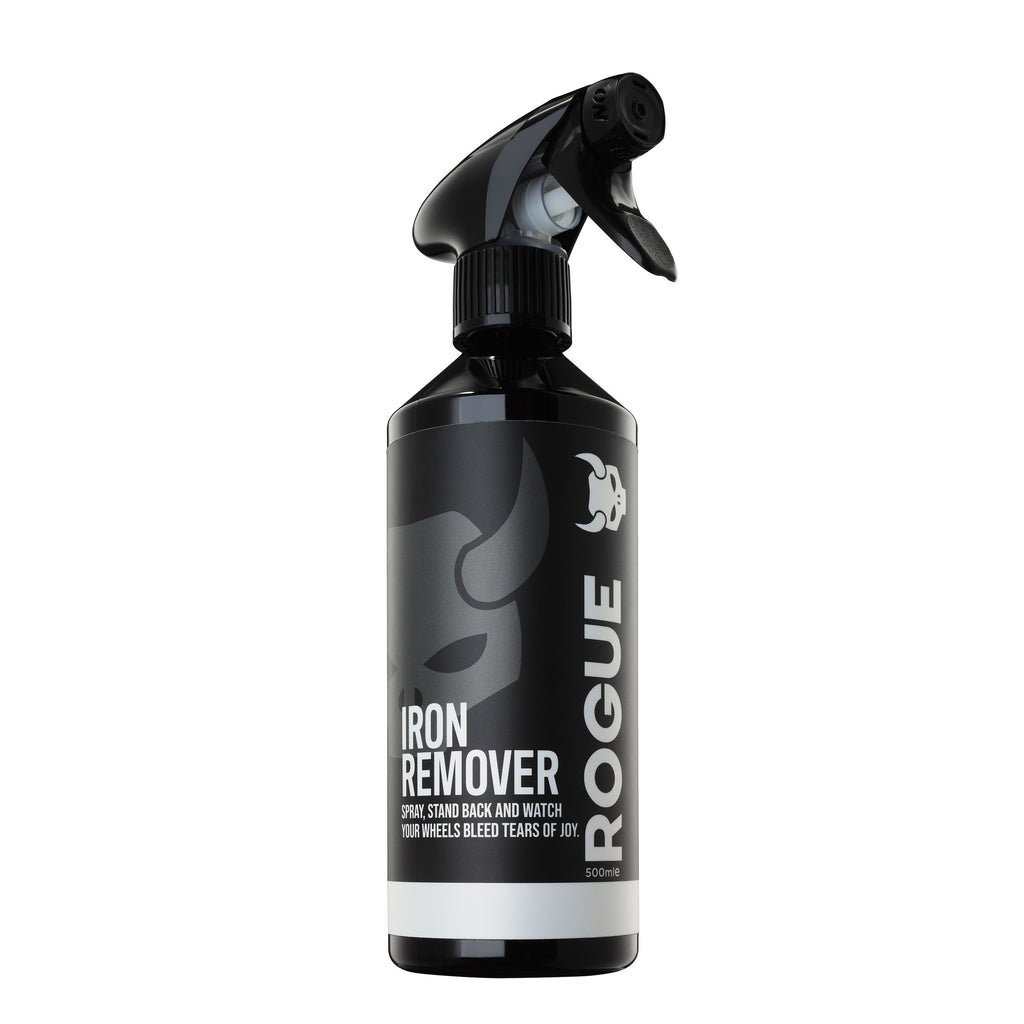
The surface must be clean after the treatment. Rinse thoroughly, clay if needed, polish if needed, and use the coating maker’s panel prep product. Any residue, oil, wax, or detergent film can affect coating bonding.
Do not assume that a product labeled “coating safe” is suitable for every coating. Some coatings have special prep rules. Always confirm the directions for your product.
Coating preparation checklist
- Wash with a compatible shampoo.
- Remove iron particles when present.
- Remove tar and sap with suitable products.
- Clay only where needed.
- Polish defects before coating.
- Wipe with approved panel prep.
- Use clean, low-lint microfiber towels.
- Apply coating in a controlled area.
- Respect temperature and cure instructions.
A ceramic coating is not a shortcut around paint correction. It can protect a well-prepared surface, but it can also lock in defects if preparation is poor.
Pros and cons of using iron remover near wax
Iron remover is a valuable detailing chemical, but it has limits. The following table helps you decide whether it belongs in your process.

| Pros | Cons |
|---|---|
| Dissolves iron particles that washing may leave behind | Does not reliably remove all wax |
| Helps prepare paint for clay or polishing | May weaken wax or sealant |
| Can reduce rough, bonded contamination | Can stain if allowed to dry |
| Useful on many painted wheels | May be unsafe for some finishes |
| Often works without heavy scrubbing | Has a strong odor in some formulas |
| Can support coating preparation | Requires careful rinsing and storage |
For a beginner, the main advantage is easier removal of embedded metal dust. The main drawback is that it adds another chemical step and requires careful use.
For an experienced detailer, iron remover can save time before clay work. It still does not replace inspection or paint correction.
Is iron remover worth buying?
Iron remover is worth the money if your vehicle has bonded brake dust, rail dust, or repeated industrial fallout. It is less useful if your main goal is simply to remove old car wax.
A sedan that stays in a garage may need iron treatment only a few times per year. A white SUV parked near a busy highway may show orange specks often. Light-colored paint makes contamination easier to see, but dark paint can hold the same particles.
When it is a good buy
- You see orange or purple-brown specks on white paint.
- The paint feels rough after a careful wash.
- Wheels have bonded brake dust.
- You live near train tracks or heavy industry.
- You plan to clay, polish, or apply a coating.
- Your vehicle travels through winter road conditions.
When to skip it
- You only want to remove wax.
- The vehicle has delicate, unapproved finishes.
- The paint is hot or exposed to direct sun.
- You cannot rinse the product well.
- You have peeling clear coat and need paint repair.
- A normal wash already leaves the surface smooth.
Check the current product listing for updated instructions, surface approvals, dilution details, and fitment-style compatibility information. For chemicals, “fitment” means surface compatibility rather than year, make, and model.
Common mistakes that reduce results
Most poor results come from using the right product in the wrong way. Small changes in technique can protect the paint and improve the outcome.
Using iron remover as a full car wash
Iron remover does not replace shampoo. Dirt can block the chemical from reaching the iron particles. Wash first unless the product label says otherwise.
Spraying in direct sun
Heat speeds drying. A product that should dwell for several minutes can dry in less time on a black hood. Work in shade and use small sections.
Letting it dry
Dry chemical can leave residue or spots. If the product begins to dry, rinse immediately. Do not wait for a stronger reaction.
Scrubbing too hard
The reaction does most of the work. Heavy scrubbing can push grit across the paint and create fine scratches.
Using it every wash
Iron remover is not a normal maintenance shampoo. Repeated use may reduce wax or sealant life and expose surfaces to needless chemicals.
Ignoring the wheels
Wheel faces, barrels, calipers, and brake hardware vary. Keep the product away from hot brakes and use only approved methods.
Trusting color alone
Some contamination does not contain iron. No purple reaction does not mean the surface is clean. Use touch and visual inspection too.
How often should you use iron remover?
There is no universal schedule. Use iron remover when contamination exists, not simply because a calendar says it is time.
Many drivers may need it once or twice a year. Vehicles near rail lines, construction sites, industrial zones, or winter roads may need it more often. Frequent users should choose a product that matches their protection system and use the mildest process that works.
| Vehicle use | Possible frequency | Inspection method |
|---|---|---|
| Garage-kept weekend car | Once or twice yearly | Plastic-bag touch test |
| Daily commuter | Several times yearly | Check lower doors and wheels |
| Winter vehicle | After the season | Inspect salt and brake dust areas |
| Work truck | As needed | Look at rocker panels and tailgate |
| EV or hybrid | Several times yearly | Inspect wheels and painted panels |
| Coated vehicle | Only when needed | Follow coating maintenance guide |
These are starting points, not fixed rules. Product labels and the vehicle’s condition should guide the final decision.
Alternatives to iron remover for a waxed car
If your goal is to maintain wax rather than remove contamination, start with a gentle wash. If your goal is a clean surface for new protection, choose a method that matches the old product.
For light dirt
Use a pH-balanced car shampoo and clean microfiber towels. This removes dirt while preserving more of the existing protection.
For road film
Use a suitable prewash or diluted cleaner. Keep it away from hot panels and rinse fully.
For tar and asphalt
Use a dedicated tar remover. Iron remover will not dissolve tar effectively.
For tree sap
Use a sap-safe solvent and gentle microfiber towel. Do not scrape with a blade unless you understand the risks and the tool is designed for the surface.
For mineral water spots
Use a water-spot remover or polish. Mineral deposits are not iron contamination.
For bonded roughness
Use iron remover first if the particles may be metallic. Then use clay if roughness remains.
For a complete reset
Use a wash, chemical decontamination, clay as needed, light polish, and a suitable panel prep. This is the most reliable route before a new coating.
Frequently asked questions
Q: Will iron remover remove ceramic coating?
A: A coating-safe iron remover normally should not remove a properly cured ceramic coating when used as directed. It may reduce the performance of a topper or maintenance spray. Always check the coating maker’s instructions.
Q: Can I use iron remover on a waxed car?
A: Yes, if the product is approved for the paint and you need to remove iron contamination. Expect that it may reduce some wax performance. Reapply protection if needed.
Q: Does iron remover remove sealant?
A: It can weaken some synthetic sealants, especially with repeated use, strong formulas, long dwell times, or scrubbing. It is not a dependable sealant stripper.
Q: Should I iron remove before or after washing?
A: In most cases, wash first. The wash removes loose grit and road film, allowing the iron remover to contact the bonded particles. Follow the product label if it gives a different process.
Q: Can iron remover damage clear coat?
A: It can cause problems if it dries, is used on hot paint, is left on too long, or is not approved for the surface. Use gloves, follow the label, and rinse well.
Q: Can I use iron remover on glass?
A: Use only a product that specifically allows glass. Some products may leave residue or affect nearby trim. A glass-safe cleaner is usually better for normal glass dirt.
Q: Is iron remover safe for matte paint?
A: Some products are safe for matte finishes, but not all are. Matte paint cannot be polished in the same way as gloss paint, so test carefully and follow the vehicle maker’s guidance.
Q: Can I use iron remover on a vinyl wrap?
A: Only if the wrap maker and product label approve it. Wrap film has different chemical limits than clear-coated paint. Test an unseen area first.
Q: Does iron remover remove brake dust from wheels?
A: It can dissolve iron-based brake dust. It will not remove every type of wheel dirt, and it may not be safe for every wheel finish. Rinse thoroughly and never use it on hot wheels.
Q: Do I need to clay after using iron remover?
A: Not always. Feel the paint after rinsing and drying. Clay only if bonded contamination remains, and use enough lubricant to reduce marring.
Q: Can iron remover replace a clay bar?
A: No. Iron remover dissolves iron particles. Clay removes many bonded contaminants that remain after chemical treatment.
Q: Will iron remover remove wax from plastic trim?
A: It may stain, dry unevenly, or affect trim dressing. Do not assume that paint-safe means trim-safe. Use a product approved for that material.
Q: Can I use iron remover on an EV or hybrid?
A: Usually, the exterior paint and wheels can be treated like those on other vehicles, but the product must be used only on exterior surfaces approved by the label. Avoid high-voltage components and follow the vehicle manual.
Q: Is iron remover safe for older cars?
A: It depends on the paint and surface condition. Older cars with peeling clear coat, repaired panels, or delicate trim need extra caution. A professional detailer can inspect the finish first.
Q: Does iron remover remove old car wax from a truck?
A: It may weaken or reduce some wax, but it should not be your main wax-removal method. Trucks often need a wash, iron treatment for metal dust, and a separate wax-removal step.
Final thoughts
Iron remover removes iron contamination, not wax. It can weaken some waxes and sealants, but its reaction with metal particles makes it a specialized decontamination product rather than a true wax stripper.
Use it when you see bonded brake dust, rail dust, or rough metallic specks. Use a strip wash, wax remover, or polish when your main goal is to remove old protection. Work on cool surfaces, prevent drying, rinse well, and protect delicate finishes.
For beginners, the safest plan is simple: wash first, use iron remover only when needed, inspect the paint, and apply fresh protection after the surface is clean. For experienced DIY detailers, iron remover is a useful step before clay, polishing, or coating preparation. For parents and gift buyers, choose a mild, clearly labeled product that matches the driver’s skill and vehicle finish.
The right chemical will not do every job. It will do one job well when you use it at the right time.